How to Test Clutch Slip Without Damaging the Clutch
Check clutch slip with a low-load test in a higher gear: hold around 2,000 rpm, apply steady throttle briefly, and watch for engine speed rising faster than road speed. A bad test adds heat, can burn friction material, and can hide slip behind misfire or wheelspin, so a sloppy check can turn a small problem into damage. This guide shows safer checks, how to spot drag, and how to separate clutch problems from misfire, hesitation, or traction loss.
What you’ll need before you start
- A flat, low-traffic route or a quiet road with room to coast to a stop
- Owner’s manual details for clutch type, fluid checks, and service access points
- A flashlight for a quick pedal and fluid inspection
- Basic hand tools if the fluid reservoir cap or inspection cover needs access
- One helper only if the car needs a second person to watch for obvious smoke or smell
Do not start on a busy hill or in traffic. If the car already smells hot, slips badly, or grinds badly into gear, stop the test plan and move straight to inspection.
- Park on level ground and set the parking brake.
- Press the pedal slowly and note the bite point, pedal feel, and return speed.
- Check clutch fluid level if the car has a hydraulic clutch system.
- Pick a quiet route with a long, clear stretch.
- Plan short checks only, then leave time to cool between attempts.
What clutch slip is and why safe testing matters
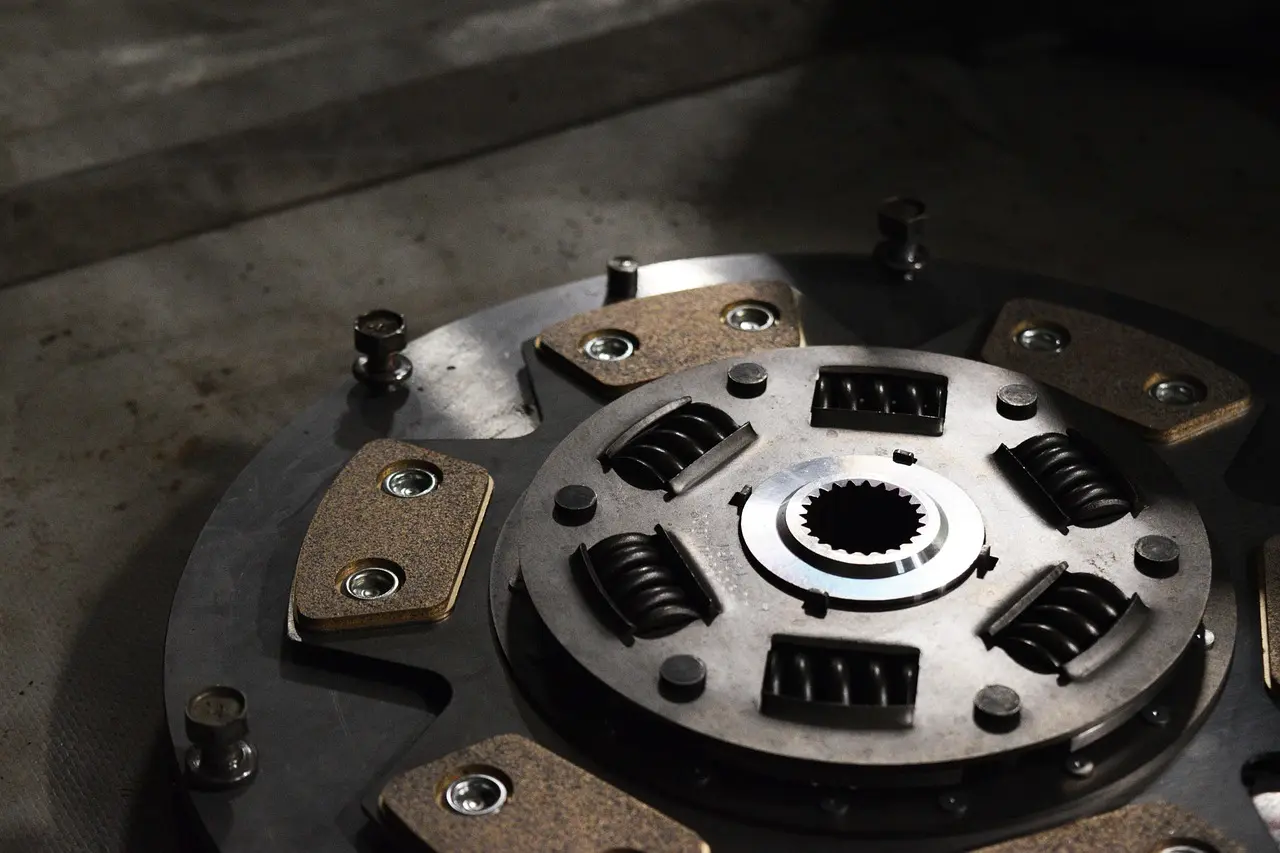
Clutch slip means engine revs rise without the expected rise in vehicle speed. In a manual transmission clutch, the engine drives the flywheel, the clutch plate transfers force through the pressure plate, and the gearbox receives that torque when everything is fully engaged. Heat is the main risk because slip turns friction into wear fast.
How clutch slip differs from normal engagement
A healthy clutch grabs cleanly after the bite point and keeps road speed climbing with rpm. Slip means the friction surface cannot hold the load, often because the clutch plate is worn, glazed, or contaminated, or because the pressure plate is losing clamping force. A burning smell after a pull is a strong clue.
What symptoms can point to slip before you test
Poor acceleration under load, a high or odd bite point, and awkward gear changes can all point to slip. These signs often show up uphill, while overtaking, or in 4th gear or 5th gear. A spongy, loose, sticky, or oddly high pedal can also point to hydraulic issues rather than a worn clutch alone.
how can you test clutch slip without damaging it?
Use a short, low-load check in a higher gear, then stop if rpm flares, the smell changes, or the pedal feel changes. Keep each attempt brief and let the clutch cool between attempts. Do not hold the throttle open against a slipping clutch; that adds heat and can damage the clutch plate and flywheel.
Step-by-step low-heat check
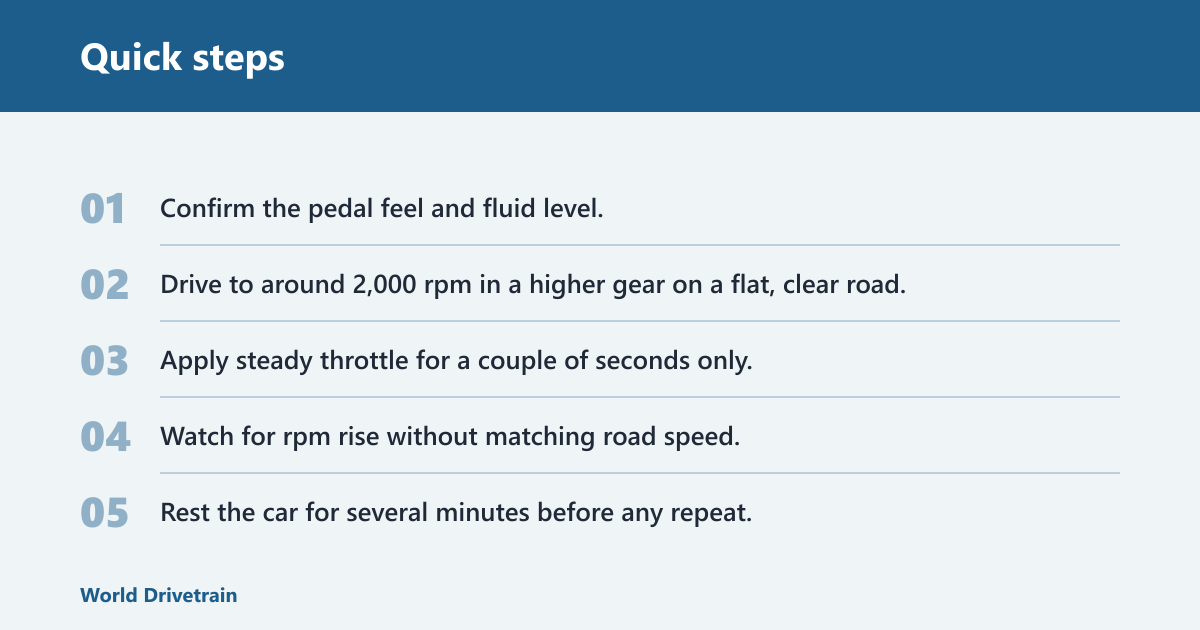
- Confirm the pedal feel and fluid level.
- Drive to around 2,000 rpm in a higher gear on a flat, clear road.
- Apply steady throttle for a couple of seconds only.
- Watch for rpm rise without matching road speed.
- Rest the car for several minutes before any repeat.
Say your car pulls cleanly in 3rd gear at 2,000 rpm, then rpm climbs sharply in 4th with little gain in speed. That pattern points toward slip. Suppose the engine surges but the front tires spin on wet pavement instead; that is traction loss, not clutch slip.
How to separate slip from wheelspin and misfire
Wheelspin shows up as tire noise, traction control intervention, or obvious road-speed instability. Misfire feels like shaking, uneven power delivery, or a flashing check-engine light, not a clean flare in rpm. If the vehicle hesitates without a clean rev flare, do not assume the clutch is the cause.
how do you tell clutch slip from clutch drag?
Slip is free-revving under load: engine speed rises, speed lags, and the car feels weak. Drag is the opposite pattern: the clutch does not release cleanly, so shifting is hard, gears clash, or the car creeps at a stop. Slip points to hold-force loss; drag points to release problems.
What each result means for clutch parts
Slip often points to wear or contamination on the clutch plate, weak pressure-plate clamping, or heat spots on the flywheel. Drag often points to a release issue, such as hydraulic problems, cable adjustment, or a warped or sticking component that keeps the disc from separating fully.
How the pedal helps separate the fault
A high or changing bite point can fit slip, but it can also come from adjustment or hydraulics. A sticky or spongy pedal leans toward a hydraulic clutch system issue. A pedal that returns slowly or feels inconsistent deserves inspection before more road testing.
Use the safe clutch slip test matrix
This matrix keeps test time short and tells you when to stop. If any row triggers a red flag, do not repeat the test that day. Heat damage comes from repeated load, not from one careful check.
| Test type | Gear and road condition | Max time per attempt | Expected result if healthy | Stop-now red flags |
|---|---|---|---|---|
| High-gear acceleration check | 3rd or 4th gear, flat quiet road | 2–3 seconds | Rpm and road speed rise together | Burning smell, rpm flare, weak pull |
| Light uphill load test | Gentle hill, low traffic, no sudden throttle | One start only | Clean takeoff without odor | Smell, shudder, worsening pedal feel |
| Cruise-and-roll check | 4th or 5th gear, steady speed | 3–5 seconds | Speed remains stable under light throttle | Rpm rises without road-speed gain |
| Gear-change feel check | 1st to 2nd, then 2nd to 3rd at low rpm | Normal shifting only | Clean engagement, no grinding | Grinding, refusal, creeping, or clash |
what does the pedal, smell, and shift feel tell you?
A high, odd, or changing bite point can be a warning sign, but it does not prove a worn clutch by itself. Spongy, sticky, or loose pedal travel often points toward hydraulic issues, while a hot friction odor under hill starts or traffic points to heat buildup at the clutch face. Hard shifting points elsewhere.
Hydraulic clutch system checks
Check fluid level against the reservoir marks and look for leaks at the master cylinder, slave cylinder, and hose connections. If the pedal feels spongy or stays down briefly, the hydraulic clutch system may not be moving the release fork fully. That can cause drag, not slip, and needs different repair.
What burning smell means
A friction odor after a hill start or repeated slow traffic pull means the clutch has already built more heat than normal. Treat that as a stop-now signal. More load after that point can glaze the clutch plate and mark the flywheel, which makes the next slip worse.
What causes a clutch to slip under load?
Under load, the clutch needs more clamping force to hold torque. A worn clutch plate, overheated friction surface, contaminated lining, weak pressure plate, or flywheel heat spots can all reduce grip. Symptoms often show up on hills, while overtaking, or in 4th gear or 5th gear because torque demand rises there.
Common first-timer mistake
A common first-timer mistake is repeating a hill start three or four times to “make sure.” That adds heat quickly. If the first attempt already produces a smell or a strong rpm flare, further attempts can turn a borderline clutch into a failed one.
Common mistakes that can damage a clutch during diagnosis
Holding the throttle open against a slipping clutch creates heat and wear. Repeating hill starts back to back does the same. Testing in traffic makes load inconsistent, so the result is hard to trust. Ignoring misfire, wheelspin, or gearbox problems can send you toward the wrong repair.
If that didn’t work, try this next
- Recheck for a misfire with the dash warning lights and a scan tool if one is available.
- Inspect for traction loss on the same route only in dry conditions.
- Confirm the clutch fluid level and look for leaks at the master and slave cylinders.
- Book a professional inspection if the symptom repeats in two short checks.
Decision path: Monitor if the symptom is rare and there is no smell, no pedal change, and no hard shifting. Inspect soon if the bite point is odd, the pedal is spongy, or the problem appears only under load. Stop driving if the rpm flare is strong, the smell is present, or gear changes become rough and worsening.
Prevention: Avoid riding the clutch in traffic, and keep fluid at the correct level on hydraulic systems so the pedal and release point stay consistent.
Frequently asked questions
how to check if clutch is slipping
Use a short 3rd- or 4th-gear pull at about 2,000 rpm on a quiet road. If rpm rises faster than road speed for 2–3 seconds, the clutch is slipping. Stop the check if you smell friction odor or if the pedal feel changes.
how to diagnose a slipping clutch
Start with pedal feel, fluid level, and a brief high-gear acceleration check. Then compare the result with wheelspin and misfire clues. A slipping clutch shows clean rpm flare under load; a misfire feels rough, and wheelspin is noisy and obvious.
how to tell if clutch is slipping
Look for rising engine rpm without a matching increase in speed, especially uphill or in higher gears. A hot friction smell and poor acceleration under load support the diagnosis. A high bite point can add suspicion, but hydraulics can also change pedal feel.
how to test clutch without damaging it
Keep each attempt short: 2–3 seconds in 3rd or 4th gear, then allow a cooling pause. Do not repeat hill starts or hold throttle against the clutch. If the car smells hot or the pedal changes, stop and inspect instead.
how can I tell clutch slip from clutch drag
Slip shows rising rpm with weak road-speed gain. Drag shows hard shifting, grinding, or creep at a stop because the clutch does not release fully. Slip points to grip loss at the friction surface; drag points to release trouble in the mechanism or hydraulics.
is it safe to keep driving with a slipping clutch
Short trips may be possible if the symptom is mild and rare, but repeated slip can overheat the clutch plate, pressure plate, and flywheel. If the smell is present, the flare is strong, or gear changes worsen, stop driving and arrange inspection.