Clutch replacement vs clutch repair cost: which to choose?
If the fault is inside the clutch stack, replace the clutch assembly; if it is hydraulic or adjustment-related, repair is usually cheaper and smarter. Waiting can turn a small fault into flywheel damage, extra labor, or a roadside breakdown. This guide compares clutch replacement vs repair costs by failure type, labor overlap, and the signs that point to each choice.
Clutch repair vs replacement: the decision in one sentence
| Decision factor | Clutch replacement | Clutch repair cost | Winner |
|---|---|---|---|
| Up-front parts cost | Higher, because the clutch kit often includes the disc, pressure plate, and release bearing | Lower when the fault is external, such as a slave cylinder or linkage issue | Clutch repair cost |
| Labor overlap | High if the transmission already has to come out | Low to moderate for hydraulic or external adjustments | Clutch repair cost |
| Repeat-labor risk | Lower when wear parts are replaced together | Higher if only one worn internal part is addressed and the clutch stack fails later | Clutch replacement |
| Best fit for slipping clutch | Best when the disc or pressure plate has worn out | Poor fit if slip comes from friction wear | Clutch replacement |
| Best fit for pedal feel problems | Only if inspection shows internal wear too | Best when the master cylinder, slave cylinder, or linkage is failing | Clutch repair cost |
Up-front parts cost
Repair looks cheaper when the failed part sits outside the clutch stack. A leaking master cylinder, weak slave cylinder, or an external linkage fault can often be fixed without removing the transmission, so the bill stays focused on diagnosis and the affected hydraulic part.
Replacement wins the value argument when the disc, pressure plate, or release bearing is already worn. Those parts sit behind the transmission, so paying to access them only once matters more than trying to save a little on parts.
Labor overlap
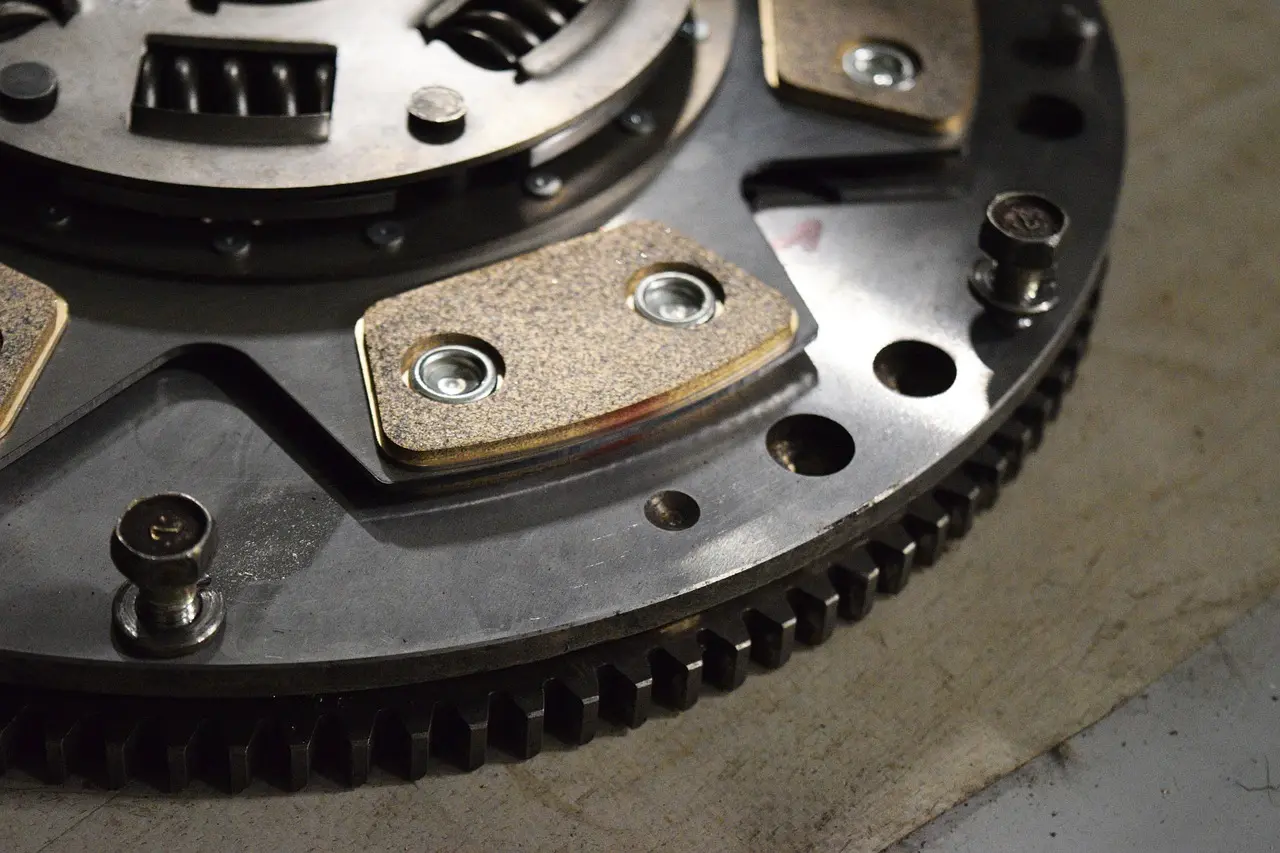
Labor overlap is the real cost divider. On many manual transmission vehicles, the transmission has to come out to reach the clutch disc, pressure plate, flywheel, and release bearing, so the labor is often the more expensive part than the parts themselves.
That is why a clutch kit is so common. If the transmission is already out, replacing all the wear items at once usually avoids paying twice for the same removal and reinstall work.
Repeat-labor risk
Repair has higher repeat-labor risk when the failed part is inside the clutch stack but only part of the stack is renewed. A disc can be replaced, but a heat-damaged pressure plate or worn release bearing can bring the same job back soon after.
Replacement lowers that risk because it addresses the linked wear items together. In clutch work, the cheapest bill is not always the cheapest outcome.
Which part failed? Use the symptom to narrow it down
The first job is to separate clutch wear from clutch-system problems that only look like wear. A slipping clutch often points to a worn friction disc, but a soft pedal can point to a hydraulic fault instead. Start with the failed part, not the symptom alone.
Clutch disc wear and clutch slip
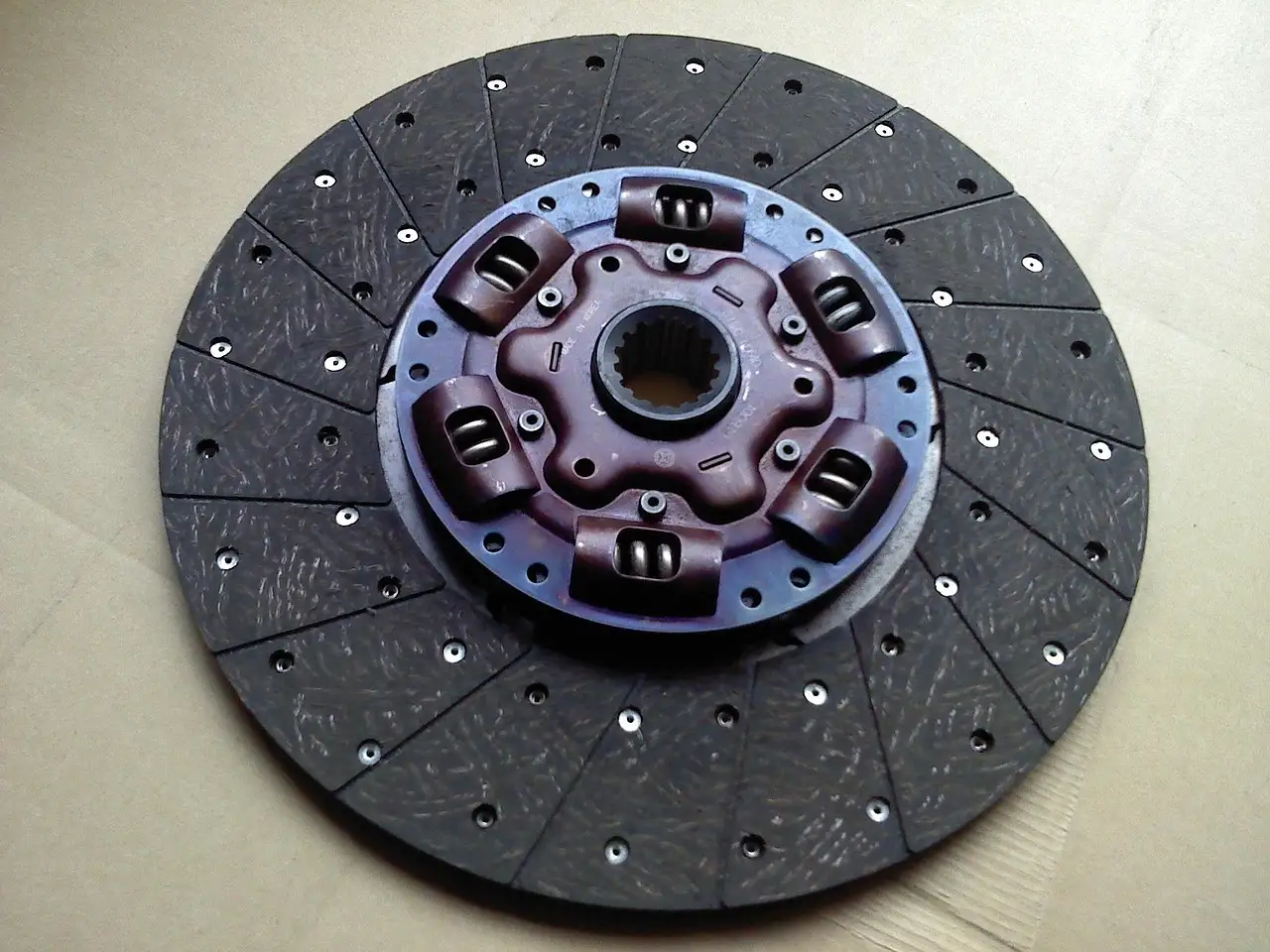
The clutch disc is the friction part that transfers engine torque to the transmission. When that lining wears down, the common signs are engine rev flare, poor acceleration, and a burned smell under load.
Once slip starts under normal driving, repair is usually false economy. The friction material is the wear surface, and there is no meaningful repair for a worn-out disc.
Pressure plate heat damage and loss of clamping force
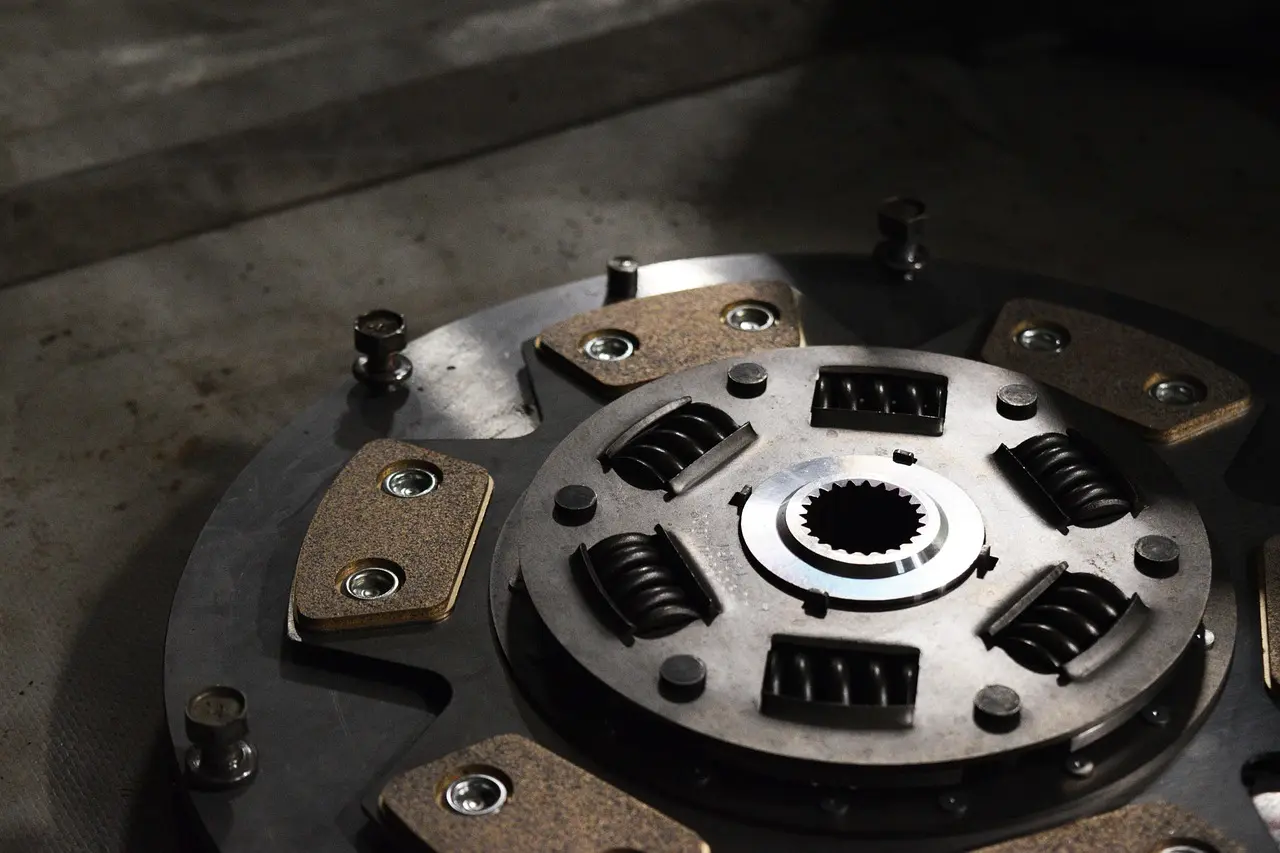
The pressure plate supplies clamping force to hold the disc against the flywheel. Heat spots, glazing, and weakened spring pressure can reduce that force and cause slip even if the disc still has some material left.
Because the pressure plate lives inside the same stack, replacing only the disc often leaves a damaged pressure plate in place. That is a common repeat-failure pattern.
Release bearing / throwout bearing noise
A release bearing, also called a throwout bearing, often announces itself with noise when the clutch pedal is pressed. It can squeal, growl, or rumble, and that sound often suggests the bearing is getting worn.
The labor overlap is large. If the transmission comes out to replace the bearing, many shops replace the disc and pressure plate at the same time because the added parts cost is small compared with doing the job again later.
Flywheel heat spots, warping, and resurfacing limits
The flywheel needs a clean, flat friction surface. Heat spots, warping, or excessive scoring can prevent the new disc from bedding in correctly and can cause chatter or renewed slip.
Some flywheels can be resurfaced, but only within manufacturer limits for thickness and runout. If those limits are already out of range, replacement changes the bill, and that is worth knowing before quoting the job.
Hydraulic clutch system faults that mimic clutch wear
A hydraulic clutch system uses a master cylinder and slave cylinder to move the clutch release mechanism. When one of those components leaks or loses pressure, the pedal can feel soft, the clutch may not disengage fully, and shifting can become difficult.
That can look like clutch failure even when the disc is still serviceable. This is where diagnosis matters most, because a hydraulic repair can be far cheaper than removing a good clutch stack.
When is clutch repair cheaper than clutch replacement?
Clutch repair is cheaper when the failure is external to the clutch stack and does not require transmission removal. Hydraulic leaks, air in the system, a bad master cylinder, a failing slave cylinder, or a misadjusted linkage can often be fixed at a much lower labor cost than a full clutch job.
Hydraulic repairs that do not require clutch removal
If the pedal goes to the floor, feels inconsistent, or returns slowly, the hydraulic system deserves inspection first. Those symptoms can come from fluid loss, internal seal failure, or an external leak, and none of those automatically means the disc is worn out.
Repair is the better buy when the fix stays outside the bellhousing. That keeps labor down and avoids paying for transmission removal that the clutch stack does not need.
Adjustment or linkage faults
Some vehicles use cable or mechanical linkage adjustments rather than a fully hydraulic setup. If the clutch is not fully disengaging because of free play, cable stretch, or misadjustment, a correction can restore normal operation without touching the clutch kit.
That said, adjustment only helps when the hardware still has life left. If the disc is slipping, an adjustment will only postpone the real repair.
Minor external faults versus internal clutch-stack wear
External faults are worth repairing because they do not create major labor overlap. Internal wear is different. A worn clutch disc, damaged pressure plate, or noisy release bearing lives behind the transmission, so the labor cost already dominates the bill.
Suppose a compact front-wheel-drive sedan loses pedal pressure and the slave cylinder is leaking externally. That repair can make sense on its own. If the same car also shows engine rev flare in third gear, the clutch stack is likely due for replacement anyway.
When should you replace the whole clutch assembly?
Replace the whole clutch assembly when the wear is inside the friction stack or when a transmission-out job is already required. Disc wear that has reached the friction limit, pressure plate heat damage, or release bearing noise all argue for a clutch kit rather than a partial fix.
Disc wear that has reached the friction limit
A clutch disc usually cannot be meaningfully “repaired” once the friction material is worn down. Slipping under load, high engine revs with weak acceleration, or a burned smell after hill starts point to a disc that is at the end of service.
At that stage, replacement is the safer spend because continued use can damage the flywheel and push the bill higher.
Pressure plate damage
The pressure plate provides the clamping force that makes the clutch work. If heat has warped the plate, weakened the springs, or glazed the surface, replacing only the disc does not restore full holding power.
That is why the pressure plate is commonly included in a clutch kit. Matching new wear parts to an old damaged plate invites another teardown.
Release bearing noise during clutch service
Throwout bearing noise is often a warning that the bearing is already wearing out. Because the bearing sits in the same labor path as the disc and pressure plate, it is usually replaced during clutch service rather than separately later.
That approach reduces repeat labor risk. It also avoids paying twice for the same transmission removal.
Decision table: do not pay twice
This table ties symptom, failed part, repairability, labor overlap, and repeat-failure risk together. Use it to decide whether the cheapest quote is actually the best value.
| Symptom | Failed part | Repair or replace | Labor overlap | Repeat-labor risk | Do not pay twice |
|---|---|---|---|---|---|
| Engine revs rise but acceleration drops | Clutch disc friction wear | Replace | High, transmission removal likely required | High if only a partial fix is done | Yes |
| Burned smell after starts or hill pulls | Disc and possibly pressure plate heat damage | Replace | High | High if heat-damaged parts remain | Yes |
| Squeal or growl when pedal is pressed | Release bearing / throwout bearing | Usually replace with clutch service | High | Moderate to high | Yes |
| Soft pedal or fluid loss | Master cylinder or slave cylinder | Repair | Low if external | Low if diagnosis is correct | No |
| Hard shifting with normal clutch bite point | Hydraulic issue or linkage adjustment | Repair | Low to moderate | Low | No |
| Chatter after clutch service | Flywheel finish or warping | Inspect, resurface only within spec, replace if out of spec | High if transmission is already out | High if flywheel is left marginal | Yes |
Choose Clutch replacement if… / Choose clutch repair cost if…
Choose Clutch replacement if the disc is slipping, the pressure plate is heat damaged, the release bearing is noisy, or the flywheel needs service while the transmission is already out. In those cases, the labor overlap is too large to gamble on a partial fix.
Choose clutch repair cost if the fault is hydraulic, linkage-related, or an adjustment problem that does not require clutch removal. That keeps the repair focused on the failed component and avoids paying for labor that the car does not need.
A common first-timer mistake is replacing the clutch because the pedal feels wrong. A failing slave cylinder can create the same complaint, and that mistake can turn a simple hydraulic repair into an unnecessary clutch job.
Picture a rear-wheel-drive coupe with a 6-speed manual transmission and a noisy clutch release bearing. If the transmission is coming out for that bearing anyway, a clutch kit and flywheel inspection are usually the sensible path. The extra parts cost is lower than repeating the labor later.
Is clutch repair cheaper than clutch replacement?
Clutch repair is cheaper when the fault is outside the clutch stack, especially in the hydraulic system or linkage. If the disc, pressure plate, or release bearing is inside the bellhousing, replacement can cost less over time because it avoids repeating the same labor.
What should you look for before approving work?
Ask the shop to separate the symptom from the failed part. A slipping clutch points toward friction wear, while a soft pedal or fluid loss points toward hydraulics. That distinction decides whether you need repair or a clutch kit.
When does a clutch need replacement instead of repair?
A clutch needs replacement when the wear is in the friction parts that cannot be restored to service, or when the labor to reach them is already the main cost. Disc wear, pressure plate damage, release bearing noise, and flywheel damage all push the decision toward replacement.
What makes the labor math change?
If the transmission has to come out, the bulk of the bill is already committed. That is the point where a clutch kit, plus flywheel inspection and possible resurfacing, often becomes the better value than a partial repair.
Can a clutch be repaired without replacing the whole assembly?
Yes, but only when the problem is not inside the clutch friction stack. Hydraulic leaks, master cylinder failure, slave cylinder failure, or a cable or linkage adjustment can often be repaired without replacing the disc and pressure plate.
Where the limit is
A worn disc cannot be repaired back into spec, and a heat-damaged pressure plate usually cannot be trusted for long-term service. If those parts are the source of slip, a partial repair is usually a false savings.
What parts are usually replaced with a clutch job?
Most clutch jobs replace the clutch disc, pressure plate, and release bearing together as a clutch kit. The flywheel is then inspected for heat spots, scoring, and warping, and it may be resurfaced or replaced if it is outside specification.
Why the bundle makes sense
Those parts share the same labor path. Replacing them together reduces repeat teardown risk and is often the most cost-effective way to restore a manual transmission vehicle that already needs clutch work.
How do I know if the problem is the clutch or something else?
Look at the symptom pattern. Engine rev flare with weak acceleration points toward clutch slip, while a soft or sinking pedal points toward hydraulics. If the car shifts badly but the clutch bite point still feels normal, the fault may be outside the clutch stack.
What diagnosis should happen first?
Start with a road test, pedal feel check, and visual inspection for leaks at the master cylinder, slave cylinder, and hydraulic lines. On older manual transmission vehicles, that quick split between friction wear and hydraulic failure often saves a lot of unnecessary labor.
Is it worth repairing a worn clutch on an older car?
It is worth repairing an older car only when the fault is external, the vehicle has otherwise reasonable life left, and the repair does not require opening the clutch stack. If the disc is slipping and the labor is already large, replacement is usually the safer spend.
What changes on high-mileage cars?
Older cars can make replacement look expensive because labor access may be tighter and surrounding parts may be tired. On front-wheel-drive layouts, packaging can raise labor time; on rear-wheel-drive vehicles, access may be simpler. Either way, diagnosis should come before the quote.
How long can you drive with a slipping clutch?
Only long enough to get it inspected and scheduled. A slipping clutch can worsen quickly, and continued driving can overheat the flywheel, add labor for resurfacing or replacement, and leave you stranded when the clutch can no longer hold torque.
What is the practical rule?
If slip appears during normal acceleration, on hills, or while towing, treat it as a short-window repair item. Avoid hard throttle, repeated hill starts, and extra load, because every episode can increase heat damage inside the clutch stack.
What causes clutch wear and failure?
Clutch wear comes from friction, heat, and repeated engagement under load. Stop-and-go traffic, poor driving technique, towing, or chronic slipping can wear the disc and overheat the pressure plate and flywheel. Hydraulic faults do not wear the clutch the same way, but they can mimic failure.
Which vehicle factors matter most?
Manual transmission vehicles with limited cooling air around the bellhousing, heavy stop-and-go use, or high-mileage original parts are more likely to need clutch work. The more heat the system sees, the more likely replacement becomes the correct answer once slip begins.
Frequently asked questions
Is clutch repair cheaper than clutch replacement?
Yes, when the failure is external to the clutch stack. Hydraulic repair, linkage correction, or adjustment work usually costs less because it avoids transmission removal. If the disc, pressure plate, or bearing is the problem, replacement usually costs less over time because it avoids paying for the same labor twice.
When does a clutch need replacement instead of repair?
A clutch needs replacement when the disc is worn, the pressure plate has lost clamping force, the release bearing is noisy, or the flywheel is heat-damaged. Those failures live inside the clutch stack, so a partial repair is usually poor value compared with replacing the wear parts together.
Can a clutch be repaired without replacing the whole assembly?
Yes, if the problem is hydraulic, cable-related, or adjustment-related. A leaking master cylinder, bad slave cylinder, or misadjusted linkage can often be fixed without touching the clutch disc and pressure plate. Once friction parts are worn or heat damaged, repair is no longer the right fix.
What parts are usually replaced with a clutch job?
A clutch job usually includes the clutch disc, pressure plate, and release bearing as a clutch kit. The flywheel is then inspected for heat spots, scoring, and warping. If it is within spec, it may be resurfaced; if not, it should be replaced.
How do I know if the problem is the clutch or something else?
Slip symptoms point to clutch wear, while soft pedal feel or fluid loss points to hydraulics. If the vehicle shifts poorly but the clutch bite point feels normal, the fault may be master cylinder, slave cylinder, or linkage related. Diagnosis before quoting is the only way to avoid buying the wrong repair.
How long can you drive with a slipping clutch?
Not long. A slipping clutch can overheat the flywheel and make the repair more expensive, and it can fail completely under load. If slip is obvious, limit driving and arrange inspection quickly rather than hoping it will stabilize on its own.