How Does Transmission Slipping Feel When Accelerating?
Transmission slip during acceleration usually feels like engine rpm rises more than expected without a matching jump in road speed, often with a delayed or soft shift. Ignore it, and clutch packs can overheat, fluid can break down, and a repair can turn into a rebuild. This guide shows how to match the sensation to RPM, speed, and shift timing so you can tell real slip from torque-converter shudder, engine misfire, or normal downshifting.
What transmission slipping feels like when you accelerate
Transmission slip usually feels like the engine is revving into the next gear before the car actually moves harder. The key clue is mismatch: RPM climbs first, speed follows late or weakly. A true slip often shows up during takeoff, a gear change, or a hard uphill pass.
RPM flare is the classic clue
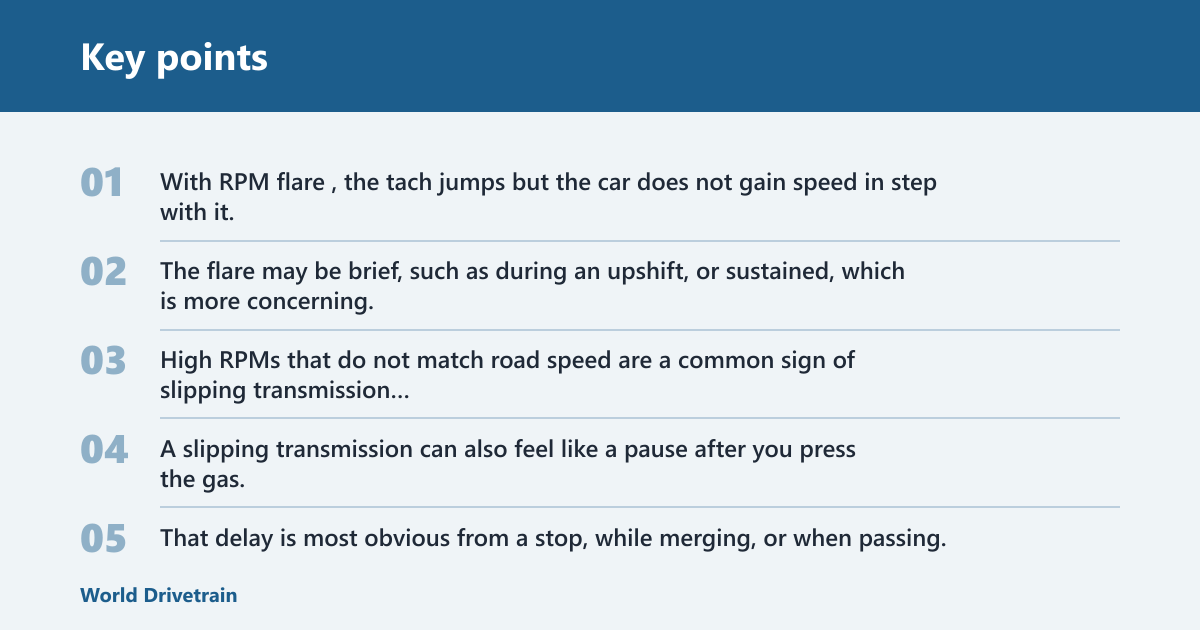
With RPM flare, the tach jumps but the car does not gain speed in step with it. The flare may be brief, such as during an upshift, or sustained, which is more concerning. High RPMs that do not match road speed are a common sign of slipping transmission behavior.
Delayed acceleration feels like a pause
A slipping transmission can also feel like a pause after you press the gas. That delay is most obvious from a stop, while merging, or when passing. The engine responds, but the vehicle hesitates before the gear engages or the ratio changes cleanly.
Shudder and jerk are different from flare
Shudder feels like a vibration or oscillation, often under light throttle or during a steady shift. Jerk feels harsher, like a sudden grab or bump as the gear catches. Those sensations can overlap with torque-converter behavior, but they are not the same as a clean RPM flare.
How it changes with throttle and load
Under light throttle, slip may feel subtle: a soft rise in RPM and a lazy upshift. Under hard throttle, the problem usually becomes clearer because load increases. Uphill driving, towing, and kickdown make slip easier to notice because the transmission must hold torque instead of coasting through it.
Say your compact SUV is merging onto a freeway at 35 mph. You press the pedal, the engine jumps from 2,000 rpm to 3,200 rpm, but the speed needle barely moves for a second. That pattern points more toward slip or delayed engagement than toward normal throttle response.
📊 Bad transmission fluid may need replacement every 100,000 miles. Source: How to Fix a Slipping Transmission: Causes, Solutions, & More.
How do you tell transmission slip from other problems?
Transmission slip is best identified by the relationship between RPM, speed, and shift timing. If RPM rises without matching acceleration, the transmission is a strong suspect. If the engine shakes, the traction light flashes, or the problem follows a steady cruise instead of a gear change, another system may be involved.
Transmission slip versus engine misfire
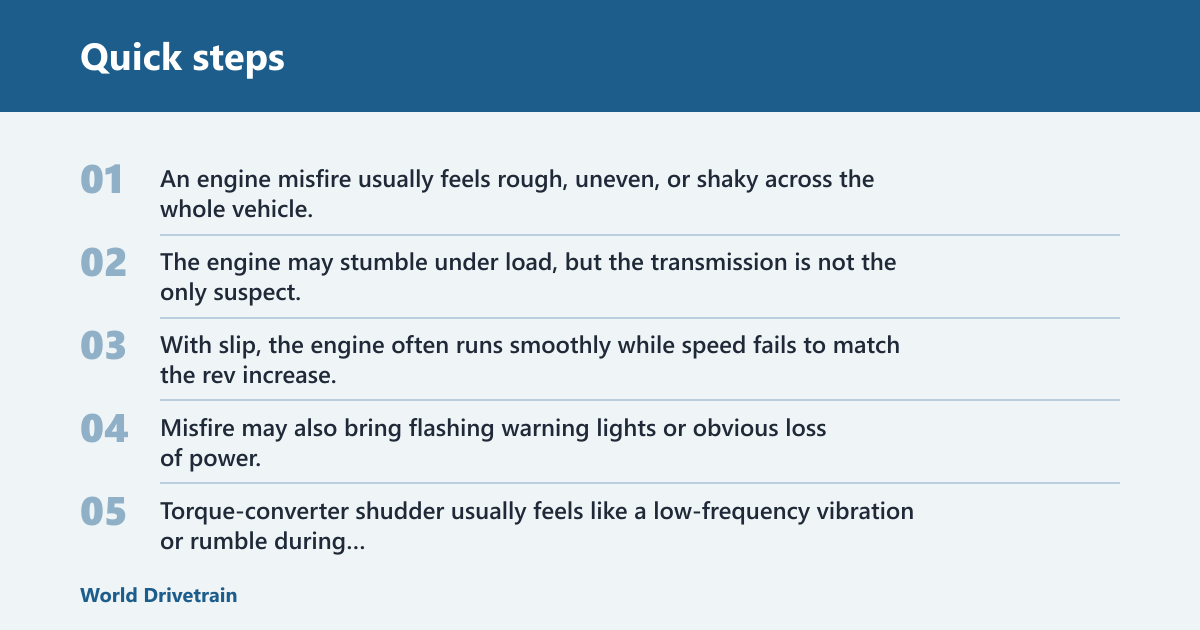
An engine misfire usually feels rough, uneven, or shaky across the whole vehicle. The engine may stumble under load, but the transmission is not the only suspect. With slip, the engine often runs smoothly while speed fails to match the rev increase. Misfire may also bring flashing warning lights or obvious loss of power.
Transmission slip versus torque converter shudder
Torque-converter shudder usually feels like a low-frequency vibration or rumble during lockup. Slip is more likely to show up during an actual gear change or takeoff, with clear RPM flare. Both can happen together, which is why a road test matters.
Transmission slip versus traction control intervention
Traction control usually reduces power when the tires start to spin. You may feel a brief throttle reduction, a flashing traction light, or a pulsing brake intervention. Slip does not usually trigger that exact pattern. If the engine cuts power and the car slows itself, traction control is more likely than a transmission fault.
Transmission slip versus normal CVT behavior
A CVT often holds RPM steady while road speed rises, which can feel strange if you expect step-by-step shifting. That is not the same as slip. On a CVT, the ratio change is intentional and usually smooth. If RPM races with little speed gain and the behavior worsens under load, that is a warning sign.
What does a car feel like when the transmission is slipping
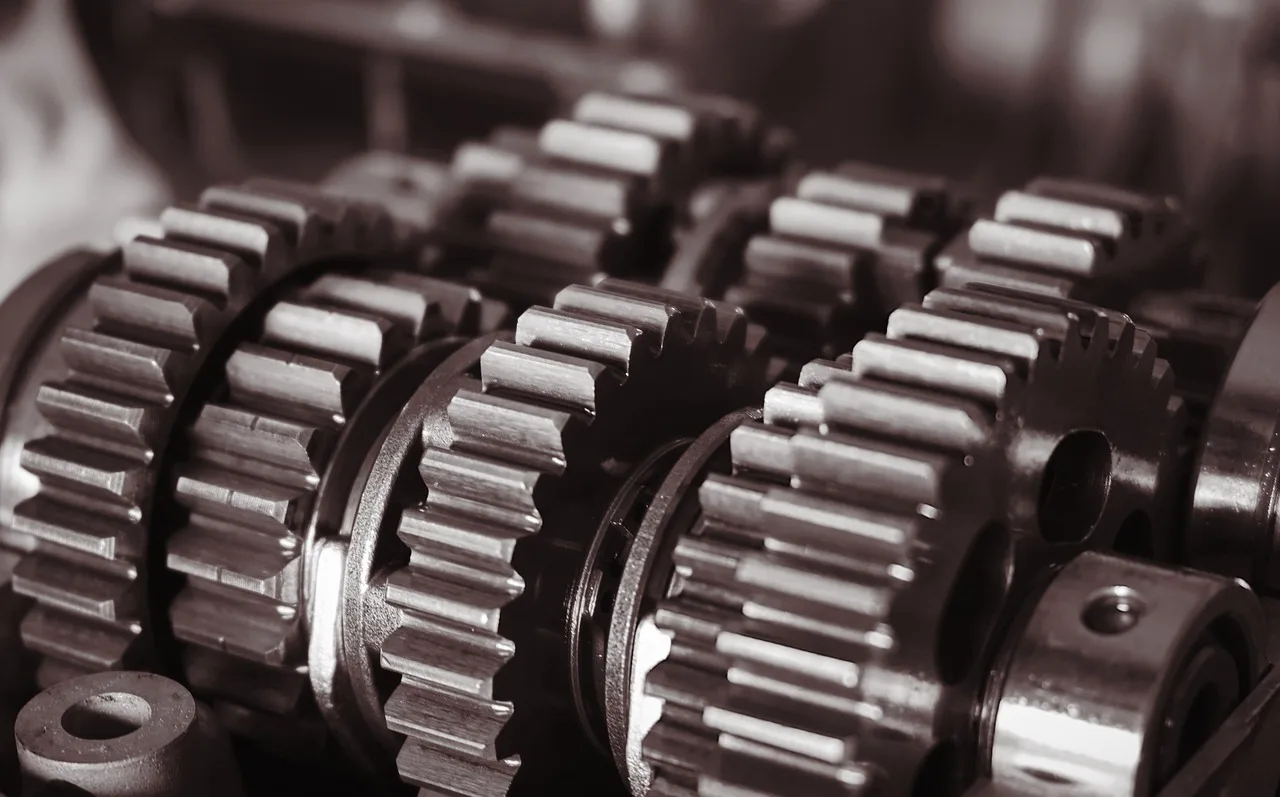
A slipping transmission can feel inconsistent, but the common pattern is a disconnect between effort and motion. You may feel a delayed launch, a flare between gears, a shudder during a shift, or a harsh late grab. Automatic transmission behavior under throttle should feel controlled; repeated lag is not normal.
Light throttle versus hard throttle
At light throttle, slip may feel like a faint hesitation or an odd pause before the next gear. At hard throttle, the problem often becomes more obvious because the transmission must hold torque under heavier load. If the symptom appears only when you ask for more power, load sensitivity is a useful clue.
Passing, merging, and kickdown
During passing or merging, the transmission may downshift or kick down to a lower gear. A healthy unit responds with a short, clean change in RPM and speed. If RPM surges but acceleration lags, or if the downshift feels delayed, the transmission may be slipping instead of shifting cleanly.
Uphill load and towing make slip easier to notice
Climbing a hill or towing a trailer raises the load on clutch packs, bands, and hydraulic controls. That is why slip often shows up first on inclines. Worn transmission bands or internal clutch packs can hold under easy driving and then fail when torque demand rises.
How do i know if my transmission is slipping
You can narrow slip by matching three things: when it happens, what RPM does, and whether speed follows. If the symptom repeats during takeoff, upshifts, kickdown, or uphill acceleration, and the engine revs without a matching increase in road speed, transmission slip moves up the list.
Use this symptom-matching table to narrow the cause
| What the driver feels | When it happens | What RPM does | Whether speed lags | How urgent it is |
|---|---|---|---|---|
| Brief flare, then normal shift | During an upshift or kickdown | Jumps quickly, then settles | Maybe slightly, for a moment | Book inspection soon if it repeats |
| Delayed takeoff from a stop | First gear engagement | Rises before the car moves cleanly | Yes, especially at low speed | Prompt diagnosis recommended |
| Shudder or vibration | Light throttle or steady cruise | May stay nearly steady | Not always | Check soon; could be torque converter or transmission fluid |
| Harsh jerk into gear | Shift timing changes or delayed engagement | May spike, then drop hard | Sometimes | Inspect soon; internal wear or hydraulic fault possible |
| Engine revs climb, vehicle barely gains speed | Hard acceleration or uphill load | Rises 300–1,000 or more without matching speed | Yes, clearly | High urgency; limit driving and diagnose promptly |
What is not transmission slip
Normal downshifting can raise RPM without damage if speed also increases and the shift finishes quickly. A CVT can hold revs steady by design. Traction control can cut power and flash a warning light. Engine misfire usually feels rough, not like a smooth but ineffective rev rise. Those differences matter.
Why does it feel like my transmission is slipping
The feeling usually comes from a loss of hydraulic pressure, friction material wear, or fluid that can no longer transfer heat and pressure properly. Low transmission fluid is a likely cause. Burnt, dark, or contaminated fluid can also make clutch packs and bands apply poorly under load.
Transmission fluid level and condition matter
Transmission fluid should be checked against the warm hash mark on the dipstick, and it should meet the cold hash mark when topped off. Good transmission fluid should be dark or bright red. Fluid that is deep brown or black is a replacement signal. A burnt smell is another warning clue.
Internal wear can create load-sensitive slip
Worn clutch packs and transmission bands can hold on easy throttle and slip when torque demand rises. That is why the symptom often worsens during passing, hill climbs, or towing. Hydraulic or valve body problems can produce similar behavior if pressure does not build or route correctly.
Why fluid problems can mimic mechanical failure
Bad transmission fluid may need replacement every 100,000 miles. Low fluid can reduce hydraulic pressure and cause delayed acceleration, flare, or harsh engagement. Foaming, if present, can also disturb pressure control. Fluid condition is not the whole diagnosis, but it is an important clue.
Picture a midsize sedan that feels fine around town, then starts to flare on every uphill merge. The pattern suggests a load-sensitive fault, not random hesitation. If the fluid is dark brown or black and smells burnt, the warning becomes harder to ignore.
How urgent is it if the slip happens again
If the symptom repeats, treat it as something to diagnose promptly rather than a nuisance. A one-time odd shift can happen. Repeated flare, delay, or shudder means the problem is likely active. Continued driving can overheat fluid, damage friction material, and widen the repair.
When to stop heavy driving
Stop towing, hard acceleration, and long uphill pulls if the transmission starts slipping under load. Those conditions increase heat and stress. If the vehicle can still move but the flare gets worse with throttle, keep trips short until it is checked.
When to book a diagnostic visit soon
Book a diagnostic visit soon if you notice repeated RPM flare, delayed acceleration, or a shudder that appears during the same shift every time. A slipping transmission can cause delayed acceleration when pressing the gas, and the problem may worsen before any warning light appears.
Signs that point to a more serious failure
High RPM without matching speed, burnt fluid, harsh engagement, or symptoms that spread across multiple gears are serious clues. If the transmission starts slipping in several driving conditions, internal clutch pack or band wear becomes more likely, and further driving can increase damage.
What a mechanic will check first
A mechanic usually starts with a road test, then checks fluid condition, looks for stored codes, and reviews transmission data if available. That first pass helps separate shift timing issues from engine faults or converter problems. Internal repairs are rarely simple, so the diagnosis should be precise before parts are replaced.
Road test and shift behavior
The road test shows when the symptom occurs: takeoff, upshift, passing, or uphill load. The technician looks for flare, delayed engagement, shudder, and any harsh or late shift. That timing often points toward a specific clutch circuit, pressure issue, or converter-related concern.
Fluid inspection
Fluid level, color, and smell are checked first because they can explain a lot. Low fluid, dark brown or black fluid, or a burnt odor supports a transmission fault. A proper level check against the dipstick hashes helps avoid guessing.
Scan for codes and transmission data
Stored codes can point to solenoids, pressure control, speed sensors, or gear-ratio errors. Live data can show whether the commanded gear matches the actual behavior. That matters because slip is not always visible from the driver’s seat alone.
Why internal repairs are rarely simple
Internal transmission faults often involve worn friction elements, valve body issues, or hydraulic control problems that require disassembly. That is why a slipping transmission is usually not a basic DIY repair. Checking fluid and getting a proper diagnosis is the safer path.
Frequently asked questions
what does transmission slipping feel like when accelerating
It usually feels like the engine revs climb faster than the car speeds up. You may notice a flare during a shift, a delay after pressing the gas, or a soft, incomplete gear change. The key sign is mismatch between RPM and road speed.
does a slipping transmission feel like delayed acceleration
Yes. Delayed acceleration is one of the most common signs of a slipping transmission. The car may pause after takeoff, lag during merging, or hesitate before a gear engages. If the delay repeats and RPM rises first, the transmission deserves attention.
can transmission slipping feel like engine revs but little speed
Yes. That is one of the clearest slip patterns. The engine can rev higher without a normal increase in vehicle speed, especially during hard acceleration or uphill load. If the pattern repeats in the same gear change, it is a strong clue.
is transmission slipping a shudder or a flare
It can be either, but they are not identical. A flare is a rise in RPM without a matching speed increase. A shudder is a vibration or rumble, often during light throttle or lockup. Some failing transmissions show both, depending on load and gear.
when accelerating, how do i tell transmission slip from engine misfire
Transmission slip usually feels smooth but ineffective: RPM rises, speed lags, and the shift feels wrong. Engine misfire usually feels rough, shaky, or uneven. If the engine stumbles and the whole car bucks, think misfire. If the engine revs cleanly but speed does not follow, think transmission.
what are the signs of transmission slipping
The main signs are high RPMs, delayed acceleration, flare during shifts, shudder under load, and harsh or late engagement. Low or bad transmission fluid is a common cause, and a burnt smell or dark brown fluid adds weight to the diagnosis. Repeated symptoms need inspection.