Why does the transmission make noise when starting?
A startup noise is often not the transmission if it fades within about 2 seconds and changes with belt load or steering input; true transmission noise may be more likely to follow gear engagement or low fluid pressure. Mixing those up leads you to replace the wrong parts and miss a fluid leak or bearing failure. This guide shows you how to pinpoint the source in under two minutes using sound location, timing, and fluid clues.
Why does the transmission make noise when starting the car?
A true transmission startup noise is more likely a whine, whirr, or light grind that comes from the bellhousing or underbody area, especially if it appears right after cranking or during the first seconds after start. Cold startup matters because fluid thickens when cold, and metal parts have not yet reached operating temperature.
What a true transmission startup noise sounds like
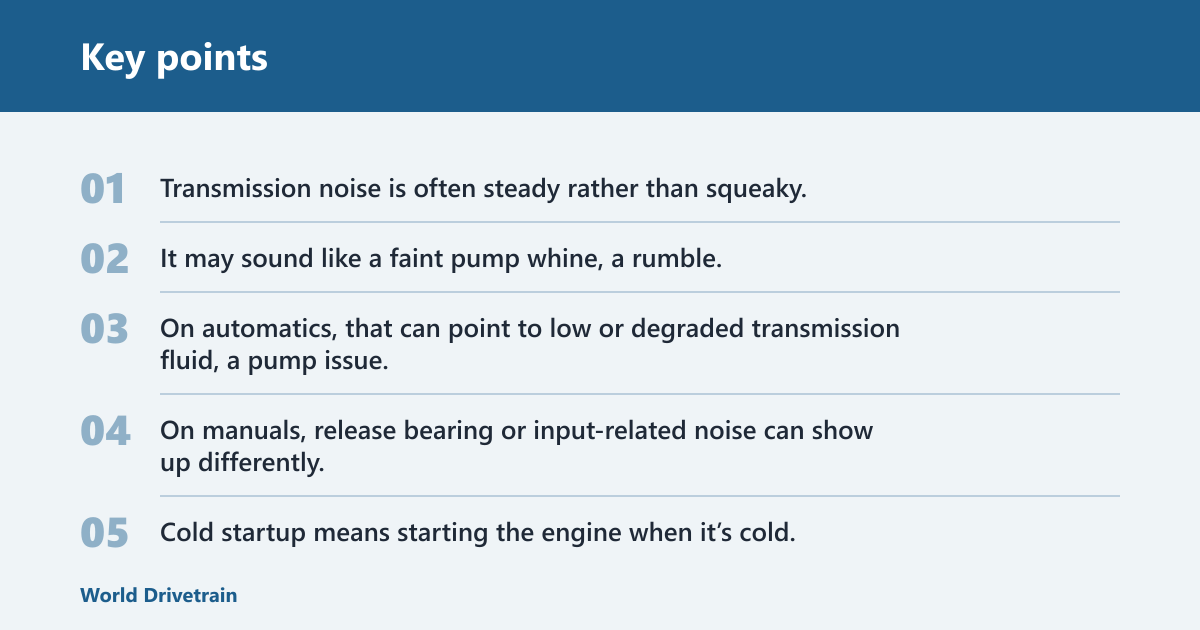
Transmission noise is often steady rather than squeaky. It may sound like a faint pump whine, a rumble, or a mechanical whirr that changes with gear selection. On automatics, that can point to low or degraded transmission fluid, a pump issue, or internal wear. On manuals, release bearing or input-related noise can show up differently.
Why a cold start changes what you hear
Cold startup means starting the engine when it’s cold, usually after the car has been sitting overnight. Cold starts can make engine noise louder because metal components haven’t warmed up. Thick fluid, contracted parts, and stiffer belts can all make a startup noise more obvious than it is later in the drive.
That is why a whine heard only on the first crank can come from the accessory drive instead of the transmission. The same sound can disappear after a minute, which is a clue that temperature is part of the symptom.
Is the noise really from the transmission?
Location, timing, and behavior separate most transmission noises from accessory-drive noise. If the sound comes from the front engine bay, changes with steering, or fades as belt load settles, start with belts, pulleys, alternator, power steering, or water pump. If it comes from under the car and tracks gear changes, the transmission moves up the list.
Location check: under the car or from the front accessory drive
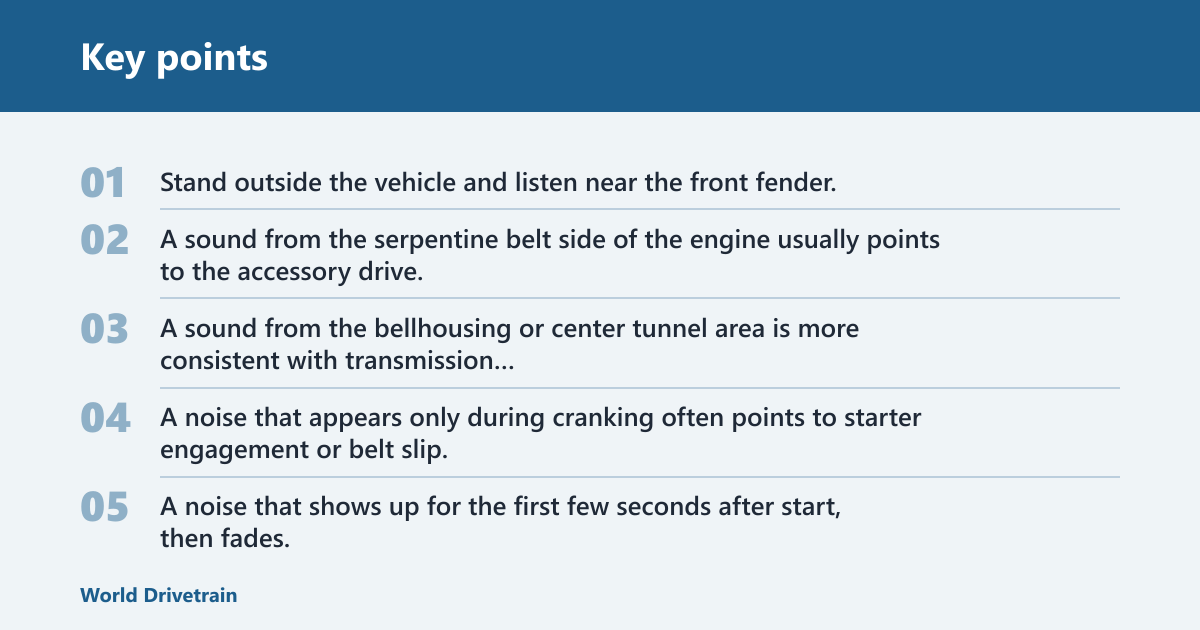
Stand outside the vehicle and listen near the front fender, then near the center of the car. A sound from the serpentine belt side of the engine usually points to the accessory drive. A sound from the bellhousing or center tunnel area is more consistent with transmission or drivetrain noise.
Timing check: only at crank, first idle, or all the time
A noise that appears only during cranking often points to starter engagement or belt slip. A noise that shows up for the first few seconds after start, then fades, often points to a belt, tensioner, pulley bearing, or power steering pump. A noise that continues at idle or grows with road speed needs a broader drivetrain check.
Behavior check: steering input, shifting, or engine speed changes
If the sound gets louder when you turn the wheel, the power steering pump or another belt-driven component may be more likely. If it changes when you shift from Park to Drive or Reverse, the transmission deserves attention. If it rises and falls with engine speed, an alternator, pulley bearing, or belt issue is more likely.
Say your compact sedan makes a high-pitched whine for 3 seconds on a cold morning, then goes quiet. If the tone gets louder when the steering wheel is turned at idle, that points away from the transmission and toward the belt-driven power steering system.
Common startup noises that are not transmission problems
Many startup noises come from belt-driven accessories, not the transmission. The most common parts to check are the serpentine belt, belt tensioner, pulley bearings, alternator, power steering pump, and water pump. These parts all spin early in the engine cycle, so they can sound loud right after a cold start.
Serpentine belt and belt tensioner noise
Loose belts can cause a whining sound at startup. Drive belts power accessories such as the alternator and power steering pump, and cold weather can worsen belt looseness or wear. A worn belt tensioner can also let the belt slip briefly, which often sounds like a squeal or whine for a second or two.
Alternator bearing whine
Alternators can create a high-pitched whining sound, and startup load can reveal bearing issues. Because the alternator is belt-driven on many vehicles, its noise can be mistaken for transmission noise when the engine is cold and idle speed is still settling. Belt inspection matters here too.
Power steering pump whine on cold start
Power steering pumps can produce a loud whining sound, and thicker fluid in cold conditions can make noises worse. Cold fluid moves more slowly, so a pump that is already marginal may complain most on the first start of the day. Steering input is the key clue.
Water pump or pulley bearing noise
Water pump bearing failure can result in a whining noise, and worn pulley bearings can do the same. These sounds are often most noticeable cold, before the engine bay warms up. If the noise is near the front of the engine and the belt area, inspect for leaks, wobble, and rough pulley rotation.
Can low transmission fluid cause startup noise?
Yes. Low transmission fluid can cause noise, and degraded fluid can make a transmission louder when pressure is building after start. Fluid level and fluid condition are both part of the check. A transmission can also be noisy without setting a fault light, because mechanical noise does not always trigger a code. (thedrive.com)
How fluid level and fluid condition affect noise
Transmission fluid does more than lubricate. It helps create hydraulic pressure, especially in automatic transmissions and CVTs. If the level is low, the pump can cavitate or whine. If the fluid is dark, burnt, or contaminated, noise can rise during cold startup and then change as pressure stabilizes.
Cold viscosity, delayed engagement, and pump noise
Cold fluid is thicker, so a worn pump, filter restriction, or low level can show up first on a cold start. If the car hesitates before moving into gear, that is a stronger transmission clue than a brief under-hood whine. A startup noise plus delayed engagement deserves prompt inspection.
What fluid clues matter most during a quick check
- Check whether the noise changes after the engine warms for a few minutes.
- Look for dark, burnt-smelling, or foamy transmission fluid.
- Note any wet spots under the center of the vehicle or around transmission lines.
- Watch for delayed engagement, slipping, or harsh shifts after start.
A common first-timer mistake is assuming any cold whine means the transmission is failing. In reality, a loose belt or weak tensioner can sound similar for a few seconds, while the transmission may be fine.
Startup noise triage table
Use this table in under two minutes. Start with where the sound seems loudest, then note when it happens, then check whether steering, shifting, or fluid condition changes the symptom.
| Noise type | When it occurs | Likely source | Quick test | Urgency |
|---|---|---|---|---|
| High-pitched whine that fades quickly | Right after cranking, then gone in 1 to 2 seconds | Serpentine belt or belt tensioner | Check belt wear and watch for slip at cold start | Schedule inspection soon if repeated |
| Whine that changes with steering | Cold start or idle | Power steering pump | Turn wheel slightly at idle and listen for change | Schedule inspection soon |
| High-pitched whine that rises with engine speed | At start and during idle | Alternator or pulley bearing | Listen near accessory drive with hood open | Inspect soon; sooner if louder |
| Whine with coolant smell or belt-area wobble | At startup or warmup | Water pump bearing | Look for leaks or pulley play | Do not ignore |
| Whine from underbody with delayed engagement | After start, before moving | Transmission fluid low or degraded | Check fluid level and condition if your vehicle allows it | Stop driving if engagement is delayed or slipping |
| Whirr or rumble that changes with shifting | Shift into Drive or Reverse | Transmission or drivetrain | Note whether the sound changes with gear selection | Inspect soon; stop if harsh or worsening |
When should you stop driving and get it checked?
Stop driving now if the startup noise is paired with delayed engagement, slipping, harsh shifting, a burning smell, fluid leaks, or a loud mechanical grind. If the noise is brief, stable, and clearly tied to belts or steering, you can usually schedule inspection soon rather than treating it as an emergency.
Warning signs that point to immediate inspection
Immediate inspection is the right move when the noise gets louder quickly, the car hesitates before moving, or the transmission feels like it is slipping. A loud whine from under the car that changes with gear choice is more concerning than a short belt squeal from the front accessory drive.
Signs that call for a soon inspection rather than a roadside stop
A brief startup whine that disappears after a few seconds, with no drivability change, is usually less urgent. Still, a belt, tensioner, alternator, or pump noise should be checked before it becomes a breakdown. Small noises often get louder as wear progresses.
How transmission behavior changes the urgency
If the noise is only a noise, the fix may be straightforward. If the noise comes with delayed reverse engagement, slipping on acceleration, or a shudder when pulling away, the transmission is sending a stronger warning. That is especially true after a cold start, when pressure and fluid flow are most stressed.
What to check on your vehicle type
Different drivetrains give different clues. Automatic transmissions often show fluid-pressure symptoms first. Manuals may reveal clutch or input-related noise. CVTs and AWD systems can make startup diagnosis trickier because belt, pulley, and driveline sounds overlap more easily than many owners expect.
Automatic transmission clues
On an automatic, listen for noise that appears as soon as the engine starts and again when shifting into gear. Low transmission fluid, degraded fluid, or a pump issue can create noise without a check engine light. A startup whine that changes with engagement deserves attention.
Manual transmission clues
Manual transmissions are less likely to sound noisy just from engine start, so a startup whine often points elsewhere. If the sound changes when the clutch pedal is pressed or released, the clutch release bearing, input bearing, or related hardware may be involved rather than the transmission fluid.
CVT and AWD notes
CVTs can be sensitive to fluid condition and level, so a cold startup whine should not be brushed off. AWD systems add more rotating parts and can spread noise through the chassis, which makes location checks more important. A sound from the rear or center tunnel may still need driveline inspection.
Frequently asked questions
why does my car make a noise when i start it
Most startup noises come from belt-driven accessories, not the transmission. A brief whine, squeal, or whirr that fades fast often points to a serpentine belt, tensioner, alternator, power steering pump, or water pump. If the noise stays under the car or changes with shifting, the transmission moves higher on the list.
when starting my car it makes a noise
Focus on when the noise appears and where it seems loudest. A sound that happens only for a second or two after cold start usually points to accessory drive parts. A sound that continues at idle, changes with steering, or changes with gear selection needs a closer look at the matching system.
why is my transmission making noise
Transmission noise can come from low or degraded fluid, pump wear, internal bearing wear, or delayed pressure buildup after start. If the sound changes when you shift into Drive or Reverse, or if the car hesitates before moving, the transmission deserves prompt inspection rather than guesswork.
what does a transmission sound like
A transmission often sounds like a steady whine, whirr, rumble, or light growl rather than a sharp belt squeal. The sound may come from the center or underbody area and may change with gear engagement. If the noise rises with engine speed only, accessory-drive parts are still in play.
can low transmission fluid cause noise?
Yes. Low transmission fluid can cause pump noise, delayed engagement, and a whining sound that is more noticeable at cold startup. Fluid condition matters too; dark, burnt, or foamy fluid can point to a problem even if the car still drives. A transmission can be noisy without a check engine light.
is a startup whining noise more likely belts or transmission?
In many cases, belts or pulleys are more likely than the transmission, especially if the noise fades within 2 seconds or changes with steering input. A transmission becomes more likely when the sound comes from under the car, tracks gear changes, or comes with delayed engagement or slipping.