Why Does My Transmission Make Noise at Idle?
A transmission that makes noise at idle usually points to fluid, pump, converter, mount, or gear-load trouble. If the sound stays about the same in Park, Neutral, Drive, and Reverse, the transmission is less likely to be the source. Chasing the wrong part can waste money on a rebuild when the real fault is an exhaust rattle, engine accessory, or mount. This guide covers the fastest checks, the sound clues, and the gear-state tests that separate harmless idle noise from a transmission fault.
Why does my transmission make noise at idle?
What idle noise points to transmission parts
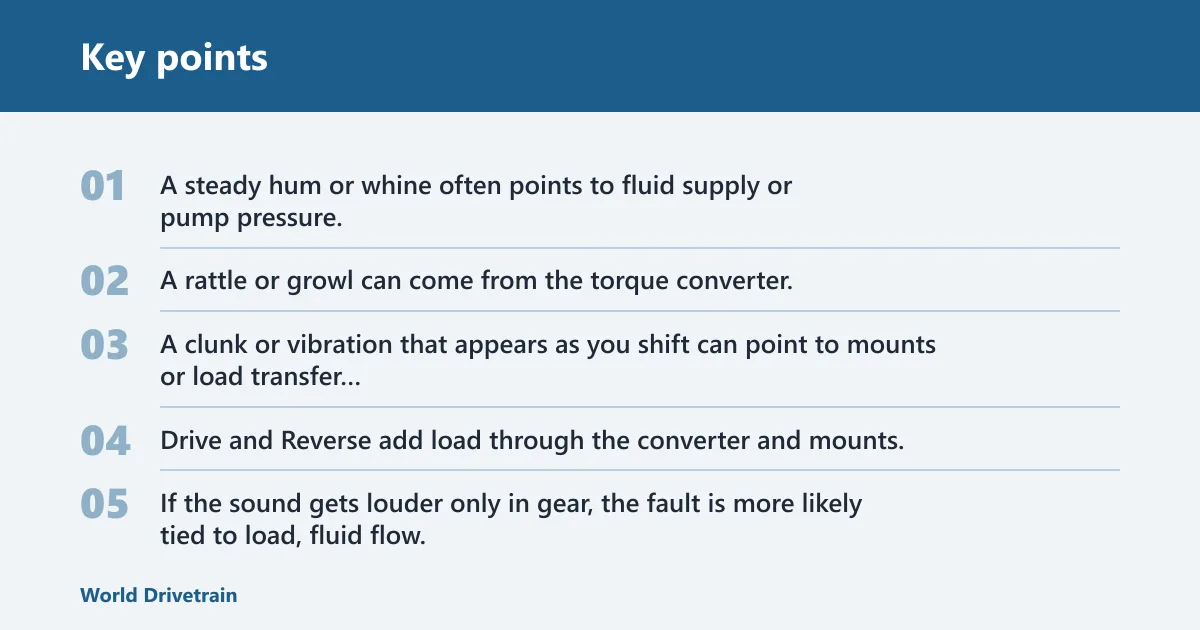
Start with the sound type. A steady hum or whine often points to fluid supply or pump pressure. A rattle or growl can come from the torque converter, loose parts in the bellhousing area, or internal wear. A clunk or vibration that appears as you shift can point to mounts or load transfer rather than gear damage.
Why gear position changes the diagnosis
Park and Neutral reduce drivetrain load. Drive and Reverse add load through the converter and mounts. If the sound gets louder only in gear, the fault is more likely tied to load, fluid flow, converter behavior, or a mount that moves under torque. If nothing changes with gear selection, the engine, exhaust, or accessory drive moves higher on the list.
When the noise is more likely engine-related
Idle noise can come from belts, pulleys, exhaust shields, engine knock, or a rough accessory bearing, then get blamed on the transmission. Raise or lower engine speed slightly in Park. If the sound follows engine rpm closely and does not respond much to shifting between Park, Neutral, Drive, and Reverse, start away from the transmission.
Transmission noise matrix
| Noise type | When it happens | Likely source | First check | Urgency level |
|---|---|---|---|---|
| Whine | Cold idle, louder in Drive or Reverse | Pump, low fluid, pressure loss | Check level and condition with the correct spec fluid | Soon |
| Hum | Hot idle, changes with gear engagement | Pump, torque converter, aerated fluid | Look for foamy or dark burnt fluid | Soon |
| Rattle | Park or Neutral, then changes in gear | Torque converter, loose shield, internal wear | Inspect converter area and nearby shields | Soon |
| Ticking | Cold idle, may stay in Neutral | Engine accessory, exhaust leak, not always transmission | Compare sound near belts and exhaust | Monitor |
| Clunk | Shift into Drive or Reverse | Mount, driveline lash, engagement shock | Inspect transmission mounts for cracks or collapse | Soon |
| Growl | Hot idle, worse in gear | Internal wear, pump, converter | Check fluid and scan for transmission codes | Stop driving soon |
| No check engine light | Any idle state with a new noise | Stored transmission codes may still be present | Use an OBD-II scan tool anyway | Soon |
| Fluid level normal | Noise remains after a proper level check | Converter, pump, mount, accessory, exhaust | Move to gear-state and engine-speed tests | Soon |
Is low fluid the first thing to check?
Yes. Start with fluid level and condition first, because automatic transmissions generally depend on fluid for circulation, pressure, cooling, and internal control. Low fluid can sometimes cause whine, hum, delayed engagement, and noise when idling hot. If the level is correct, keep going; a full pan does not rule out pump, converter, mount, or control problems.
How to check level the right way
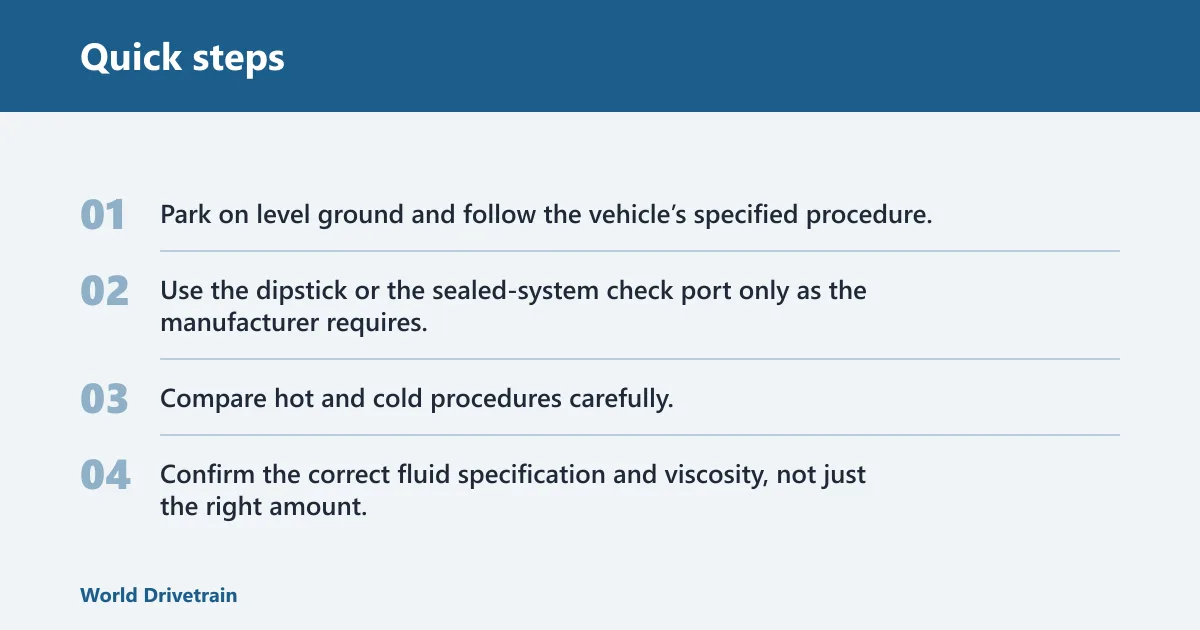
- Park on level ground and follow the vehicle’s specified procedure.
- Use the dipstick or the sealed-system check port only as the manufacturer requires.
- Compare hot and cold procedures carefully; some checks require the fluid to be at operating temperature.
- Confirm the correct fluid specification and viscosity, not just the right amount.
What burnt, dark, or foamy fluid suggests
Burnt fluid points to heat and wear. Dark fluid can mean the fluid has aged beyond service limits or has overheated. Foamy fluid warns of aeration, overfill, or a suction-side problem. Aerated fluid can make a pump noisy and reduce pressure, especially at idle and when the fluid is hot.
When the fluid is full but the noise stays
Do not stop at the dipstick or fill plug. If fluid level and specification are correct, separate load-related noise from engine noise next. Shift between Park, Neutral, Drive, and Reverse, then note whether the sound changes with engine rpm or with the added load of gear engagement.
Say your sedan is quiet in Park, but a soft whine starts in Drive at a warm idle and gets sharper after 15 minutes of traffic. If the fluid is full and still bright red, the next checks are pump pressure, converter behavior, and mounts, not a refill.
What does a bad transmission sound like?
A bad automatic transmission does not have one fixed sound. The common patterns are whine, hum, rattle, growl, and clunk, and the key clue is how each sound changes with gear selection and temperature. A true transmission fault often changes when fluid warms up, when Drive is selected, or when reverse load is applied.
Whine and hum from the pump or pressure loss
A pump-related whine is often most noticeable at idle because pump speed is tied to engine speed. If the sound gets worse when the fluid is hot, that can point to pressure loss, wear, or fluid that is thin, low, or aerated. A steady hum can sound mild at first and still matter.
Rattle or growl from the converter or internal wear
A torque converter can make an idle-related rattle or growl, and the noise may change when the selector moves into gear. That matters because converter noise follows a different path from gear mesh noise. Internal wear can also produce a rougher growl, especially when hot or when the transmission is loaded in Drive or Reverse.
Clunk or vibration from mounts and load changes
Worn transmission mounts can send vibration into the body and make a healthy transmission sound damaged. Cracks, collapse, or loose fasteners can let the unit move more than it should. A clunk during engagement is often a mount or driveline lash clue, not proof of broken gears.
Could the torque converter or pump be the cause?
Yes. The torque converter and transmission pump are two of the most important idle-noise suspects because both respond to fluid flow and load changes. A converter can rattle or hum when the transmission is put in gear, while a weak pump can whine at idle and get worse as fluid temperature rises.
Why converter noise can change in gear
In Park or Neutral, the converter still turns with engine speed, but the load path is different than in Drive or Reverse. If the noise changes sharply when you select gear, the converter deserves attention. That change is one of the best clues for separating converter noise from a fixed engine or exhaust sound.
How pump noise often tracks with temperature
Cold fluid is thicker and can hide some faults. As the transmission warms, fluid thins, internal leakage can increase, and a worn pump may become louder. That is why a noise that appears only after a long idle or after a freeway exit can be more concerning than a brief cold-start hum.
What makes these faults different from gear noise
Gear noise usually changes with vehicle movement and road speed, not just with idle and gear selection. If the vehicle is stationary and the sound changes when you move between Park, Neutral, Drive, and Reverse, the pump, converter, fluid, or mounts move higher on the list than the gears themselves.
Could mounts or another part be fooling you?
Yes. Transmission mounts, exhaust shields, belts, pulleys, and even a slight engine knock can mimic a transmission fault at idle. Rule out vibration sources before you call an internal failure. A sound that seems to come from the transmission case can travel from a nearby part.
How worn mounts transmit vibration at idle
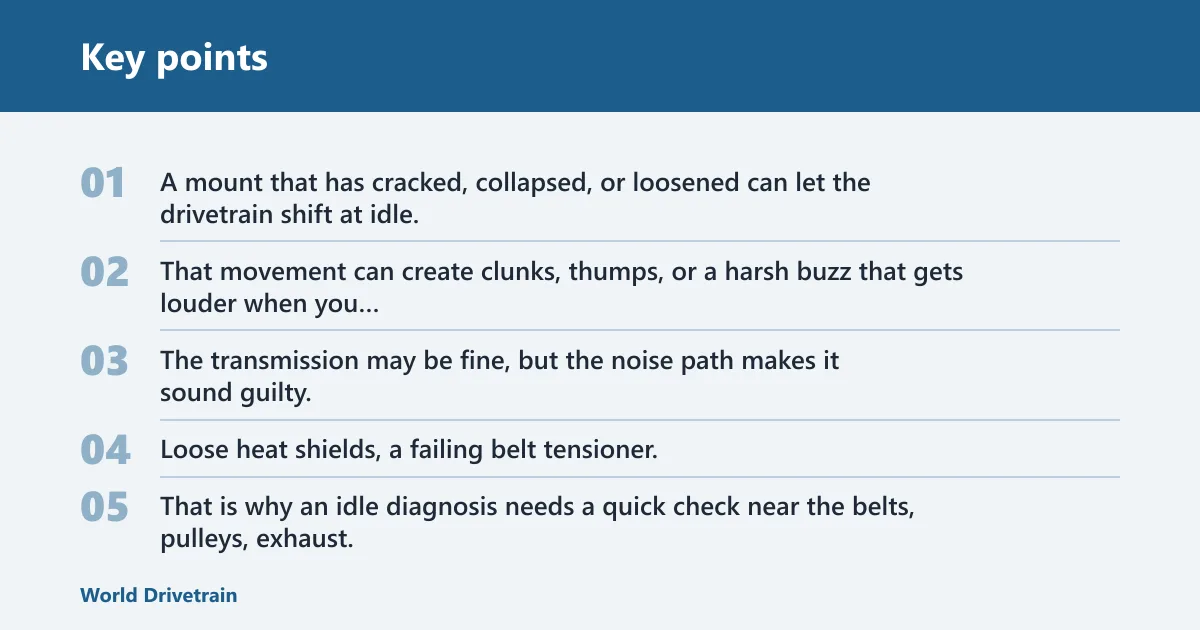
A mount that has cracked, collapsed, or loosened can let the drivetrain shift at idle. That movement can create clunks, thumps, or a harsh buzz that gets louder when you select Drive or Reverse. The transmission may be fine, but the noise path makes it sound guilty.
Why exhaust shields and accessories can mimic transmission noise
Loose heat shields, a failing belt tensioner, or a pulley bearing can rattle or whine at the same engine speed where a transmission pump also makes noise. That is why an idle diagnosis needs a quick check near the belts, pulleys, exhaust, and bellhousing area before any assumption about internal damage.
How engine rpm changes can separate the source
Raise engine speed slightly in Park. If the noise rises and falls with rpm alone, think engine or accessory first. If the sound changes more with gear selection than with small rpm changes, the problem is more likely in the transmission, converter, mount, or the fluid supply path.
Suppose a crossover makes a light ticking only in Park at a warm idle, then the sound fades when the engine is held at 1,200 rpm. If the tick never changes in Drive, that points away from the transmission and toward an accessory, shield, or engine-side source.
When should you stop driving?
Stop driving if the transmission slips, delays engagement, grinds, or suddenly gets louder in gear, especially as the fluid warms up. Those signs suggest a pressure or internal wear problem that can worsen quickly. If the vehicle still moves but the noise is growing, get it diagnosed soon rather than waiting for a breakdown.
Slip, delayed engagement, or grinding
Slip means engine speed rises without a matching response from the vehicle. Delayed engagement means a long pause after selecting Drive or Reverse. Grinding is never a healthy idle sound. Any of those with a transmission noise call for immediate inspection.
When an OBD-II scan should happen next
An OBD-II scan tool helps even when there is no check engine light. Transmission-related codes may be stored without a warning lamp, and some vehicles need a transmission-capable scanner to read them fully. A code check is a fast next step once fluid is verified and the noise still changes with gear load.
Frequently asked questions
Why is my transmission making noise at idle?
Idle noise often points to fluid, pump, converter, mount, or load-related behavior. The key test is whether the sound changes in Park, Neutral, Drive, and Reverse. If it does not change much with gear selection, the source may be engine, exhaust, or an accessory instead of the transmission.
Why is my transmission making a humming noise?
A humming transmission at idle often points to pump pressure, low or aerated fluid, or a torque converter issue. If the hum gets louder when the fluid is hot or when you select Drive, that matters. A scan for transmission codes and a proper fluid check should come next.
Why is my transmission noisy in park but quiet in gear?
That pattern often points away from a hard internal failure and toward resonance, mounts, exhaust contact, or an engine-side noise that happens to be heard best in Park. A true transmission fault more often gets worse in gear, not quieter. Compare engine rpm and gear changes carefully.
Can low transmission fluid cause noise?
Yes. Low fluid can cause whine, hum, delayed engagement, and hot-idle noise because the pump may draw air or lose pressure. Low fluid also makes the transmission more sensitive to temperature. Check the correct level procedure first, then inspect fluid condition and specification if the noise continues.
Does a bad transmission make noise?
It can, but noise alone is not enough to prove it is bad. A failing transmission may whine, growl, rattle, or clunk, usually with changes in gear, temperature, or load. Mounts, converter problems, and even engine accessories can produce similar sounds at idle.