How to Fix Grinding Gears in a Manual Transmission
Begin with the low-cost checks: verify clutch free play, fluid level, and linkage adjustment, then road-test by gear. If grinding appears only in one gear or during one shift, that gear’s synchronizer is a likely suspect. Ignoring it can turn a minor adjustment into missed shifts, hard parts wear, or a complete transmission teardown. This guide gives you a fault-isolation sequence that separates clutch, linkage, fluid, and synchronizer problems by symptom and driving condition.
What grinding gears means
Grinding usually means the input shaft, gearset, and synchronizers are not matching speed cleanly during engagement. The noise often comes from teeth or blocking rings fighting each other as the shifter moves. Pause, return the shifter to neutral, and recheck clutch release before trying again. Forcing it can chip synchro teeth, round dog teeth, or turn a small adjustment problem into internal damage.
Reverse deserves special attention. Many manuals do not synchronize reverse, so a brief grind can happen if the vehicle is still rolling or the clutch is dragging. First gear can also feel worse when cold, because thicker gear oil and tight clearances slow the parts’ movement until warm.
What you’ll need
- Owner’s manual for the correct transmission fluid specification
- Jack and stands, if the linkage or leaks need a closer look
- Flashlight
- Clean rag or paper towels
- Gloves
- Drain pan, if you need to inspect fluid condition
- Basic hand tools for linkage, cable, or underhood checks
- Scan tool only if the vehicle uses clutch or gear-position sensors
How to tell what is grinding
A gear-specific pattern tells you where to start. Grinding in one forward gear points more toward that gear’s synchronizer or the linkage that selects it. Reverse grinding points first to clutch drag or the lack of a reverse synchronizer. Grinding only when cold points toward oil viscosity or a marginal clutch release, while grinding after a clutch job usually means the release system still is not fully separating the clutch.
-
Test reverse first. Stop fully, hold the clutch pedal down, then select reverse. If it grinds only while the car is still creeping or the pedal feels high and vague, suspect clutch drag before opening the transmission.
-
Compare one gear to the others. Test 2nd, 3rd, and 4th on light throttle. Grinding in one gear only, such as 4th, is commonly a synchronizer pattern. Grinding in several gears points more toward clutch release, fluid, or linkage.
-
Check cold versus warm. Try the same shift after an overnight sit, then again after a 10- to 15-minute drive. If the problem fades as the gearbox warms, oil viscosity or cold clearances move up the list. If it stays the same, look harder at clutch drag or wear.
-
Note recent repairs. If grinding began after a clutch replacement, put the clutch hydraulics, cable setting, and pedal free play near the top of the list. A new clutch can still drag if the release point is wrong or air remains in the system.
Clutch drag checks
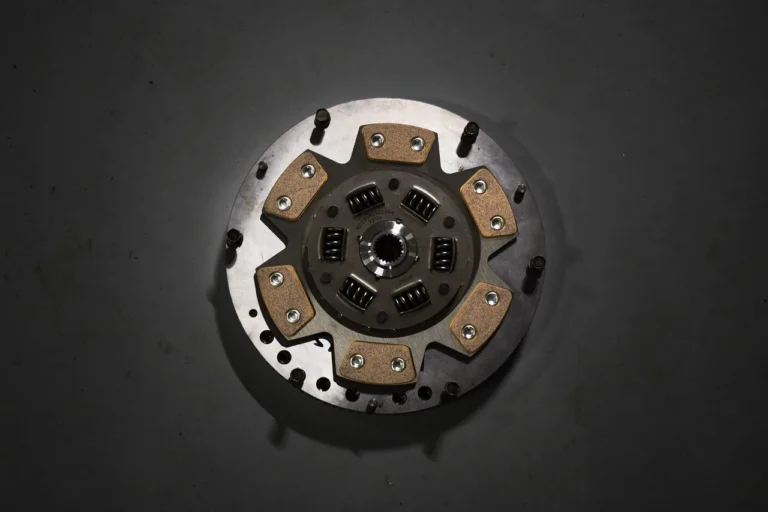
Clutch drag means the clutch disc is not fully releasing from the flywheel, so the input shaft keeps spinning when it should slow down. That creates grind at every gear, often reverse first. Check pedal free play, cable adjustment where used, and hydraulic release parts before assuming the gearbox is worn out.
Pedal free play and cable adjustment
-
Measure pedal free play. Use the owner’s manual specification, then compare it with the pedal’s first movement before resistance builds. Too much free play can keep the clutch from fully releasing; too little can hold the release bearing against the pressure plate.
-
Adjust the cable or pedal. If the vehicle uses a cable clutch, set it at the adjuster to the factory specification in the owner’s manual > clutch adjustment section. Recheck reverse and first gear after each change.
Say your car grinds only into reverse with the engine running, but slips into reverse quietly after you shut the engine off. That pattern points away from synchronizers and toward clutch drag or an out-of-adjustment release system.
Hydraulic master, slave, and air in the system
-
Inspect the hydraulic level. Check the clutch master reservoir and look for leaks at the master cylinder, slave cylinder, and line fittings. Low fluid or wet seals mean the system may not be moving the release fork far enough.
-
Bleed the system fully. Follow the vehicle’s bleed sequence in the service manual or owner’s manual. Air in hydraulics can shorten release travel, and a weak pedal after bleeding points to a failing master or slave cylinder.
Manual transmission fluid checks
Fluid problems can make shifts balky, especially when cold. Low level, the wrong viscosity, or a fluid that does not match the OEM-approved specification can all slow synchronizer action.
Level and leaks
-
Check the fill level. Park on level ground, remove the fill plug only if the vehicle calls for that procedure, and confirm the fluid reaches the bottom of the fill hole. Top up only with the specified fluid, then recheck for leaks.
A common first-timer mistake is topping off with the wrong gear oil because the bottle fits the opening. Use the OEM-approved specification listed for the transmission, not a generic “manual transmission fluid” label.
Wrong viscosity or non-approved fluid
-
Match the fluid spec. Compare the bottle to the transmission spec in the owner’s manual. If the fluid is too thick, cold shifts can feel stiff; if it is the wrong friction package, synchros may not slow gears cleanly.
Metal debris or contamination
-
Inspect the drained oil. Catch a sample in a clean pan and look for glitter, flakes, or a burnt smell. Fine gray paste on the drain plug can be normal wear, but chips or heavy debris point to internal damage that needs diagnosis.
Grinding diagnosis matrix
This table maps symptom pattern to the most likely cause, a quick test, and the next move. Use it after the cheap checks, not before them.
| Likely cause | Grinding in one gear only | Reverse only | All forward gears | Only cold | Only under acceleration | Engine off but not running | After clutch replacement |
|---|---|---|---|---|---|---|---|
| Clutch drag | Less likely unless that gear is hardest to select | Very likely; test with engine off versus running | Likely if the pedal has excess free play or air in hydraulics | Possible, but cold only usually points elsewhere | Possible if release travel is short under load changes | Usually shifts cleanly engine off if clutch is dragging | Very likely; recheck cable, pedal, master, slave, and bleed |
| Shift linkage misadjustment | Likely, especially if one gate is hard to find | Possible if reverse gate is not fully reached | Possible if the lever does not center or engage fully | Usually unchanged by temperature | Can show up when load moves the drivetrain | May still feel off if the linkage is binding | Possible if the cable or shifter was set too short or too long |
| Low or wrong fluid | Possible, especially in 2nd, 3rd, or 4th | Possible if cold oil slows shaft speed change | Possible if the level is low or the fluid is contaminated | Very likely if the grind eases as the gearbox warms | Less likely than synchro wear | Usually still shifts better engine off than running | Possible if the unit was refilled with the wrong oil |
| Worn synchronizers | Very likely; often one gear such as 4th | Less likely because reverse is often unsynchronized | Unlikely unless several synchros are worn | Can feel worse cold, then improve warm | Likely on the gear that sees the most wear | May still shift better with the engine off than under power | Unlikely if the symptom started right after the repair |
| Internal damage | Possible if there is a chipped gear, bent fork, or debris | Possible if the grind is harsh and constant | Likely if multiple gears grind and fluid has metal | Can worsen as the oil thins or the parts heat up | Possible if noise changes with load | May still show rough engagement even engine off | Possible if the transmission was disturbed during the job |
Fix the cheapest likely cause first. That means verifying clutch release, checking the fluid, and confirming the linkage is actually putting the gearbox into full gear. If those checks pass and one gear still grinds, the synchronizer for that gear is the next likely failure.
-
Correct the clutch release. Set pedal free play, bleed hydraulics, or adjust the cable to the factory spec. Then test reverse and first again. If the grind disappears, the issue was clutch drag rather than internal gearbox damage.
-
Service the fluid. Drain and refill with the OEM-approved specification if the level is low, the oil is wrong, or debris is present. If the fluid contains metal, treat that as a warning sign and avoid long drives until the source is identified.
-
Inspect linkage travel. Check bushings, cable ends, and shifter alignment. A worn bushing or misadjusted cable can leave the lever short of the gate, which feels like a grind or a hard stop when the gear is only half engaged.
-
Plan for synchronizer repair. If only one forward gear still grinds after the external checks, the synchronizer ring or blocker assembly is the likely culprit. That is an internal transmission repair, and continued forcing can spread wear to the matching gear set.
If that did not work, stop driving it hard and schedule a professional inspection. Frequent or worsening grind, popping out of gear, or metal in the drained fluid means the problem has moved beyond a simple adjustment.
Common mistakes
- Forcing the shifter through the grind instead of pausing and rechecking clutch release.
- Assuming reverse grinding always means a bad gearbox, even though many manuals have no reverse synchronizer.
- Using the wrong fluid because it “fits,” then blaming the synchros when cold shifting gets worse.
- Ignoring a pedal that changed after clutch work; that often points to hydraulic bleed or adjustment.
- Overlooking linkage bushings when the lever feels vague or the gear is hard to find.
- Keeping to drive when the fluid has glitter or flakes, which can spread wear through the unit.
Keep the fluid at the correct level, use the specified gear oil, and fix clutch free play or hydraulic issues as soon as pedal feel changes.
Frequently asked questions
What is grinding gears in a manual transmission?
It is the sound and feel of parts not matching speed cleanly when a gear is selected. The usual reason is that the input shaft and selected gear are not synchronized fast enough, so the synchro ring, blocker, or gear teeth resist engagement until speeds match.
Why are my gears grinding?
The most common reasons are clutch drag, low or wrong fluid, worn synchronizers, or poor linkage travel. The pattern matters. Reverse-only grind points first to clutch drag or unsynchronized reverse. One-gear grind points more toward that gear’s synchronizer or selector hardware.
How bad is it to grind gears in a manual?
A brief grind once in a while is not the same as repeated forcing, but repeated grinding can chip synchro rings, round engagement teeth, and shed debris into the oil. If it is happening often, stop driving it as if nothing is wrong and diagnose it promptly.
Why does my 4th gear grind?
A single-gear grind often points to that gear’s synchronizer ring or blocker assembly. Fourth gear is a common complaint because it is used often and can wear its synchro more than adjacent gears. If clutch and fluid checks pass, the gearbox likely needs internal repair.
Why does my manual transmission grind into reverse?
Reverse often lacks a synchronizer, so it can be sensitive to clutch drag and shaft spin. If reverse grinds while the vehicle is still moving or the engine is running with the clutch pedal down, recheck release travel, pedal free play, and hydraulic bleed before assuming major damage.
Why does my manual transmission grind going into first gear?
First gear is one of the most sensitive shifts, especially when cold. Thick oil, clutch drag, or a weak release system can all make it hard to engage cleanly. If first grinds only cold and improves warm, look hard at fluid viscosity and clutch adjustment.
How do I stop my manual transmission from grinding?
Do not force the lever. Check clutch free play, verify the correct fluid, confirm linkage adjustment, and test reverse and one forward gear after each correction. If grinding stays tied to one gear, that gear’s synchronizer is likely worn and needs internal repair.