Why Does My Manual Transmission Grind Only When Cold?
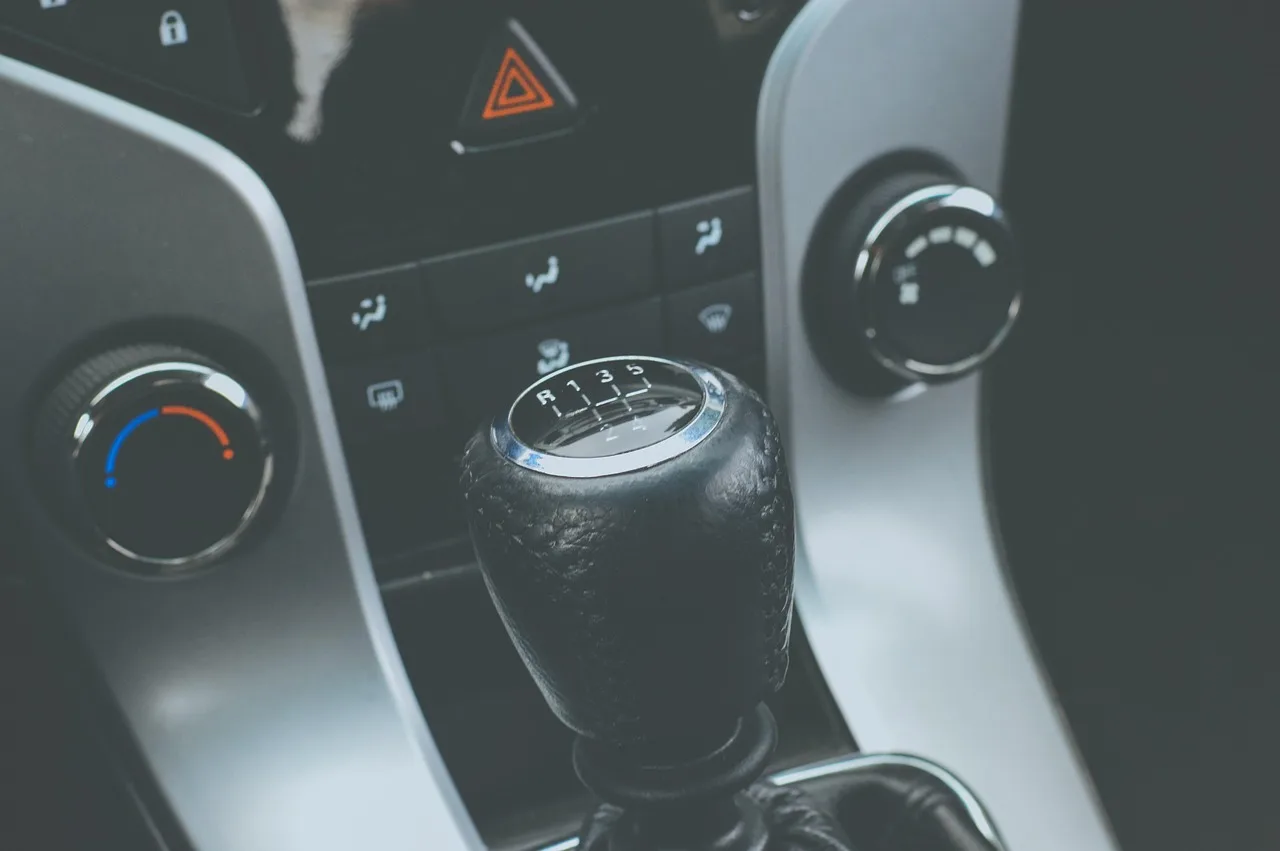
A manual transmission that grinds only when cold usually points to thick gear oil, clutch drag, or weak synchronizers; if reverse and first gear grind at idle with the clutch fully down, start with clutch release checks. Ignoring that pattern can burn synchros, chip gears, and turn a fluid or adjustment issue into a rebuild. Use this cold-shift decision tree to sort fluid, clutch, linkage, and synchro wear before you buy parts.
Diagnosing fluid, clutch, and synchronizer issues
Cold-only grinding usually means the fault is worst before the gearbox, clutch parts, and fluid warm up. Thick oil slows synchronizer action, a dragging clutch keeps the input shaft spinning, and worn synchros lose margin first when oil is cold. A symptom that fades after about 5 to 15 minutes is often associated with fluid, clutch drag, or a weak synchronizer, but it should not be dismissed if the grind is severe or getting worse.
Temperature matters because manual transmission fluid has to flow quickly enough for synchro rings to match gear and shaft speed. The exact fill spec matters too. Some manuals were designed around ATF or a light synthetic manual transmission fluid, while others need a specific GL-4 manual gear oil. A common mistake is filling with 75W-90 GL-5, and low, old, or contaminated fluid can make cold shifts worse.
Cold-shift decision table
| Symptom pattern | Most likely cause | One at-home test | Next step |
|---|---|---|---|
| All gears feel stiff for the first few minutes | Old, low, wrong-spec, or thick fluid | Compare cold behavior to behavior after 5 to 15 minutes of driving | Verify the exact fill spec and service history before replacing parts |
| First or reverse grinds at a stop with the clutch down | Clutch drag | Hold the clutch down, wait a few seconds, then try reverse again | Check clutch fluid level, leaks, and release travel |
| One gear grinds cold while others are fine | Worn synchronizer ring on that gear | Try the same shift slowly, then try double-clutching | Plan for internal inspection if the same gear keeps grinding |
| Grinding fades after 5 to 15 minutes | Cold fluid, light drag, or a weak synchro with reduced cold margin | Note whether the grind disappears as the drivetrain warms up | Confirm fluid type first, then reassess clutch release and synchros |
| Shifter feels stiff with the engine off | Shift linkage, cables, bushings, or pivots | Move the shifter through the gates with the engine off | Inspect external parts before blaming gearbox internals |
| Clutch pedal feels soft or inconsistent | Hydraulic fault, air in system, or fluid loss | Check pedal feel, reservoir level, and for leaks at master and slave cylinders | Bleed or repair the hydraulic system, then retest |
| Double-clutching reduces the grind on cold shifts | Weak synchronizer on that gear | Repeat the shift with a pause in neutral between clutch actions | Treat the improvement as a diagnostic clue, not a permanent fix |
| The grind gets louder, lasts longer, or spreads to more gears | Worsening fault in fluid, clutch release, linkage, or internals | Compare the current symptoms with last week’s cold start behavior | Inspect before further damage |
Say your car goes into reverse cleanly after 10 minutes of driving, but cold reverse crunches at every stop. That pattern points away from a general gearbox failure and toward clutch release or fluid issues first, because reverse often shows the fault before other gears do.
Is the clutch dragging?
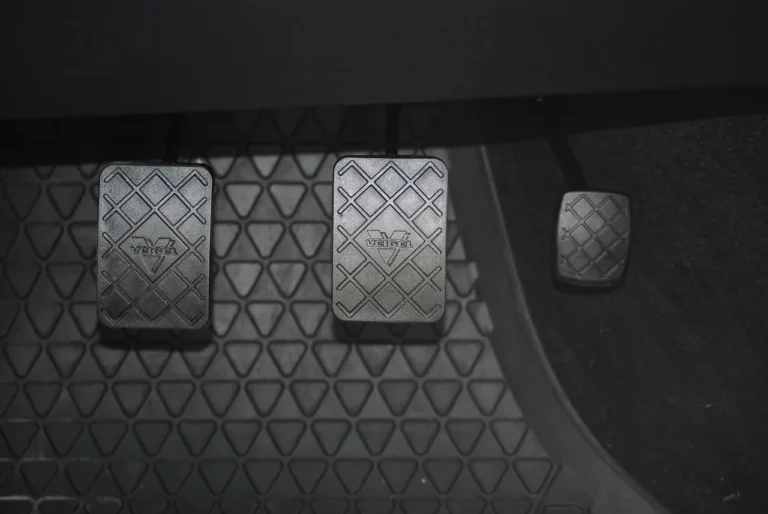
A clutch that does not fully release keeps the input shaft spinning, so the transmission still has to fight moving parts when you select a gear. First and reverse are the common complaints. Reverse gear often lacks a synchronizer, so a cold reverse grind at a stop strongly suggests clutch drag before you condemn the gearbox.
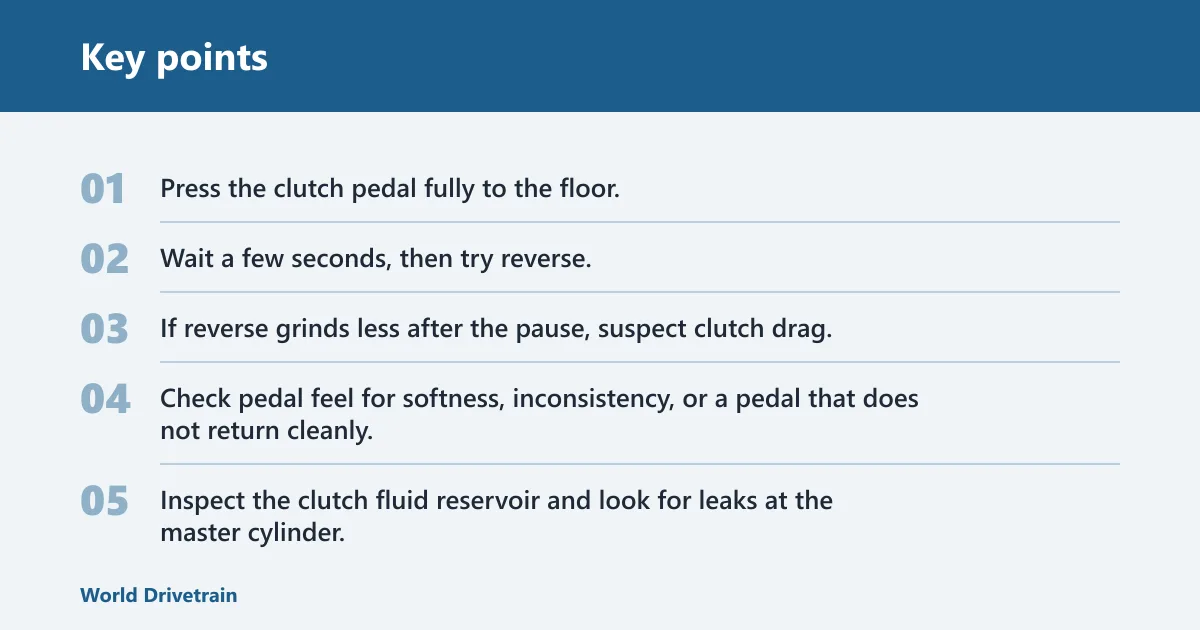
How to check clutch release
- Press the clutch pedal fully to the floor.
- Wait a few seconds, then try reverse.
- If reverse grinds less after the pause, suspect clutch drag.
- Check pedal feel for softness, inconsistency, or a pedal that does not return cleanly.
- Inspect the clutch fluid reservoir and look for leaks at the master cylinder, slave cylinder, and hydraulic line.
A clutch hydraulic problem can keep the clutch from fully disengaging. Low fluid, air in the system, or leaking seals can all leave the input shaft turning when it should be still. After a clutch replacement, a mis-bled hydraulic system can cause the same symptom pattern, so do not assume new parts rule out release issues.
Why first and reverse complain first
First gear and reverse demand the biggest speed change from a stop. Reverse is especially useful as a clue because many manuals do not have a reverse synchronizer. If reverse grinding at a stop improves after waiting a few seconds with the pedal down, the clutch is more suspicious than the gears themselves.
Could the fluid be wrong?
Yes. Cold manual transmission grind often improves after 5 to 15 minutes of driving, and that improvement can point to fluid that is too thick, too old, contaminated, or simply the wrong spec. The manufacturer fill spec matters more than a generic “manual gear oil” label, especially in transmissions built around ATF or a light synthetic MTF.
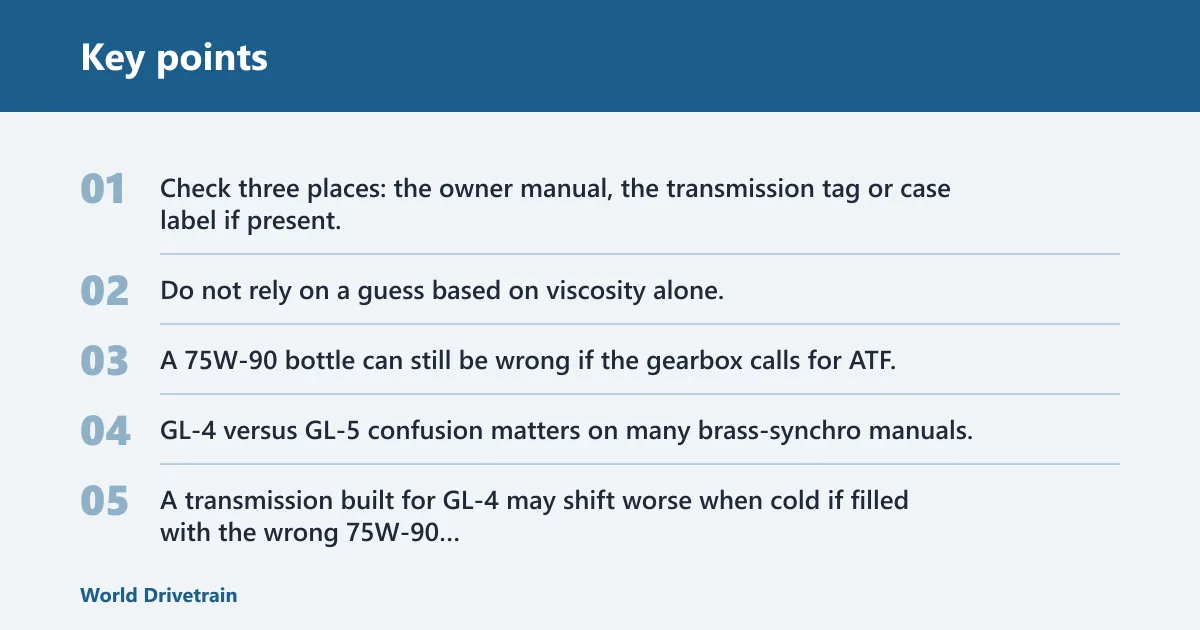
How to confirm the exact fill spec
Check three places: the owner manual, the transmission tag or case label if present, and service data for the exact gearbox code. Do not rely on a guess based on viscosity alone. A 75W-90 bottle can still be wrong if the gearbox calls for ATF, a light synthetic manual transmission fluid, or a specific GL-4 oil for brass synchronizers.
GL-4 versus GL-5 confusion matters on many brass-synchro manuals. GL-5 is not a blanket substitute. A transmission built for GL-4 may shift worse when cold if filled with the wrong 75W-90 GL-5 oil, even if the oil is new.
What old or contaminated fluid can do
Low fluid reduces the oil available to the synchros and bearings. Old fluid can thicken, lose friction characteristics, or carry debris that slows synchronizer action. Contaminated fluid can do the same. If the gearbox grinds several gears for the first few minutes, the fluid deserves attention before any internal teardown.
Suppose a five-speed manual was serviced recently, but the invoice says only “gear oil.” If cold shifts got worse afterward, verify the exact fill spec before replacing synchronizers. A wrong fill can create a new complaint that looks like a worn transmission.
When one gear grinds cold
If one gear grinds cold while others are fine, that points toward one gear’s synchronizer. Second or third gear grinding when cold can indicate a worn synchronizer, and a worn synchro may still grind even if you shift slowly. That is why a single-gear complaint is a stronger clue than a general cold stiffness complaint.
What a synchronizer ring does
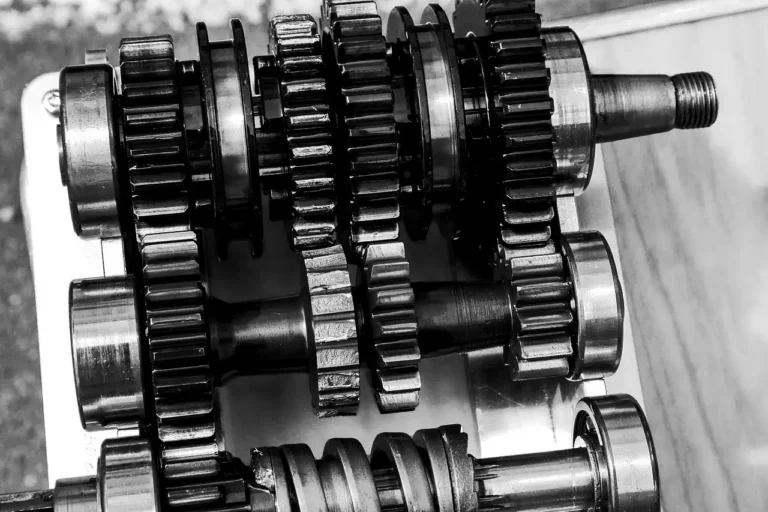
The synchronizer ring matches gear and shaft speed before engagement. When the ring is worn, glazed, or weak, it has less ability to equalize speed. Thick oil makes that weakness show up first because the synchro has to work harder before the gearbox warms up.
Why double-clutching matters
Double-clutching can reduce grind on a worn synchro because it helps bring shaft speeds closer together. That makes it a useful diagnostic clue on cold first drives. It is not a permanent repair. If the same gear still grinds with normal shifting, or if the problem spreads, the synchronizer is likely past its best window.
Does the shift linkage bind when cold?
Yes. Shift linkage, cables, bushings, and pivots can bind when cold and mimic an internal gearbox fault. If the shifter is stiff with the engine off, the gearbox internals may not be the main problem. Engine-off feel is a good separator because it removes clutch release and gear mesh from the equation.
What to look for outside the gearbox
Move the shifter through the gates with the engine off. It should feel consistent and return cleanly. Any notchiness, extra effort, or delayed return can point to worn bushings, dry pivots, stretched cables, or a bent or binding external linkage. Cold weather can make those weak points more obvious.
A common first-timer mistake is replacing fluid for a stiff engine-off shifter. That can miss a simple cable or bushing fault entirely. If the shifter feels sticky before the engine is running, inspect the external parts first.
Should I keep driving if my manual transmission grinds until it warms up?
Only if the grind is brief, mild, and clearly improving, and even then you should treat it as a fault to diagnose. Grinding that worsens, appears in more gears, or lasts longer than the usual 5 to 15 minute warm-up window points to a problem that is not staying stable. Continued grinding can damage synchronizers and gears.
Separate harmless cold stiffness from a serious clutch-drag pattern. Harmless stiffness usually eases across several gears as the fluid warms. Serious drag tends to hit first and reverse at a stop, with the clutch fully down, and may not improve much after a short wait. That is the pattern that deserves immediate attention.
Frequently asked questions
Why does my manual transmission grind only when cold?
Cold-only grinding usually means one of three things: fluid that is too thick or the wrong spec, a clutch that does not fully release, or a synchronizer that is wearing out. If the grind improves after 5 to 15 minutes, start with fluid and clutch release checks before any internal teardown.
Is it normal for a manual transmission to be stiff when cold?
Some cold stiffness is common, especially in very cold weather, because gear oil thickens before it warms up. It is not normal if the stiffness is severe, lasts too long, or comes with grinding. Shifter feel should improve as the transmission warms; if it does not, inspect fluid, linkage, and clutch release.
Will changing transmission fluid fix a cold grind?
Sometimes, but not always. Fluid changes help when the fill is low, old, contaminated, or the wrong spec. They will not cure a worn synchronizer or a clutch that drags. Confirm the exact factory fluid requirement first, because filling a brass-synchro gearbox with the wrong GL-5 oil can keep the problem alive.
Why does reverse grind more when the car is cold?
Reverse often grinds first because many manuals do not have a reverse synchronizer. That means reverse depends heavily on the clutch fully releasing. If reverse grinds at a stop with the pedal down, wait a few seconds and try again. Better behavior after the wait points strongly to clutch drag.
Why does second or third gear grind only on cold shifts?
Second or third gear grinding when cold is a classic sign of a worn synchronizer ring on that gear. Thick oil makes the worn ring work harder, so the symptom shows up before the transmission warms. If double-clutching helps that one gear, treat it as a strong clue rather than a fix.
How do I tell if the clutch is dragging when cold?
Use the reverse-at-a-stop test. Hold the pedal fully down, wait a few seconds, then select reverse. If the grind lessens, clutch drag is likely. Also check for a soft or inconsistent pedal, low fluid, or leaks at the master and slave cylinders, because hydraulic faults can stop full disengagement.