Why Is My Car Hard Shifting in Cold Weather?
Lightly harsh or delayed shifts for the first few minutes in freezing weather can be normal as transmission fluid warms; if it does not improve within 5–15 minutes or a few miles, or gets worse, suspect a fault. Ignoring that can turn a small fluid, sensor, or valve issue into slip, heat, and repair costs. This guide explains the warm-up timeline and the warning signs that point to real transmission trouble.
Why hard shifting happens when it’s cold
Hard shifting feels like a jerk, thud, clunk, or abrupt gear change. It can also feel like a delayed engagement, where you press the accelerator and the transmission hesitates before the gear catches. In an automatic transmission, that shift feel depends on hydraulic pressure, fluid flow, and how quickly parts apply and release.
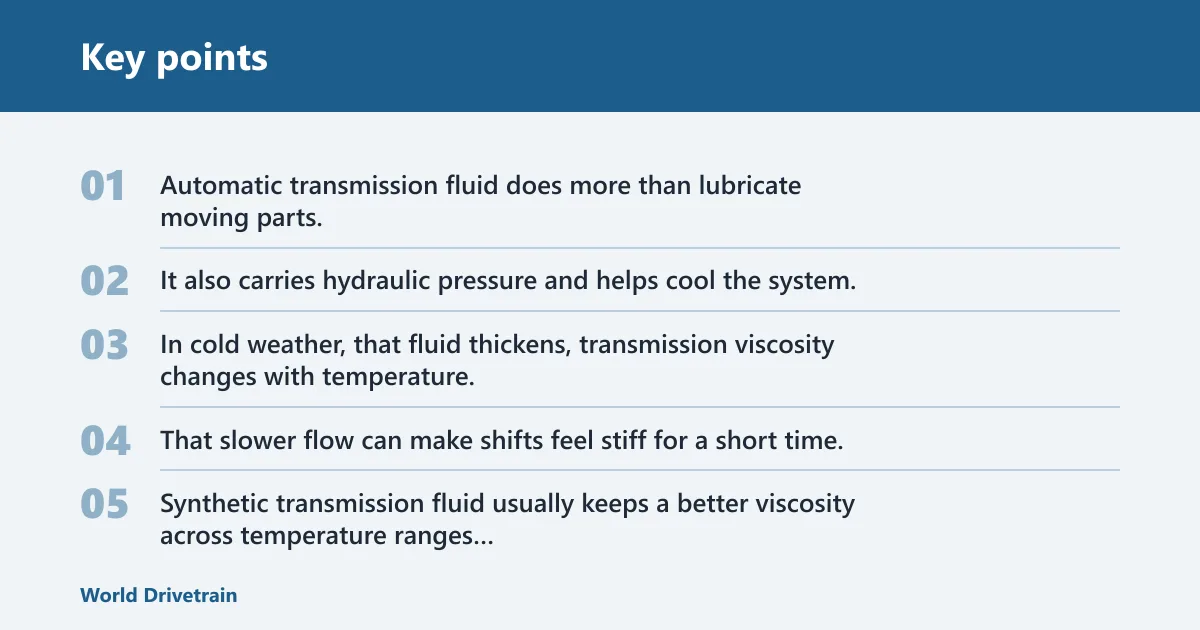
Automatic transmission fluid does more than lubricate moving parts. It also carries hydraulic pressure and helps cool the system. In cold weather, that fluid thickens, transmission viscosity changes with temperature, and the fluid flows less freely through the transmission until it warms. That slower flow can make shifts feel stiff for a short time.
Synthetic transmission fluid usually keeps a better viscosity across temperature ranges than conventional fluid, so it often handles cold starts better. That does not mean synthetic fluid prevents every winter shift complaint. A worn seal, low level, dirty fluid, or internal wear can still create harsh shifts in cold weather.
When cold behavior is normal
Briefly harsh shifting after an overnight freeze is often the transmission reacting to thick fluid, especially after freezing nights or sharp temperature swings. If the shift feel improves as the engine and transmission warm, and the car otherwise drives normally, that points more toward cold-fluid behavior than a major failure.
Say your sedan backs out of a driveway on a 20-degree morning with a firm 1–2 shift, then settles down after 10 minutes. That pattern is different from a car that keeps thudding into every gear once it is fully warm. The first is often temperature-related. The second needs attention.
How long should it last after startup?
Most cold-start harshness should fade within a short warm-up period. If the transmission is only clumsy for the first few minutes, then behaves normally, that is often consistent with cold fluid. If the harshness persists after a few miles or gets worse as the drive continues, it is no longer reasonable to blame temperature alone.
First few minutes cold
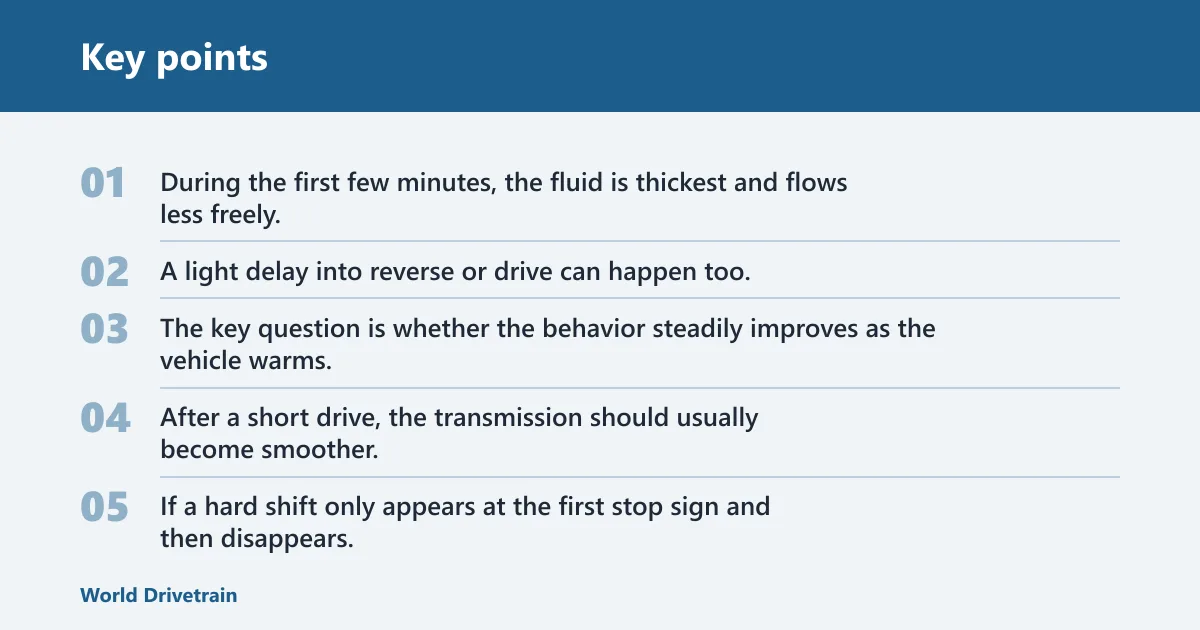
During the first few minutes, the fluid is thickest and flows less freely, so shifts may feel firmer than usual. A light delay into reverse or drive can happen too, especially if the car sat overnight in freezing weather. The key question is whether the behavior steadily improves as the vehicle warms.
After a short drive
After a short drive, the transmission should usually become smoother. If a hard shift only appears at the first stop sign and then disappears, monitor it and check fluid service history when you can. If it repeats every cold morning, the issue is more than a one-off annoyance and deserves inspection soon.
When warm still feels harsh
Harsh shifting that remains after the transmission is warm is a stronger sign of trouble. Heat should thin the fluid and improve normal hydraulic response. If the problem stays, look at fluid level, contamination, leaks, sensor faults, valve-body issues, or worn internal parts.
| Symptom pattern | Likely cause | Recommended next step |
|---|---|---|
| Only the first few minutes cold, then normal | Cold fluid thickening and slow hydraulic flow | Monitor, confirm service history, and note whether it improves within 5–15 minutes |
| Cold-only harsh shifting that repeats on several mornings | Fluid aging, borderline fluid level, or early hydraulic control issue | Schedule a transmission inspection soon and check for leaks or dirty fluid |
| Persists warm | Internal wear, valve-body fault, low pressure, or torque converter issue | Do not keep driving hard; book diagnosis promptly |
| Visible red-brown wet spots under the vehicle | Seal leaks, gasket leaks, or cooler line leaks reducing hydraulic pressure | Check fluid level safely and arrange service soon |
| Dark brown or black fluid with burnt smell | Contaminated or degraded fluid, heat damage, possible clutch or band wear | Stop postponing service; have the fluid and transmission checked |
| Shuddering, slipping, delayed engagement, or worsening harshness | Internal wear such as clutch packs, bands, or torque converter trouble | Limit driving and get a professional diagnosis as soon as possible |
Is it fluid, a leak, or wear?
The fastest way to sort cold shifting from a real fault is to ask three questions: Is the fluid low? Is the fluid dirty? Does the problem go away when warm? Low fluid can reduce hydraulic pressure, and that alone can make shifts feel late, harsh, or inconsistent. Leaks and worn parts can create the same result.
Low fluid and leak clues
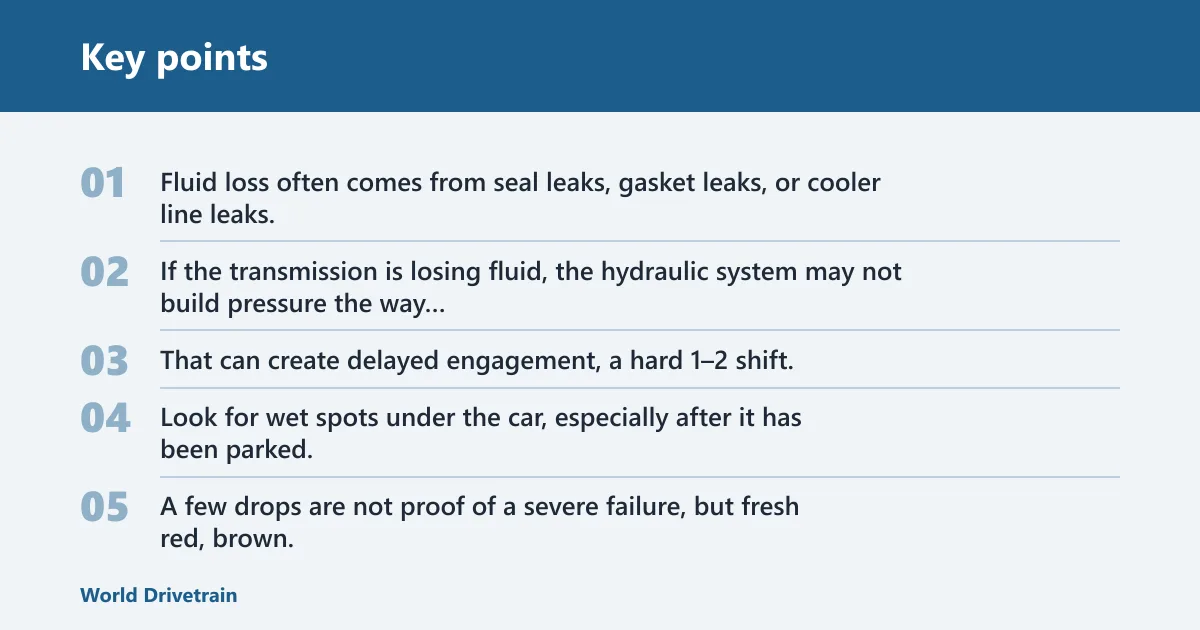
Fluid loss often comes from seal leaks, gasket leaks, or cooler line leaks. If the transmission is losing fluid, the hydraulic system may not build pressure the way it should. That can create delayed engagement, a hard 1–2 shift, or a clunk when you select drive or reverse.
Look for wet spots under the car, especially after it has been parked. A few drops are not proof of a severe failure, but fresh red, brown, or dark fluid around the transmission case, pan, axle seals, or lines should not be ignored.
Dirty or degraded fluid clues
Contaminated or degraded fluid often looks dark brown or black and may smell burnt, similar to burnt toast. It can also carry metal particles. That points to heat damage, wear, or both. Fresh fluid should not smell burnt, and a strong burnt odor is not a normal winter finding.
Fluid changes are often recommended every 30,000 to 60,000 miles, though the exact interval depends on the vehicle and use. If service history is unknown, old fluid becomes a stronger suspect, especially if winter harshness is a new pattern.
Internal wear clues
Clutch packs use friction discs to engage different gears. Over time, those discs can wear thin or glaze, which changes how cleanly the gear applies. Transmission bands can also wear; their friction lining may slip and then grab, which feels like a harsh or uneven shift.
The torque converter can add its own symptoms. It is a fluid coupling with an impeller, turbine, and stator, and trouble there can show up as shuddering during acceleration or a delayed, unsettled takeoff. If hard shifting comes with shudder, slipping, or delayed movement into gear, the problem may be deeper than cold fluid alone.
Hard shifting can also point to valve-body or hydraulic-control problems. The valves and passages that route fluid must open and close at the right time. If that control is sticky, worn, or contaminated, the transmission can shift at the wrong pressure or at the wrong moment.
What parts can make shifts harsh in winter?
Cold weather can expose weak points, but it does not create every problem by itself. If the transmission is only slightly firm when cold, fluid behavior is the main suspect. If it stays harsh warm, the likely cause shifts toward a part that is worn, contaminated, or not controlling pressure correctly.
Clutch packs and bands
Automatic transmissions use multiple clutch packs to engage different gears. When those friction discs are worn or glazed, they can grab too hard or slip before catching. Transmission bands can do something similar when the friction lining is worn. Both faults can make shifts feel abrupt, especially once the fluid thins and the unit tries to apply more cleanly.
Torque converter issues
A torque converter problem can show up as shuddering during acceleration, delayed takeoff, or a strange sense that the car is not coupling smoothly. Because the converter sits at the front of the transmission and depends on fluid movement, a weak converter can make cold and warm symptoms overlap.
Valve body and hydraulic control
The valve body directs fluid where it needs to go for each gear change. If a valve sticks, a passage is restricted, or pressure control is off, the transmission can shift too hard, too late, or with a clunk. That kind of issue often persists after warm-up, which is one reason warm behavior matters so much in diagnosis.
What should you check before driving farther?
Check the easiest clues first: warning lights, visible leaks, fluid history, and whether the symptom changes after warm-up. You do not need tools for those steps. If the problem is limited to the first few cold minutes and then fades, you can usually monitor it. If it persists warm, plan service soon.
- Look for a check engine light or a transmission temperature indicator. A transmission problem may trigger one, both, or neither.
- Note whether the harsh shift happens only cold or also after 10–15 minutes of driving.
- Check under the car for fresh fluid spots or wetness around the transmission case, pan, lines, or seals.
- Review the service history if it is available, including when the fluid was last changed.
- Pay attention to new symptoms such as slipping, shuddering, delayed engagement, or worsening noise.
A check engine light may or may not appear with transmission issues, so do not wait for one before taking action. A transmission temperature indicator, when present, is a more direct warning that the unit may be running abnormally hot or outside its normal range.
Suppose a crossover shows hard reverse engagement on cold mornings and leaves a small reddish spot on the driveway. That combination points away from “normal cold weather behavior” and toward a leak and low pressure. The safe move is to limit driving and inspect the fluid level and leak source soon.
As for cold weather and starting, freezing temperatures can make the engine feel slow to start too, but that is a separate issue from transmission shift harshness. If the car also struggles to start in the cold, the battery, starter, oil viscosity, or fuel system may need attention. Do not assume the transmission explains every winter symptom.
Frequently asked questions
Why does my car shift hard in cold weather?
Cold weather thickens automatic transmission fluid, so it flows less freely and builds pressure more slowly. That can make the first shifts feel firm, delayed, or abrupt. If the harshness fades after warm-up, it may be normal. If it stays harsh, suspect low fluid, dirty fluid, or wear.
Is it normal for my transmission to shift hard when it’s cold?
Lightly harsh shifting for the first few minutes can be normal, especially after freezing nights or large temperature swings. The key is improvement. If the transmission shifts better once warm, that points toward cold-fluid behavior. If it keeps thudding or slipping after a short drive, it needs diagnosis.
How long should hard shifting last after a cold start?
Hard shifting often eases after about 5–15 minutes or a few miles. That is often enough for fluid to warm and flow better in many driving conditions. If the problem lasts longer, repeats every cold start, or gets worse, it is less likely to be normal winter behavior.
Can cold weather cause transmission fluid problems?
Cold weather does not usually “ruin” fluid by itself, but it does expose fluid that is old, low, or marginal. Thick fluid can worsen shift quality, and a small leak can matter more when pressure is already borderline. Synthetic transmission fluid usually handles temperature swings better than conventional fluid.
When is cold-weather hard shifting a sign of bigger transmission damage?
It becomes more serious when the harsh shift persists after warm-up, comes with delayed engagement or slipping, or appears with burnt-smelling dark fluid, metal particles, or a leak. That pattern points to reduced hydraulic pressure or internal wear. At that stage, drive only as needed and arrange service soon.