Why Is My Clutch Slipping When Hot?
Hot-only clutch slip often suggests clutch wear or reduced clamp force from heat; if it slips only after about 15–20 minutes, hydraulic drag or a glazed or warped flywheel are also common possibilities. Ignored, it can overheat the disc, damage the flywheel, and leave you stranded in traffic or on a hill. This guide shows how hot slip behaves, how to separate clutch wear from hydraulic faults, and when the flywheel must be inspected.
What hot-only clutch slip usually means
The classic pattern is simple: the engine speeds climb while road speed does not keep pace, especially under load. That mismatch is the clue. The clutch is no longer sending torque cleanly, so the engine flares without a matching shove at the wheels.
A slipping clutch often shows up first in higher gears, on steep grades, or when towing. Those situations ask the clutch to hold more torque for longer, so a marginal disc, weak pressure plate, or heat-soaked flywheel gives up sooner. The symptom can be subtle at first, then obvious after a few stop-start cycles.
A burning smell is another strong clue. Slipping can produce a sweet, burnt odor in the cab under load. If the smell appears after a hill start, slow traffic, or a hard pull in fourth or fifth gear, treat it as a heat sign, not normal clutch use.
What happens when a clutch slips
When the clutch slips, the friction surfaces are no longer holding the engine and transmission together tightly enough. Heat rises fast, the lining sheds more material, and the pressure plate and flywheel can take damage as well. The car may still move, but acceleration feels weak and disconnected.
That matters because a slipping clutch is not the same as a brief, deliberate slip used to get the car moving. Normal take-up happens during launch. Fault slip happens under steady throttle, often after the drivetrain has warmed and the clutch should be fully engaged.
Why heat makes a weak clutch slip more
Heat makes a marginal clutch more likely to slip because friction material, clamp force, and metal parts all change with temperature. A clutch that holds cold may start to slip once the lining overheats, the flywheel face changes, or the pressure plate loses effective force after repeated load cycles.
Friction material and glazing
A clutch disc has friction material on both sides, and a standard single-plate clutch has two friction surfaces in contact. When that lining wears thin, available friction drops. The Motor Guy notes worn clutch friction material may measure between 7 and 10 mm when new, and a clutch plate may still work down to about 2 mm thickness if wear is even.
That lower limit is not a comfort zone. Once heat gets into a thin or uneven lining, the surface can glaze. Glazing makes the disc look shiny and reduces bite, so the clutch can feel fine for a short drive and then slip once temperatures climb.
Suppose a manual car drives normally for the first 10 minutes, then starts flaring on a long incline in third gear. That points away from simple launch technique and toward a part that is losing grip as it heats up.
Thermal expansion and clamp force
The pressure plate is what clamps the disc against the flywheel. Its diaphragm spring is a Belleville spring washer, and if that spring weakens or the plate face overheats, clamping force can fall enough to allow slip under load. Heat-related fade is especially noticeable when the car has been pulled hard more than once in a short period.
The guide’s torque capacity formula uses n, μ, F, and Rm, which is another way of showing the basic issue: less friction, less clamp force, or less effective radius lowers the torque the clutch can hold. You do not need the math to diagnose the car, but the direction is useful. Heat can reduce the margins very quickly.
Heat can spike clutch-face temperatures past 1,000 degrees Fahrenheit in less than 3 seconds. That is why a clutch that survives one gentle trip may fail on the next hill, especially if the vehicle keeps slipping while the pedal is released fully.
Why stop-start driving makes it worse
Repeated crawling in traffic can keep the clutch in a hot, marginal state. Each take-up cycle adds heat, and each heat cycle can deepen glazing or reveal a weak pressure plate. A slipping clutch in traffic often feels worse after the second or third stop because the parts never fully cool between loads.
A common mistake is to suspect the transmission because the slipping shows up only after the car has been driven long enough to heat the clutch. But the clutch is used to change gears without grinding them, and hot slip can make the whole drivetrain feel vague long before the transmission itself has a fault.
Could a hydraulic fault be the real cause?
Yes. Low fluid, a failing master cylinder, a leaking slave cylinder, or release system drag can all create symptoms that look like slip, especially when the drivetrain is hot. The key question is whether the clutch is truly slipping under power, or whether it is not fully engaging because the hydraulic system is holding the release mechanism in the wrong position.
Low fluid, master cylinder, and slave cylinder checks
The hydraulic clutch system uses a master cylinder, slave cylinder, and fluid to move the release bearing. If fluid is low, dirty, or leaking, the clutch may not release or engage correctly. That can cause difficult shifting, a high or changing biting point, and a pedal that feels different when hot.
Can low clutch fluid cause clutch slipping? Sometimes it causes clutch-related symptoms, but not true friction slip by itself. Low fluid more often leads to incomplete disengagement, gear clash, or an inconsistent pedal. If the engine revs flare while road speed lags, the friction side still needs inspection.
A hydraulic fault is a common possibility if the pedal engagement point moves higher after a long drive, then returns after cooling. That kind of change points to fluid behavior, seal wear, or heat-related expansion in the master or slave cylinder rather than immediate friction wear alone.
Release bearing drag and incomplete disengagement
The release bearing pushes on the pressure plate so the clutch can disengage. If the bearing is worn, dry, or dragging, it can keep pressure on the pressure plate when it should not. That may cause noise, poor release, and heat-related problems that feel like a slipping clutch when the vehicle is warm.
Release bearing wear often comes with noise symptoms, especially when the pedal is pressed. If the noise changes with pedal movement and the biting point wanders, the release system deserves attention before the clutch pack is condemned.
Do not replace yet: when the symptom points first to hydraulics
Do not replace the clutch pack first if the main clues are a low fluid level, a pedal that changes with temperature, or shifting trouble without a clear rpm flare under load. Start with the hydraulic side. A master cylinder, slave cylinder, or release bearing issue can imitate clutch trouble without meaning the friction disc is worn out.
If the clutch does slip under load and the hydraulic system also looks weak, inspect both. But if the complaint is mainly a high or moving biting point, difficult gear engagement, or a pedal that feels inconsistent after warm-up, the hydraulic branch comes first.
How to read clutch parts for heat damage
Hot-only slip can come from worn friction parts, but the visible signs differ. Look for lining wear, glazing, oil contamination, pressure plate weakness, and flywheel condition. Each part leaves a different pattern, and the pattern matters more than replacing a single component by habit.
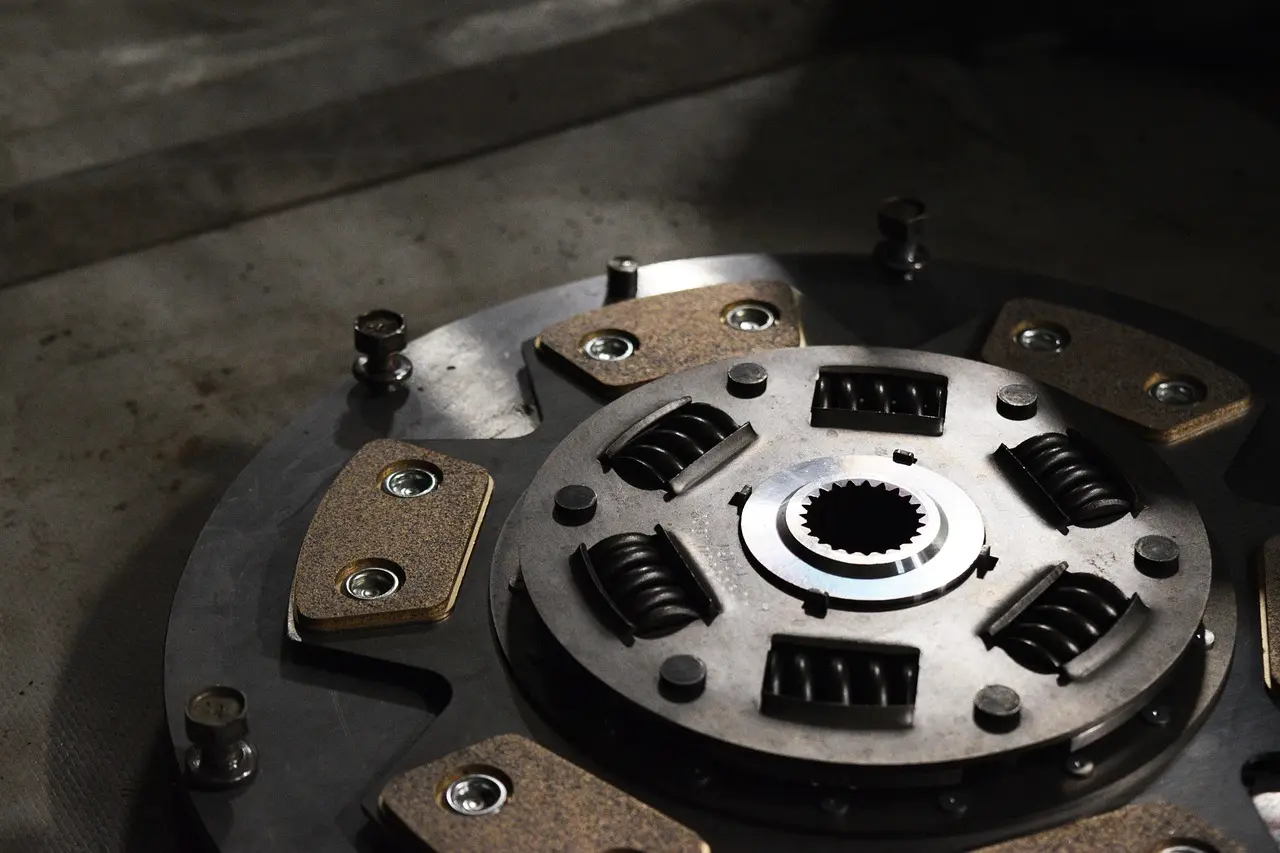
Clutch disc wear, glazing, and contamination
The clutch disc wears as the lining thins. Even wear usually preserves some grip, but heat can polish the face into a glazed surface that slips under load. Oil or grease on the disc is a separate problem. Oil on the clutch plate surface can cause slip and overheating, and contamination often makes the bite inconsistent from one pull to the next.
Contamination usually comes from an engine rear main seal, a transmission input seal, or excess grease during assembly. If a new clutch slips hot, contamination should move high on the list because a fresh lining should not be heat-failing that soon without another cause.
Pressure plate weakness and diaphragm spring issues
The pressure plate can lose clamping force if the diaphragm spring weakens, the contact face overheats, or the assembly was damaged during installation. The result is heat-related fade: the clutch holds cold, then slips once the plate is hot and the load rises.
Sticky engagement can also happen if the plate does not move cleanly. That can leave you with a high biting point, a narrow engagement window, or a clutch that feels normal at idle but slips hard in a tall gear.
Flywheel warping, pitting, cracking, and dual-mass concerns
The flywheel can be part of the problem when its face is warped, cracked, glazed, or pitted. A bad flywheel can cause slippage, especially at high speeds and high RPMs. A damaged face cannot provide consistent grip, and heat makes the mismatch worse.
Dual-mass flywheels add another failure path. If the internal damping mechanism is worn or the unit is overheated, the flywheel may not transmit load cleanly even when the disc itself looks serviceable. In that case, replacing only the clutch disc can leave the symptom unchanged.
Picture a car that got a clutch job and then started slipping on the first long hill a week later. If the disc is new, the flywheel finish, hardware setup, and hydraulic release travel deserve a close look before anyone assumes the new part is defective.
Hot clutch diagnostic matrix
Use this matrix to separate heat-amplified clutch slip from hydraulic or flywheel faults. The timing of the symptom matters as much as the symptom itself.
| Symptom timing | Likely cause | Quick check | Next action |
|---|---|---|---|
| Cold, then worse hot; slip under load | Worn disc | Look for thin lining, high biting point, and rpm flare in a tall gear | Inspect clutch pack and related hardware |
| Hot only; slip after repeated hills or traffic | Glazed disc | Check for shiny friction faces and burning smell after load | Inspect disc and flywheel face together |
| Hot only; may come and go | Contaminated disc | Look for oil or grease on the bellhousing area and disc | Find and fix the leak before replacement |
| Hot under heavy throttle | Weak pressure plate | Note a soft clamp feel and slipping in higher gears | Replace the clutch set and inspect release travel |
| Hot only; vibration or hot pull | Warped flywheel | Check for heat spots, blueing, cracks, or pitting | Machine or replace the flywheel as required |
| Pedal feels low or inconsistent; shifting trouble first | Low hydraulic fluid | Check reservoir level and look for leaks at master or slave cylinder | Repair hydraulics before replacing the clutch |
| Noise with pedal movement; hot engagement changes | Release bearing drag | Listen for bearing noise and compare pedal feel cold vs hot | Inspect release bearing and fork movement |
| After recent clutch work; engagement point seems wrong | Incorrect clutch adjustment | Verify free play, pedal height, and hydraulic or cable setup | Correct adjustment before condemning the new parts |
- Note when the symptom starts: cold, hot, or only under load.
- Watch for rpm flare versus road speed in a higher gear.
- Smell for burning after a hill, traffic crawl, or towing pull.
- Check fluid level and look for leaks if the pedal feel changes.
- Inspect the flywheel and clutch face if the slip is real and load-based.
Why is my new clutch slipping when hot?
A new clutch that slips when hot often points to contamination, flywheel surface problems, or a setup issue rather than normal wear. Oil on the disc, a poor flywheel finish, hydraulic overtravel, or incorrect adjustment can all keep a fresh clutch from clamping correctly once temperature rises.
Contamination from oil or grease
Oil or grease on a new friction surface can show up quickly once heat builds. The lining may hold for a short drive, then slip when the surface film softens. Check for a rear main seal leak, transmission input seal leak, or assembly grease on the wrong area.
Flywheel surface problems after machining or reuse
A resurfaced flywheel must have the right finish and geometry. If the face is glazed, pitted, cracked, or warped, a new disc can slip even though the parts are new. Dual-mass flywheels also need careful inspection because internal wear can mimic a clutch fault.
Overtravel, adjustment, and hydraulic setup errors
If the release system travels too far, the clutch can sit in a partly released state. That may happen because of the wrong adjustment, an incorrect master or slave cylinder setup, or a pedal ratio issue. The clutch then behaves like it is slipping only when hot because the problem gets worse as the hydraulics warm and expand.
One simple way to think about a new clutch problem is this: new friction parts do not cancel out a bad flywheel, bad seal, or wrong release travel. If the symptom started right after repair, inspect the installation path before replacing the new kit again.
Is it safe to keep driving if it only slips when hot?
It is not a good long-term plan. If the clutch only slips when hot, the parts may still be near the edge of failure, and continued driving can turn a manageable repair into a larger one. Limit driving if possible, especially if the symptom appears in traffic, on hills, or when towing.
Continued slip adds heat to the disc, pressure plate, and flywheel. That extra heat can glaze the friction material, weaken the diaphragm spring, and damage the flywheel face. If the slipping becomes more frequent or more severe, stop driving it until the cause is found.
When to stop and when to limit driving
Limit driving if the car only slips under heavy load and still moves normally in light use. Stop driving if the engine flares badly, the smell is strong, the pedal feel changes sharply, or the car struggles to climb even moderate grades. Those are signs the clutch is losing the ability to hold torque.
Before booking the repair, note three things: whether the problem is cold or hot, whether it happens only under load, and whether the pedal or biting point changes with temperature. That information helps separate friction wear from hydraulic faults and keeps the diagnosis focused.
Frequently asked questions
Why does my clutch slip when hot?
Hot slip usually means the clutch is close to its friction limit, or heat is reducing clamp force somewhere in the system. A worn disc, glazed lining, weak pressure plate, warped flywheel, or hydraulic drag can all show up only after warm-up, especially under load in higher gears.
What does it mean if your clutch slips?
It means the engine and transmission are no longer holding together tightly enough for the torque being asked of them. The usual sign is the engine revs rising while road speed does not keep up. That can come from worn friction material, contamination, or loss of clamping force.
Why is my new clutch slipping?
A new clutch that slips usually points to contamination, flywheel condition, or setup error. Oil or grease on the disc, a warped or poorly finished flywheel, or incorrect hydraulic or cable adjustment can prevent full clamp force. A fresh kit does not rule out an installation problem.
What happens when a clutch slips: heat builds quickly, friction material
Heat builds quickly, friction material wears faster, and the flywheel and pressure plate can suffer damage too. You may notice rev flare, weak acceleration, and a burnt smell after hills or traffic. If the slip continues, the clutch can fail sooner and leave the car unable to move properly.
Why is my clutch slipping when hot?
Heat is often the trigger that pushes a marginal clutch over the edge. The lining may be worn or glazed, the pressure plate may be fading, or the flywheel may be damaged. If the symptom starts only after 15–20 minutes, also inspect hydraulics and release travel.
Can low clutch fluid cause clutch slipping?
Low fluid can cause clutch-related symptoms, but it does not automatically mean the friction disc is slipping. More often it causes incomplete disengagement, shifting trouble, or a changing pedal feel. Check for leaks at the master and slave cylinder before replacing friction parts.
How can I tell if heat is making my clutch slip worse?
Watch for a symptom that appears only after warm-up, then gets worse with repeated hill starts, traffic, or towing. A high biting point, burning smell, or stronger rpm flare in a tall gear after several load cycles all point to heat-amplified slip rather than a cold-only release issue.
Is it safe to keep driving if my clutch only slips when hot?
Only for short, careful trips if the symptom is mild. Heat-only slip can worsen fast and damage the disc, pressure plate, and flywheel. If the flare gets stronger, the smell becomes obvious, or the car struggles on hills, stop driving it and inspect the system before more damage is done.