What Does Transmission Slipping Mean?
Transmission slipping means engine speed rises without a matching rise in road speed because the transmission is not holding the gear or torque path correctly. Ignore it, and a hydraulic, clutch, or fluid fault can turn into internal damage. This guide explains what slipping means, how it feels, how to separate it from similar symptoms, and what to do next.
What does transmission slipping mean?
Transmission slipping is a symptom, not a diagnosis. It points to lost gear engagement, so the engine can rev while the car does not accelerate as it should. In an automatic, that often means hydraulic pressure, clutch packs, bands, or electronic control are not applying correctly. In a manual, it often points to clutch wear or gear engagement problems.
The phrase matters because drivers use it for different feelings. Some mean a brief RPM flare during a shift. Others mean the car hesitates, shudders, or drops out of gear. Those are not the same fault, and they do not call for the same next step.
How transmission slipping feels
A slipping transmission can make the engine rev without a matching increase in vehicle speed. That is the core pattern. The car may pause before moving, then catch, or it may feel weak under throttle even though the engine note rises.
Automatic transmission slip can show up as rev flare between shifts, delayed engagement from Park to Drive, unexpected downshifts, or failure to upshift. Manual transmission slip can feel like grinding, gear dropout, or a gear that will not stay engaged. The exact feel depends on which part of the torque path is failing.
A sedan example can show the tachometer jumping by about 800 rpm while road speed barely changes for about two seconds. That is not normal shift smoothness. That points to a real slip event, not a routine shift flare.
Transmission slip matrix
This matrix translates common driver wording into the most likely technical meaning. It also separates “monitor and schedule” cases from “stop driving now” cases. The subsystem note is the first place a technician would usually look, not the final diagnosis.
| Driver wording | Likely technical meaning | Urgency level and next step |
|---|---|---|
| revving but not speeding up | Engine speed is rising faster than output speed; likely loss of gear holding, often linked to fluid pressure, clutch wear, or torque converter slip | Urgent. Reduce driving and schedule diagnosis now; stop driving if it worsens under light throttle |
| slips when hot | Clearance or pressure issue appears after fluid warms and thins; most often fluid pressure, clutch pack wear, or overheating | Urgent. Park it if the slip becomes repeated; diagnose soon because heat usually accelerates damage |
| hard shift into gear | Pressure control or engagement timing problem; may involve electronic control, solenoid issues, or low fluid | Schedule diagnosis soon. If engagement becomes delayed or harsh enough to lurch, stop driving |
| takes a long time to move after shifting to Drive | Delayed engagement from Park to Drive; often points to low fluid, pressure loss, or worn internal apply parts | Urgent. Check fluid only if safe; book inspection immediately |
| gear drops out | Transmission fails to stay engaged; can involve clutch packs, bands, or manual clutch wear | Stop driving if frequent. Loss of drive can leave you stranded or worsen internal damage |
| RPMs rise but speed does not | Classic slip pattern; likely clutch packs, torque converter, or hydraulic pressure loss | Urgent. Minimize driving and get a proper diagnosis now |
| check engine light came on with the slipping | Electronic control fault, solenoid issue, or pressure-sensor code may be stored; light does not confirm the cause by itself | Schedule diagnosis soon. Use an OBD-II scan with fluid and pressure checks |
| burning smell after a long drive | Overheated transmission fluid; often means fluid quality and cooling are suffering, with possible internal wear | Urgent. Stop driving if the smell is strong or slip is getting worse |
What causes slipping?
Slipping is often described as pointing to low hydraulic pressure, friction parts that cannot hold torque, or an electronic apply issue. It usually means one of three things: hydraulic pressure is too low, friction parts cannot hold torque, or electronic control is commanding the wrong apply pattern. That is why a slipping transmission is a symptom, not a single broken part.
Low transmission fluid can cause slipping right away. Dirty fluid, burnt fluid, or fluid that has a dark reddish or brownish color can reduce hydraulic pressure and cooling. Fluid quality matters because automatic transmission operation depends on fluid pressure to shift gears and keep clutches alive under heat.
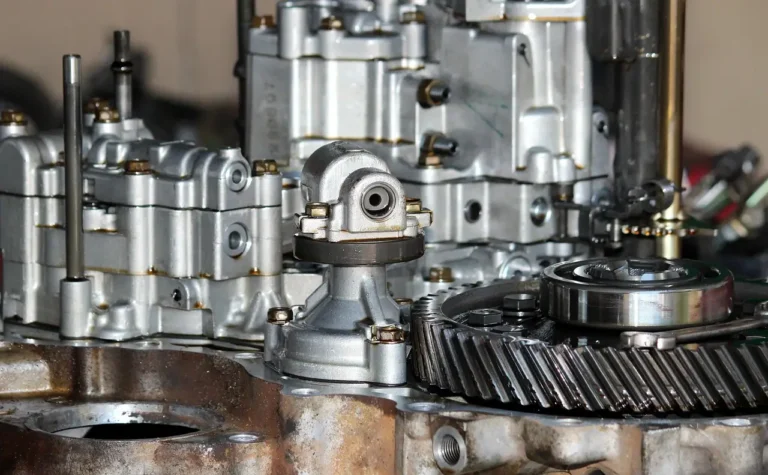
Worn clutch packs can stop gears from holding properly. Worn or broken transmission bands can also affect gear engagement. Internal friction material failure can create slip, and damage at that stage may require rebuild or replacement. A torque converter problem can do the same by breaking the normal hydraulic power transfer path.
Electronic control issues matter too. Modern automatics rely on solenoids, pressure sensors, and control logic to apply the right clutch at the right time. An OBD-II scan can help point to solenoid or pressure-sensor faults, but it is often paired with hydraulic pressure tests and a visual inspection.
Automatic vs manual transmissions
Automatic transmission slip usually feels like revving between shifts, delayed engagement, unexpected downshifts, or failure to upshift. The vehicle may move, but it does not feel connected to engine speed the way it should. Because the system uses hydraulic pressure, low fluid or pressure loss often shows up quickly.
Manual transmission slipping may show up as gear dropout, grinding, or difficulty engaging a gear. It may show as gear dropout, grinding, or failure to engage a gear. In standard transmission vehicles, that often points to clutch wear rather than an internal hydraulic problem. A manual can also fail to stay in gear if the linkage or internal engagement parts are worn.
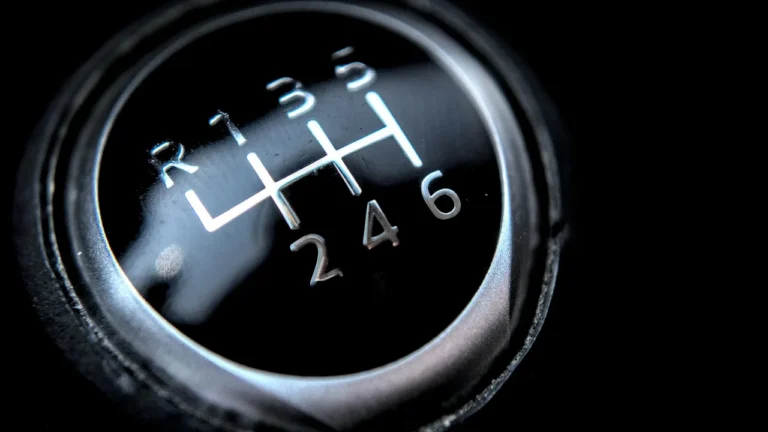
Picture a compact hatchback with a manual gearbox that starts to grind going into second and then pops out of third under load. That is not the same pattern as an automatic that flares on the 2-3 shift. Different hardware, different diagnosis path.
Could it be fluid or overheating?
Yes. Fluid level and fluid condition are among the first things to check because they affect hydraulic pressure and cooling. Low transmission fluid can cause gears to shift poorly, and overheated fluid can create a burning smell. Those signs do not prove the exact failed part, but they do raise urgency.
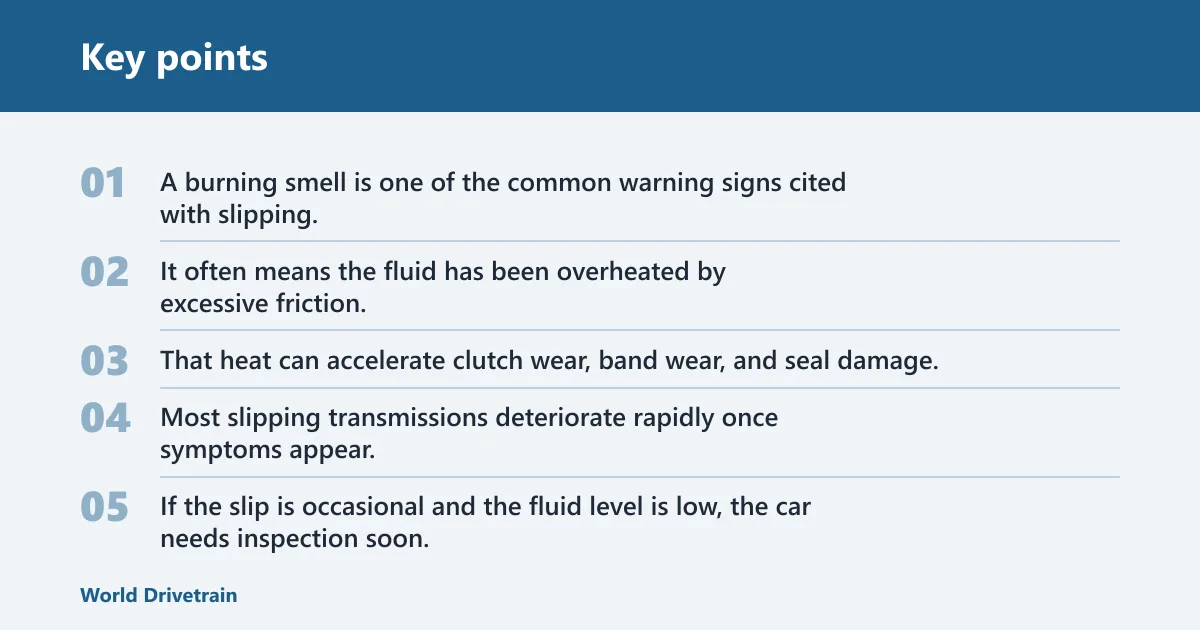
A burning smell is one of the common warning signs cited with slipping. It often means the fluid has been overheated by excessive friction. That heat can accelerate clutch wear, band wear, and seal damage, which is why a slipping transmission may fail anywhere from a few days to several months. Most slipping transmissions deteriorate rapidly once symptoms appear, and some repair sources say most worsen within 2 to 8 weeks.
The practical rule is simple. If the slip is occasional and the fluid level is low, the car needs inspection soon. If the slip is frequent, the smell is strong, or the car hesitates badly to move, stop driving and arrange diagnosis now.
How slipping is diagnosed
Diagnosis starts with confirming that the symptom is real, then narrowing the subsystem. An OBD-II scan can read diagnostic trouble codes, especially for solenoid or pressure-sensor issues. That scan does not replace physical checks, because low fluid or worn friction parts can slip without an obvious code.
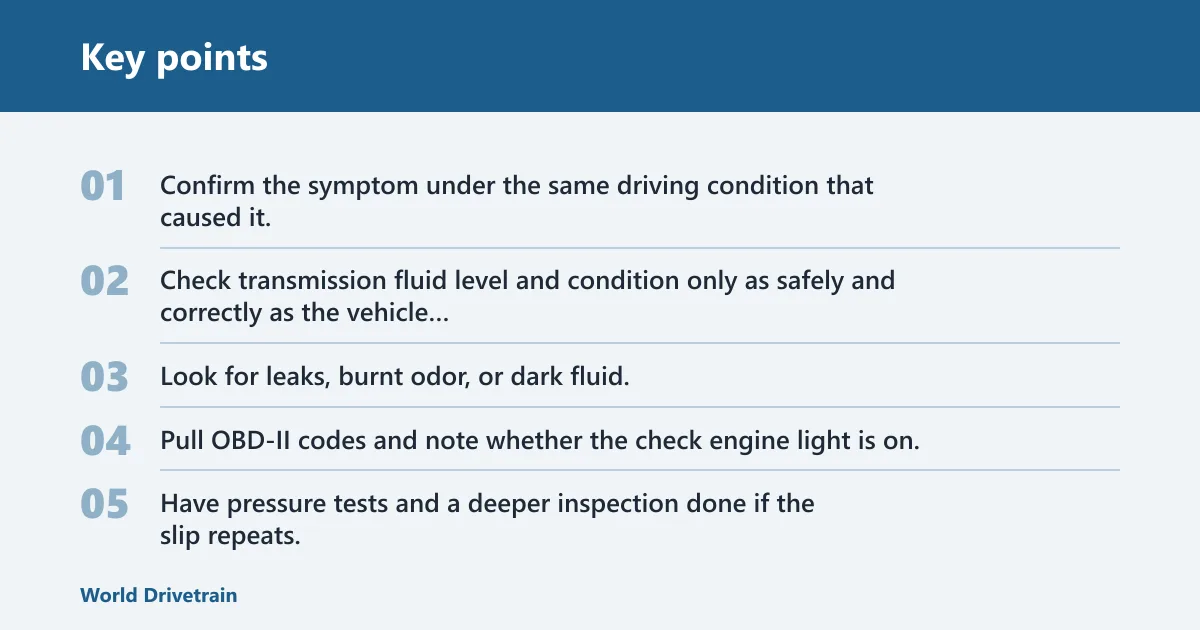
Technicians also inspect transmission fluid level, color, and smell, then look for leaks. Dark reddish or brownish fluid, or a burnt odor, points toward overheating. From there, pressure tests and deeper inspection help separate a control issue from a hydraulic or mechanical failure.
- Confirm the symptom under the same driving condition that caused it.
- Check transmission fluid level and condition only as safely and correctly as the vehicle allows.
- Look for leaks, burnt odor, or dark fluid.
- Pull OBD-II codes and note whether the check engine light is on.
- Have pressure tests and a deeper inspection done if the slip repeats.
A common first-timer mistake is assuming a fluid top-off will cure every slip. Sometimes it helps. Sometimes it only buys a short delay while worn clutch packs, broken bands, or a torque converter fault keep getting worse. The diagnosis has to match the symptom pattern.
Frequently asked questions
What does trans slipping mean?
It means the drivetrain is not holding torque the way it should, so engine speed rises without a matching increase in vehicle speed. Drivers usually use it for an automatic that flares or hesitates, but the same idea can apply to a manual transmission that loses clutch grip or drops out of gear.
What is a transmission slipping?
It is a symptom of lost gear engagement, not a single failure part. The transmission may be losing hydraulic pressure, clutch grip, band hold, or electronic control timing. The key clue is mismatch: the engine revs, but the vehicle does not accelerate normally.
What does slipping mean for transmission?
It means the transmission is not sending power cleanly from the engine to the wheels. That can come from low fluid, worn clutch packs, worn bands, torque converter problems, or control faults. If it repeats, treat it as a diagnosis problem, not a minor shift quirk.
What does your transmission slipping mean?
It means your car has a real power-transfer fault unless a mechanic proves otherwise. If you also notice delayed engagement, harsh shifts, a burning smell, or a check engine light, the odds of an actual transmission issue rise. The safest next step is inspection before the symptom gets worse.
Why would my transmission be slipping?
The most common reasons are low or burnt transmission fluid, worn clutch packs, damaged bands, torque converter failure, or electronic control issues. Automatic and manual transmissions fail differently, so the feel matters. A scan tool, fluid check, and pressure test usually narrow the cause faster than guesswork.
What are the signs of transmission slipping?
Common signs include revving without acceleration, delayed engagement from Park to Drive, hard or delayed shifts, unexpected downshifts, gear dropout, grinding in a manual, a burning smell, and sometimes a check engine light. One sign alone may be inconclusive, but several together point to a real fault.