What Are the Symptoms of a Transmission Fluid Leak?
A transmission fluid leak can show up as red, brown, or dark fluid under the car, a hot, burnt odor, delayed or harsh shifting, slipping, or a transmission warning light; any active drip or drivability change means stop driving soon. Ignoring it can overheat the transmission, turn a simple seal job into major repair, and leave you stranded. This guide sorts the symptoms by urgency so you can tell a seep from a transmission-threatening leak in minutes.
Spotting fresh stains, location, and fluid smell
The first clues are usually a spot under the vehicle, a change in smell, or small shifting changes before the transmission acts up badly. Fresh transmission fluid is often red and slightly see-through, but age and debris darken it, so color alone is only one clue.
Fresh spots versus older stains
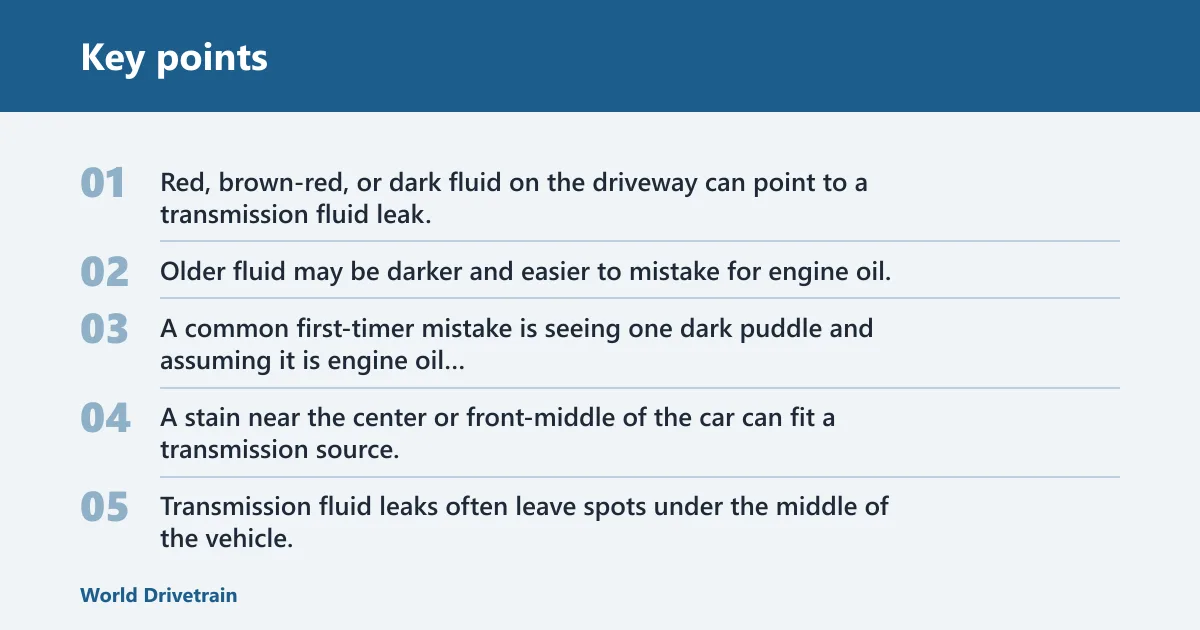
Red, brown-red, or dark fluid on the driveway can point to a transmission fluid leak, especially if it appears after parking in the same spot more than once. Fresh fluid often looks slick and thin. Older fluid may be darker and easier to mistake for engine oil.
A common first-timer mistake is seeing one dark puddle and assuming it is engine oil because the color is no longer bright red. Location matters just as much as color. A stain near the center or front-middle of the car can fit a transmission source, especially if the pan edge or front seal area is wet.
Where the fluid appears after parking
Transmission fluid leaks often leave spots under the middle of the vehicle, not only at the front of the engine bay. A leak from the transmission pan gasket can show fluid around the pan perimeter. A front seal or torque converter seal problem can leave wetness closer to the front-middle area.
Fluid that drips near cooler lines may trail along underbody parts before it lands on the ground. That can make the source harder to read from the driveway alone. If the spot keeps reappearing after each drive, treat it as active until proven otherwise.
How smell and texture help narrow the source
A burning odor is a warning sign when transmission fluid leaks onto hot engine or exhaust parts. That smell makes the leak more urgent, even if the puddle itself looks small. Thin, slippery fluid with a reddish tint is more consistent with transmission fluid than coolant or water.
Suppose you find a quarter-size red spot after a short errand and notice a faint burnt smell when you stop. That combination points away from a harmless stain and toward a leak that may already be reaching hot parts. In that case, do not keep driving as if nothing changed.
Which leak symptoms mean you should stop driving?
Stop driving soon if the leak comes with slipping, delayed engagement, a strong burning smell, or a puddle that grows quickly. Those signs suggest the fluid loss is already affecting hydraulic pressure or lubrication, and low fluid can prevent proper lubrication of transmission components.
Slipping or delayed engagement
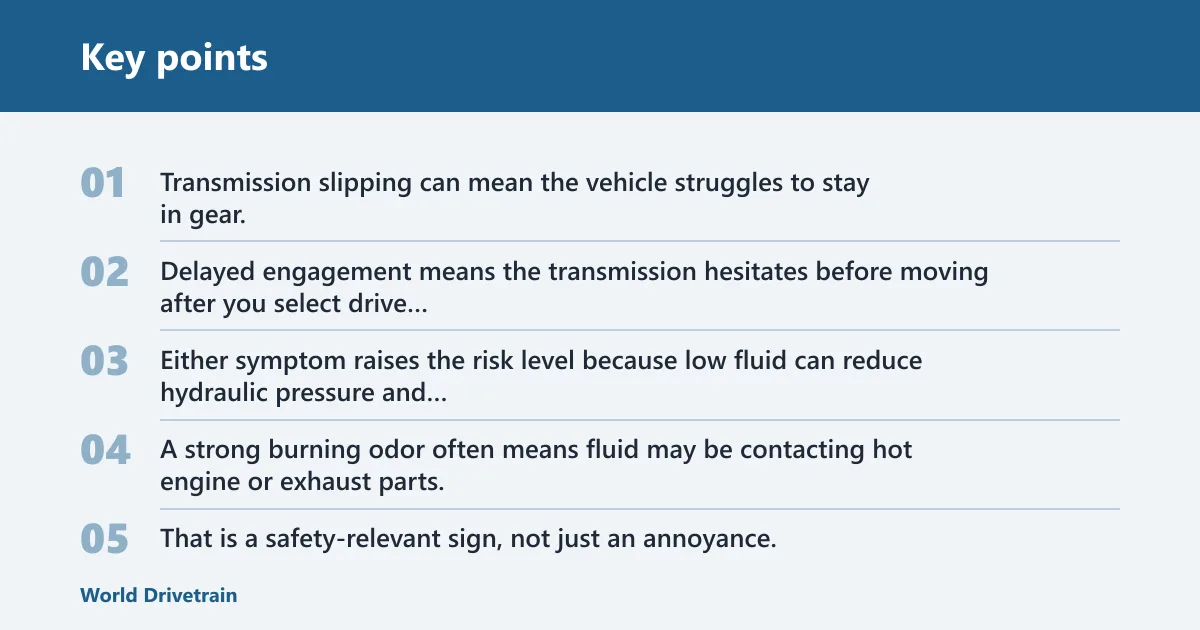
Transmission slipping can mean the vehicle struggles to stay in gear. Delayed engagement means the transmission hesitates before moving after you select drive or reverse. Either symptom raises the risk level because low fluid can reduce hydraulic pressure and interrupt normal operation.
Strong burning smell
A strong burning odor often means fluid may be contacting hot engine or exhaust parts. That is a safety-relevant sign, not just an annoyance. If the smell is strong enough to notice outside the cabin, the leak may be reaching a hot surface and needs prompt inspection.
Rapidly growing puddle or repeated low-fluid symptoms
Repeated spots under the car, new slipping after the vehicle warms up, or a puddle that grows quickly after parking all point to a faster leak. That is the point where driving farther can turn a fixable leak into internal damage, because the transmission may run low enough to lose lubrication and pressure.
Transmission leak triage table
This table pairs symptom patterns with likely source areas and next steps. Use it to separate a slow seep from a transmission-threatening leak.
| Symptom | Likely source area | Urgency level | Recommended next action |
|---|---|---|---|
| Small red or brown spot after parking; no drivability change | Pan gasket perimeter or a slow seal seep | Monitor soon | Check the spot again after the next drive and book inspection if it repeats |
| Fluid wet around the pan edge; slight shift change | Transmission pan gasket | Schedule inspection soon | Limit driving and have the leak source confirmed before fluid gets low |
| Drip near cooler line routing; underbody wetness | Transmission lines or fittings | Schedule inspection soon | Inspect for corrosion, cracking, or brittle line sections |
| Burning smell plus smoke-like odor near hot components | Leak reaching exhaust or engine parts | Stop driving soon | Park safely, avoid extended driving, and get the vehicle inspected promptly |
| Slipping, harsh shifting, or delayed engagement with low fluid signs | Leak large enough to lower hydraulic pressure | Stop driving | Do not keep driving; arrange towing or immediate inspection |
| Wetness near the front-middle of the vehicle | Torque converter seal or related front seal area | Stop driving soon | Have the front of the transmission checked for seal wear or hardware damage |
| Warning light with a leak-related smell or shifting problem | Transmission-related fault, possibly low fluid | Stop driving soon | Inspect promptly; a warning light is not a diagnosis by itself |
How do you tell a transmission leak from other fluid leaks?
Start with location, color, and smell. Transmission fluid is often red when fresh, but it can darken with age and debris. It may be mistaken for engine oil, power steering fluid, or even other vehicle fluids, so you need more than color alone to identify it.
Transmission fluid versus engine oil
Engine oil is usually brown to black and tends to smell oily rather than sharp or burnt unless it has been heated. Transmission fluid is often red when fresh and can smell burnt if it has reached hot parts. A stain under the middle of the car points more toward the transmission than the engine.
Transmission fluid versus power steering fluid
Power steering fluid can also look reddish on some vehicles, which is why location matters. A leak near the transmission pan, lines, or bellhousing area fits transmission fluid better than a front-of-engine steering leak. Look for where the wetness starts, not only where it drips.
Transmission fluid versus coolant
Coolant usually looks different in color and has a sweet smell rather than a burnt one. It also tends to leave a watery or crusty trace as it dries. Transmission fluid is oilier, and a leak that combines oily spots with shifting issues is much more concerning for the transmission itself.
What usually causes a transmission fluid leak?
Common leak points are the transmission pan gasket, seals, lines, torque converter seal, and drain plug. Those are source areas, not the reasons the leak started. The reason may be age, wear, corrosion, cracking, or poor installation, depending on the part.
Pan gasket and drain plug
The transmission pan gasket is a common leak point at the pan perimeter. When it fails, fluid often gathers around the edge of the pan before it drips. A drain plug can also leak if its sealing washer or plug seal is damaged or not seated correctly.
Transmission lines and fittings
Transmission lines carry fluid to and from the cooler. Metal lines can corrode, and rubber or plastic lines can crack or become brittle. Those failures often show up as drips under the vehicle rather than wetness only in one small spot.
Torque converter seal and front seals
Damage to the torque converter may leak near the front-middle of the car. Seal wear or failure is another common leak source. Because this area sits deeper in the drivetrain, a leak here can be harder to spot without a careful underbody inspection.
Do symptoms differ by transmission type?
Yes, the broad warning signs overlap, but the way they show up can differ. Automatic, CVT, and manual transmissions can all leak fluid, yet the driving symptoms and fluid-level checks are not identical. That is why the owner’s manual or service information matters.
Automatic transmission clues
Automatic transmissions may show slipping, delayed engagement, harsh shifting, or odd shift timing when fluid gets low. A warning light may appear on some vehicles, but many vehicles do not have a direct transmission fluid level warning or a dedicated low-fluid light.
CVT-specific shifting complaints
CVTs can feel like they are searching for the right ratio, or they may hold engine speed strangely if fluid pressure drops. A leak in a CVT still matters for the same reason: low fluid can reduce lubrication and hydraulic pressure, which affects driveability quickly.
Manual transmission leak signs
Manual transmissions may show fluid spots, gear noise, or difficult shifting, but they usually do not present the same slipping pattern as an automatic. If a manual gearbox is leaking, the exact feel depends on which seal or gasket is failing and how low the fluid has fallen.
What should you check next?
Check the source area, note the fluid color and smell, and confirm whether the vehicle is still shifting normally. Then follow the correct fluid-level procedure for that specific vehicle. Some transmissions use a dipstick, some do not, and the check may depend on temperature, gear selection, or engine status.
Practical inspection checklist
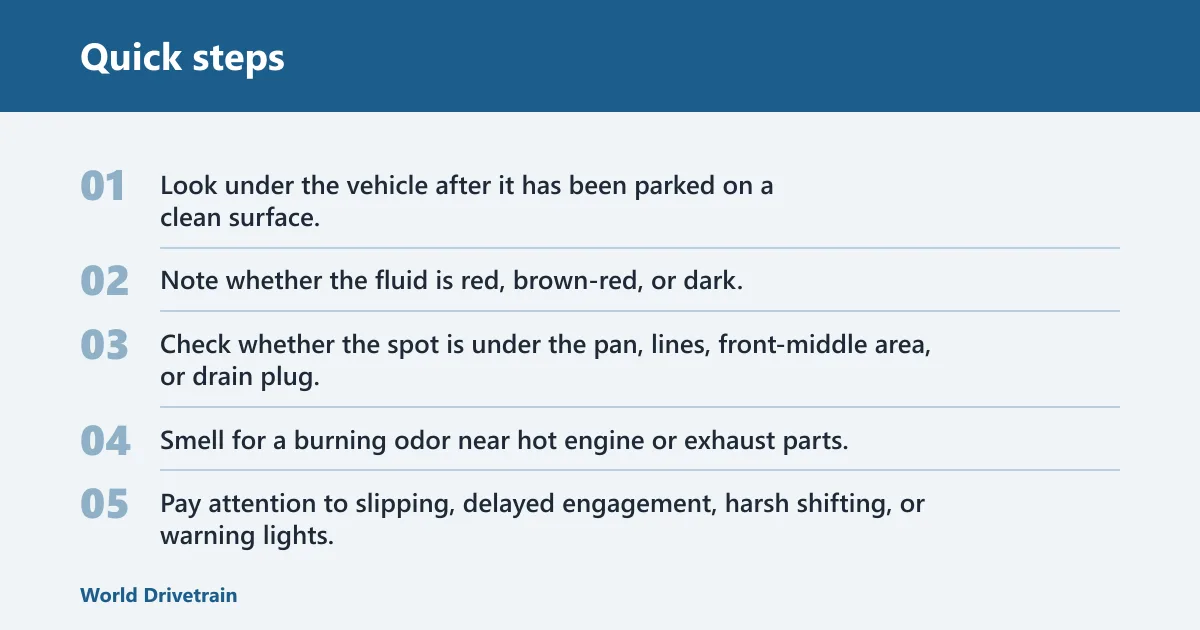
- Look under the vehicle after it has been parked on a clean surface.
- Note whether the fluid is red, brown-red, or dark.
- Check whether the spot is under the pan, lines, front-middle area, or drain plug.
- Smell for a burning odor near hot engine or exhaust parts.
- Pay attention to slipping, delayed engagement, harsh shifting, or warning lights.
- Limit driving if the puddle is growing, the smell is strong, or the transmission changes how it shifts.
- Book an inspection if the leak repeats or the source is not obvious.
Why the fluid-level procedure depends on the vehicle
The correct fluid-level check is not the same for every transmission. Some vehicles require a specific temperature range, some require the engine on, and some use procedures that differ by gear selection or service mode. Follow the owner’s manual or service information for that model instead of a universal rule.
When to book an inspection
Book inspection promptly if the leak is repeated, the fluid is dark and wet around a common source area, or the vehicle shows shifting changes. If you see slipping, a strong burning smell, or rapid fluid loss, stop driving and get help immediately. The longer low fluid runs, the more likely the transmission is to suffer damage.
Frequently asked questions
What are the symptoms of a transmission fluid leak?
The most common symptoms are reddish or dark fluid under the vehicle, a burning smell, slipping, harsh or delayed shifting, unusual noise, and sometimes a transmission warning light. Low fluid can reduce lubrication and hydraulic pressure, so the transmission may start to feel wrong before it fully fails.
How do you know if you have a transmission leak?
Look for fluid under the middle of the car, especially if it is red, brown-red, or oily and the transmission behavior has changed. A leak often leaves wetness around the pan gasket, lines, drain plug, or front seal area. Repeating spots after parking are a strong clue.
What happens when transmission fluid leaks?
When transmission fluid leaks, the system can lose lubrication and hydraulic pressure. That can lead to slipping, delayed engagement, harsh shifts, noise, and overheating. If the leak continues, what starts as a seep can become a drivability problem that risks internal transmission damage.
What causes a transmission fluid leak?
Common causes include a worn pan gasket, corroded or cracked transmission lines, seal wear or failure, a leaking torque converter seal, and a drain plug that is not sealing correctly. Age, heat, road exposure, and poor installation can all contribute, depending on the part.
Is it normal for transmission fluid to leak?
No. A healthy transmission should not leave fluid on the ground. A small seep can happen as components age, but any repeated spot, wet pan edge, or smell of burnt fluid deserves inspection. “Normal” is not the right label once a leak is visible or drivability changes.
How can I tell if my transmission is leaking?
Check where the fluid appears, how it smells, and whether the transmission still shifts normally. Transmission fluid is often red when fresh and may darken with age. If the spot is under the pan, lines, or front-middle area and you notice slipping or a warning light, treat it as a likely leak.