Why Does My Transmission Shift Hard From Park to Reverse?
A hard park-to-reverse shift usually points to fluid level or condition, idle load, linkage misadjustment, or a delayed clutch or parking pawl release; a single clunk is often more normal than repeated banging. Ignoring it can turn a minor adjustment into worn mounts, damaged linkage, or transmission damage. This guide explains the normal feel, the main causes, and the checks that separate fluid, hydraulic, electronic, and mechanical faults.
Why park to reverse feels different
Park-to-reverse is a different kind of shift than an ordinary upshift. Reverse loads the drivetrain more abruptly, so a brief clunk can happen as the park pawl releases and the reverse gear set engages. What matters is the pattern: one clean engagement is one thing, repeatable harshness or delay is another.
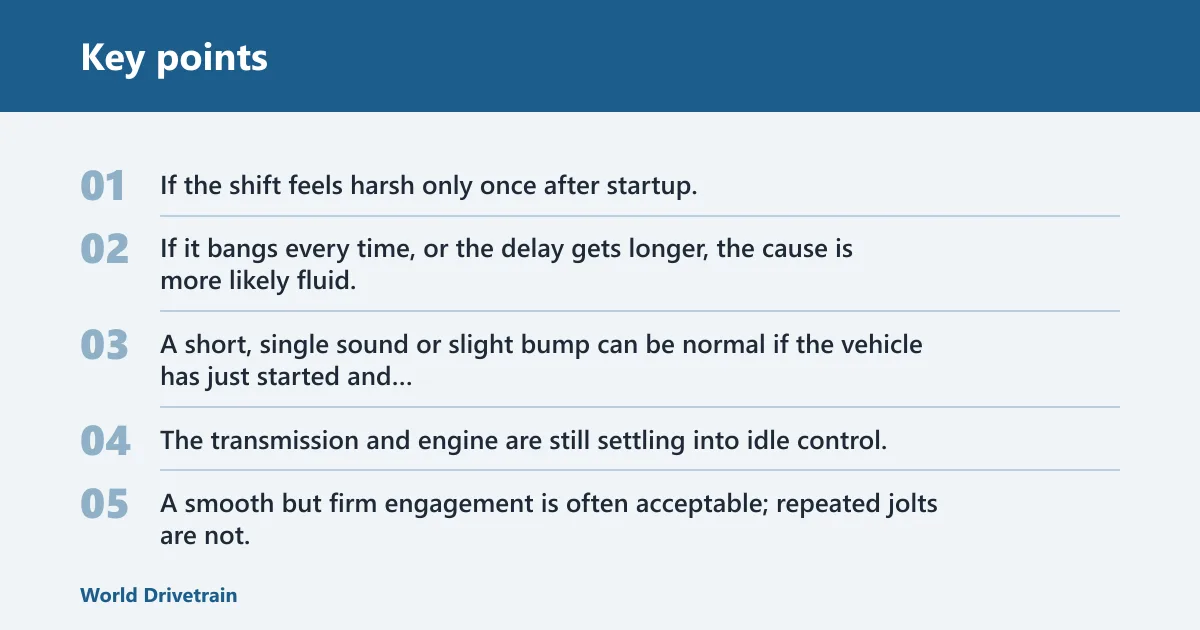
If the shift feels harsh only once after startup, that can sometimes come from idle speed settling, cold fluid, or the way the vehicle sits on a slope. If it bangs every time, or the delay gets longer, the cause is more likely fluid, control, linkage, or a mechanical fault.
What is normal when selecting reverse?
A short, single sound or slight bump can be normal if the vehicle has just started and reverse is selected after a brief pause. The transmission and engine are still settling into idle control, and automatic transmission fluid is thicker when cold. A smooth but firm engagement is often acceptable; repeated jolts are not.
Normal does not mean silent on every vehicle. It means consistent, brief, and not getting worse. If the same shift becomes louder, delayed, or rough in both forward and reverse, treat it as a fault pattern rather than a normal trait.
Park-to-reverse hard shift triage
| Symptom pattern | Likely cause | Simple check | Scan data to look for | Next action |
|---|---|---|---|---|
| One-time startup clunk | Cold fluid, idle settling, parking pawl load, slight linkage play | Compare cold start to fully warm restart on level ground | Idle speed, gear command, range sensor agreement | Verify fluid level and watch whether the feel disappears warm |
| Repeated harsh engagement | Low or degraded automatic transmission fluid, solenoid fault, range sensor issue, hydraulic pressure problem | Check for leaks, fluid condition, and repeatability in all temperatures | Transmission control module trouble codes, commanded gear, input status | Scan the transmission module and inspect the fill procedure before adding fluid |
| Delayed reverse engagement | Low fluid, worn seals, pressure loss, torque converter issue, internal hydraulic delay | Count the delay from selector movement to engagement | Slip, pressure-related codes, abnormal gear timing | Do not keep cycling the selector; confirm fluid level and scan data |
| Reverse-only harshness | Linkage misadjustment, range sensor error, reverse circuit issue, mount load | Check whether park, drive, and reverse feel different | Range signal, reverse command status, solenoid-related codes | Inspect linkage and range input before replacing parts |
Could low or dirty fluid be the cause?
Yes. Low or degraded automatic transmission fluid is one of the most common reasons for hard shifting. Fluid handles lubrication and hydraulic pressure, so a drop in level or quality can make reverse engagement slower, harsher, or inconsistent. Contamination can also reduce smooth operation.
Before adding fluid, check for leaks. Many vehicles have no dipstick, so you cannot rely on a quick pull-and-read check. Follow the vehicle-specific level procedure exactly, because some transmissions must be checked at a certain fluid temperature, engine state, or fill-port condition.
Automatic transmission fluid level and condition
Look at color, smell, and consistency if the design allows a visual check. Dark, burnt, or gritty fluid suggests heat stress or wear. Low fluid can let air enter the hydraulic system, which hurts clutch apply quality and can make park-to-reverse feel abrupt or delayed.
Fluid issues are the most common reason for automatic hard shifting. That does not mean fluid is always the answer, but it is the first place to verify because it is cheap to inspect and often tied to the symptom.
Why cold fluid can feel harsher
Transmission fluid becomes thicker as temperatures drop. Cold transmission operation can make shifting feel harsher until warm-up, especially after the vehicle has sat overnight. If the first reverse selection is rough but the same shift is smoother after about several minutes of driving, that often points toward temperature-related behavior rather than a constant fault.
Suppose a sedan backs out of a driveway with a single bump at 20°F, then shifts into reverse smoothly after a five-minute drive to the store and back. That pattern leans toward cold-fluid behavior. If the same jolt happens after full warm-up, the cause is less likely to be temperature alone.
What sensors and solenoids can cause this?
A sensor or solenoid fault can also cause hard shifting. The transmission control module reads shift-related inputs and stores trouble codes, while the engine control module monitors transmission-related signals and other inputs that can affect shift quality. A scan tool is the fastest way to see whether the problem is being recorded.
Electronic faults matter because they can change line pressure, gear command timing, or the transmission’s idea of what gear is selected. That can produce a harsh reverse engagement even when the fluid level looks acceptable.
Transmission control module trouble codes
The TCM stores trouble codes when it sees an electrical or signal fault, and those codes can point to solenoids, range data, or pressure-related problems. A scan tool should be used to check the transmission module, not only the engine computer.
If the scan shows a code tied to reverse timing, range signal, or shift control, that is more useful than guessing at parts. Codes help separate a hydraulic complaint from an input problem.
Engine control module input faults
The ECM can detect sensor faults and monitor signals that affect shift behavior. An engine-side fault, such as a throttle or idle-control issue, may not look like a transmission failure at first, but it can change how hard reverse engages. Rough idle can add load during selection.
Check for engine codes if the vehicle also idles poorly, hesitates, or has unstable rpm in gear. A transmission problem and an engine problem can happen at the same time.
Shift solenoid and range sensor problems
A shift solenoid controls hydraulic shifting and can fail electrically or mechanically. It may set related trouble codes. A transmission range sensor, also called a position sensor, reports gear position, and a bad signal can affect shifting. Age, heat, or a short can make that signal unreliable.
These faults often show up as repeatable symptoms, not one odd event. If reverse is always harsh while other gears feel normal, or the dash gear display does not match selector position, suspect the range circuit early.
Can the shifter or linkage make reverse feel hard?
Yes. A bad shifter cable can cause issues as the gears change, and linkage play or misalignment can make the selector feel like a transmission fault when the transmission itself is not the main problem. Some vehicles allow adjustment; others need replacement parts.
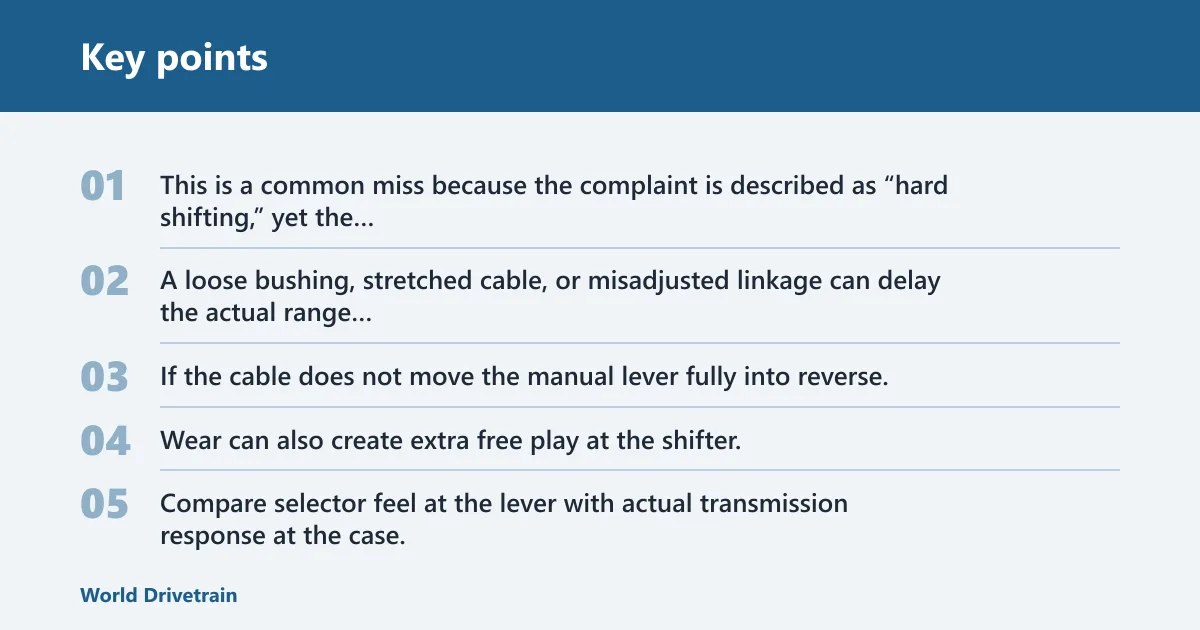
This is a common miss because the complaint is described as “hard shifting,” yet the problem is outside the transmission. A loose bushing, stretched cable, or misadjusted linkage can delay the actual range selection.
Shifter cable adjustment and wear
If the cable does not move the manual lever fully into reverse, the transmission may catch late or with a jolt. Wear can also create extra free play at the shifter. Compare selector feel at the lever with actual transmission response at the case, if accessible.
Parking pawl feel versus true transmission fault
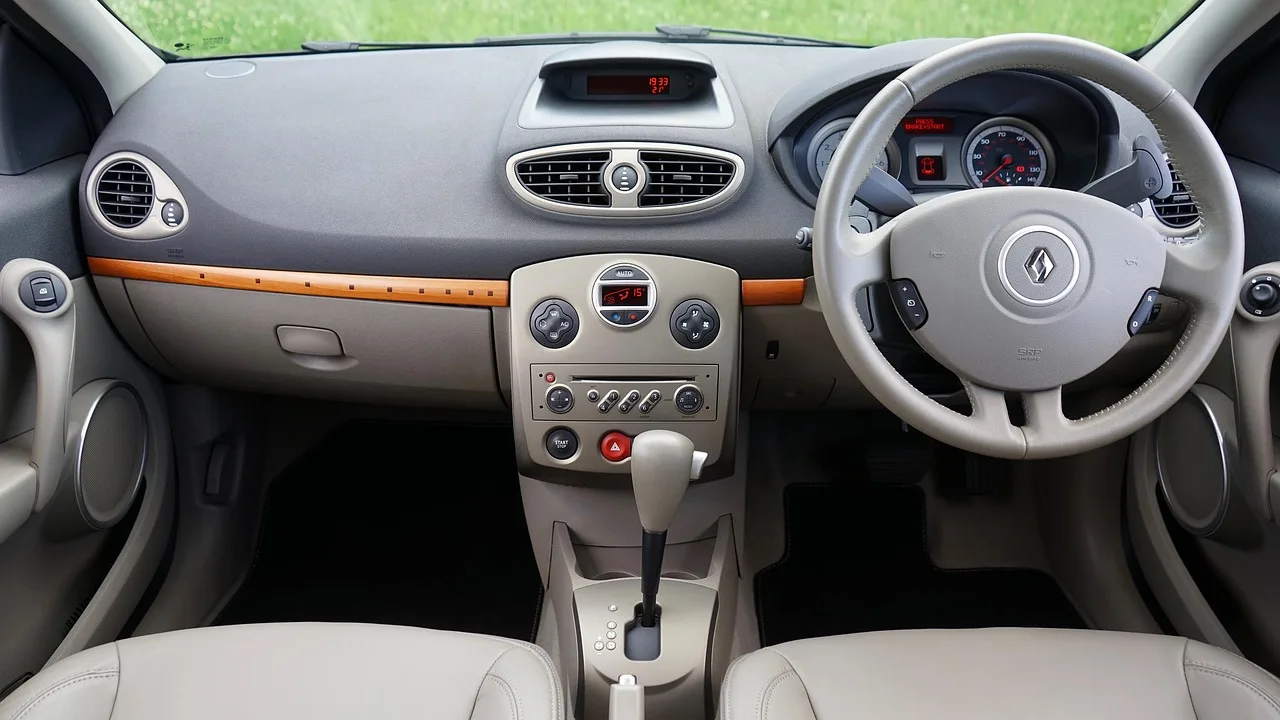
The parking pawl holds the vehicle in park. When you move to reverse, that pawl releases before the reverse gear set takes over. On a slope, the vehicle’s weight can load the pawl and make the release feel like a hard shift, especially if the parking brake was not set first.
A common first-timer mistake is testing reverse on a steep driveway without the parking brake set. The car rolls slightly, then the selector is moved out of park under load. That can create a harsh clunk that looks worse than it is.
Could engine load or a torque converter issue be involved?
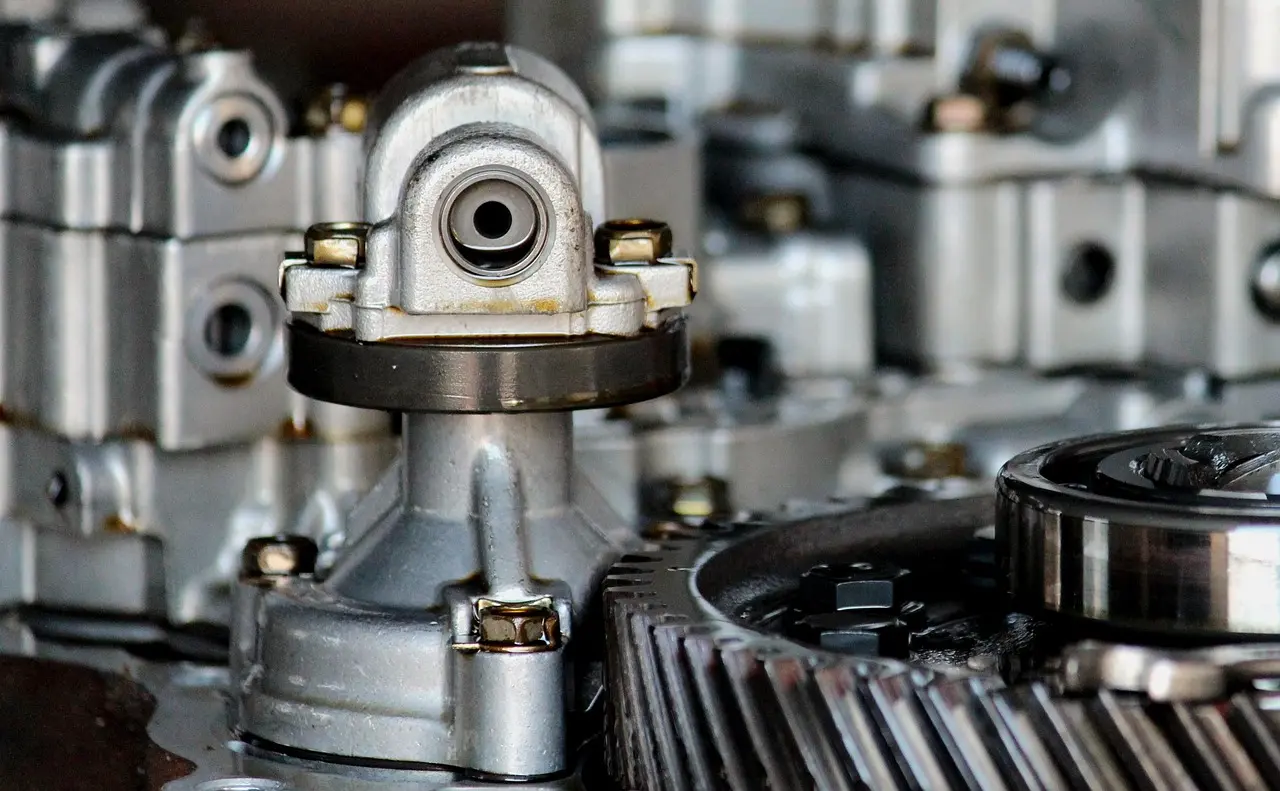
Yes. Idle speed, engine mounts, and torque converter behavior can all affect how reverse feels. A torque converter transfers power from the engine to the wheels, so if it is not operating cleanly, the symptom may include delayed or harsh engagement plus broader driveability issues.
Do not ignore mount condition. Excess engine movement can make a normal engagement feel violent, and it can also stress linkage parts over time.
Idle speed and engine mount checks
If idle speed is too high or unstable, the transmission may engage reverse against extra engine output. Worn mounts can add a harsh thump because the engine rocks farther when load is applied. These are simple checks when the complaint happens mainly at idle and not while driving.
Torque converter symptoms that matter
A torque converter problem is more likely when reverse is harsh along with slipping, shudder, or delayed drive engagement in more than one gear. That is different from a one-off clunk only in reverse. Persistent low-fluid conditions can also affect converter operation, since the converter contains transmission fluid.
Older vacuum modulator faults
Older cars may use a transmission vacuum modulator. If the vacuum line leaks or the modulator fails, the transmission can see extra pressure and shift too hard. That is a legacy cause, but it still matters on older automatic transmissions that use that setup.
What to check before you replace parts
Start with the parts of the system you can verify quickly. Fluid, leaks, and the correct level procedure come first. Then move to scan data, because the TCM and ECM may already have clues stored. Finish with cold-versus-hot comparison so you know whether temperature is part of the pattern.
- Check for leaks around the pan, cooler lines, seals, and transmission case before adding fluid.
- Verify fluid level by the vehicle-specific procedure, since many vehicles have no dipstick.
- Note fluid color, odor, and any contamination.
- Watch idle speed in park and in reverse, and listen for mount movement or excess shake.
- Inspect the shifter cable or linkage for play, misalignment, or damaged bushings.
- Scan the transmission module and the engine computer for trouble codes and gear-related data.
- Compare cold and fully warm reverse engagement before replacing internal parts.
Picture a crossover that shifts into reverse with a hard hit only after sitting overnight, then behaves normally once the engine is warm. That pattern points first to cold-fluid behavior and level verification. If the same vehicle starts logging a range sensor code and reverse remains harsh hot and cold, the path changes quickly.
Frequently asked questions
Why does my transmission shift hard from park to reverse?
A hard park-to-reverse shift usually comes from low or degraded fluid, idle load, linkage misadjustment, or an electrical fault that delays reverse engagement. A single clunk can be normal, especially when cold or on a slope. Repeated banging, delay, or worsening behavior points to a fault that needs diagnosis.
Why is it hard to shift from park to reverse?
It is hard to shift from park to reverse when the parking pawl releases under load, the transmission fluid is low or cold, the linkage is out of adjustment, or a sensor or solenoid is not commanding the shift correctly. The important question is whether the harshness happens once or every time.
What would cause transmission to shift hard?
Hard shifting can come from low or dirty fluid, leaks, sensor or solenoid faults, cold temperatures, linkage problems, engine idle issues, or internal wear. The automatic transmission, TCM, and ECM can all contribute. Start with fluid level, leak inspection, and trouble codes before assuming internal damage.
Can low transmission fluid make park-to-reverse shift harsh?
Yes. Low fluid can make park-to-reverse shift harsh because the transmission needs the right fluid level for lubrication and hydraulic pressure. That is why leak checks come first. If the vehicle has no dipstick, use the vehicle-specific level procedure rather than guessing or adding fluid blindly.
Could a bad shift solenoid cause a hard reverse engagement?
Yes. A bad shift solenoid can cause a hard reverse engagement by disrupting hydraulic control or timing. It may set related trouble codes in the transmission control module. A scan tool is the best next step when the problem is repeatable and not explained by fluid level or temperature alone.
Is hard shifting normal when the transmission is cold?
Sometimes, yes. Cold transmission operation can feel harsher until warm-up because fluid becomes thicker as temperatures drop. A short, repeatable clunk that improves after a few minutes can be normal. If the shift stays harsh after warm-up, or it gets worse over time, treat it as abnormal.