Why Is My Clutch Slipping After Replacement?
Clutch slip soon after replacement often points to misadjustment, contamination, hydraulic issues that keep the clutch partly engaged, or an installation problem with the flywheel or pressure plate; normal bedding-in should not cause steady slip beyond roughly the first few hundred miles. Ignoring it can glaze the new friction disc, damage the flywheel, and turn a comeback repair into a bigger bill. This guide shows how to separate bedding-in from installation, hydraulic, contamination, and unrelated drivetrain faults before you return to the shop.
Why a new clutch can still slip
A clutch slips when engine RPM rises without a matching increase in road speed. That is the key symptom, whether you notice it on a hill, in a higher gear, or during a full-throttle pass. A newly installed clutch should not keep doing that once the friction surfaces begin to mate.
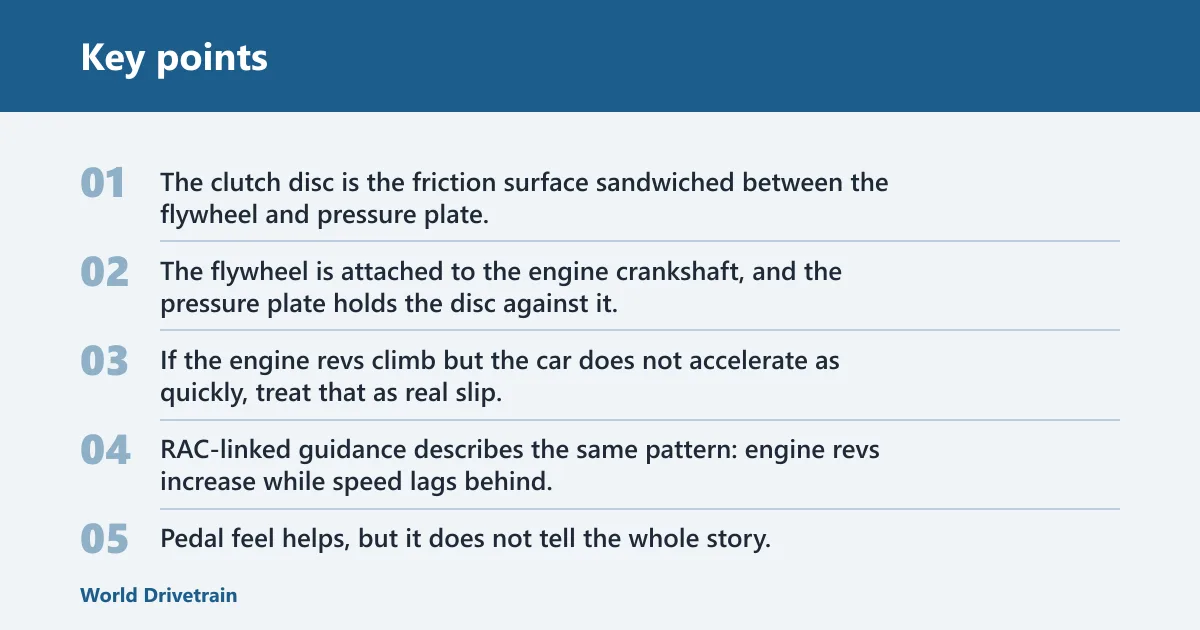
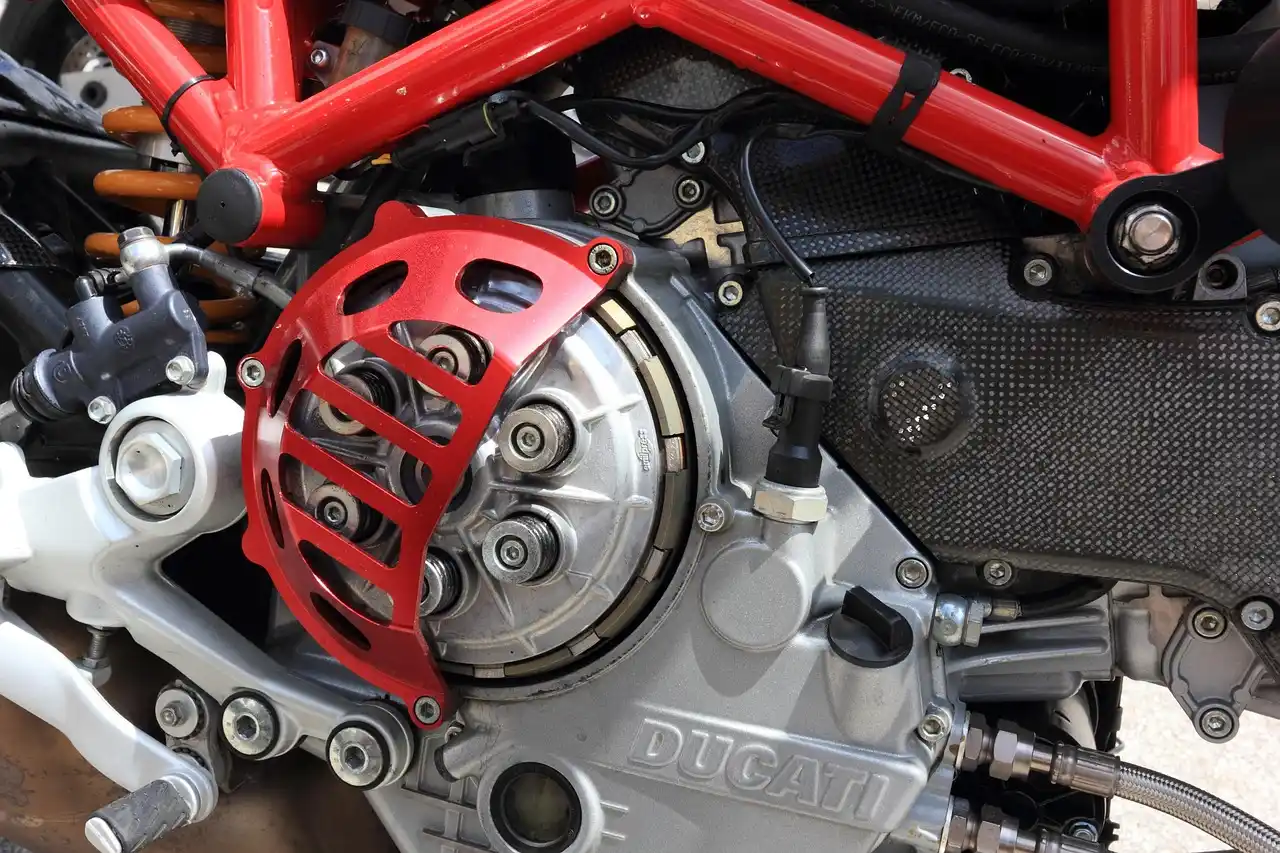
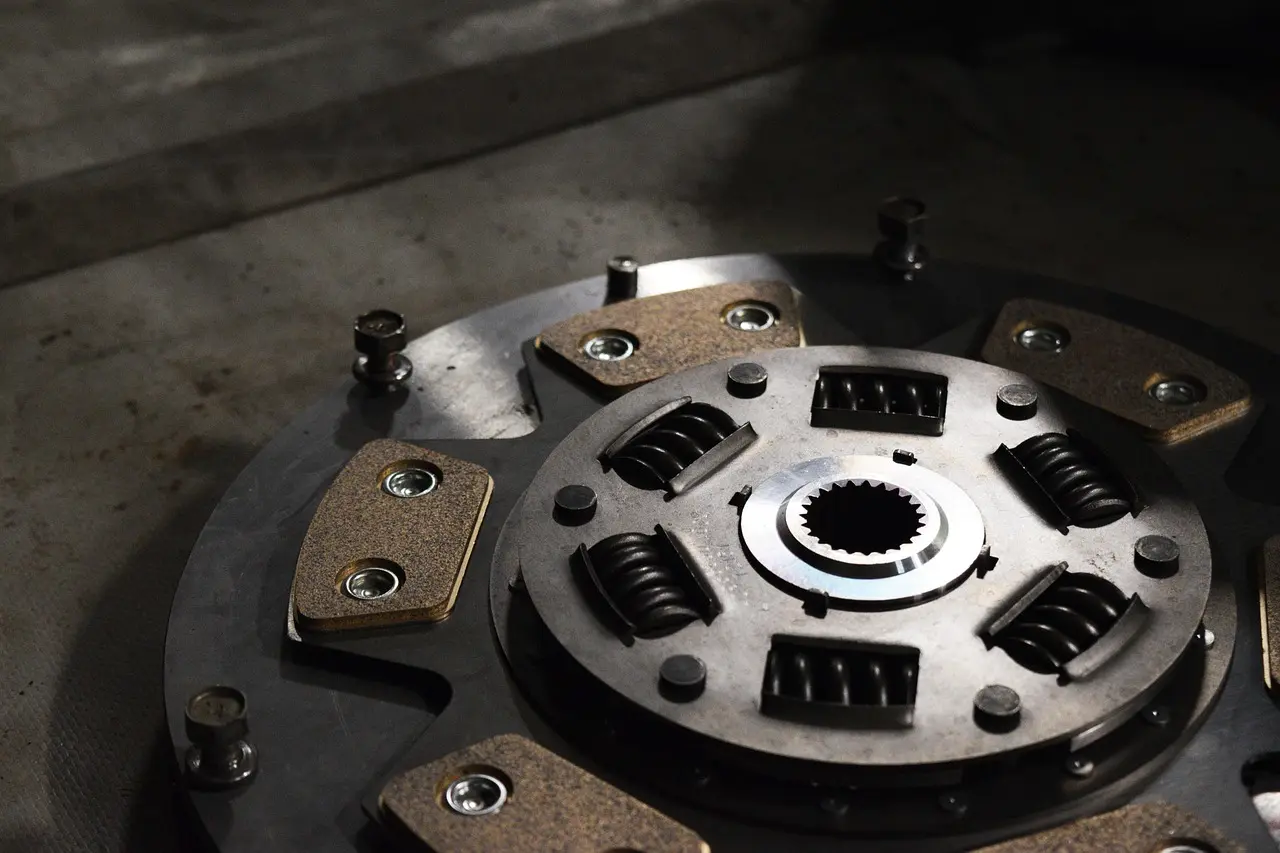
The clutch disc is the friction surface sandwiched between the flywheel and pressure plate. If the disc is oil-soaked, glazed, wrong for the application, or clamped with the wrong parts, it cannot transmit torque cleanly. The flywheel is attached to the engine crankshaft, and the pressure plate holds the disc against it. If either surface is scored, overheated, or the diaphragm spring has lost clamping force, the new kit can slip from day one.
Signs the slip is real
If the engine revs climb but the car does not accelerate as quickly, treat that as real slip. RAC-linked guidance describes the same pattern: engine revs increase while speed lags behind. A burning smell from overheated friction faces is another classic sign, and Star Motorworks notes that slip is often worse under high-torque driving such as uphill driving or towing.
Pedal feel helps, but it does not tell the whole story. A high bite point is a common symptom, and a spongy pedal points more toward hydraulic trouble than to a worn friction disc. Gear selection can also change. A slipping clutch may come with awkward shifting, but hard shifting alone usually points more toward clutch drag or release problems than true slip.
If a car drives away normally in light traffic but the engine RPM jumps by about 1,000 or more in 4th gear on a moderate hill while road speed barely changes, that is closer to clutch slip than normal bedding-in. That pattern is much closer to clutch slip than to normal bedding-in.
What pedal feel can and cannot tell you
Pedal feel is useful, but it is only one clue. A very high bite point, a pedal that feels different than it did right after the repair, or a pedal that sinks or feels spongy can point to a hydraulic or release issue. Low clutch fluid can affect operation, but it more often causes incomplete disengagement and hard shifting than true slip from low clamp load.
If the pedal feels normal and the engine still flares under load, focus on clamp force, contamination, or wrong parts. If the pedal feels spongy or the bite point keeps changing, focus on the master cylinder, slave cylinder, fluid level in the master cylinder, and trapped air or pressure loss.
What to check first after repair
Start with evidence you can collect before booking the comeback. The most useful checks are part-number verification, a look for leaks or contamination, and a quick note of how the pedal and bite point behave cold versus hot. Those details help separate true slip from drag, release trouble, or an unrelated torque flare that only feels like slip.
-
Verify the part application.
Check the clutch kit part number against the vehicle identification and engine code on the invoice or packaging. If the wrong disc thickness, spline count, or pressure-plate variant was fitted, the assembly can slip even when it is brand new. Ask the shop to confirm the exact application for your model rather than relying on a close match.
-
Inspect for contamination.
Look for oil, gearbox fluid, or grease near the bellhousing, inspection cover, or the bottom of the engine-to-gearbox joint. FixMyCar says oil contamination can reduce friction between components, which is enough to make a new disc slip. A contaminated disc usually needs removal again, because surface cleaning rarely restores full grip.
-
Check the hydraulic level.
Look at the fluid level in the master cylinder reservoir and inspect the slave cylinder, lines, and fittings for seepage. FixMyCar advises checking clutch fluid level in the master cylinder. Low fluid by itself is not usually the cause of true slip, but air or pressure loss can keep the release system from working as intended and can change the bite point.
-
Note pedal feel and bite point.
Press the pedal several times with the engine off, then note whether the bite point feels high, low, or inconsistent. A high bite point can fit slip, while a spongy or changing pedal often points to hydraulics. If the point changes as the car warms up, that detail matters for diagnosis.
-
Look for heat clues.
Sniff for an acrid burning smell after a short drive. Star Motorworks lists burning odour as a classic slipping-clutch symptom. If the smell appears after towing, climbing a hill, or pulling away in traffic, that supports an overload or clamp-force problem rather than a random engine issue.
A common first-timer mistake is calling every high-rev event “slip.” Suppose the engine surges in 2nd gear because the throttle body or ignition is misbehaving. That is torque flare, not necessarily clutch failure. The clue is whether the rev rise follows engine load only, or whether road speed and clutch load are actually separating.
Clutch slip triage
Use this table to sort the first day or two after repair. Normal bedding-in is usually light, brief, and improving. A repeatable slip pattern, especially under load, is a return-to-shop problem.
| Symptom timing | Likely cause | Quick driveway checks | Normal bedding-in or return-to-shop? |
|---|---|---|---|
| Immediate slip in 3rd gear after pickup | Wrong part, contamination, or pressure plate clamp fault | Verify part number, check for oil at bellhousing, note whether RPM rises faster than speed | Return-to-shop problem |
| Slip only when hot | Weak diaphragm spring, glazing, or fluid pressure issue | Repeat the same road load cold and hot, note any bite-point change | Return-to-shop problem |
| Slip only on hills or towing | Torque capacity too low, wrong application, or overheated friction surfaces | Compare light-throttle driving with a loaded hill pull, check for burning smell | Return-to-shop problem |
| Slip after one hard acceleration run | Disc glazing or low clamp load | Note whether the smell appears immediately after the pull | Return-to-shop problem |
| Brief, mild flare in the first miles only | Normal bedding-in if it is fading quickly | Confirm it is improving, not repeating under the same load | Usually normal bedding-in |
| Burning smell after stop-start traffic | Disc slipping under repeated heat load | Check whether the smell fades after a cool-down and whether RPM flare repeats | Return-to-shop problem if repeated |
| Pedal feels spongy or inconsistent | Air in the hydraulic system, master cylinder, or slave cylinder issue | Check reservoir level, inspect for leaks, pump the pedal and note whether feel changes | Return-to-shop problem |
| High bite point from the first drive | Release-system setup issue or mismatch in parts | Compare bite point to the handover feel and note if it keeps climbing | Return-to-shop problem |
| Difficulty selecting 1st or reverse with no RPM flare | Clutch drag, not true slip | Listen for input-shaft drag, check pedal travel and hydraulic feel | Return-to-shop problem |
| Slip after towing or a heavy load | Overload of a weak or contaminated clutch, or flywheel heat damage | Inspect for smell, note whether the issue now happens with light throttle too | Return-to-shop problem |
Which post-replacement faults cause slip?
The most common post-replacement faults are not mysterious. They are wrong parts, contaminated friction surfaces, missed flywheel or pressure-plate damage, and release-system problems that keep clamp force from being applied properly. Hydraulics matter when they change release position or pedal feel, but they do not usually create true slip by themselves unless the system is holding the clutch partly released.
Clutch disc, flywheel, and pressure plate issues
South Bend Clutch identifies the clutch disc as the friction surface between the flywheel and pressure plate, the flywheel as the engine-mounted side, and the pressure plate as the part that holds the disc against it. If the disc is glazed, contaminated, or wrong for the car, it cannot grip. If the flywheel is scored or overheated by slip, it may need inspection for warping or glazing before the new disc can work properly.
The same source notes that a slipping clutch can cause significant damage to the flywheel and pressure plate. That matters after replacement because a worn flywheel face can ruin a new disc quickly, and a weak pressure plate can make a good disc act bad.
Diaphragm spring or release-system problems
The diaphragm spring provides the clamping force inside the pressure plate. If it is damaged, worn, or not loaded correctly during installation, clamp force drops and slip can follow. Release bearing preload, release fork setup, and incorrect assembly can also hold the clutch too near disengagement.
This is where many comeback complaints start. The clutch may be new, but if the release system was set up incorrectly, the disc never gets full clamp. That is a fault, not bedding-in.
When hydraulics matter and when they do not
The hydraulic system includes the master cylinder, slave cylinder, and the fluid that moves them. Air in the system, a leak, or pressure loss can change pedal feel and bite point. That often produces incomplete disengagement, which feels like hard shifting or drag more than classic slip.
Could low clutch fluid make a newly replaced clutch slip? Usually no, not by itself. Low fluid is more likely to cause incomplete release, a low or spongy pedal, and trouble selecting gears. If the pedal feel has changed and the reservoir is low, that still deserves a return visit because the root cause may be a leak or a bad cylinder.
Can you keep driving it?
If the clutch is slipping in a repeatable way, especially immediately after repair, keep driving to a minimum and book the shop. Continued driving can glaze the clutch disc and damage the flywheel and pressure plate further. Prolonged slip does not mainly destroy the gearbox; it mainly cooks the clutch assembly itself.
Use the car only long enough to confirm the symptom and get it back to the workshop if the slip is mild. If RPM flare is strong, the burning smell is present, or the car slips under normal acceleration, do not keep testing it on the road.
How long bedding-in should take?
Normal bedding-in should usually improve over roughly the first few hundred miles, rather than causing steady slip that gets worse. Light smell, a slightly different bite point, or a small amount of change as the new surfaces mate can be normal. Steady RPM flare under load is not a bedding-in excuse.
Can a slipping clutch fix itself after replacement? If the symptom is real slip, no. A clutch that is slipping because of wrong parts, contamination, clamp-force loss, or hydraulic hold will not heal with more driving. It usually gets worse.
Frequently asked questions
Why is my clutch slipping after replacement?
Post-replacement slip usually points to wrong parts, contamination, incomplete release setup, or a pressure-plate or flywheel fault. A new clutch should not keep allowing engine RPM to rise without matching road speed. If the slip is repeatable under load, treat it as a comeback issue rather than normal bedding-in.
Can a clutch slip because it was installed incorrectly?
Yes. Incorrect installation can leave the disc contaminated, the pressure plate misseated, the diaphragm spring improperly loaded, or the release system set too tightly. Any of those can reduce clamp force. The result is the same: the clutch disc cannot grip the flywheel strongly enough to transmit power.
Why does my clutch slip only when accelerating hard?
Hard acceleration raises torque demand, so a weak or contaminated clutch shows the problem first there. The same source notes that slip is often worse under high-torque driving such as uphill driving or towing. If the same car is fine at light throttle but flares on a hard pull, the clutch is usually near or past its limit.
Is a burning smell normal after a new clutch replacement?
A short-lived smell can happen during early bedding-in, but an acrid burning odour that repeats under load is a warning sign. The same source lists burning odour as a classic slipping-clutch symptom. If the smell appears with RPM flare, treat it as a fault, not as routine break-in.
Could low clutch fluid make a newly replaced clutch slip?
Low fluid is more likely to cause incomplete disengagement, hard shifting, or a spongy pedal than true slip from low clamp load. FixMyCar advises checking clutch fluid level in the master cylinder. If the reservoir is low, look for a leak or hydraulic fault, but do not assume low fluid alone explains engine flare.
How do I tell if the clutch, hydraulics, or flywheel is the problem?
Start with symptom pattern. RPM flare under load points toward the clutch disc, pressure plate, flywheel, or diaphragm spring. A spongy pedal, changing bite point, or fluid loss points toward hydraulics. Difficulty selecting gears without flare points more toward clutch drag or release trouble than to true slip.