Clutch Pedal Problems: Symptoms, Causes, and Fixes
A clutch pedal that stays on the floor or feels spongy usually points to hydraulics, while a pedal with a normal feel but poor disengagement can point to cable, linkage, or internal clutch wear. Ignoring it can strand you, damage the clutch, or turn a minor seal leak into a tow and a transmission job. This guide gives a symptom-to-system matrix for pedal height, feel, return, and engagement so you can separate hydraulic, mechanical, and clutch-wear faults before replacing parts.
What a normal clutch pedal should feel like
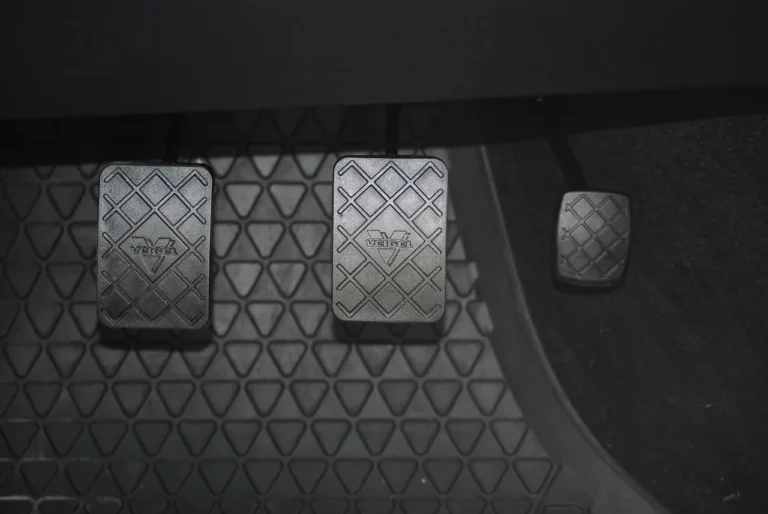
A healthy clutch pedal moves through a consistent range, returns fully on its own, and has a defined resistance point before the clutch starts to disengage. Free play at the top should be small but present on many cable systems, while hydraulic systems usually have a short, repeatable dead zone before pressure builds.
Normal pedal height matters. A pedal that suddenly sits lower than usual, returns higher than usual, or changes resistance overnight usually points to a fault rather than wear that developed slowly over time. The quickest check is comparison: if the pedal feel changed in one drive cycle, treat it as a new problem.
Pedal travel, free play, and return behavior
Normal travel should feel smooth from the first touch to the floor, without sticking, notchiness, or a delay before the pedal begins to move back. Return should be complete and brisk enough that the pedal does not hang half way or stay closer to the floor after a shift.
Free play is the small amount of movement before the release system begins to load. Too little free play can hold the release bearing against the pressure plate fingers. Too much free play can leave the clutch partly engaged and make gear selection difficult.
What a normal pedal height and resistance change tells you
Stable height with firm resistance usually means the pedal path is intact and the fault may be farther downstream, such as clutch drag, release wear, or a pressure plate issue. A pedal that drops, becomes soft, or loses resistance usually points first to hydraulic loss, air, or a bypassing master cylinder.
A sudden change matters more than a slow one because hydraulics and linkages often fail in steps. A seal can start bypassing, a cable can fray and hang, or a pivot can seize. Once the symptom changes abruptly, diagnostic confidence rises if you follow the symptom rather than guessing at the part.
Clutch pedal diagnostic matrix
The fastest path is to map the symptom to the system most likely at fault, then confirm it with two checks before replacing anything. That approach matches the way clutch diagnosis is commonly organized: start with what you can feel, then narrow the cause with one symptom at a time. On many charts, the first cues are noise, slipping, chatter, hard shifting, or a hard pedal.
| Symptom | Most likely system | First two checks to confirm it |
|---|---|---|
| Stuck down | Hydraulic loss, pedal pivot binding, or release mechanism drag | Check clutch fluid level and inspect for wetness at the master cylinder, slave cylinder, and lines; then test whether the pedal returns by hand with the engine off |
| Slow return | Binding pedal hardware, cable drag, or a weak hydraulic return path | Inspect the pedal bracket, bushings, and pivot for wear or rust; then check for a cable that does not slide freely or a hydraulic line that holds pressure |
| No resistance | Master cylinder internal bypass or major hydraulic fluid loss | Inspect fluid level and look for leaks around the master and slave cylinders; then hold steady pressure on the pedal to see whether it sinks |
| Hard to press | Mechanical binding, release fork/pivot wear, cable routing, or internal clutch drag | Check for a cable that is fraying, kinked, or out of adjustment; then listen for release bearing noise or feel for a rough pivot at the fork |
| Spongy | Air in the hydraulic circuit or fluid contamination | Check fluid condition and level in the reservoir; then bleed the clutch and see if pedal firmness comes back and stays steady |
| Difficulty selecting gears | Incomplete clutch release from hydraulics, cable adjustment, or internal clutch drag | Test reverse and first gear with the engine running; then confirm whether the clutch fully disengages or the gears grind even with the pedal fully depressed |
| When to stop driving and tow | Safety-critical failure | If the pedal stays down, will not return, or the transmission will not disengage cleanly, stop driving; tow the vehicle before more damage occurs |
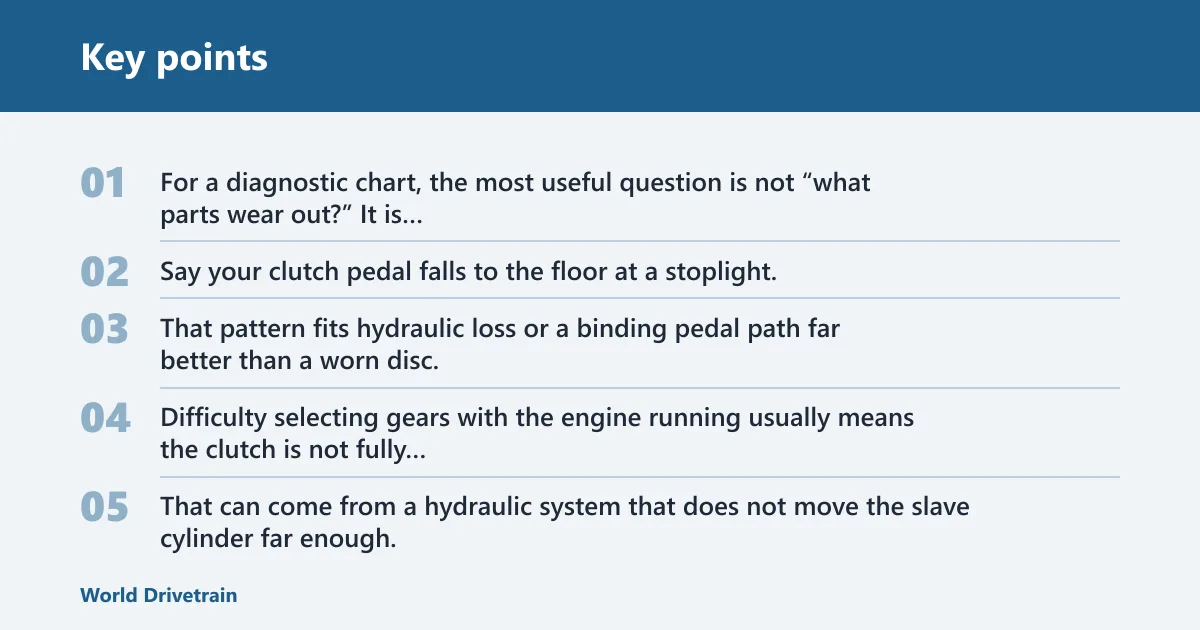
For a diagnostic chart, the most useful question is not “what parts wear out?” It is “what changed in the pedal and shift behavior?” A pedal that feels normal but will not release the clutch points in a different direction than a pedal that lost resistance. That split saves time and avoids guesswork.
Say your clutch pedal falls to the floor at a stoplight, then comes back only after you hook it up with your foot. That pattern fits hydraulic loss or a binding pedal path far better than a worn disc, because the symptom is in the pedal, not only in the shift feel.
Difficulty selecting gears and what it usually points
Difficulty selecting gears with the engine running usually means the clutch is not fully disengaging. That can come from a hydraulic system that does not move the slave cylinder far enough, a cable that lost adjustment, or internal clutch drag from a warped or overheated component.
If reverse grinds first, that clue is especially useful because reverse has no synchronizer on many manuals. A clutch that drags will often show up there before it shows up in every forward gear. If the engine is off and the gears select normally, the gearbox itself is less likely than the release system.
Why is my clutch pedal stuck to the floor?
A clutch pedal stuck to the floor usually means hydraulic pressure is gone, fluid escaped, or a mechanical component is binding so badly that the pedal cannot return. The first checks should be fluid level, visible leaks, and whether the pedal comes back when lifted by hand with the engine off.
Most likely hydraulic causes
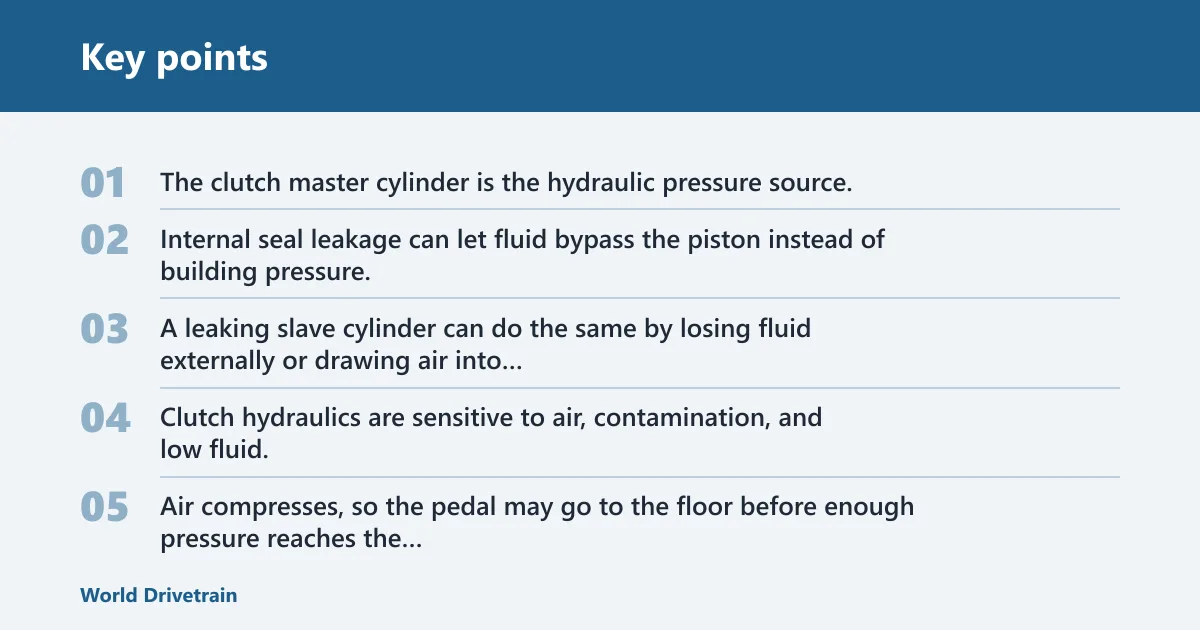
The clutch master cylinder is the hydraulic pressure source. Internal seal leakage can let fluid bypass the piston instead of building pressure, which produces a pedal sink or almost no resistance. A leaking slave cylinder can do the same by losing fluid externally or drawing air into the system.
Clutch hydraulics are sensitive to air, contamination, and low fluid. Air compresses, so the pedal may go to the floor before enough pressure reaches the slave cylinder. A low reservoir can point to an external leak at a line fitting, master cylinder, slave cylinder, or the hydraulic connection itself.
Mechanical binding points to check
A pedal that will not come back can also be held down by a bent or worn release fork, a seized pivot, a binding pedal bracket, or a cable that has frayed and hung up inside its sheath. Those faults can mimic hydraulic failure because the driver feels the same dead pedal.
Check the pedal itself first. If the pivot bushings or bracket holes are worn, the pedal can bind before the master cylinder is even involved. Then inspect the release linkage for movement that feels rough or uneven. A cable clutch adds another failure point: stretch, fraying, and routing drag.
What failure pattern points to internal clutch drag
If the pedal stays down and the car still creeps with the clutch pressed, the clutch may not be releasing cleanly. That points toward incomplete release inside the bellhousing, such as pressure plate finger problems, release bearing drag, or a flywheel surface issue that keeps the disc dragging.
A common first-timer mistake is to replace the master cylinder because the pedal is on the floor, then discover the slave cylinder is leaking and the system still needs bleeding. The symptom can look identical. Confirm fluid loss, pressure loss, and return behavior before ordering parts.
Why does my clutch pedal not return fully?
Incomplete return usually means something in the pedal path, cable, or hydraulic return is holding the system partly applied. If the pedal returns slowly, hangs low, or needs to be lifted by hand, do not assume the clutch disc is worn out. The fault may be above the bellhousing.
Pedal assembly and bracket wear
Wear at the pedal bracket, pivot pin, or return spring mount can create drag that feels like a hydraulic problem. A pedal bracket that flexes or shifts under load can also change pedal height and feel, especially on older cars or vehicles with heavy clutch effort.
Inspect for oval holes, broken spring anchors, rust, and looseness at the pedal support. If the pedal moves freely with the cable or hydraulic pushrod disconnected, the hardware upstream is the better suspect.
Cable or linkage binding
Cable-operated clutches are more vulnerable to friction from routing, kinks, and fraying. A stretched cable can also run out of adjustment range, which changes pedal height and leaves the clutch partly engaged or hard to release. Binding in the cable housing can make return slow even if the pedal feels normal at first.
On a mechanical linkage, look for worn bushings, dry joints, and bent rods. Any point that binds will change the force curve. The pedal may return part way, then stop, because the linkage is dragging under load rather than moving smoothly.
Master cylinder or slave cylinder return issues
Hydraulic return problems often come from internal seal issues, contamination, or a compensating port that does not allow fluid to move back correctly. A master cylinder with an internal bypass can make the pedal feel inconsistent, while a slave cylinder with an internal fault can leave the clutch partly applied.
Bleeding matters here, but only after the system is checked for leaks and low fluid. Bleeding is not a cure for a failed seal or cracked line. If the pedal improves briefly and then goes soft again, air is probably re-entering from a leak.
Why does my clutch pedal have no resistance?
No resistance almost always points to a hydraulic problem, especially on a clutch that used to feel firm. A pedal that drops with little or no effort usually means fluid pressure is not being created or is escaping before it can move the slave cylinder far enough to disengage the clutch.
Fluid loss and air in the hydraulic circuit
Start with the reservoir. Low fluid can mean a leak, and air in the system can make the pedal feel almost empty. A hydraulic clutch with air may pump up temporarily, then go soft again as the bubbles move through the lines.
Check the master cylinder, slave cylinder, hoses, and fittings for dampness or wet dust. Contamination can also swell seals or damage them, which makes the pedal inconsistent. If you bleed the system and the pedal briefly improves, then fades again, suspect an active leak rather than trapped air alone.
Master cylinder internal bypass symptoms
A master cylinder can fail internally without showing a visible leak. Internal seal leakage lets fluid bypass the piston, so the pedal moves but pressure does not build. The common clue is a pedal that sinks under steady pressure or feels firm at first, then drops.
That pattern is different from a cable fault. A cable that is stretched or binding usually changes effort and pedal position, but it does not create a pedal that slowly sinks with constant foot pressure. That sinking behavior points back to hydraulics first.
What slave cylinder leakage can look like
A slave cylinder leak may show up as wetness at the transmission bellhousing or along the slave body. External leakage can reduce release stroke, which means incomplete disengagement and difficult shifting even if the pedal still moves.
Slave cylinders are sensitive to air intrusion. If the fluid level drops and the pedal becomes spongy, the slave is a likely suspect. A failed slave can also masquerade as a master cylinder issue, so inspect both ends before replacing either one.
Hydraulic and cable causes
Clutch master cylinder and slave cylinder checks
For hydraulics, the first job is verification. Check the fluid level, then inspect for leaks at the master cylinder pushrod area, the line connections, and the slave cylinder. Look for a pedal that sinks, loses resistance, or changes feel after a few pumps.
If the clutch adjustment is correct and the line is dry, pressure loss becomes more likely than mechanical misadjustment. That is especially true when the pedal feel changed suddenly. A master cylinder and slave cylinder often fail in ways that look similar from the driver’s seat.
Fluid level, leaks, contamination, and bleeding
Fluid level tells you whether the system has lost volume. Contamination tells you whether the seals or fluid itself may be compromised. Bleeding removes air, but it should be done after the leak source is addressed, or the pedal complaint will return.
If the system has been opened, bleeding is part of the fix. If the system was never opened and the pedal suddenly became spongy, look first for a leak or seal failure. Air does not appear by itself; it enters because fluid left or a component failed.
Cable stretch, fraying, adjustment, and binding
Cable clutches do not use hydraulic pressure, so their diagnosis is different. A stretched cable increases pedal travel and can reduce release stroke. Fraying creates rough movement and eventual sticking. Binding in the sheath changes effort and can keep the pedal from returning fully.
Check adjustment range next. If the cable is already at the end of its adjustment, the system may no longer be compensating for wear. That can give you a high pedal, poor disengagement, or a pedal that feels oddly heavy near the top of travel.
Why is my clutch pedal hard to press?
A hard clutch pedal usually points to mechanical resistance, release bearing drag, or an internal clutch issue that raises release effort. It can also happen when a cable is misrouted or a pivot is worn. A firm pedal is not automatically “good” if the effort jumped suddenly or the shift quality worsened with it.
Release fork, pivot, and linkage wear
The release fork transfers movement from the slave cylinder or cable to the release bearing. If the fork pivot wears, or the linkage binds, the pedal effort rises and the release stroke becomes uneven. A worn pivot can also make the pedal feel gritty or notchy.
Listen for noise with pedal input. A release bearing can make noise when the pedal is pressed, and that noise often comes with drag or a hard shift. A bearing that is dragging can make the pedal feel heavier because the system is fighting its own friction.
Pedal bracket wear and mounting flex
Do not ignore the pedal box. A cracked bracket or worn pedal pin can change the mechanical ratio and make the pedal feel much heavier than it should. Mounting flex can also distort release geometry and cause chatter or uneven return.
Suppose the pedal feels heavy only when you press halfway down, then suddenly eases near the floor. That shape points to binding or geometry change, not a hydraulic system that is simply low on fluid. The force curve is a clue.
Why is my clutch pedal spongy?
A spongy pedal is a hydraulic symptom until proven otherwise. Air, contaminated fluid, or an internal hydraulic fault can create compressibility, so the pedal feels soft and inconsistent. A spongy pedal may still move the clutch, but it often does so with reduced stroke and poor release.
Check the reservoir first, then inspect the master and slave cylinders for leaks. If the pedal improves after pumping but softens again, that is a classic clue for air or an internal hydraulic bypass. Bleeding should only be done after the leak source is identified.
Air in the hydraulic circuit
Air in the clutch hydraulics acts like a cushion. The pedal may travel farther before engagement, and the release point may change from one press to the next. That inconsistency is one of the clearest signs that the system needs bleeding.
After bleeding, the pedal should return to a more repeatable feel. If it does not, the air is probably coming back through a failed seal, loose fitting, or cracked line.
Master and slave cylinder faults that mimic softness
A master cylinder with internal seal leakage can feel soft even when the reservoir is full. A slave cylinder with an internal leak or external seep can reduce the effective release stroke and create the same complaint. Both failures can also make gear selection difficult.
This is where symptom separation matters. A soft pedal with fluid loss is a hydraulic issue. A normal pedal with chatter, hard shifts, or noise may instead point to the release bearing, flywheel, or pressure plate.
Internal clutch wear and drivetrain symptoms
Pressure plate finger wear and heat damage
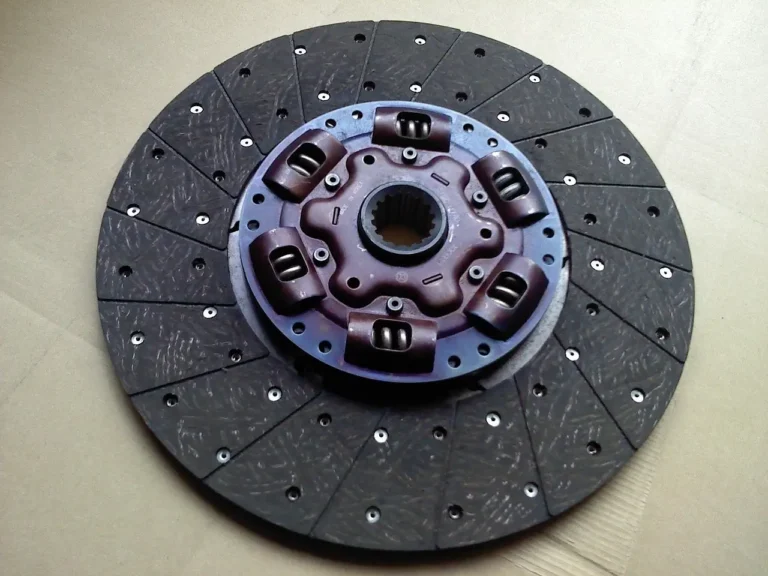
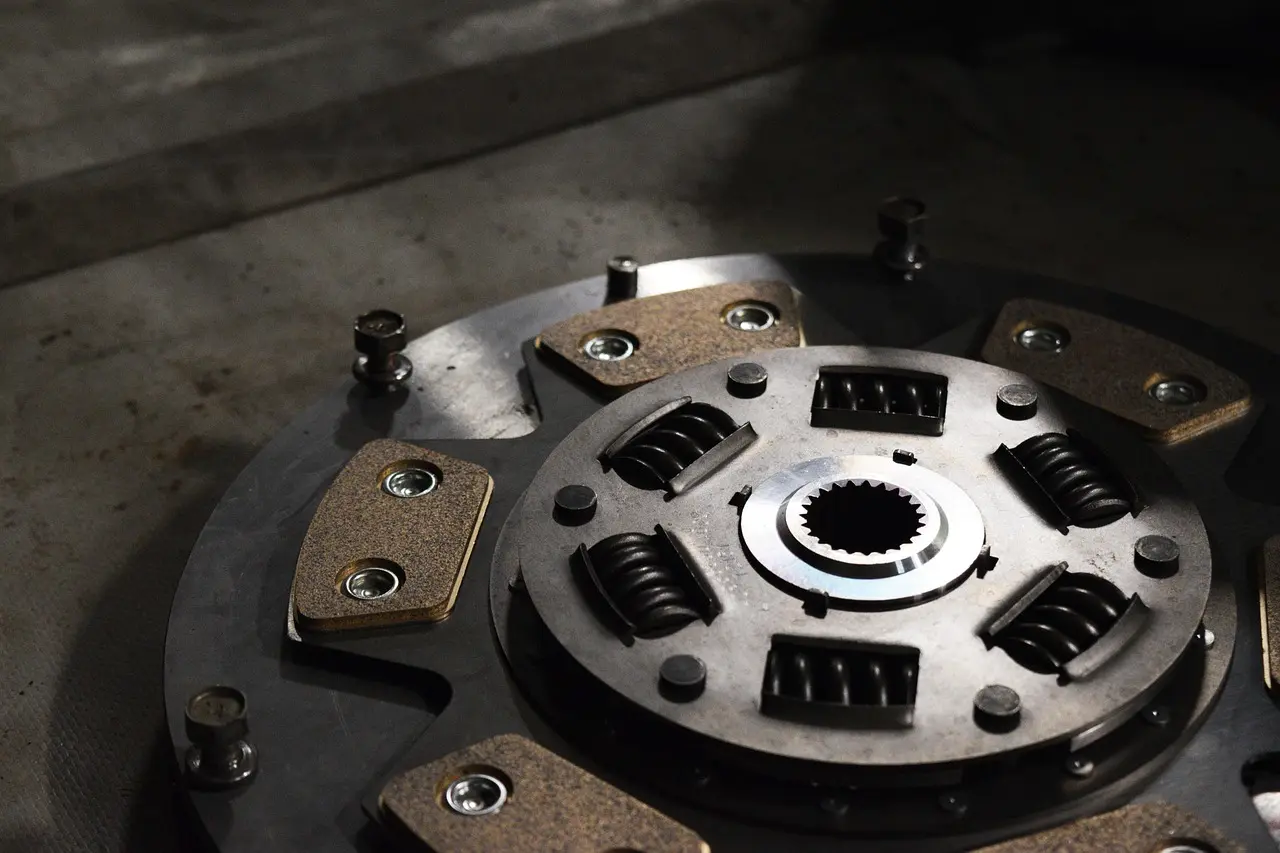
Uneven pressure plate fingers can change release height and cause a clutch that grabs, chatters, or refuses to disengage smoothly. Heat damage can also reduce clamp force or warp the contact surfaces, which changes pedal feel only indirectly but affects shift quality immediately.
Slipping and dragging are different clues. A slipping clutch can come from an oil-soaked disc, an out-of-adjustment clutch, or binding hydraulics. A dragging clutch points more toward incomplete release, warped parts, or release system problems.
Flywheel warpage, heat checking, and resurfacing limits
Flywheel problems often show up as chatter, shudder, or inconsistent engagement. Heat checking and warpage can prevent the disc from contacting evenly, which makes the car hard to drive smoothly even if the pedal itself feels acceptable.
Solid flywheels are resurfaced with every clutch job according to the chart used by some repair references. Dual-mass flywheels usually cannot be resurfaced. That distinction matters because the wrong flywheel treatment can leave the new clutch with the same symptoms the old one had.
Dual-mass versus solid flywheel considerations
Dual-mass flywheels are more sensitive to wear and heat damage than a simple solid design. If a dual-mass unit has excessive play or damage, replacement may be the correct path rather than machining. A solid flywheel gives more room for resurfacing, but only within safe limits.
If the clutch was replaced and the problem returned quickly, the flywheel condition deserves another look. A fresh disc will not cure a warped or heat-damaged mating surface.
Motor and transmission mounts that can mimic clutch trouble
Broken motor mounts and transmission mounts can let the drivetrain shift under load, which changes release geometry and can produce chatter or harsh engagement. On some cars, mount movement feels like a clutch fault because the symptom appears during takeoff or gear change.
That movement can also make a good clutch feel inconsistent. If the pedal is normal but the car shudders on launch, inspect the mounts before replacing the clutch again. The problem may be drivetrain movement rather than release hardware.
How to tell if your clutch pedal problem is hydraulic or mechanical
Use the pedal feel first. Soft, spongy, sinking, or suddenly dead pedals usually point to hydraulics. Hard, sticky, or slow-return pedals usually point to mechanical binding, cable drag, or pedal hardware. If the pedal feels normal but the car still grinds or drags, internal clutch wear rises on the list.
Then separate static from loaded behavior. With the engine off, a mechanical bind often shows up as poor pedal return by hand. With the engine running, a hydraulic loss may show up as difficulty selecting gears or a pedal that no longer disengages the clutch fully. That two-condition check is simple and useful.
- Check fluid level and look for leaks if the pedal is soft, spongy, or on the floor.
- Check pedal pivots, brackets, cables, and linkages if the pedal is hard, sticky, or slow to return.
- Test for gear selection with the engine running to see whether the clutch fully disengages.
- Listen for release bearing noise when pressing the pedal.
- If the symptom is sudden, severe, or gets worse in one drive, stop driving and arrange towing.
One useful clue from repair charts is that diagnosis should start with the symptom and narrow from there, not with the most expensive part. A release bearing is often the first suspect when clutch noise appears. A pilot bearing clue is that the noise gets louder when the transmission is placed in gear.
Frequently asked questions
Why is my clutch pedal not returning fully?
Incomplete return often comes from a worn pedal bracket, a binding cable, or a hydraulic return problem in the master or slave cylinder. The pedal may hang low, return slowly, or feel rough. A full return test with the engine off helps separate pedal hardware from release-system faults.
How do I tell if my clutch pedal problem is hydraulic or mechanical?
Hydraulic faults usually change pedal firmness, height, or return speed. Mechanical faults more often create sticking, rough movement, or high effort without a true loss of pressure. If the pedal sinks or feels spongy, check hydraulics. If it binds or stays up poorly, check the pedal path and linkage.
Is it safe to drive if the clutch pedal stays down?
No. If the pedal stays down, you may lose the ability to disengage the clutch, shift safely, or stop without stalling. That can strand you in traffic and make towing the safest option. Continuing to drive can also damage the clutch, flywheel, or transmission.