Why Is My Clutch Pedal Hard to Press?
A hard clutch pedal usually means resistance in the pedal pivot, cable, hydraulic circuit, or clutch pressure plate. Find where the force path stops before you replace parts. Ignoring it can cause missed shifts, cable or hydraulic failure, and an unnecessary clutch job. This guide shows how to trace the load source step by step and narrow the fault fast.
Understanding mechanical resistance and pedal feel
A hard clutch pedal usually means mechanical resistance somewhere in the load path, not a loss of hydraulic pressure. The drag can begin at the pedal assembly, move through a stiff cable or hydraulic linkage, and end at the clutch hardware. A hard pedal is different from a soft one, and that difference points you toward the right branch.
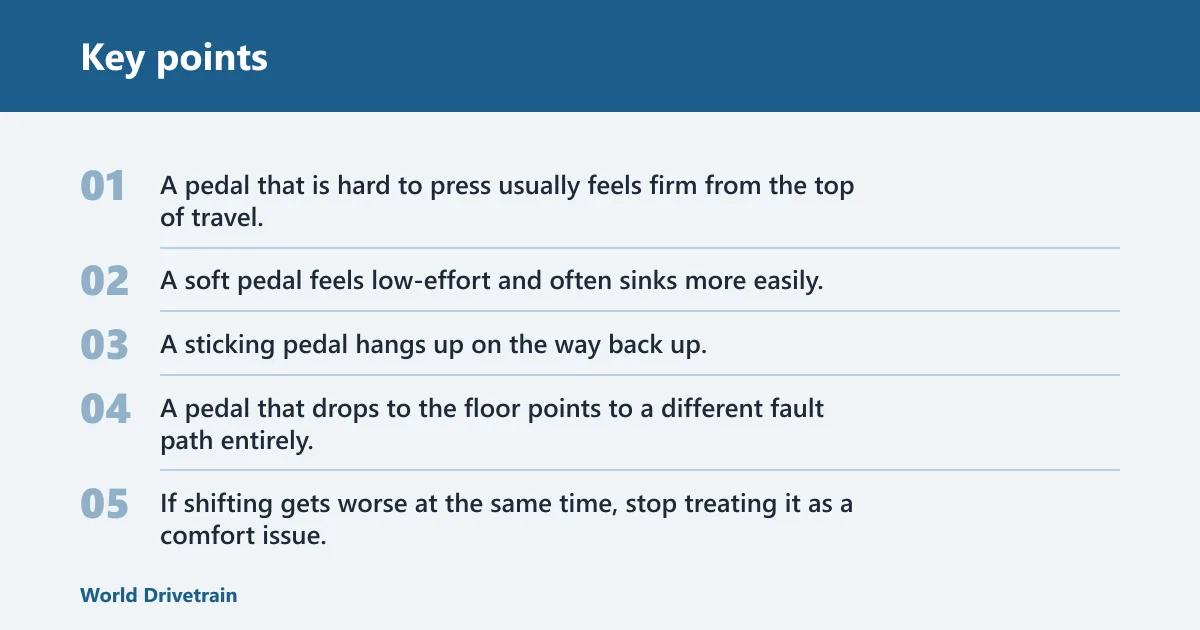
A pedal that is hard to press usually feels firm from the top of travel, then resists all the way down. A soft pedal feels low-effort and often sinks more easily. A sticking pedal hangs up on the way back up. A pedal that drops to the floor points to a different fault path entirely.
If shifting gets worse at the same time, stop treating it as a comfort issue. A hard pedal plus poor shifting can mean the clutch is not releasing fully, which can increase the risk of a no-shift or damage event. If the pedal suddenly becomes extremely difficult or the gears grind after you press it, a mechanic visit is the safer call.
| Branch | Likelihood | Driveability risk | Inspection difficulty | Pass signs | Fail signs |
|---|---|---|---|---|---|
| Cable system | High on cable-operated cars | Medium to high | Low to medium | Pedal effort changes with cable routing; visible fray or sticky return; free play outside spec | Outer sheath cracked, cable binds in bends, adjuster cannot set free play, pedal effort stays high after rerouting |
| Hydraulic system | Medium for true hard-pedal complaints | Medium | Medium | Reservoir full, no leaks, pedal still stiff, slave travel is present but resistance stays high | Low fluid, wet master or slave area, damp lines, or air symptoms that match a soft pedal rather than a hard one |
| Mechanical clutch hardware | High when the pedal is hard and shifting is poor | High | Medium to high | Pedal effort rises with engine running, clutch release noise, gear engagement improves only slightly, no hydraulic leak found | Release bearing drag, pressure plate finger wear, bent fork, or seized contact point that stays stiff after pedal-side checks |
Clutch pedal
This matrix helps separate cable, hydraulic, and clutch-hardware problems before you replace parts. The same symptom can come from different branches, so the first job is to match the symptom pattern to the system layout on the vehicle.
Cable system: likelihood, risk, and quick checks
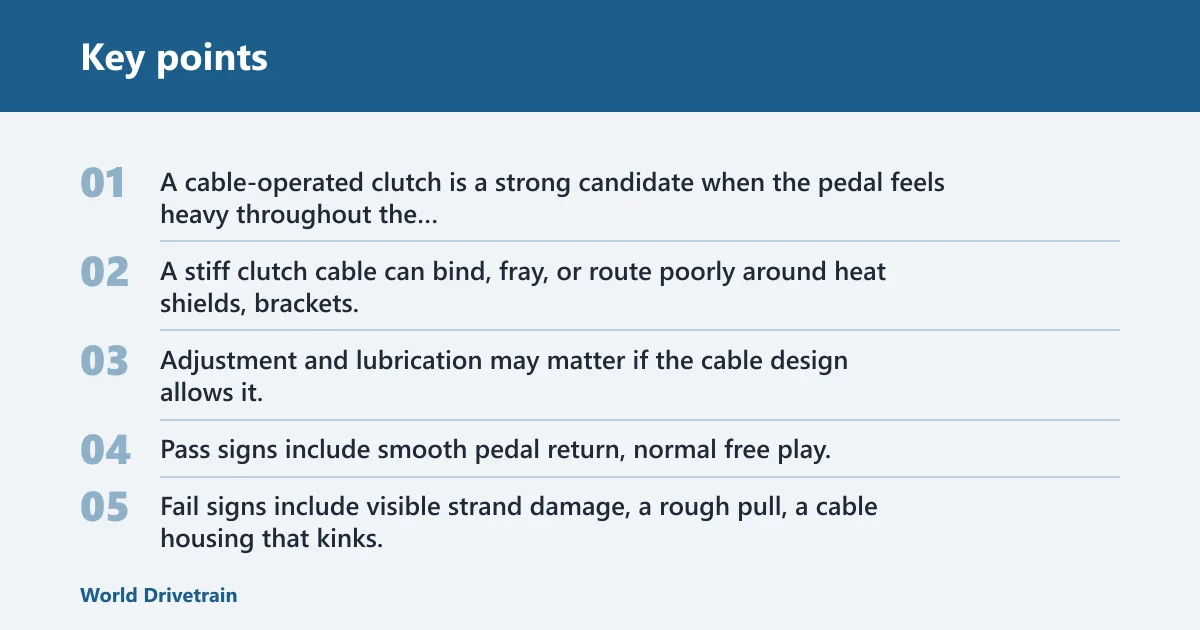
A cable-operated clutch is a strong candidate when the pedal feels heavy throughout the stroke and the pedal effort has changed gradually. A stiff clutch cable can bind, fray, or route poorly around heat shields, brackets, or sharp bends. Adjustment and lubrication may matter if the cable design allows it.
Pass signs include smooth pedal return, normal free play, and a cable that moves without notchiness when disconnected at a safe service point. Fail signs include visible strand damage, a rough pull, a cable housing that kinks, or a pedal that feels lighter with the cable released from the clutch fork.
Hydraulic system: likelihood, risk, and quick checks
A hydraulic clutch can feel heavy, but air or low fluid usually creates a soft pedal, not a hard one. That is why hydraulic failures are grouped separately from mechanical resistance in clutch diagnosis. If the system is hydraulic, inspect the reservoir, lines, master cylinder, slave cylinder, and the slave area for leaks.
Pass signs include correct fluid level, dry fittings, and a pedal that still feels stiff after external leaks are ruled out. Fail signs include wet residue at the master pushrod, damp lines, fluid around the slave, or air symptoms such as a spongy, low-resistance pedal that does not match a hard-pedal complaint.
Mechanical clutch hardware: likelihood, risk, and quick checks
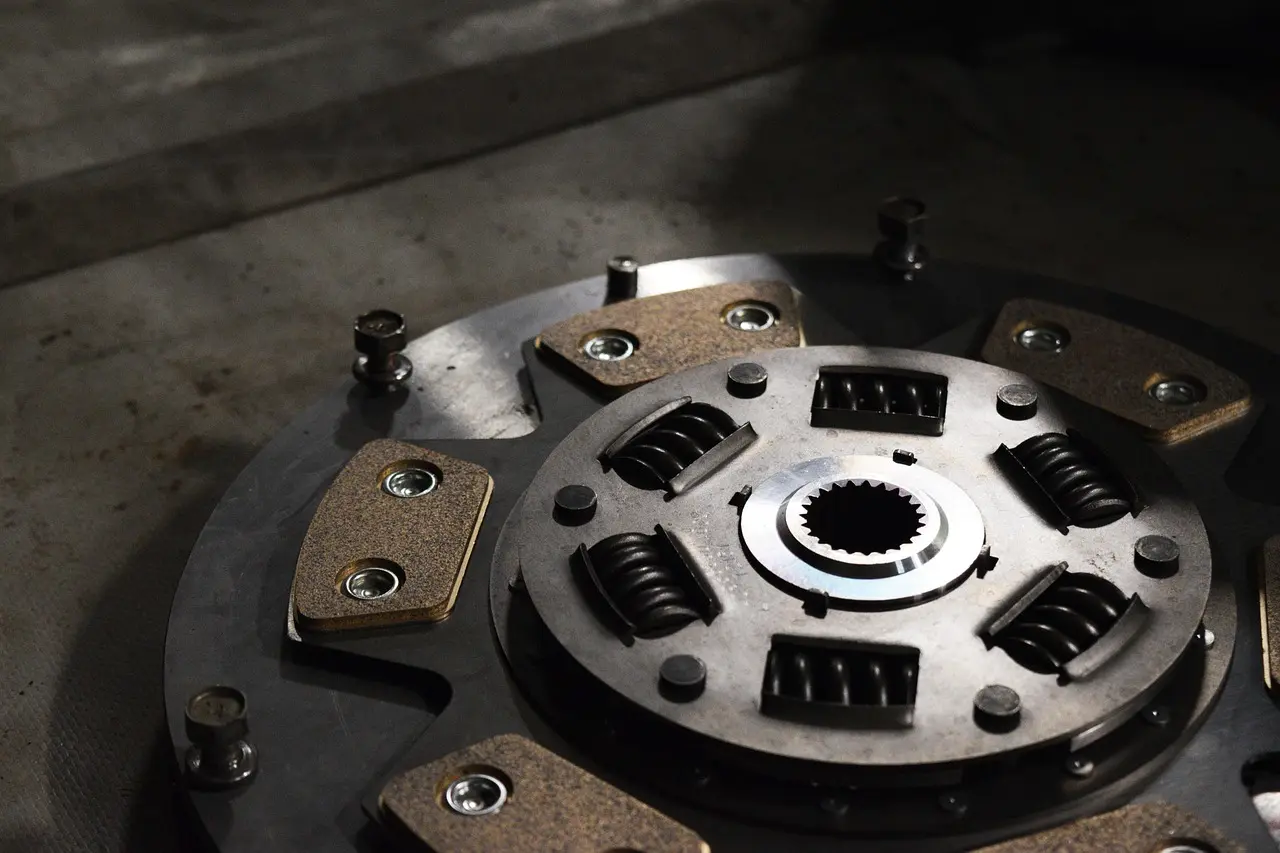
Mechanical drag inside the clutch is one of the most important causes to consider when the pedal is hard and shifting is also worse. Worn pressure plate fingers can require extra force to disengage. A worn or seized clutch release bearing can also make the pedal hard to push, and it may seize on the input shaft collar.
Pass signs include a normal pedal-side return and no obvious cable or hydraulic fault, yet the pedal still loads up under foot. Fail signs include release bearing noise, a bent or broken clutch fork, or a pressure plate that no longer releases cleanly. A failing pressure plate is a common cause of heavy pedal effort.
What should you inspect first?
Start at the simplest visible points: the pedal assembly, the cable or hydraulic controls, and the leak points. That order matters because pedal assembly friction can resemble clutch failure, but it is a separate problem from resistance inside the clutch itself. Check the easy branches before assuming the transmission needs removal.
- Press and release the pedal by hand. It should move smoothly and return without sticking.
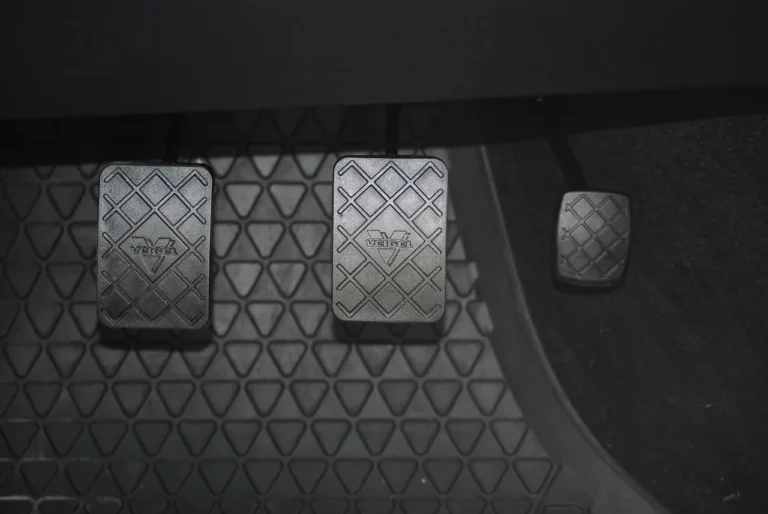
- Inspect the pedal assembly pivot, bushings, and return spring for wear, misalignment, or breakage.
- If the car uses a cable, inspect routing, fray points, and adjustment.
- If the car uses hydraulics, check the reservoir, lines, master cylinder, slave cylinder, and slave area for leaks.
- Compare the pedal feel with shifting behavior. Hard pedal only points one way; hard pedal plus poor shifting points deeper into the clutch hardware.
A broken return spring can affect pedal return and may make the pedal feel sticky or heavy at the top of travel. Binding in the pedal assembly itself can also create stiffness, especially if the pivot is worn or misaligned. Do not confuse that with clutch disc or pressure plate resistance.
If the pedal feels hard before the engine starts and stays hard with the engine off, check first for pedal assembly friction or cable drag. If the pedal is easy until the last half-inch, then gets much heavier with poor shifting, that pattern leans toward clutch hardware load, not a simple pedal pivot issue.
Is it a cable problem or a hydraulic problem?
A hard pedal can be either, but the symptom pattern is different. A binding cable can give a heavy, rough, or uneven pedal. A hydraulic problem more often gives a soft or ineffective pedal, especially when air or low fluid is present. That is why you should not treat every clutch complaint as a hydraulic issue.
Signs that point to a binding clutch cable
A cable problem is likely when pedal effort rises gradually, the pedal feels rough on the way down or up, and the cable path shows obvious bends or wear. A stiff cable causes heavy pedal feel because the load is being lost in friction instead of moving the clutch fork cleanly.
Pass signs include clean cable routing, normal free play, and even pedal return. Fail signs include fraying, stiffness at one point in the travel, or a cable that improves if rerouted away from heat or sharp angles. Adjustment and lubrication may help if the design allows service.
Signs that point to a hydraulic fault
A hydraulic fault is more likely when the pedal feel changes along with fluid level, leaks, or visible wetness around the master or slave area. If the system is hydraulic, check the reservoir first, then inspect the lines, master cylinder, slave cylinder, and connection points for seepage.
Low fluid or air usually does not make the pedal hard. It usually makes it soft, low, or inconsistent. If the pedal is hard and the fluid level is normal, the fault is more likely outside the hydraulic circuit or inside the clutch hardware.
Why air or low fluid usually points away from a hard pedal
Air compresses. That reduces effective force transfer and makes the pedal feel less firm. Low fluid can create the same result if the system draws air or loses stroke. That is why a stiff pedal is not the classic hydraulic symptom, even though hydraulic parts can still be involved in some cases.
Which clutch parts can make the pedal heavy?
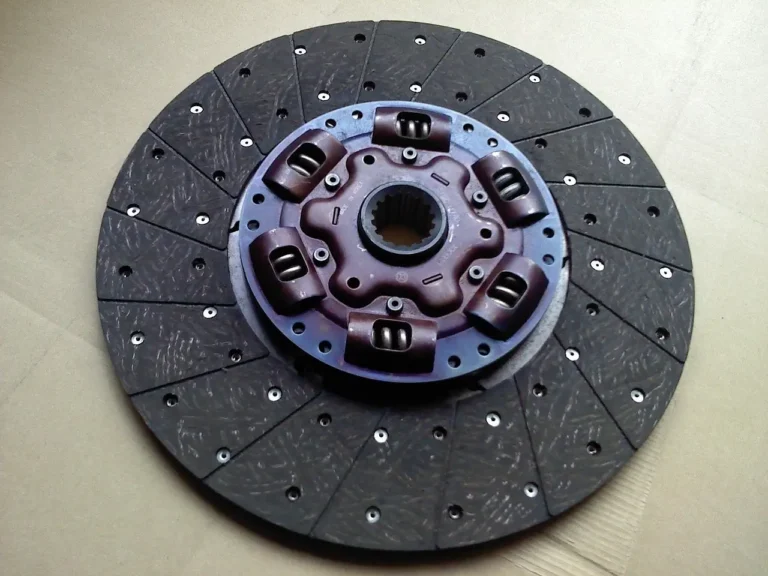
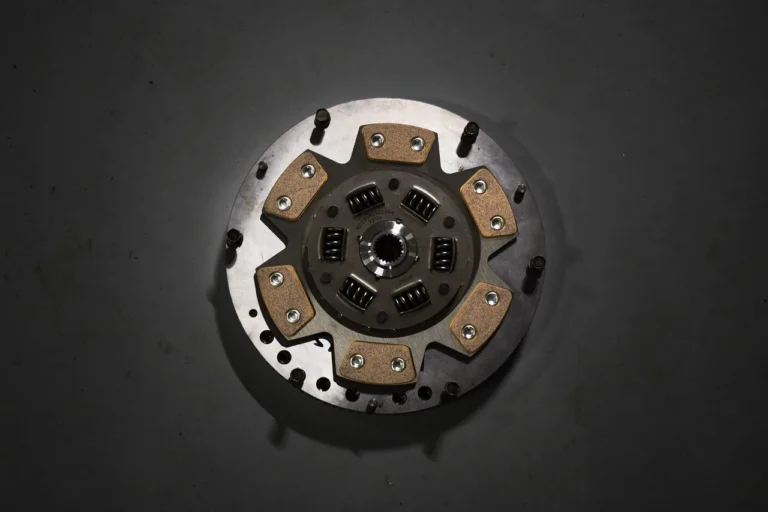
The clutch hardware can create real resistance even when the pedal, cable, and hydraulics look acceptable. The most important parts to think about are the pressure plate, the release bearing, and the fork or collar area that carries load into the clutch pack. These are mechanical load points, not just control parts.
Pressure plate fingers and diaphragm wear
Worn pressure plate fingers can require greater force to move. A failing pressure plate can also make the pedal feel heavy and can reduce how cleanly the clutch disengages. If the pedal is hard and the car still wants to creep or grind into gear, the pressure plate deserves close attention.
Look for a symptom pattern that includes heavy pedal effort plus poor release, not just a heavy pedal alone. That combination supports pressure plate trouble more than pedal pivot wear does.
Clutch release bearing seizure or drag
The clutch release bearing can wear out and make the pedal hard to push. It may also seize on the input shaft collar, which increases resistance every time the pedal is pressed. Bearing drag often shows up as a mechanical feel that does not match a cable or hydraulic issue.
If the pedal is hard and there is release noise, roughness, or inconsistent disengagement, the bearing becomes a stronger suspect. A bearing fault usually needs deeper disassembly than a cable or fluid inspection.
Fork, collar, and other mechanical drag points
A bent or broken clutch fork is a listed cause of hard pedal feel. Drag can also come from wear at the fork pivot, input shaft collar, or other contact points that should move freely. These faults raise pedal force because the load path is no longer straight and smooth.
When the pedal side looks normal but the clutch still resists release, these deeper mechanical points move up the list fast. That is especially true if the pedal hardens with engine running and shifting gets worse.
Can cold weather make the pedal stiffer?
Yes. Cold weather can temporarily increase clutch pedal effort. Low temperatures can thicken grease, stiffen cable routing, and make bushings or seals move less freely for a short time. That effect should ease as the car warms up.
If the pedal stays hard after warm-up, cold weather is not the whole answer. Temporary stiffness points to a marginal cable, sticky pivot, or parts that are already close to wear limits. Worsening stiffness over several drives points to a real fault, not a weather-only change.
A common first-timer mistake is blaming a January hard pedal on “the clutch itself” when the cable jacket has already started to drag in a cold bend. If the pedal feels normal after a short drive but gets heavy again the next morning, that pattern supports temperature-sensitive friction more than a failed pressure plate.
Clutch free play and adjustment checks
Clutch pedal free play matters because it sets how the release system begins to load. A common adjustment range is 6–12 mm, and too much or too little free play can change pedal feel and engagement quality. The exact setting depends on the vehicle, so use the service specification when available.
Too much free play can cause clutch engagement problems, while too little can preload the system and make the pedal feel wrong. On many cable systems, a wrench and screwdriver are used to loosen the locknut and turn the adjuster. That is a basic service step, not a cure for a seized cable or worn clutch hardware.
Adjustment works only when the pedal feel changes with free play and the rest of the system passes inspection. If the pedal remains heavy after correct adjustment, the cable may be binding or the clutch hardware may be loading up. On hydraulic systems, do not use adjustment to cover up leaks or air in the circuit.
Frequently asked questions
Why is my clutch pedal hard to press?
A hard clutch pedal usually points to resistance in the pedal assembly, clutch cable, hydraulic controls, or clutch hardware. The main job is to find where the force path is binding. If shifting is also poor, treat it as a mechanical release problem, not just a comfort issue.
Why is my clutch pedal getting harder to press?
A pedal that gets harder over time usually signals wear, contamination, or growing friction in one part of the system. Cable drag, a tired pressure plate, a release bearing that is starting to seize, or a stiff pedal pivot are common patterns. A gradual change matters.
What causes a clutch pedal to feel stiff or heavy?
Common causes include a stiff or frayed clutch cable, worn pressure plate fingers, a worn or seized release bearing, a bent or broken clutch fork, or binding in the pedal assembly. On hydraulic systems, look for leaks and fluid issues first, but remember that low fluid usually causes softness, not stiffness.
Can cold weather make a clutch pedal harder to press?
Yes. Cold weather can make grease thicker and cables or bushings less flexible, which can raise pedal effort for a while. If the pedal loosens after the cabin or drivetrain warms up, that points toward temperature-related stiffness. If it stays hard, inspect for wear or binding.
Is a hard clutch pedal a cable problem or a hydraulic problem?
It can be either, but the symptom pattern differs. A cable issue often feels rough or heavy throughout travel. A hydraulic issue more often gives a soft or ineffective pedal, especially with air or low fluid. Check the reservoir, lines, master cylinder, slave cylinder, and slave area if the system is hydraulic.
When is a hard clutch pedal unsafe to keep driving?
Stop driving if the pedal becomes extremely hard, shifting gets difficult, or gears grind when you try to disengage the clutch. Those signs suggest the clutch is not releasing cleanly, which can leave you stuck or cause more damage. A sudden change deserves immediate inspection.