What Does a Slipping Clutch Feel Like While Driving?
A slipping clutch feels like engine speed climbs while road speed lags, most clearly in a higher gear or on a hill. If ignored, the clutch can overheat, lose drive completely, and leave you stranded. This guide maps the feel at launch, during acceleration, uphill, and at speed, then separates clutch slip from engine misfire, transmission issues, and other lookalikes.
How slip symptoms appear during launch and acceleration
A slipping clutch usually feels like the engine is doing more work than the car is moving. You press the throttle, the revs climb, but the road speed falls behind, especially in higher gears or under load. A hot, acrid burning smell after that pull is another common clue, because friction material is overheating.
The symptom usually stands out when torque demand rises. Mild slip can feel like a soft, vague connection; severe slip can feel like the engine briefly “free-revs” before the car catches up, or fails to catch up at all.
What happens at launch
At pull-away, a slipping clutch often shows up as a higher-than-normal biting point, hesitation before the car moves, or a flare in revs with only a weak launch. A worn friction plate may be glazed or thin, and the pressure plate may not be clamping hard enough. That can make the takeoff feel lazy even when the engine sounds busy.
Shudder at launch is not the same thing as slip. Shudder points more toward grabby engagement, flywheel issues, or contamination on the friction surfaces. True slip is the opposite problem: the engine speed rises, but torque is not being transferred cleanly to the wheels.
What happens during acceleration?
During acceleration, slip often shows up first in 2nd or 3rd gear as the rev counter rises while road speed increases little. The car may feel normal at light throttle, then lose pull when you ask for more. That is why a load test, done safely, is useful: it makes slip easier to feel without forcing repeated abuse.
Higher gears often reveal slip more easily because they put more load through the clutch. A misfire can also make the car feel weak, but misfire usually brings rough running, hesitation, or a shaking engine rather than a clean rev flare.
What happens uphill?
Uphill loading is one of the clearest ways to feel slip. On a hill start or a steady climb, a slipping clutch may let revs rise while speed stalls, and the smell of hot friction material may appear after the attempt. The added load exposes weak grip faster than flat-road cruising.
If the clutch is near the end of its life, even modest hills can make the problem obvious. A car may feel acceptable on level ground, then lose drive once gravity adds resistance.
How clutch slip feels at pull-away
At pull-away, clutch slip usually feels like the car is slow to bite, then suddenly revs higher than expected without a clean surge forward. A changing biting point, especially one that sits higher than normal, can point to wear. Pedal feel can change too, but pedal feel alone does not confirm slip without a road test.
First gear can hide a mild problem because the gear ratio multiplies torque and masks the mismatch. If the clutch is close to failure, the car may still move away in first, then slip more clearly in a higher gear or on a hill.
High bite point versus true slip
A high biting point means the clutch begins to engage near the top of pedal travel. That can signal wear, but it is not proof of slip by itself. A worn hydraulic system, cable adjustment issue, or release mechanism fault can also change where the bite happens.
True slip is confirmed by the road test feel: revs rise without a matching increase in road speed. That is the distinction to keep in mind.
Shudder versus slip
Shudder feels like a vibration or judder as the clutch starts to engage. Slip feels smoother but weaker. A flywheel problem, especially on a dual-mass flywheel, can add shudder or harsh engagement feel and can appear alongside clutch wear. The two faults can travel together, so one symptom does not settle it.
What happens during acceleration?
During acceleration, clutch slip shows up as rev flare under throttle, then poor acceleration under load. The most useful clue is the mismatch itself: the engine speed climbs, but the vehicle does not accelerate in step. That is often easier to notice in 2nd, 3rd, or 4th gear than in 1st.
If the engine also runs rough, misfire becomes more likely. If the pedal feel is wrong but the car still pulls normally, hydraulic or adjustment trouble may be the better fit.
Why higher gears reveal slip
Higher gears ask the clutch to transmit more torque for the same road speed. That extra load can push a weak clutch over the edge. A small amount of slip may be invisible in 1st gear and obvious in 4th.
That is why a safe load test matters. You do not need to abuse the clutch. You need a controlled, brief check that shows whether the revs and road speed stay linked.
How does it feel uphill?
Uphill, a slipping clutch often feels worse because the drivetrain is under greater load. A hill start may bring a high bite point, delayed movement, rev flare, or a burning smell after a short attempt. Steady climbing can also expose a weak clutch that seems fine on flat roads.
This is one of the best conditions for diagnosing slip by feel, because the added load makes the mismatch clearer. It also separates slip from some engine faults that show up more at idle or light throttle.
Creeping and hill starts
Creeping in traffic can hide the problem until you meet a hill. Then the clutch may struggle to transmit enough torque, and the car feels like it is running out of pull. If the smell appears after repeated hill starts, friction material overheating is likely.
Do not keep feeding throttle to “see what happens.” That can turn a marginal clutch into a fully slipping one.
Clutch feel matrix
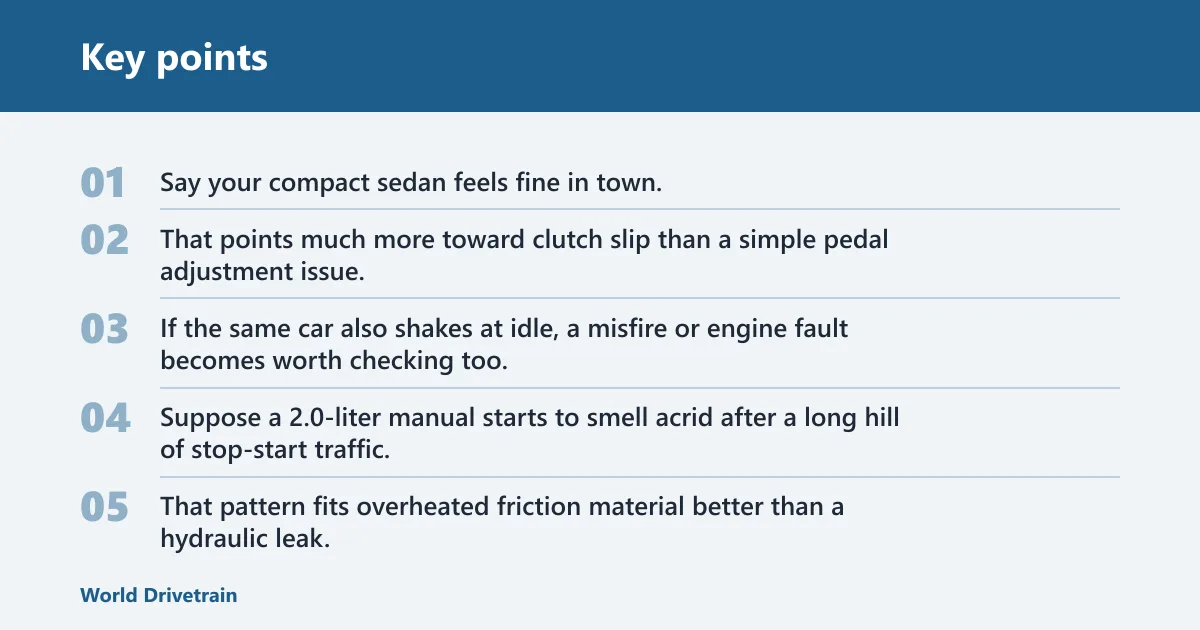
This matrix turns the common driving situations into a simple symptom-to-sensation map. Use it to match what you feel in the seat and through the pedal, then compare it with the most likely lookalike fault.
| Driving scenario | Expected feel | What it usually means | Most likely lookalike fault |
|---|---|---|---|
| Pull-away | High biting point, delayed launch, revs rise before the car moves cleanly | Worn friction plate or weak pressure plate grip | Hydraulic or cable adjustment issue changing pedal engagement |
| 2nd-gear acceleration | Rev flare under throttle, weak pull, speed gains slowly | Clutch slip under load | Engine misfire or low engine power |
| Uphill load | Slip appears sooner, climbing feels flat, possible burning smell | Reduced clutch clamping under high torque demand | Engine output loss or misfire under load |
| Cruising | May feel normal until a gentle overtake or sudden throttle input | Mild slip can be hidden at low load | Transmission fault or engine hesitation |
| Hot stop-start traffic | Pedal feel may stay normal, but engagement gets inconsistent and odor may appear | Heat buildup in friction plate and flywheel surfaces | Hydraulic fade or release problem if the pedal feel changes sharply |
Say your compact sedan feels fine in town, then the tachometer jumps by 800 rpm during a 3rd-gear overtake while road speed barely changes. That points much more toward clutch slip than a simple pedal adjustment issue. If the same car also shakes at idle, a misfire or engine fault becomes worth checking too.
Suppose a 2.0-liter manual starts to smell acrid after a long hill of stop-start traffic, but the pedal still returns normally. That pattern fits overheated friction material better than a hydraulic leak, because the pedal has not sunk or lost pressure. The smell matters because it often follows repeated slip, not a single gentle launch.
What else can feel similar?
Several faults can mimic clutch slip, and the pedal alone is not enough to separate them. Low engine power or misfire can feel like poor acceleration. Hydraulic or adjustment problems can change the biting point without true slip. Pressure plate weakness and flywheel damage can sit in the middle, making the symptom set messy.
Low engine power and misfire
A misfiring engine often feels rough, uneven, or hesitant. You may notice vibration, warning lights, or a harsh stutter under throttle. By contrast, a slipping clutch usually lets the engine rev rise cleanly, just without a matching increase in speed.
Hydraulic or adjustment problems
Hydraulic issues can alter pedal travel, resistance, or engagement point. A clutch pedal that sinks can point more toward a hydraulic leak than clutch slip. Adjustment problems can also move the bite point high or low without the friction surfaces actually slipping.
Pressure plate and flywheel faults
The pressure plate clamps the friction plate. If clamping force is weak, slip can appear even when the friction disc still has material left. The flywheel, especially a dual-mass flywheel on modern cars, can add shudder, heat damage, or harsh engagement feel that makes the diagnosis less straightforward.
- Check whether revs rise faster than road speed in a higher gear.
- Repeat the feel check on a modest hill, briefly and safely.
- Note whether the biting point is higher than usual or has changed recently.
- Watch for burning clutch smell after stop-start traffic or hill starts.
- If pedal feel is odd, separate that from true slip and inspect the hydraulic system too.
- Book an inspection if the problem is repeatable.
Can you keep driving?
You may be able to drive a little longer, but continued slip can create more heat, more wear, and eventually no drive at all. If the clutch is already slipping under load or on hills, avoid hard acceleration, towing, and repeated hill starts. Those actions can turn a borderline clutch into a failed one.
Short trips to a repair shop are one thing. Repeated testing is another. If the clutch smell is strong, slip is obvious in higher gears, or the pedal feel has changed along with drive quality, book inspection soon.
What to avoid doing
Do not hold the car on the clutch at traffic lights or on inclines. Do not floor the throttle to “see if it clears.” Do not keep loading the clutch in hopes of bedding it back in. A slipping clutch does not heal from abuse.
When to book inspection
Book inspection once you can repeat the symptom in normal driving. If the clutch slips in 2nd gear, on a hill, or during a brief overtaking load, the fault is already beyond a vague warning sign. At that point, a mechanic should inspect the friction plate, pressure plate, flywheel, and hydraulic system together.
Frequently asked questions
What does clutch slip feel like while driving?
It can feel like engine speed rises faster than car speed. You may notice weak acceleration, especially in a higher gear or on a hill, and sometimes a burning smell after the event. The key clue is the mismatch between revs and road speed, not a strange pedal alone.
What does a slipping clutch feel like?
A slipping clutch often feels soft and disconnected under throttle. The bite may be higher than usual, and the car may hesitate before moving properly. On harder acceleration, the revs flare while the vehicle barely gains speed, which separates it from many simple pedal feel complaints.
How to tell if you have a slipping clutch
Use a short, safe load test. Try a controlled acceleration in a higher gear, or a brief hill climb, and watch for rev flare without matching speed gain. If the pedal feel is odd but the car still accelerates normally, hydraulic or adjustment trouble may be the better explanation.
What does a slipping clutch look like?
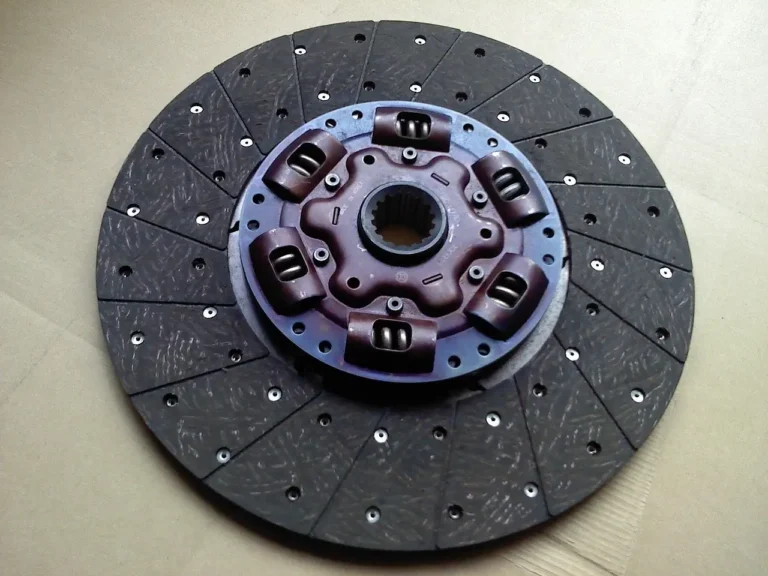
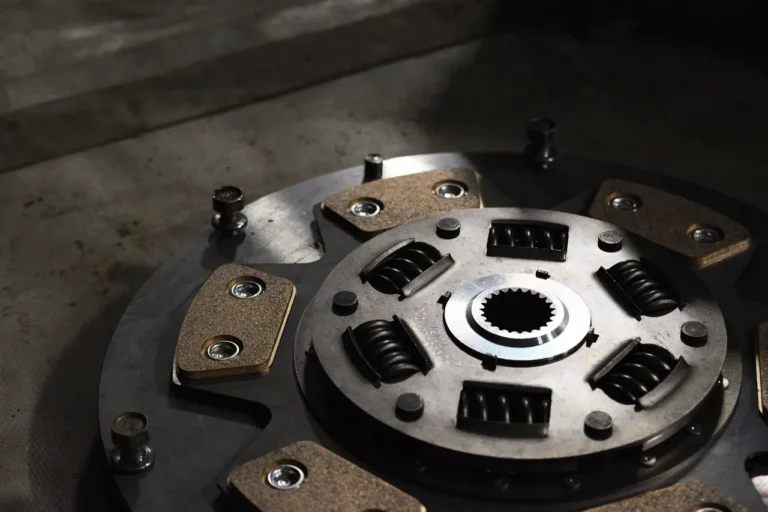
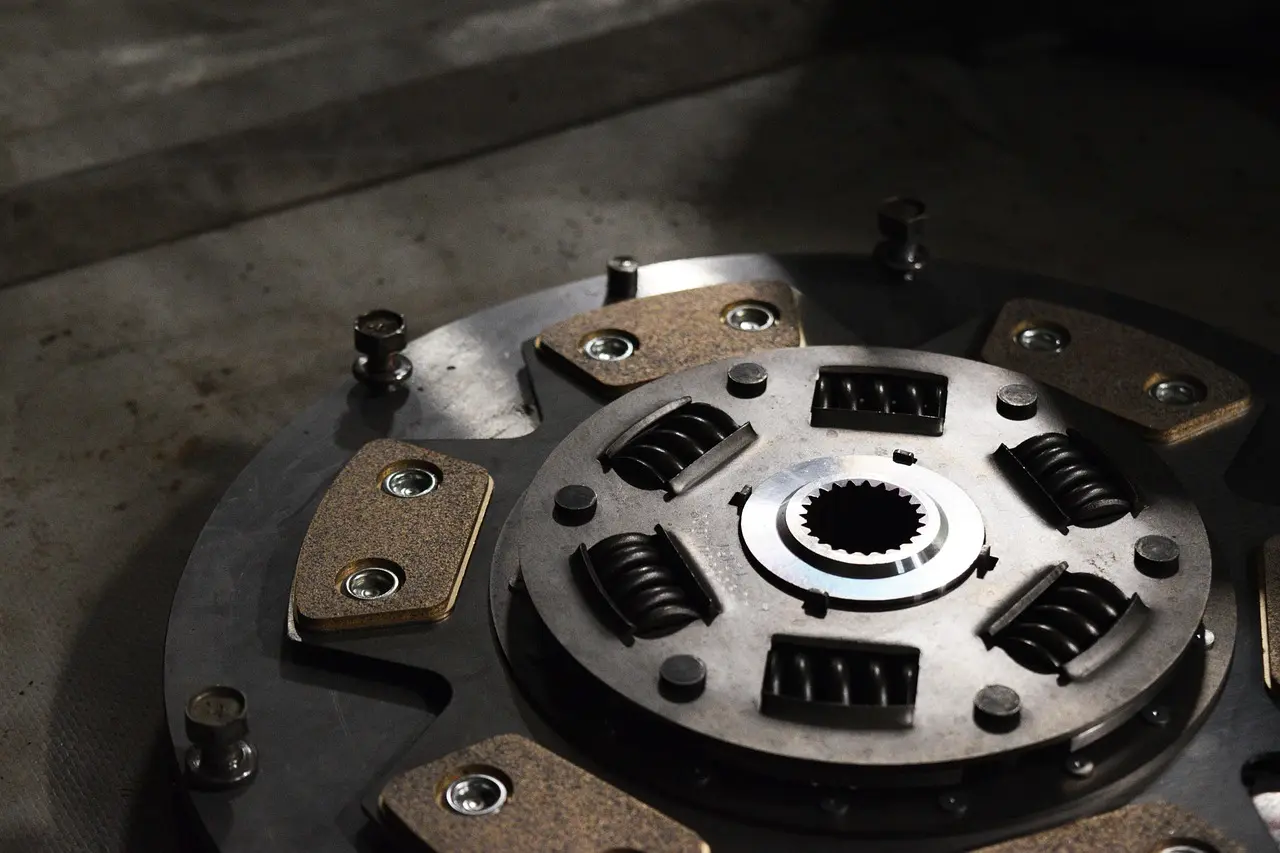
Visually, a worn clutch often shows heat marks, glazing, or thinning on the friction plate when disassembled. A flywheel may show heat damage or scoring, especially on a dual-mass unit. From the driver’s seat, though, the “look” is really the movement of the tachometer against the road speed.
Can you drive with a slipping clutch?
Sometimes, for a short distance, but it is a risk. The more you load the clutch, the more heat and wear you create. If it already slips under normal acceleration or on hills, keep driving to a minimum and plan inspection quickly before the clutch loses drive completely.