Why Is My Clutch Slipping in First Gear?
First-gear slip usually means the clutch is weakest under launch load, but it can also come from a hydraulic release fault, oil contamination, or poor launch loading. If it slips in 2nd and 3rd too, wear is more likely. Ignore it and heat damage can spread fast, the flywheel can be ruined, and the car may stop taking off cleanly. This guide shows how to separate true clutch wear from hydraulic, contamination, and driving-load causes, and what to check next.
What clutch slip means
A slipping clutch does not fully engage, so engine speed rises without a matching increase in road speed. In a manual car, that means the transmission input shaft is not being driven as firmly as it should be, and the engine can flare while the car feels weak.
Slip versus drag
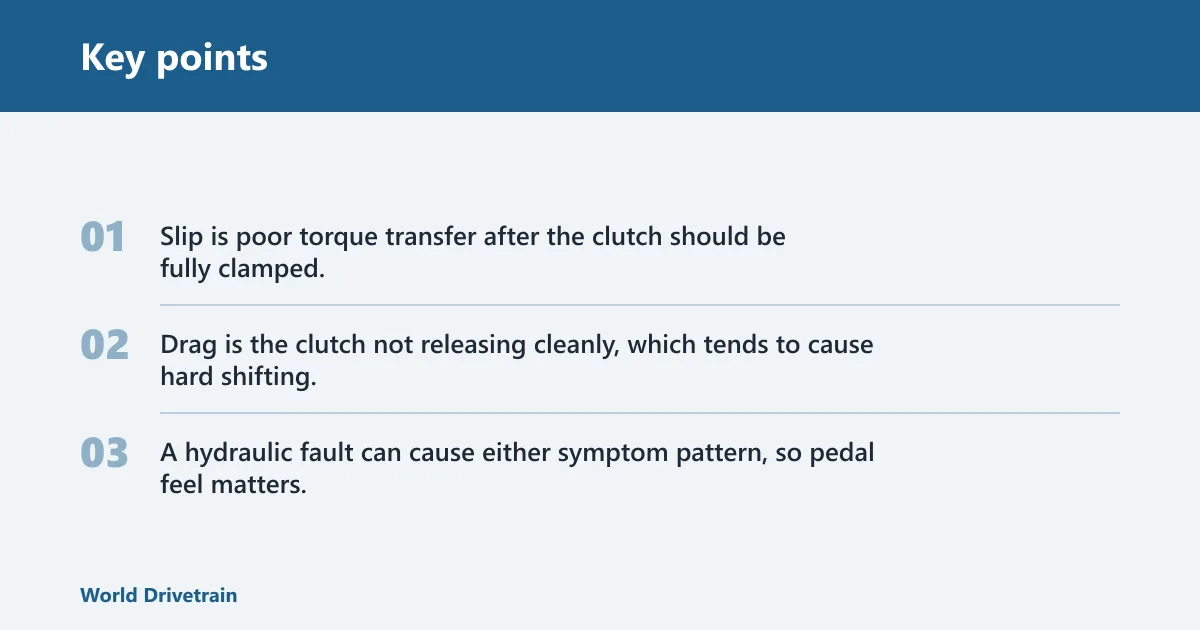
Slip and drag are opposite faults. Slip is poor torque transfer after the clutch should be fully clamped. Drag is the clutch not releasing cleanly, which tends to cause hard shifting, creep at a stop, or gear engagement problems. A hydraulic fault can cause either symptom pattern, so pedal feel matters, but it is not proof by itself.
Why first gear exposes slip first
First gear can reveal a marginal clutch before other gears because launch happens at low road speed, where any loss of torque transfer is easier to feel and see. The clutch is asked to move the car from rest, so slip energy builds quickly during takeoff, hill starts, or stop-and-go traffic.
Why hills and towing matter
Engine torque demand during launch is highest when you are pulling away uphill, towing, or trying to accelerate hard from a stop. Those conditions do not create the fault, but they expose a clutch that is already near its limit. That is why a car may seem fine on level ground and then flare badly on a grade.
How hard acceleration changes the symptom
When you press the throttle hard in first gear, the clutch has to transmit more torque while the car is still moving slowly. If the friction surfaces are worn or heat-damaged, the engine can rev up faster than the vehicle speed follows. The same weak spot may stay quieter in higher gears because the launch event is over.
A vehicle that pulls away cleanly on flat streets, then flares on a steep hill exit with a hot, sharp odor, may have marginal clamp load or worn friction material. That pattern points more toward marginal clamp load or worn friction material than toward a gearbox fault, because the symptom appears when load and heat rise together.
What does a slipping clutch look like?
What does a slipping clutch look like? The usual pattern is revs rising while speed does not match, often with a hot friction smell and weak pull under load. Pedal feel may change too, but the most useful clue is the mismatch between engine speed and vehicle speed during a launch or hard pull.
Burning smell after load or traffic
A burning smell is a common sign of the problem. It often follows hill starts or stop-and-go traffic, because repeated slip builds heat at the clutch disc, flywheel, and pressure plate. A hot friction odor after a few rough launches is a stronger clue than a one-time smell from unrelated heat sources.
Clutch bite point changes
A high, sticky, spongy, or inconsistent bite point can point to wear, adjustment issues, or a hydraulic problem. A very high bite point often shows less usable travel left in the clutch, but it does not prove slip on its own. Treat it as a clue, then check for rpm flare under load.
Pedal feel clues that matter
A soft pedal, slow return, or changing engagement point often points to the hydraulic clutch system, especially the master cylinder or slave cylinder. Low fluid or a leak can change how the clutch releases and engages. That can create hard shifting or poor release, which is different from true slip.
Common causes of first-gear slip
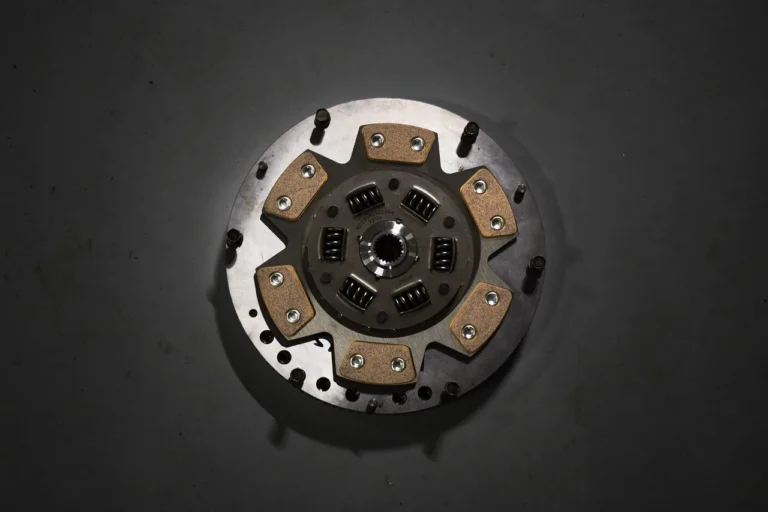
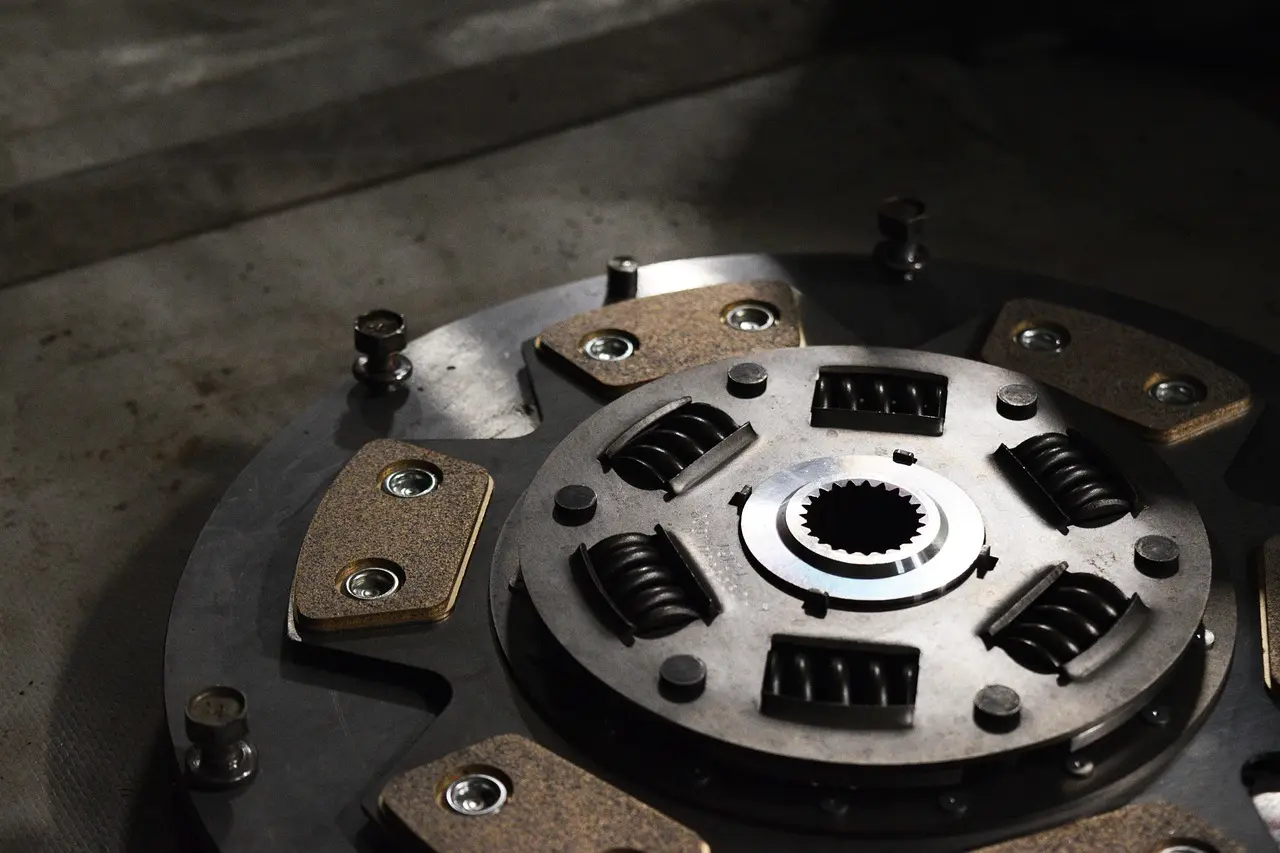
The most common cause in a stick shift is a worn clutch. More specifically, the clutch disc or clutch plate can lose friction material, overheat, or glaze, so it stops gripping the flywheel and pressure plate well enough under load. First gear makes that weak grip easiest to notice.
Clutch disc wear, glazing, or overheating
The friction lining on the clutch disc wears down over time. Heat can glaze the lining, which lowers grip even before the disc is fully worn out. A hot launch or repeated hill starts can push a marginal disc into visible slip sooner than steady cruising ever would.
Flywheel heat damage or contamination
The flywheel is the contact surface for the clutch disc. If it is heat-checked, glazed, or contaminated by oil or fluid, friction can drop and the clutch may slip even with a fresh disc. A flywheel that was not machined or replaced when needed can carry the same problem into a new repair.
Pressure plate and diaphragm spring weakness
The pressure plate provides clamping force, and the diaphragm spring is part of that assembly. If the spring loses force, or if the pressure plate has wear spots or heat damage, clamp load falls and slip becomes more likely. This can show up first in first gear because launch demand is the easiest place to overwhelm a weak clamp.
Fluid contamination after repair
A new clutch can still slip if oil, grease, or fluid got onto the friction surfaces during installation. That includes residue from an engine rear main seal, transmission input shaft seal, or an assembly mistake. Contamination can cause immediate slip, especially on the first hard takeoff.
Suppose a clutch kit was just fitted and the car now flares in first gear on a short uphill merge. If the pedal feels normal and the slip started right after repair, contamination or a missed flywheel step deserves more suspicion than simple wear.
Is it really the clutch?
Is it really the clutch? Not always. Hydraulic faults can change pedal feel and prevent correct engagement or release, but they more often cause incomplete release, drag, or hard shifting than true clutch slip. That distinction matters before you replace parts or blame the gearbox.
Hydraulic clutch system faults
Low fluid, air in the system, a leaking master cylinder, or a failing slave cylinder can change how far the clutch moves. The result is usually poor release or inconsistent engagement. If the pedal feels spongy, changes height, or returns slowly, check hydraulics before assuming the friction surface is gone.
When the transmission input shaft gets blamed
Loss of torque transfer can feel like a gearbox problem because the transmission input shaft is not receiving engine torque as it should. But if the engine revs climb while speed stays behind, the clutch is still the first suspect. Gearbox noise or shifting faults are separate clues, not proof of slip.
Drag, release problems, and hard shifting
Hard shifting, gear clash, or creeping at a stop points more toward clutch drag than clutch slip. A dragging clutch can be caused by hydraulic issues, adjustment errors, or a warped or misassembled release component. That is why a pedal complaint and a slip complaint should not be treated as the same fault.
First-gear slip decision table
Use this table as a filter, not a final diagnosis. Start with the driving situation, then compare rpm behavior, road-speed behavior, smell, and pedal feel. The last column tells you whether the pattern points more toward friction wear, hydraulic trouble, or contamination.
| Driving situation | RPM behavior | Road-speed behavior | Smell | Pedal feel | Likely culprit | Points to |
|---|---|---|---|---|---|---|
| Level-road launch, mild throttle | Small flare, then settles | Car moves, but pull feels weak | May be absent | Usually normal | Early clutch disc wear or mild glazing | Friction wear |
| Hill start or towing from rest | Revs rise faster than speed | Slow takeoff, poor pull | Hot friction odor after a few attempts | May still feel normal | Marginal clamp load, worn disc, or heat-damaged flywheel | Friction wear |
| Slip began right after clutch work | Flare appears immediately under load | Speed lags more on hard launches | Possible oily or burnt odor | Can feel normal | Contamination, missed flywheel machining, incorrect adjustment | Contamination |
| Pedal feels spongy or inconsistent | May flare or may only drag | May shift poorly more than slip | Often none | Soft, sticky, or changing bite point | Master cylinder, slave cylinder, low fluid, or air in system | Hydraulic issue |
| Continuous slip at moderate throttle | Engine speed keeps climbing | Vehicle speed does not keep pace | Strong burning smell | May feel normal or high | Severe friction-surface wear or pressure-plate weakness | Friction wear |
| Do not test this way | Do not hold the car against the brake to “prove” slip | Can overheat the clutch quickly | Often creates a burn smell | Not a valid diagnostic clue | Unsafe stall-test habits can damage a good clutch | Not a diagnosis |
| Stop driving now | Revs flare every time you ask for power | Car struggles to pull even on a gentle launch | Repeated burning smell | May change, but does not matter now | Severe slip, heat damage, or contamination | Immediate inspection |
Why does my clutch keep slipping?
Repeat slip after recent clutch work often means the root problem was not fixed. Common causes include contamination, a flywheel that was not machined or replaced, incorrect adjustment, or a weak pressure-plate setup that cannot hold clamp load under launch demand.
Repeat slip after recent clutch work
When a new clutch slips soon after installation, look at what was done around it. A fresh disc cannot overcome oil on the flywheel, a worn pressure plate, or a poor setup. If the symptom started after repair, the installation details matter as much as the parts list.
When the problem is getting worse
A clutch that slips more often, flares sooner, or begins to smell after shorter drives may be getting hotter and weaker. That pattern means damage is compounding. Continued driving can turn a borderline clutch into one that will not hold on a hill at all.
- Confirm the symptom during a first-gear launch, not from a guess at idle.
- Watch for rev flare without matching road-speed gain.
- Note whether the smell appears after hill starts or stop-and-go traffic.
- Check the pedal for a high, sticky, spongy, or inconsistent bite point.
- Look for recent clutch work, leaks, or fluid loss before you blame the disc alone.
- If slip is continuous, arrange inspection now.
Frequently asked questions
Why is my clutch slipping in 1st gear?
First gear often shows the symptom first because launch happens at low road speed, where a weak clutch is easiest to notice. If engine speed rises without matching vehicle speed, the clutch may be worn, glazed, contaminated, or losing clamp load. Hills and hard takeoffs make it show up sooner.
Why would my clutch be slipping?
The common causes are worn friction material, heat glazing, contamination on the clutch disc or flywheel, pressure-plate weakness, or a diaphragm spring that no longer clamps hard enough. In a manual car, a slipping transmission is usually caused by a worn clutch, not by the gearbox itself.
What does it mean if your clutch slips?
It means the clutch is not fully engaging, so torque transfer is incomplete. The classic sign is revs rising while speed does not match. You may also notice poor acceleration under load, a burning smell, or difficulty changing gears if another fault is present at the same time.
Why is my new clutch slipping?
A new clutch can slip if oil, grease, or fluid contaminated the friction surfaces, if the flywheel was not machined or replaced when needed, or if the pressure-plate setup is weak or misadjusted. A fresh installation should not be assumed good just because the parts are new.