How to Tell If Your Clutch Is Slipping
A clutch may be slipping if engine speed rises by roughly 300–500 rpm without a matching increase in road speed during a higher-gear acceleration test, or if it slips in a higher gear at moderate throttle. Ignored slip overheats the friction disc, can leave you stranded, and turns a simpler adjustment or replacement into flywheel damage. This guide shows a low-risk check sequence, common lookalikes, and when the car needs immediate repair.
Clutch slip signs
True clutch slip means the engine revs climb faster than the car accelerates. The mismatch is most obvious in higher gears, on hills, under load, or after the drivetrain has warmed up. A burning friction smell, weak pull, and rev flare are the usual clues, but one symptom by itself is not enough.
Slip often starts intermittently. Cold driving may feel normal, then the clutch begins to flare once the disc and pressure plate heat up. That pattern matters, because hot-only slip can point to borderline wear, a hydraulic release problem, or contamination that changes when parts expand.
How do you check it safely?
Use a steady road check, not a hard launch. The safest check is a brief acceleration in a higher gear at moderate throttle on a quiet street, while you watch for engine speed to rise without a matching increase in road speed. If the clutch slips, stop the test; repeated abuse can add heat and wear.
Compare cold behavior with hot behavior, because a clutch that only slips after about 10 to 20 minutes of driving may be near the edge of its clutch capacity. That contrast helps separate real slip from a one-time mis-shift or a weak engine that feels flat all the time.
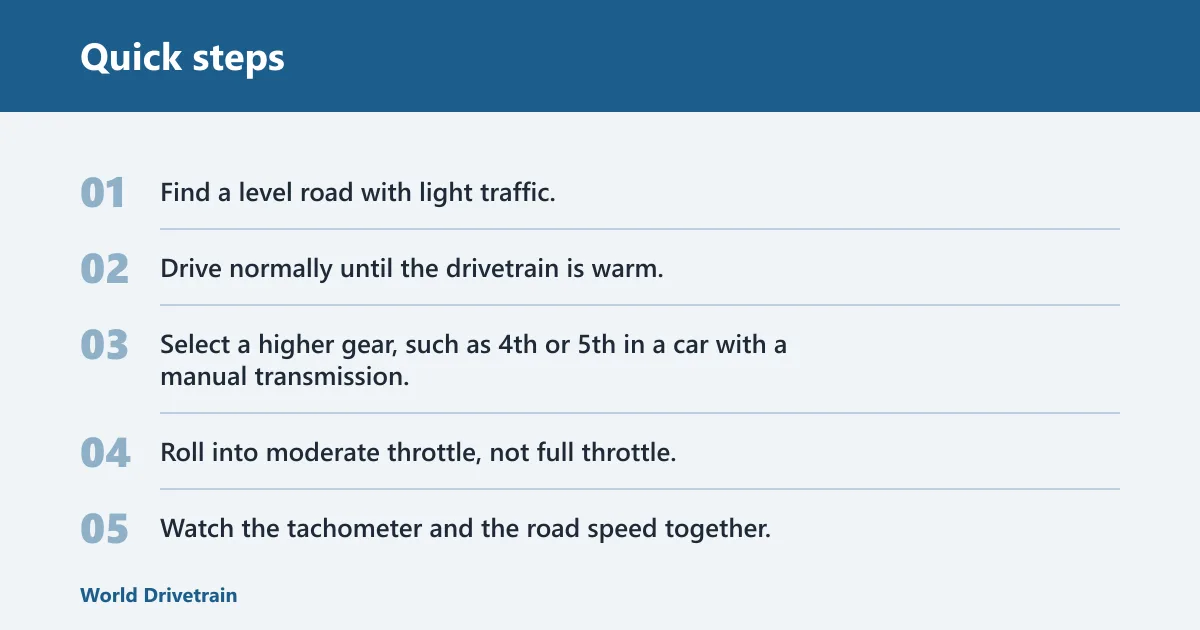
- Find a level road with light traffic.
- Drive normally until the drivetrain is warm.
- Select a higher gear, such as 4th or 5th in a car with a manual transmission.
- Roll into moderate throttle, not full throttle.
- Watch the tachometer and the road speed together.
- Stop the test if revs flare without a matching pull.
What not to do
Do not do a burnout, do not hold the car at high rpm with the clutch partly engaged, and do not repeat the test many times. Those habits can turn a borderline problem into a failed disc, a heat-spotted flywheel, or a pressure plate that loses more clamp force.
How do you avoid false alarms?
Separate slip from clutch drag, gear-selection mistakes, and engine misfire before you blame the clutch. Drag makes shifting hard because the clutch does not fully release. Mis-shifts and low-gear bogging make the engine feel wrong, but the revs and vehicle speed still stay linked in a different way.
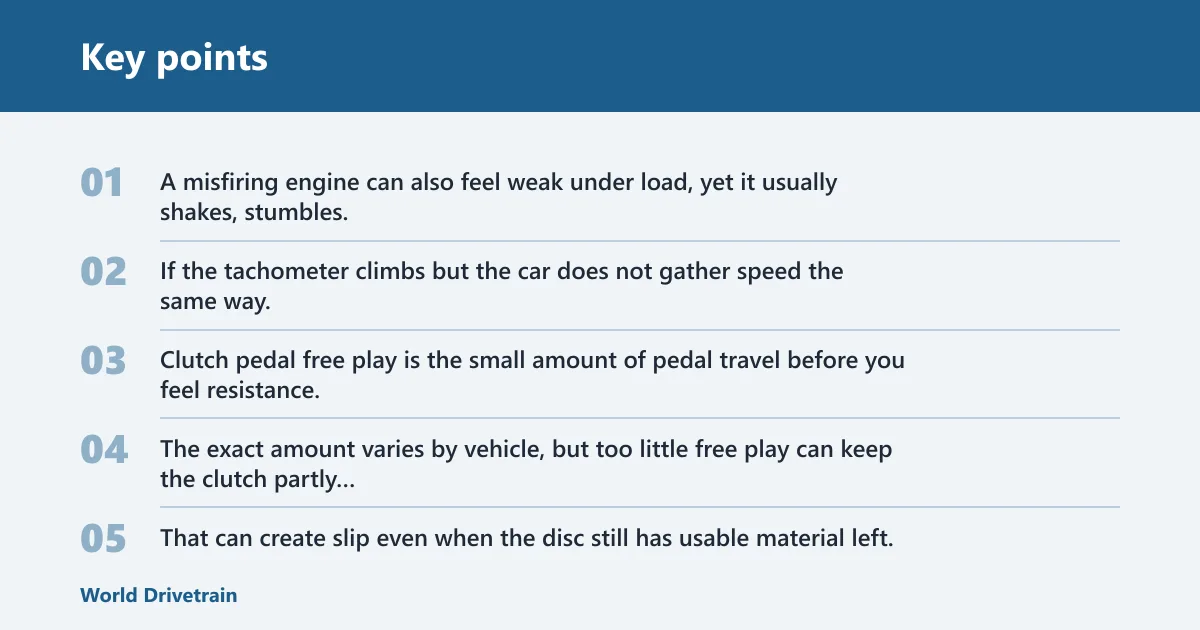
A misfiring engine can also feel weak under load, yet it usually shakes, stumbles, or flashes a warning light rather than free-revving. If the tachometer climbs but the car does not gather speed the same way, that points much more strongly toward clutch slip than toward an engine problem.
Look for pedal and hydraulic clues
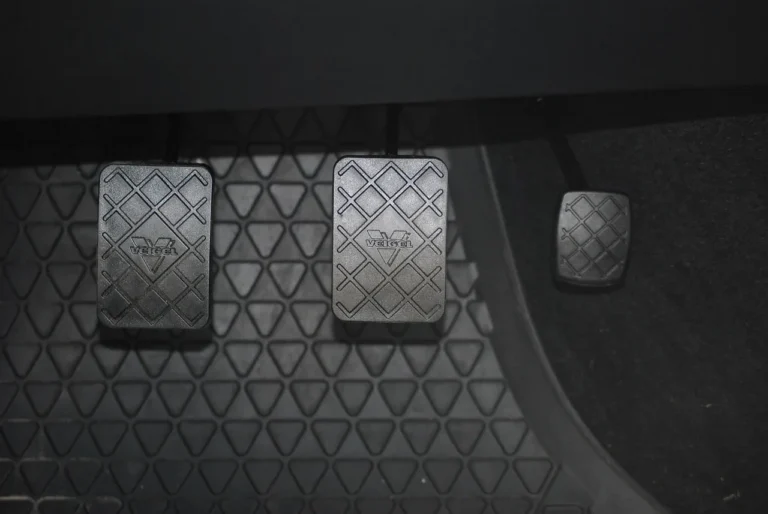
Clutch pedal free play is the small amount of pedal travel before you feel resistance. The exact amount varies by vehicle, but too little free play can keep the clutch partly released. That can create slip even when the disc still has usable material left.
Check the fluid level if the car uses a hydraulic clutch. Low clutch fluid, leaks, air in the system, or wear in the master cylinder or slave cylinder can prevent full release and can also change how the pedal feels. A soft pedal, a sinking pedal, or visible wetness near the cylinders deserves prompt service.
Read the driving condition
Slip shows up first under heat, heavy load, towing, uphill pulls, first gear launches, and reversing. Those situations demand the most clamp force, so a borderline clutch fails there first. That is why a car may back out of a driveway fine yet flare on a hill in 4th gear.
Slip or not?
Use the table as a quick filter, not a final repair verdict. It separates the most likely cause from the next safe step, and it includes a scenario that points away from clutch slip altogether.
| Scenario | Expected rev / road-speed behavior | Most likely cause | Next action |
|---|---|---|---|
| Cold start, normal acceleration in 2nd or 3rd | Revs and speed rise together; no flare | No clear clutch slip yet | Monitor; repeat the warm test later |
| Hot-only driving after 15 minutes | Revs flare first, then speed catches up slowly | Borderline wear, heat-related hydraulic issue, or contamination | Book service soon |
| Uphill pull with steady throttle | Revs rise without a matching increase in speed | True clutch slip under load | Stop hard driving; arrange inspection soon |
| 4th or 5th gear acceleration at moderate throttle | Engine speed jumps 300–500 rpm while speed lags | Classic clutch slip | Book repair soon; limit driving |
| First gear and reversing only | Chatter, take-up delay, or harsh engagement without rev flare | Clutch drag, adjustment, or gear-selection issue | Check free play and hydraulics; do not assume slip |
| Engine revs rise, but the car also shudders and misfires under load | RPM and speed do not separate cleanly | Engine misfire or fuel/ignition fault | Diagnose engine fault before replacing the clutch |
What can cause clutch slip?
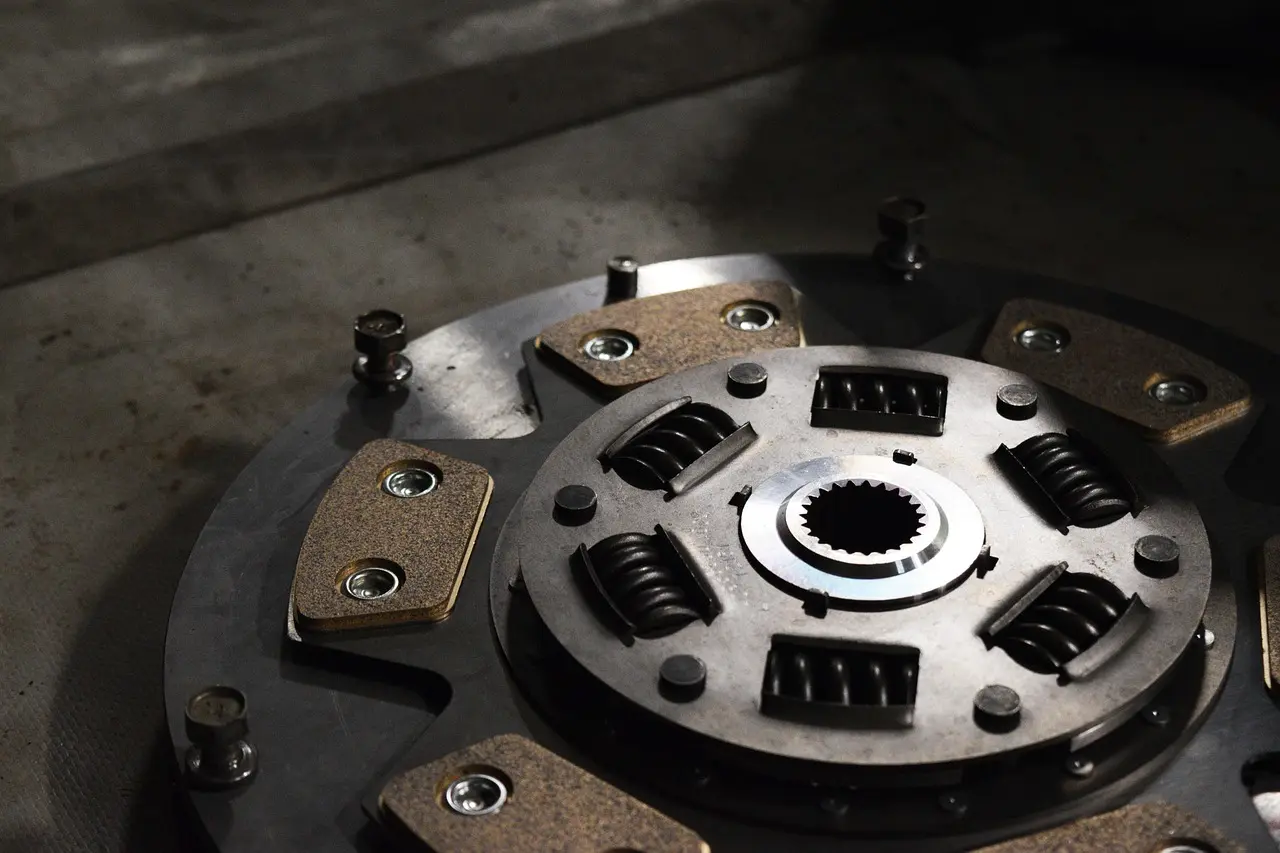
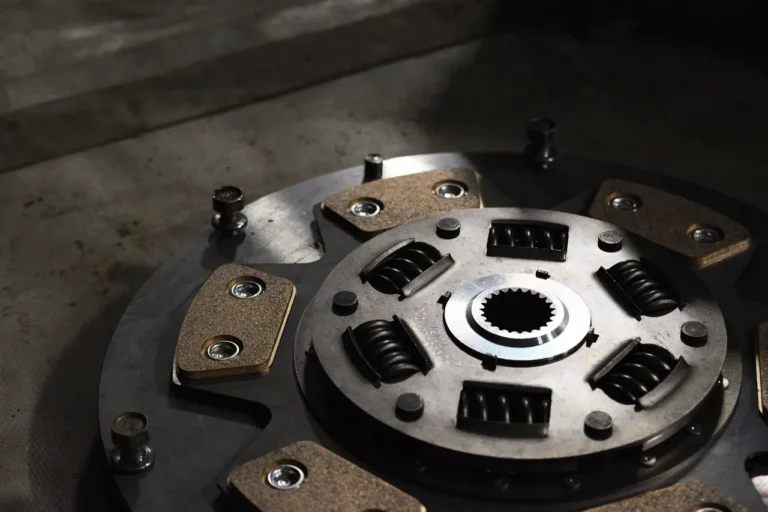
Worn friction material is the most common cause. As the disc wears down, it loses the grip needed to hold engine torque. Glazing can do the same thing sooner, especially after repeated heat cycles or aggressive clutch use, because the surface gets slick instead of biting evenly.
Heat damage matters too. A disc that has been overheated can smell burnt and lose holding power even if the lining is not fully gone. Most replacement decisions are driven by wear, glazing, or heat damage rather than mileage alone.
Pressure plate and flywheel problems
The pressure plate provides the clamping force that keeps the disc locked to the flywheel. Spring fatigue, weak fingers, or oil and grease contamination can reduce that force. A contaminated clutch will often slip sooner and may leave a specific burnt-oil smell, not only a friction smell.
The flywheel also needs attention. Heat spots, scoring, or an uneven surface can prevent the new clutch from holding correctly. If the clutch is being replaced, the flywheel may need resurfacing or replacement so the new friction material has a flat, clean mating surface.
Motorcycle and dirt bike checks
On a motorcycle or dirt bike, clutch slip shows up as engine rpm rising faster than road speed, often under hard acceleration, hill climbs, or when the clutch is asked to carry too much load in a high gear. The same warning signs apply: flare, weak drive, and a hot friction smell.
Do not try to diagnose a motorcycle clutch by feathering it hard for long periods. Check cable free play or hydraulic feel first, then look for contamination, worn plates, or heat damage. If the engine revs cleanly but the bike does not pull, the clutch is a stronger suspect than the transmission.
Common first-timer mistake
A common first-timer mistake is assuming first-gear bogging means the clutch is slipping. In many cases, the engine is simply too low in the rev range, or the wrong gear is selected for the road speed. True slip shows the opposite pattern: more revs with less forward gain.
Can you keep driving?
If the symptom is mild, inconsistent, and does not worsen when hot or under load, monitor it and recheck with the safe road test. If the car only shows a slight flare once in a while, you can usually plan service before it becomes a no-drive problem. Keep load low and avoid towing.
Book service soon if the slip repeats in higher gears, on hills, or after warm-up. At that point the clutch is losing hold under normal use, and continued driving can overheat the disc and flywheel. The problem will usually worsen over time, not improve.
Stop driving and arrange repair if the engine revs climb sharply while road speed barely changes, if you smell burning friction material repeatedly, or if the clutch starts to slip so badly that you cannot maintain speed. Yes, a slipping clutch can damage the transmission indirectly by forcing harsh shifts and heat-related stress, but the bigger risk is usually the clutch assembly and flywheel.
Frequently asked questions
How do I tell if my clutch is slipping while driving?
Watch for engine speed rising faster than road speed in a higher gear, especially at moderate throttle. If the tachometer jumps by roughly 300–500 rpm without a matching pull, that is a classic slip pattern. A burning smell and weak acceleration make the diagnosis more likely.
How can I check if my clutch is slipping without damaging it?
Use a short, gentle road check in a higher gear on a level road, then repeat once after the drivetrain is warm. Do not rev the engine hard, do not dump the clutch, and do not repeat the test many times. Stop as soon as the revs flare.
What does a slipping clutch feel like?
It usually feels like the engine is speeding up, but the car is not responding with the same urgency. Drivers often describe weak acceleration, a delay between throttle input and pull, and a rising engine note that does not match the vehicle’s pace. Heat can make it more obvious.
What sound does a slipping clutch make?
Sound is secondary, not definitive. Many slipping clutches make little obvious noise beyond a higher engine note. Some produce a sharp burning smell from friction material, and severe slip can make the engine rev flare sound exaggerated. Do not rely on sound alone to diagnose it.
Can low clutch fluid cause clutch slipping?
Yes, low clutch fluid can contribute if the system is hydraulic. Low level, leaks, or air in the system can change release behavior, and a master cylinder or slave cylinder problem can keep the clutch from fully engaging. That can mimic or worsen true slip.
Why does my clutch slip when the car is hot?
Heat can reduce the margin left in a worn disc, thin fluid can act differently when warm, and expanding parts may reveal an adjustment problem that did not show cold. Hot-only slip is a warning sign. It often means the clutch is near the end of its usable range.
How long will a slipping clutch last?
There is no reliable mileage or time answer. A clutch that only barely slips may last a short period, then fail quickly under load or heat. A clutch that slips badly can stop holding almost immediately. Once slip is confirmed, plan repair rather than waiting for a guess.