Can You Drive with a Transmission Fluid Leak?
Yes, but only if the seep is minor, there is no warning light or slipping, and the fluid level stays near full. Any active drip, low-fluid warning, or shift problem means to stop driving or tow the vehicle. Low ATF can burn clutch material, raise transmission temperature, and turn a small seal leak into a rebuild. Here’s how to tell drive, drive only to a shop, or tow now.
Can you drive with a transmission fluid leak?
Why fluid loss matters
Transmission fluid does three jobs at once: it carries hydraulic pressure, removes heat, and lubricates moving parts. Once the level drops enough, pressure falls first, then shift quality drops, then heat rises. That sequence can happen quickly on hot days, in traffic, or under load.
Automatic transmissions depend on fluid pressure to apply clutches and bands. Manual transmissions need gear oil for bearing and gear protection. CVTs are even more sensitive because fluid condition and pressure affect belt or chain control. Low fluid in any of them is a risk, but the failure mode differs.
What makes the risk climb from nuisance to damage
A small seep may only leave a film or a few drops after parking. A fast drip can empty enough fluid on a short drive to cause delayed engagement or slipping. Burning smell, dark fluid, and any warning light can raise the risk from “check soon” to “stop now.”
Transmission leak triage table
| Symptom or sign | Risk level | Immediate action |
|---|---|---|
| Wet film or a few drops after parking; no symptoms | Low | Check the fluid level, note the spot location, and drive only if level stays near full |
| Small puddle, roughly 2 to 6 inches across, forming after parking | Moderate | Drive only a short distance to a shop if shifts remain normal and the level checks safe |
| Drip rate that leaves a spot every few seconds or a steady stream | High | Tow now; a fast loss can drop pressure before you reach a shop |
| Slipping, delayed engagement, flare between gears | High | Stop driving and arrange towing |
| Burning smell, overheated fluid, or warning light | High | Stop driving and arrange towing |
Puddle size and drip rate
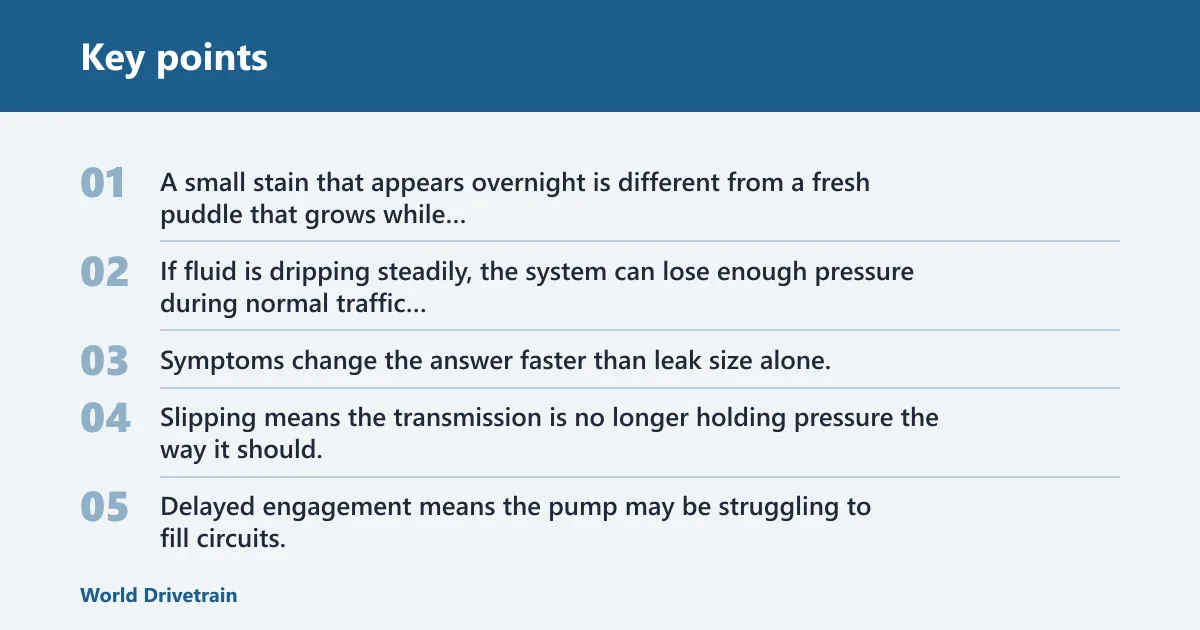
Size matters, but rate matters more. A small stain that appears overnight is different from a fresh puddle that grows while the engine idles. If fluid is dripping steadily, the system can lose enough pressure during normal traffic to make the car unsafe before you notice a problem.
Slip, delay, smell, and warning light
Symptoms change the answer faster than leak size alone. Slipping means the transmission is no longer holding pressure the way it should. Delayed engagement means the pump may be struggling to fill circuits. A burning smell often means the fluid has overheated. Any transmission warning light should move the decision toward stopping the car.
Immediate action
If the leak is minor and the transmission still shifts normally, a short drive to a shop may be reasonable. If the leak is active or symptoms are present, do not try to “make it home.” Tow service is the safer call when fluid loss is fast or the transmission has already started to misbehave.
How bad is the leak?
Color, smell, and where the fluid lands help you decide whether the leak is a seep or an active failure. Fresh automatic transmission fluid is often red or pink, but it can turn brown with age. Burnt-smelling fluid, especially with dark color, points to heat and possible clutch damage.
Red or brown fluid under the vehicle
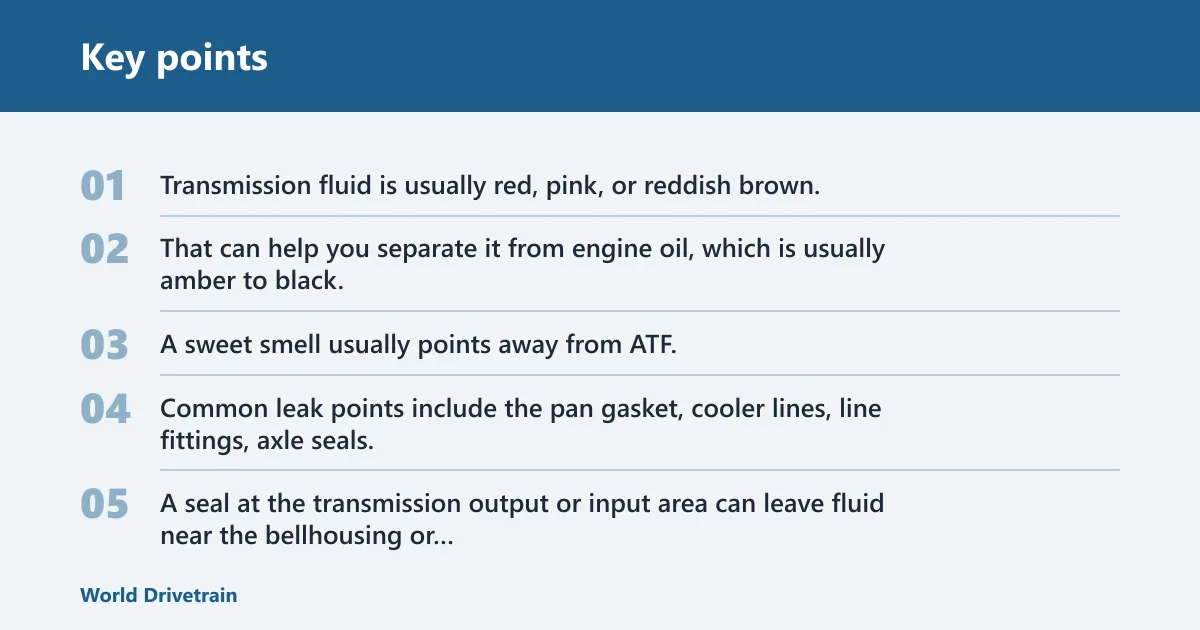
Transmission fluid is usually red, pink, or reddish brown. That can help you separate it from engine oil, which is usually amber to black, and coolant, which is often green, orange, or pink and feels slick but watery. A sweet smell usually points away from ATF; a burnt smell points toward transmission trouble.
Leak points to inspect from the ground
Common leak points include the pan gasket, cooler lines, line fittings, axle seals, shaft seals, and case connections. A seal at the transmission output or input area can leave fluid near the bellhousing or tail housing. Cooler-line leaks often leave a trail that starts higher and drips down the underbody.
Say your driveway spot is about 4 inches across after an overnight park, and the transmission still shifts normally. That is still a warning, but it is usually a shop-trip situation, not a long-drive situation. If the same spot doubles after about 10 minutes of idling, the leak is active enough to treat as a tow-now problem.
Why a fast drip can empty the system before the driver notices
A transmission does not need a huge hole to lose enough fluid for trouble. A steady drip can pull the level below the pickup or pump inlet during acceleration, cornering, or braking. Once that happens, pressure drops and the transmission can begin to slip or hesitate within the same trip.
What happens when fluid gets low?
Low fluid starves the transmission of pressure and cooling. That leads to slip, delayed engagement, harsh shifting, and heat buildup. The damage can move from temporary shift trouble to worn clutches, burnt seals, or internal failure if driving continues.
Automatic transmission
Automatic transmissions are pressure-driven. When ATF falls too low, clutches can slip instead of applying fully, and the converter and valve body can overheat. Continued driving can glaze clutch material and spread wear through the unit, which is how a leak turns into an expensive repair.
Manual transmission
Manual transmissions usually rely on gear oil, not ATF, but the same low-fluid problem applies. Bearings and gears lose lubrication, which can lead to noisy operation, harder shifting, and long-term wear. If the fluid loss is severe, the damage can progress even if the car still moves.
CVT
CVTs are especially heat-sensitive. Correct fluid level and pressure matter for belt or chain control, pulley operation, and cooling. A low-fluid CVT may slip, shudder, or overheat quickly. Because repairs can be costly, driving a CVT with a leak is a poor gamble once symptoms begin.
How to check the fluid level
Use the vehicle manual first, because the check procedure is not universal. Some vehicles use a dipstick. Others require a sealed level check, a specific fluid temperature, or a scan tool. The wrong procedure can give a false reading and lead you to overfill or miss a low level.
Park on level ground and follow the correct cold or hot check method
- Park on a level surface and set the parking brake.
- Check the owner’s manual for the correct method: cold, hot, engine running, or engine off.
- If a dipstick is present, clean it, reinsert it, then read it again using the specified procedure.
- If the vehicle uses an electronic or sealed check, follow the temperature and fill-port steps exactly.
- If the level is low, add only the specified fluid type and only enough to reach the proper mark.
If the level is low
Top off only as a temporary step so you can reach a shop or finish a proper inspection. Do not treat added fluid as a repair. Overfilling can foam the fluid, raise pressure in the wrong places, and create its own shift problems. The leak source still needs to be fixed.
Suppose the level checks one quart low on a transmission that still shifts normally and the fluid looks clean. Adding the correct spec fluid may make a short trip to a repair facility reasonable. If the same car starts slipping after the top-off, stop driving. The issue is no longer just low level.
When should you stop driving?
Stop driving as soon as the transmission slips, delays engagement, smells burnt, or triggers a warning light. Those signs mean the unit is already losing the pressure or cooling it needs. At that point, every mile raises the odds of internal damage and a larger repair bill.
Short-distance driving only
Short-distance driving is limited to a minor seep, a correct fluid level, and normal shift behavior. Keep the trip direct and short. Do not add errands, highway speeds, towing, or heavy loads. Distance limits are not universal, because leak rate and symptom severity matter more than miles alone.
Tow now
Tow now when the leak is fast, fluid is pouring, or the vehicle will not stay in gear. Towing is also the better choice if the fluid is burnt, the warning light is on, or the transmission already slipped. A service truck is cheaper than risking total transmission failure.
What not to do
Do not keep driving because the car still moves. Do not overfill to “make up for” a leak. Do not rely on stop-leak products as a repair. Those products may mask symptoms for a short time, but they do not fix a split line, bad seal, or damaged gasket.
Repair and tow next steps
A shop should inspect the leak source before adding more fluid or replacing parts. That means checking the pan, gasket, lines, fittings, seals, and case for wetness, cracks, or impact damage. The diagnosis matters because an external leak can come from a simple reseal or from hardware that needs replacement.
Common repairs
Typical repairs include resealing the pan, replacing cooler lines, replacing seals, tightening or replacing fittings, and correcting case damage where possible. After the repair, the transmission must be refilled with the correct fluid type and brought to the proper level using the vehicle-specific procedure.
Why ignoring the leak gets expensive
A seal or line repair is far cheaper than a transmission rebuild. If the fluid level drops enough for slip and heat damage, the repair bill can grow fast. That is why the correct choice is often to stop early, not to stretch the drive and hope the leak stays small.
Frequently asked questions
How far can you drive with a transmission leak?
Distance depends on the leak, not a fixed number of miles. If the fluid level is safe and shifts are normal, drive only far enough to reach a shop. If the leak is steady or the transmission starts slipping, the safe distance is effectively zero and towing is the better option.
What happens when transmission fluid leaks
As fluid drops, pressure and cooling drop with it. That can cause delayed engagement, slipping, harsh shifts, overheating, and internal wear. If the leak continues, the transmission may stop moving the vehicle or suffer damage severe enough to require major repair or replacement.
Can you drive with transmission oil leak?
If the leak is minor and the transmission still operates normally, a short drive to a shop may be acceptable. If the leak is active or the vehicle is already showing symptoms, stop driving. Whether the fluid is called oil or fluid, the risk is the same once the level falls.