How Much Does It Cost to Replace a Clutch and Flywheel?
A clutch-and-flywheel replacement in the UK is commonly reported at about £700 to £1,400 on a manual car, but it can rise to around £1,800 or more if the dual-mass flywheel also needs replacing; if the flywheel is still within spec, you may sometimes save about £300 to £900. Ignore wear and you can end up with slipping, shudder, or a breakdown that turns a clutch job into a recovery bill. This guide breaks down the price, when the flywheel is reusable, and which symptoms change the final quote.
How much does it cost?
For a clutch-only job, the average UK price sits at £450 to £750, with a platform average of £666.74. That figure can move up or down with the car, the workshop’s labour rate, and whether the garage replaces related parts while the gearbox is out. Labour often takes the largest share of the bill.
What pushes the quote higher
Make and model matter. FixMyCar lists averages of £819.74 for Audi, £603.48 for BMW, £877.35 for Mercedes, and £678.70 for Volkswagen. Parts choice, local labour rates, and the need for extra seals, fluid, or a flywheel change can add more. A city-centre workshop and a hard-to-access drivetrain often cost more.
The clutch in a manual car transfers engine power to the transmission. The friction disc wears over time, and that wear is a common cause of clutch trouble. Because the gearbox or transmission has to come out to reach the assembly, the labour is high even when the parts themselves are not.
Why labour takes a large share
The job is access-heavy. The mechanic usually removes the transmission, and fluid may be drained during the repair. That means the quote reflects hours of stripping and refitting, not just the clutch parts. On many cars, the pressure plate, pilot bearing, and throw-out bearing are replaced at the same time because the labour is already committed.
A common first-timer mistake is to compare only the price of the clutch kit. That misses the real cost driver: the hours spent reaching the clutch, then refitting the transmission and checking for leaks, alignment, and smooth pedal operation.
Does the flywheel need replacing?
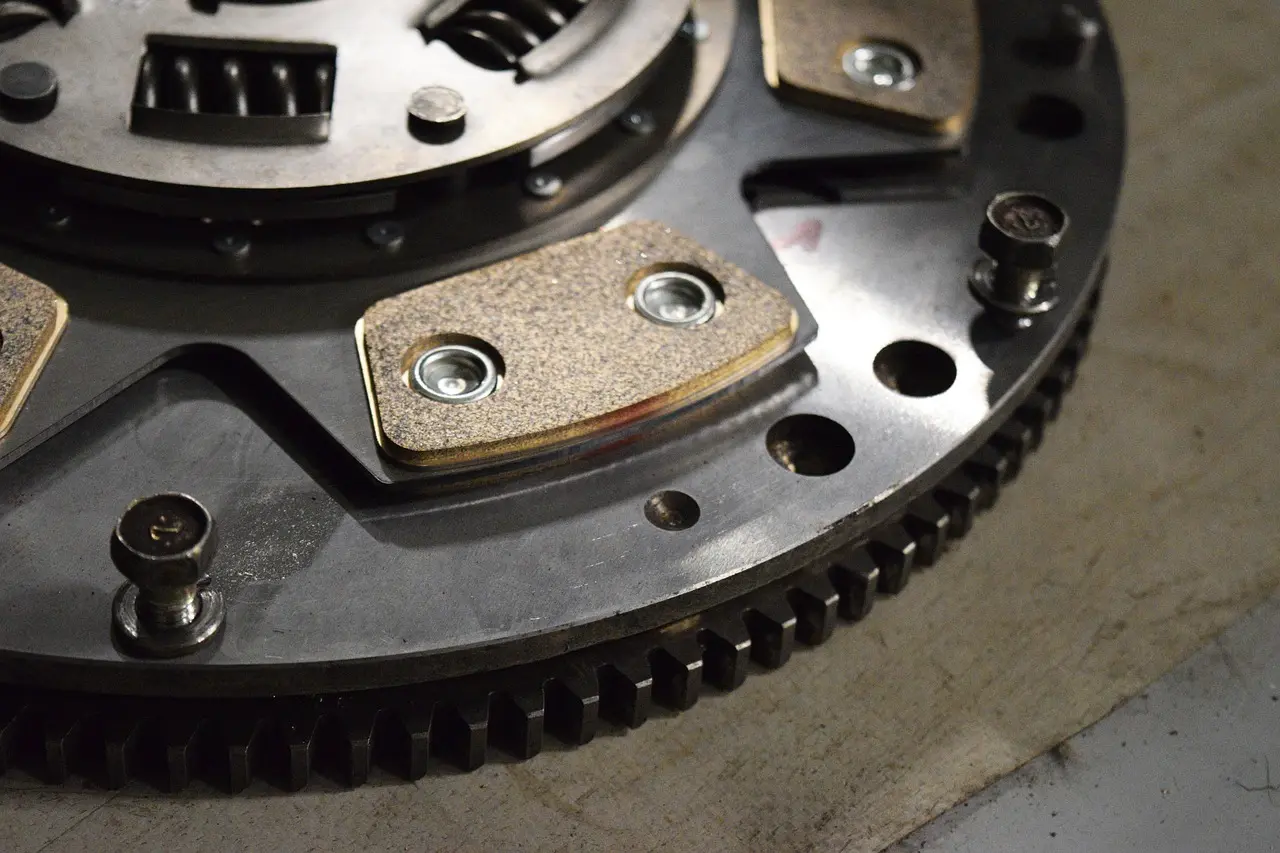
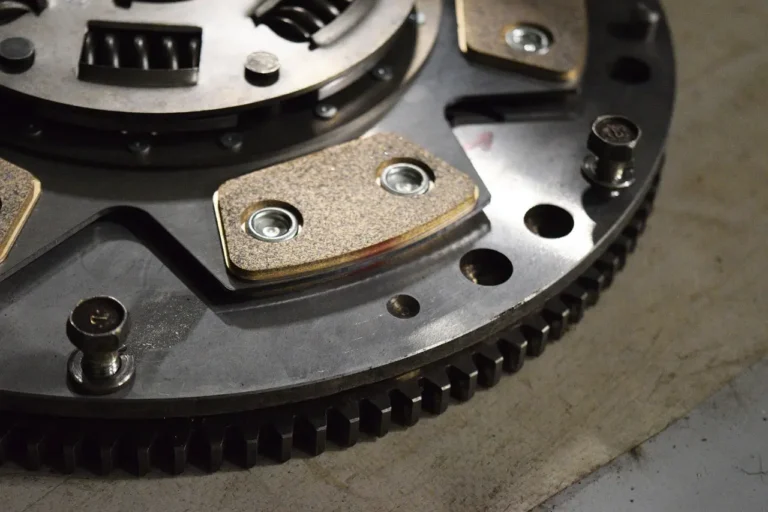
Not always. A standard flywheel can often be reused if it is flat, not heat-cracked, and still within wear limits. The bill rises when the flywheel is scored, warped, or heat-damaged, or when the car uses a dual-mass flywheel that has developed play or noise. The flywheel choice can add hundreds of pounds.
Standard flywheel versus dual-mass flywheel
A standard flywheel is a simpler, single-piece part. If it is sound, the garage may machine or reuse it rather than replace it. A dual-mass flywheel is more complex and is designed to damp drivetrain vibration, so when it fails the usual answer is replacement rather than repair.
The same source says the average price of a dual-mass flywheel repair is £499.29, and worn units may increase vibrations through the clutch pedal. A faulty dual-mass flywheel may also cause a rattling noise. If those symptoms are present, the quote often moves beyond a basic clutch job.
Say your hatchback has a slipping clutch, but the flywheel measures within spec and shows no heat damage. In that case, the garage may quote for the clutch set only. Suppose the same car has a rattling idle and vibration through the pedal; the flywheel line on the invoice is much more likely to appear.
When replacement is likely
Ask for the flywheel to be inspected before authorising the work. If the car has a dual-mass unit and the mileage is high, replacement becomes more likely because the part is already a known wear item. The extra cost is not from the part alone. It is also from the same access work you are already paying for.
What signs point to clutch failure?
Common clutch symptoms include slipping gears, a burning smell, a high bite point, judder, difficulty selecting gears, and pedal feel changes. If the revs rise but road speed does not follow, the friction disc may be worn. If the pedal feels odd or the car shudders pulling away, the fault may be moving beyond simple wear.
Slipping, rev flare, and trouble accelerating
Slipping often shows up under load, such as a motorway overtake or a hill start. The engine speed climbs, but the car does not accelerate in step. That points to a clutch friction disc that can no longer grip the flywheel properly.
Burning smell, judder, or high bite point
A burning smell can appear after repeated slip or heavy stop-start use. Judder on take-off often means uneven friction or contamination. A high bite point can also point to wear, especially when it arrives with a harder pedal and awkward gear changes.
Hard shifts and pedal feel changes
Difficulty selecting gears can mean the clutch is not fully disengaging. That can come from worn clutch parts, hydraulic issues, or a release mechanism problem. The throw-out bearing, pressure plate, and pilot bearing are often renewed together because they sit behind the transmission and cost less than repeat labour.
Picture a family saloon that bites near the top of the pedal travel and smells hot after a steep hill. The clutch may still move the car, but the pattern suggests the friction disc is near the end of its life and the final quote is likely to include the full clutch set.
Why the quote is so high
The headline price is high because the job is labour-heavy. The transmission has to come out, and that takes time before a single worn part is even visible. Once access is open, related components are often replaced at the same time, which adds parts cost but avoids paying the labour twice.
Transmission removal and access time
The gearbox has to be removed for clutch replacement. On some vehicles that means disconnecting driveline parts, mounts, hydraulics, and wiring before the clutch can be reached. That is why labour is such a large slice of the invoice, even when the clutch kit itself is modest.
Parts usually changed at the same time
Pressure plate, pilot bearing, and throw-out bearing are commonly changed with the clutch because they sit behind the same labour wall. The flywheel may also be changed if it is worn, damaged, or a dual-mass unit nearing failure. That is where the quote can jump by several hundred pounds.
Why related fluids and seals matter
Related fluids and seals matter because a cheap clutch repair that leaves a leak in place is a false economy. If the gearbox is out, a garage may recommend replacing consumables or seals that would be difficult to reach later. That is not padding if the parts are genuinely due.
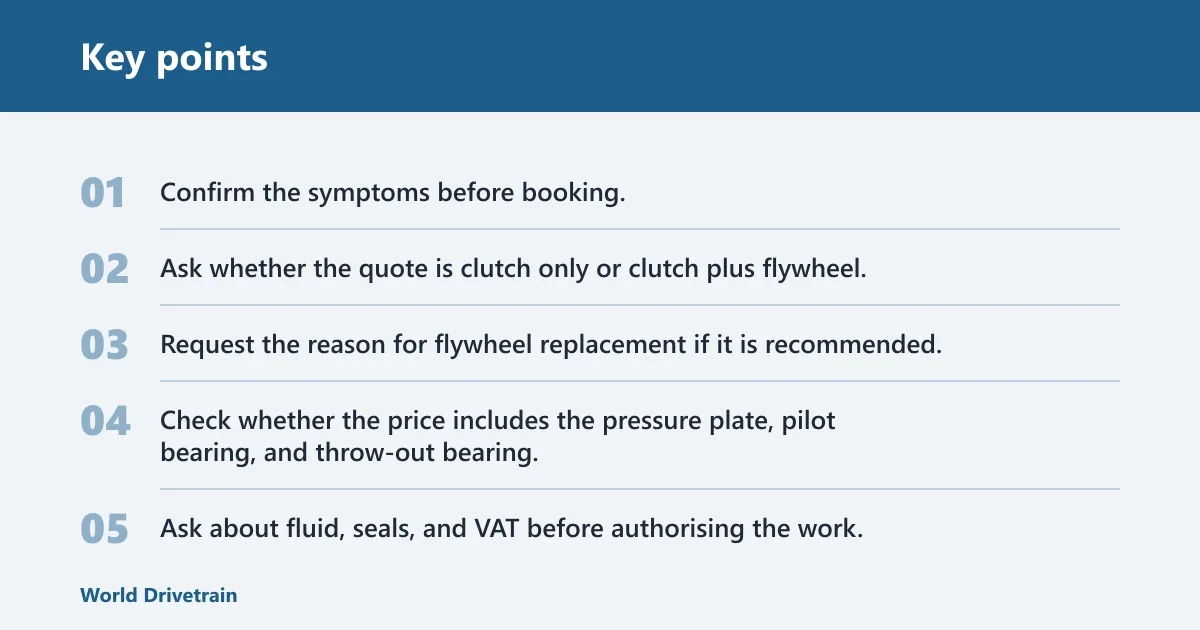
- Confirm the symptoms before booking. Slipping, vibration, or noise can point the garage toward the right inspection.
- Ask whether the quote is clutch only or clutch plus flywheel.
- Request the reason for flywheel replacement if it is recommended.
- Check whether the price includes the pressure plate, pilot bearing, and throw-out bearing.
- Ask about fluid, seals, and VAT before authorising the work.
Clutch flywheel cost table
This table breaks the bill into three common scenarios. Use it to see where the flywheel changes the price, when it can stay in place, and what to ask before the garage starts the job.
| Scenario | Likely symptoms | Is the flywheel usually replaced? | Cost drivers | Questions to ask before authorising work |
|---|---|---|---|---|
| Clutch only | Slipping gears, burning smell, high bite point, difficulty selecting gears | No, if a standard flywheel is flat and within spec | Clutch kit parts, gearbox removal, labour, fluid top-up or replacement | Is the flywheel in spec? Are the pressure plate, pilot bearing, and throw-out bearing included? |
| Clutch + standard flywheel | Clutch slip plus heat marks, chatter, judder, or confirmed flywheel wear | Yes, if it is scored, warped, or heat-damaged | Extra flywheel part cost, more inspection time, the same labour already required | What damage was found on the flywheel? Can it be reused or machined safely? |
| Clutch + dual mass flywheel | Vibration through the clutch pedal, rattling, knocking at idle or on shutdown, slip | Usually yes, because a faulty dual-mass unit is commonly replaced | Higher flywheel part cost, added labour if related damage is found, consumables and fluids | Is the vibration or rattle coming from the dual-mass flywheel? Is the replacement price separate from the clutch kit? |
For a standard manual car, a clutch-only quote often stays closer to the lower end of the UK range. Add a flywheel, and the total can rise quickly. Add a dual-mass flywheel, and the bill can move into four figures without any unusual labour rate at all.
How long does the job take?
The same source says clutch replacement commonly takes 3–6 hours, and that is before a garage finds extra wear, seized fasteners, or a flywheel issue. Some cars are straightforward. Others need more dismantling, which can push the job into a full day or longer if extra parts are needed.
Typical workshop time window
A simple clutch swap may be booked as a same-day job. That depends on parts being in stock and the car not needing a flywheel, seals, or additional diagnostic work. If the garage has to wait for a part, the return time moves back immediately.
What delays a same-day return
Cars with cramped packaging, corrosion, or a dual-mass flywheel problem tend to take longer. The transmission still has to come out, and the garage may want to inspect the flywheel before deciding the final bill. If that inspection finds damage, the job stops being a basic clutch replacement.
What a clutch replacement usually includes
Most clutch jobs go beyond the friction disc. The pressure plate is usually replaced with the clutch because it has the same labour access. The pilot bearing and throw-out bearing are also often replaced at the same time for the same reason. That is standard practice, not upselling, when the transmission is already out.
Frequently asked questions
How much does it cost to replace a clutch and flywheel?
The exact total depends on the vehicle, the garage’s labour rate, and whether the flywheel can be reused safely.
How much does it cost to replace a clutch and flywheel in the UK?
For UK drivers, the clutch-only average is £450 to £750, while the combined bill rises when the flywheel is needed. FixMyCar’s platform average for clutch replacement is £666.74, but make and model matter a lot. Audi, Mercedes, and some other brands often sit above the overall average.
Do I need to replace the flywheel with the clutch?
Not always. A standard flywheel can often stay in place if it is still within spec and not heat-damaged. A dual-mass flywheel is different: if it is rattling, vibrating, or showing play, replacement is commonly recommended because leaving it in place can damage the new clutch.
Why is clutch replacement so expensive?
The cost comes from labour, not only parts. The transmission has to be removed, and that takes several hours even on a straightforward car. Once the gearbox is out, garages often replace the pressure plate, pilot bearing, throw-out bearing, and sometimes the flywheel too, which raises the total.
How long does clutch and flywheel replacement take?
The same source says clutch replacement commonly takes 3–6 hours, but adding a flywheel or dealing with corrosion can extend the job. A same-day return is possible on some cars if parts are in stock and no extra damage is found during inspection.
What are the signs I need a clutch replacement?
Look for slipping gears, a burning smell, a high bite point, judder, trouble selecting gears, or changes in pedal feel. If the car revs rise without matching acceleration, the friction disc may be worn. If vibration or rattling appears too, the flywheel may also need inspection.