What Does Bad Differential Fluid Look and Smell Like?
Bad differential fluid usually smells burnt, looks dark brown or black, and may feel gritty or metallic; a sharp burnt odor, foam, or glitter means service or inspection now. Ignore it and heat can cook the gears, bearings can wear out, and a low-cost fluid change can turn into a differential rebuild. This guide explains color, smell, texture, and symptoms for front, rear, and limited-slip differentials.
What differential fluid does
Differential fluid is gear oil that lubricates the ring gear, pinion, bearings, and side gears inside front, rear, and limited-slip differentials. Common grades include about 75W-90 and 80W-90, and some units may need limited-slip additive or a fluid that already includes it. Heat, water, wear, and long service intervals change the oil’s smell and color.
Rear differentials usually hold the most fluid, but the warning signs are similar across axle types: odor, color, texture, leaks, and noise. Front differentials can be harder to inspect because packaging is tighter, while limited-slip units add one more clue: chatter or shudder if the friction package is wrong or depleted.
What does differential fluid smell like?
Healthy gear oil usually has a sharp, sulfur-like smell. That odor comes from the additives that help protect gears under load, so smell alone does not mean failure. A burnt, acrid, or sour odor is more concerning, especially if the fluid also looks dark, foamy, or full of metal.
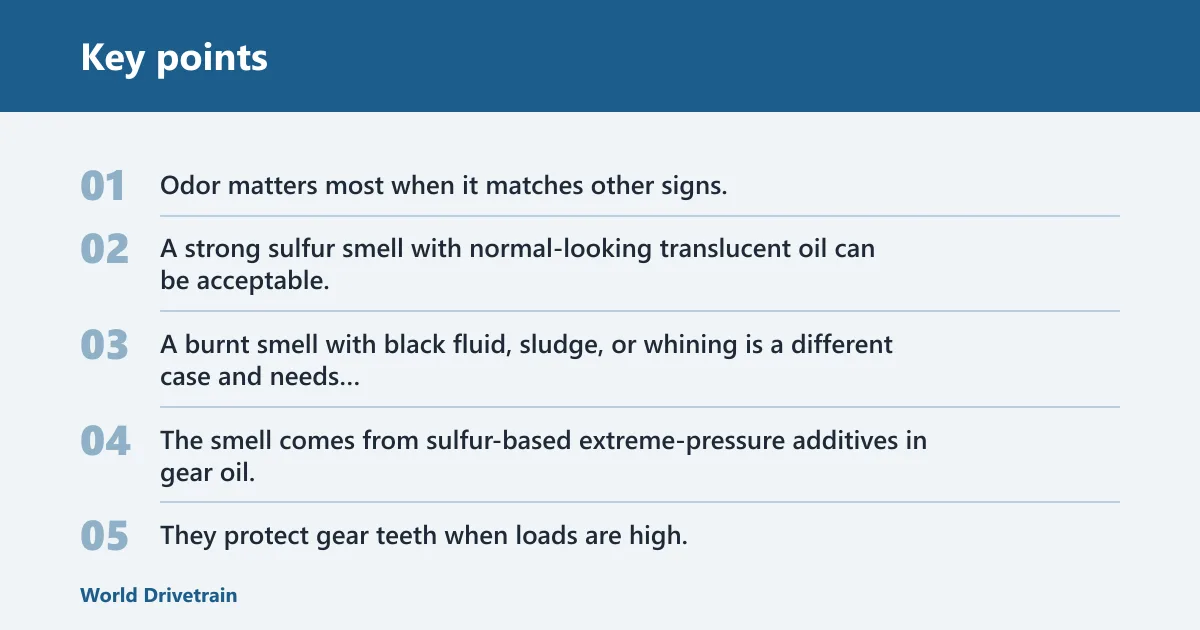
Odor matters most when it matches other signs. A strong sulfur smell with normal-looking translucent oil can be acceptable. A burnt smell with black fluid, sludge, or whining is a different case and needs inspection now.
Why does differential fluid smell so bad?
The smell comes from sulfur-based extreme-pressure additives in gear oil. They protect gear teeth when loads are high, so the odor can be normal even in healthy fluid. The problem is not sulfur smell by itself; it is sulfur smell plus burnt color, metal, foam, or a noise complaint.
A common first-timer mistake is to treat any strong odor as a failed differential. That misses the real warning pattern: heat damage, contamination, or low fluid usually leaves more than odor behind.
What color should differential fluid be?
Good differential fluid is often amber or honey-colored. It can also be darker and still usable if it remains translucent and free of debris. Black, muddy, cloudy, milky, foamy, or sparkly fluid is a warning sign, especially if the vehicle is also leaking or making noise.
Color helps most when you can compare it to a fresh sample. If the oil still looks clear enough to see through, that is different from opaque black sludge. Water intrusion, overheating, and wear each change the appearance in a different way.
What color is differential fluid?
On many vehicles, fresh or healthy used fluid looks amber, brownish amber, or honey-colored. As it ages, it may darken without becoming a failure sign. Once it turns black, cloudy, or milk-colored, or carries visible particles, the condition is no longer normal.
Differential fluid triage table
| Symptom | Likely meaning | Urgency | Next step |
|---|---|---|---|
| Sulfur smell only | Normal gear-oil odor if the fluid is still clean and translucent | Low to moderate | Check color, level, and service history before calling it bad |
| Burnt smell | Possible overheating, oxidation, or fluid breakdown | High | Inspect fluid condition now and look for leaks or noise |
| Black or sludgy fluid | Aged, overheated, contaminated, or heavily worn lubricant | High | Drain and inspect; check for metal and consider professional diagnosis |
| Milky fluid | Water contamination from a failed seal, vent issue, or submersion | High | Do not ignore; inspect seals, vent, and housing for water entry |
| Metallic glitter | Wear from gears or bearings; larger shavings are worse than fine dust | High to critical | Check the magnetic drain plug and stop driving if shavings are present |
| Foaming | Overfill, aeration, overheating, or contamination | High | Verify fluid level and look for wrong fluid or seal issues |
| Fluid mixed with a leak or noise complaint | Low level, seal failure, blocked vent, or internal damage | High to critical | Inspect the leak source and diagnose the noise before more driving |
What do glitter, sludge, and foam mean?
Metallic glitter usually points to wear. Fine shimmer on a drain pan can come from normal break-in or light wear, but larger particles, chips, or curls are more serious. A magnetic drain plug matters because it catches ferrous debris and makes the amount of wear easier to judge.
Foaming means air has entered the oil or the oil is being churned. Overfill can whip the fluid, heat can thin it, and contamination can make aeration worse. Sludge or thick residue suggests breakdown, old oil, or debris that has been cooking inside the housing.
What makes glitter different from shavings?
Fine glitter is a warning, not proof of immediate failure. Larger flakes, slivers, or curled shavings are much more serious because they point to active gear or bearing damage. If the magnetic plug carries a heavy layer of metal paste, the differential deserves a closer look before more driving.
Suppose a rear axle drain plug comes out with a light gray film and a few tiny sparkles. That is different from a plug coated in chunky metal or a pan full of visible chips. The second case needs inspection right away.
How do you check differential fluid?
Most housings are checked through the fill plug on the differential cover or on the housing itself. If the vehicle has a drain plug, that plug may be used during service and can reveal debris. The basic check is simple: verify level at the fill opening, then inspect color, smell, and particles.
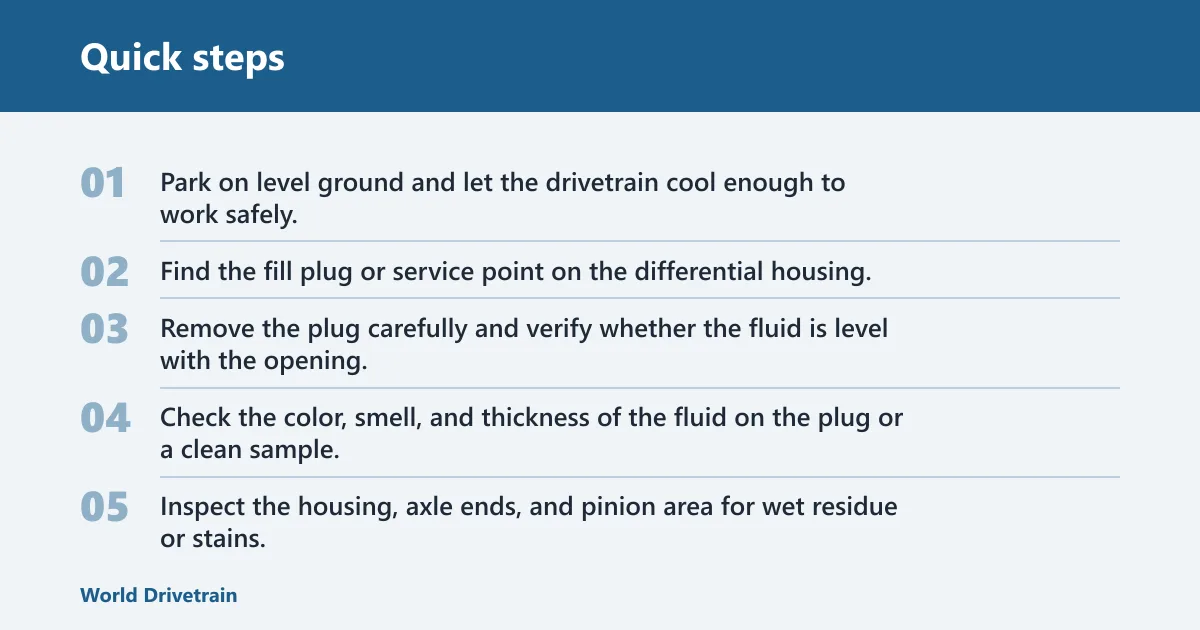
Look around the axle seals, pinion area, and vent for wet residue. A seal leak can lower the level, and a blocked vent can push oil past seals when the housing heats up. That matters because low fluid can damage gears long before the oil actually runs out.
- Park on level ground and let the drivetrain cool enough to work safely.
- Find the fill plug or service point on the differential housing.
- Remove the plug carefully and verify whether the fluid is level with the opening, per the vehicle’s procedure.
- Check the color, smell, and thickness of the fluid on the plug or a clean sample.
- Inspect the housing, axle ends, and pinion area for wet residue or stains.
- Look for metal on a magnetic plug, and note any foam, milkiness, or sludge.
How do you check rear differential fluid?
Rear differentials are often checked through a fill plug on the axle housing. With the vehicle safely supported and level, remove the plug and confirm the fluid reaches the bottom edge of the opening, unless the manufacturer specifies another level check method. Then inspect the sample for color, odor, and debris.
How do you check front differential fluid?
Front differential checks vary more because many front-drive or four-wheel-drive layouts package the unit tightly. Some have a side fill plug, some share fluid with the transaxle or transfer case, and some require a different access point. Follow the vehicle-specific procedure and inspect for leaks near the seals and vent while you are there.
What symptoms travel with bad fluid?
Whining, humming, grinding, and clunking can travel with bad fluid or internal damage. Noise under acceleration often points one way in the housing, while noise on deceleration or during turns can point elsewhere. Burnt fluid plus noise is more urgent than odor alone because it can mean heat and wear are happening together.
Low fluid, contaminated fluid, or the wrong fluid can all change how the gears load up. In a limited-slip differential, missing friction modifier can also cause chatter or shudder during turns, which can sound like a separate driveline problem even when the gears themselves are not yet damaged.
How do you tell if differential is bad?
Look for a combination of symptoms, not one clue in isolation. Bad fluid, leaks, noise, and metal together are more convincing than smell alone. A differential with repeated whining under load, burnt oil, and glitter on the drain plug needs prompt inspection.
Picture a rear axle that starts humming on the highway and leaves a wet ring near the pinion area. That points toward a leak or wear problem, not just old oil. If the same unit also smells burnt, the risk rises quickly.
When should you change or inspect it?
Most manufacturers list mileage-based service intervals, but the owner’s manual is the reference that matters. Severe use such as towing, off-road driving, repeated short trips, deep water exposure, or high heat usually shortens the interval. If symptoms appear before the scheduled change, inspect the fluid now.
A limited-slip unit may need the correct friction modifier to avoid chatter. Some gear oils include it, while others require a separate additive. Use the specified fluid type rather than guessing, because the wrong blend can create noise that looks like mechanical failure.
If you see metallic shavings, milkiness, or a burnt odor with grinding, stop treating it as routine maintenance. That combination can mean the gears or bearings are already damaged, and more driving can make the repair larger.
Frequently asked questions
What does diff fluid smell like?
Healthy diff fluid usually smells sharp, oily, and sulfur-like. It should not smell sweet or neutral. If it smells burnt, the fluid may have overheated or broken down, and the housing should be checked for low level, leaks, or wear.
Why does differential oil smell so bad?
The smell comes from gear-oil additives designed to protect metal surfaces under pressure. That is why a strong odor is not automatically a failure sign. Bad odor becomes meaningful when it lines up with black fluid, milkiness, foaming, or metallic debris.
How do you know if differential fluid is bad?
Check smell, color, texture, and debris together. Burnt odor, black or sludgy fluid, milkiness, foam, or glitter all point toward trouble. The urgency rises when those signs appear with whining, humming, grinding, or a visible leak near the seals or vent.