Is It Bad to Drive with a Manual Transmission Grinding?
No—if a manual transmission grinds in gear, under load, or on every shift, stop driving and inspect it; a short drive only makes sense when the noise stays limited to one gear or reverse. Ignoring it can turn a fixable clutch or linkage fault into gear damage, missed shifts, and a car that will not move. This guide tells you when to park it, when a short drive is acceptable, and how to tell clutch drag from synchro wear.
Assessing whether you can safely drive
Yes, often. The urgency depends on when the grinding happens, because the symptom pattern points to very different faults. Grinding on every shift, grinding while accelerating, or grinding after a clutch replacement deserves prompt attention. Grinding limited to one gear, especially reverse, may allow a short drive only to reach a repair bay.
When short-distance driving may be acceptable
If the grind appears only in reverse, or only in one forward gear and the car still shifts cleanly into the other gears, a short, careful trip to a shop may be reasonable. Keep the distance short, avoid heavy throttle, and use the clutch fully. The goal is to reduce further wear, not to keep driving normally.
Say your car grinds only when selecting reverse in a parking lot, but every forward gear engages normally. That pattern often points to clutch drag or the lack of synchro help in reverse, not a full gearbox failure. A short drive to inspection can make sense if the car is otherwise predictable.
When you should stop driving immediately
Stop driving if the transmission grinds on every shift, grinds under load, or starts grinding after a clutch repair. Those patterns can mean the clutch is not fully releasing, the synchronizers are worn, or the installation is wrong. Continued shifting through the noise can turn a repairable problem into internal damage.
What transmission grinding means
Grinding is a harsh, metallic sound caused by two hard surfaces making contact without proper lubrication or cushioning. In a manual transmission, the sound matters less than the timing. A grind while you move the shifter tells you something is not matching speeds cleanly, and that mismatch can damage parts fast.
Gear clash versus synchro wear
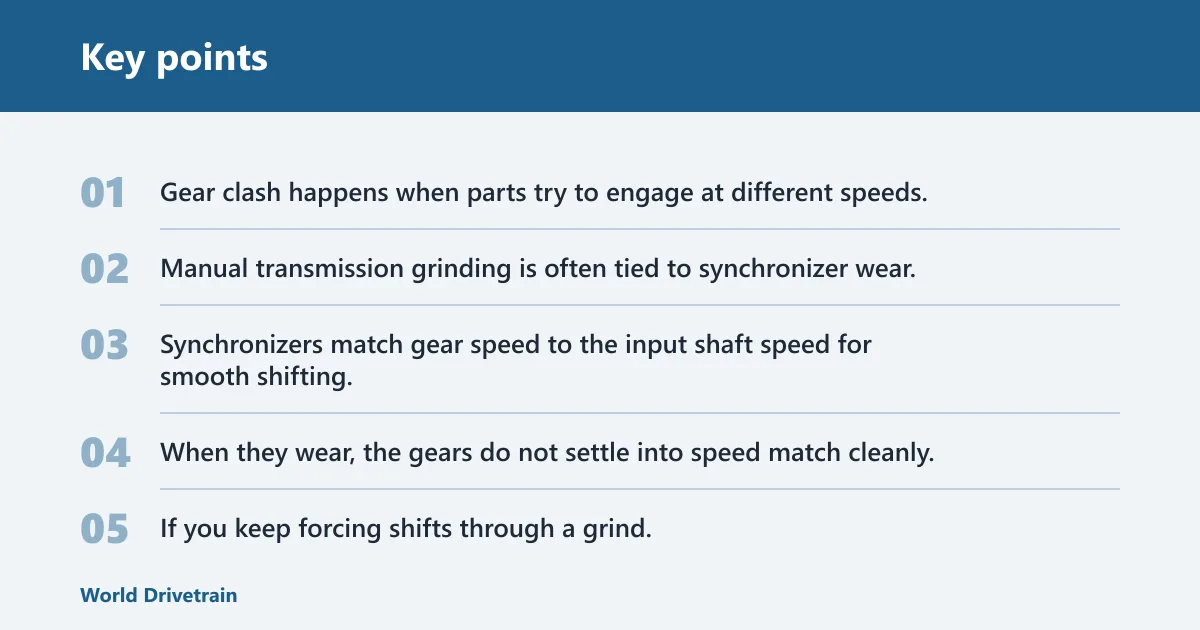
Gear clash happens when parts try to engage at different speeds. Manual transmission grinding is often tied to synchronizer wear. Synchronizers match gear speed to the input shaft speed for smooth shifting, and the brass synchronizer rings are part of that job. When they wear, the gears do not settle into speed match cleanly.
What gets damaged if you keep shifting through it
If you keep forcing shifts through a grind, the wear moves from a feel issue to a parts issue. The synchronizer faces can lose more material, shift quality degrades, and the affected gear may become harder to select. In severe cases, you can end up with missed shifts, locked-out shifts, or debris in the oil.
Manual transmission grinding decision matrix
This matrix gives a quick action path. Match the symptom pattern first, then decide whether short-distance driving is acceptable and what to check next. The same noise can mean a clutch problem, a fluid problem, or an internal synchronizer problem, so timing and gear choice matter more than the sound alone.
| Symptom pattern | Likely cause | Short-distance driving acceptable? | Next diagnostic check |
|---|---|---|---|
| Grind in one gear only | Isolated synchronizer wear, often in second or third gear | Yes, if the car shifts cleanly elsewhere and the grind is light | Test whether the same gear grinds hot and cold; check gear oil condition |
| Grind in reverse only | Clutch drag or reverse engagement without synchro assistance | Sometimes, for a short trip only | Check clutch release first, then verify hydraulic operation and pedal travel |
| Grind on every shift | Clutch not fully releasing | No | Check the hydraulic system first, then inspect for air, leaks, or adjustment issues |
| Grind only when cold | Fluid viscosity, old gear oil, or wear that improves as parts warm up | Maybe, if it improves quickly and does not appear under load | Check fluid level and service history; see whether warm-up changes the symptom |
| Grind after clutch replacement | Adjustment, bleeding, installation error, or unrelated transmission fault | No | Recheck clutch release, hydraulic bleeding, and assembly alignment |
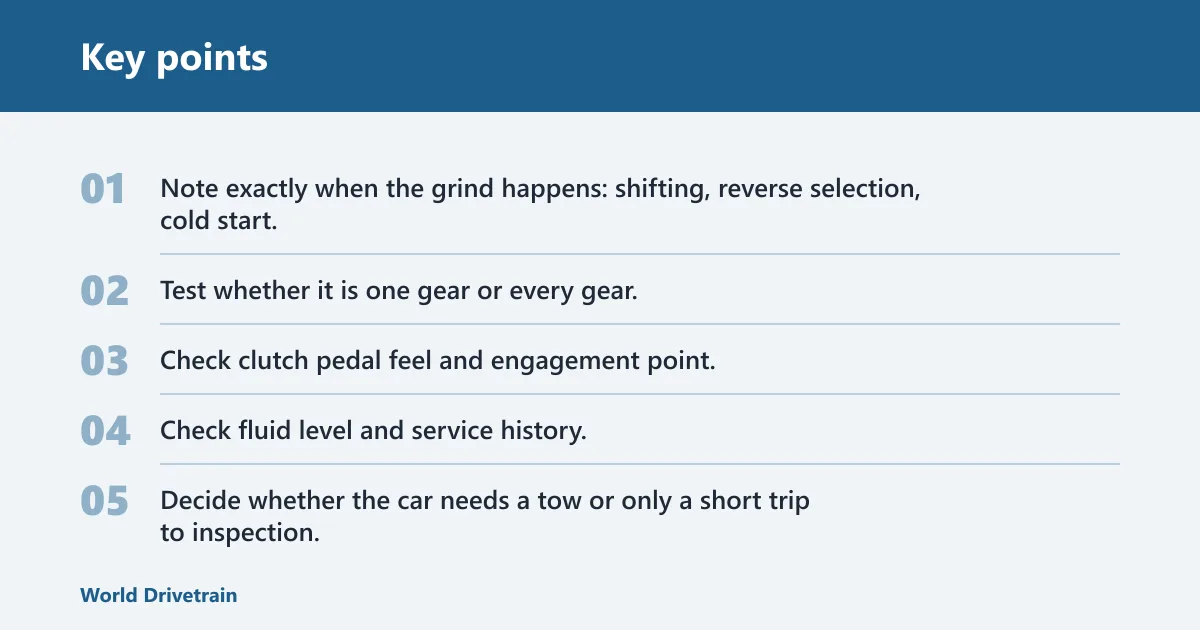
- Note exactly when the grind happens: shifting, reverse selection, cold start, or acceleration.
- Test whether it is one gear or every gear.
- Check clutch pedal feel and engagement point.
- Check fluid level and service history.
- Decide whether the car needs a tow or only a short trip to inspection.
Is the clutch not releasing?
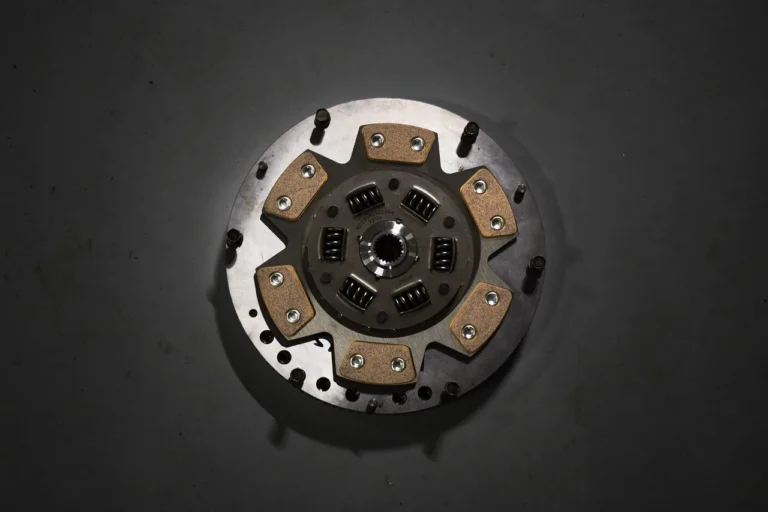
Grinding on every shift often means the clutch is not fully releasing. That keeps the input shaft spinning when it should slow down, so the gears have to fight that speed difference. If the problem appears at stops or low speeds, the hydraulic system should be checked first because a dragging clutch can mimic transmission failure.
Hydraulic checks first
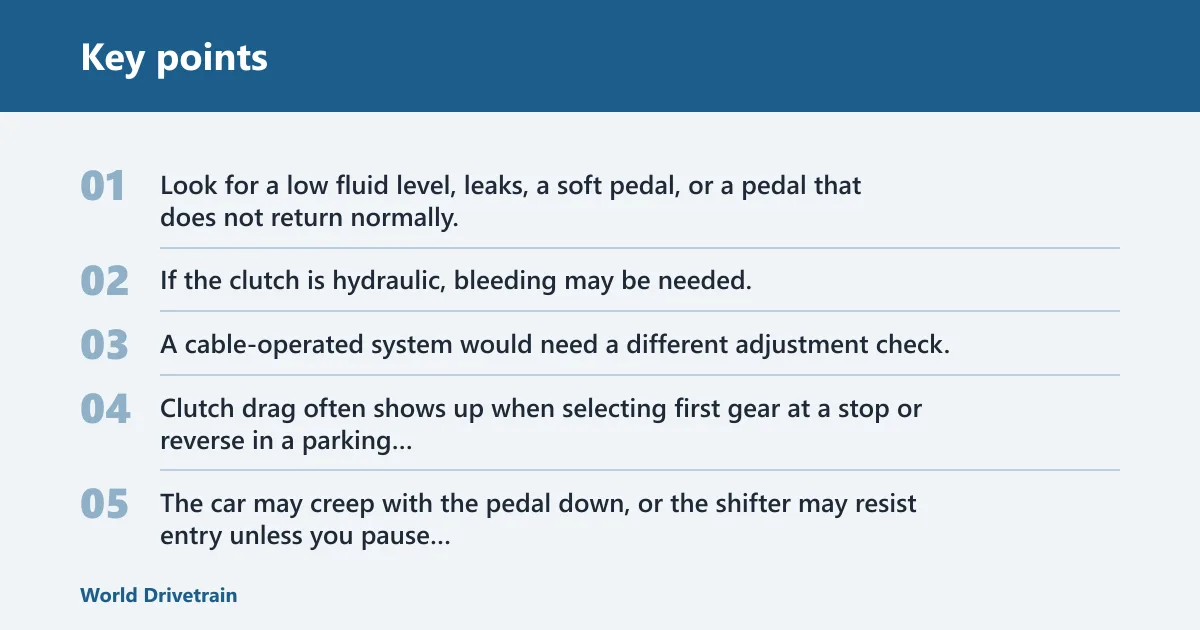
Start with the clutch hydraulic system. Look for a low fluid level, leaks, a soft pedal, or a pedal that does not return normally. Air in the system can reduce release travel. If the clutch is hydraulic, bleeding may be needed. A cable-operated system would need a different adjustment check, but the same goal applies: full release.
Clutch drag symptoms at stops and low speeds
Clutch drag often shows up when selecting first gear at a stop or reverse in a parking space. The car may creep with the pedal down, or the shifter may resist entry unless you pause for a moment. That pause lets shaft speed drop, which is why the symptom can seem better after a few seconds.
Suppose a car grinds every time reverse is selected after waiting at a red light, but third gear is smooth once moving. That pattern fits clutch drag more than a widespread internal failure, because the problem shows up most when the input shaft should be fully stopped.
Why a dragging clutch can grind every gear
If the clutch never fully separates engine speed from transmission speed, every shift starts from the wrong baseline. That makes the synchronizers work harder and can create grinding in more than one gear. It also makes shifting difficult without stopping the input shaft, which is why this branch is treated as urgent.
Could the synchronizers be worn?
Yes. Synchronizer wear is a common cause of manual transmission grinding, especially when one gear complains more than the others. The brass synchronizer rings are supposed to match gear speed to the input shaft speed. When they wear, the gear may resist engagement or grind right as the shift is completed.
Why second gear often shows wear first
Synchro wear is usually worst in second gear. That gear sees frequent use, especially in city driving, so its synchronizer can wear faster than others. If second gear grinds but the rest of the transmission behaves, the problem may be isolated rather than a full gearbox failure.
What isolated third gear grinding can mean
Third gear grinding can point to isolated synchronizer wear, especially if first, second, fourth, and reverse behave differently. That pattern argues against a blanket transmission failure. If third gear grinds more than others, note whether it happens hot, cold, or only during quick shifts, because that timing helps separate wear from clutch drag.
Could the fluid be part of it?
Yes. Manual transmissions use gear oil that breaks down over time, and low or contaminated fluid can fail to lubricate gears and synchronizers properly. That does not mean fluid is the only cause, but it can make an already worn synchronizer grind sooner and shift more roughly than it should.
Low manual transmission gear oil
Low fluid reduces the cushion between parts and can contribute to grinding. Some manual transmissions are notorious for fluid-related issues, so a level check matters even if the car still drives. A missing quart, a leak at the case, or seepage at the axle seal can all matter.
Old or contaminated fluid
Old fluid loses viscosity and may not protect synchronizers as well as fresh oil. The article gives 60,000 miles as a mileage point to consider gear-oil service. That is not a universal rule, but it is a useful checkpoint, especially on cars with hard shifts or high mileage.
Why cold shifting can change after warm-up
If grinding appears only when cold and fades as the transmission warms, fluid condition becomes more suspicious. Cold oil is thicker and can slow synchronization, and worn parts can be less forgiving before the oil thins. If warm-up changes the symptom, that pattern belongs in the diagnosis instead of being dismissed as normal.
When reverse or first gear grinds
Reverse gear grinding is a common symptom category in manuals, and it needs its own treatment because reverse often lacks synchro assistance. First gear grinding can look similar, but it may show up at stops or very low speeds. Those two complaints are related, yet they do not always point to the same fault.
Reverse gear without synchro help
Reverse often grinds because there may be no synchronizer to help match speeds. A slight clutch drag can make it worse. If reverse grinds but the forward gears behave, the problem may be release travel rather than internal damage. Pausing in neutral before selecting reverse can sometimes reduce the symptom, but it does not fix the cause.
First gear at a stop or crawl
First gear grinding can indicate clutch drag or synchro wear, and it often differs from reverse and higher-gear complaints. If it happens mainly at a stop, suspect incomplete clutch release first. If it happens while rolling slowly and only in first, the synchronizer deserves more attention.
How to tell clutch drag from gear wear
Clutch drag tends to affect more than one gear and often appears at stops, reverse, or the first shift after idling. Gear wear tends to stay more gear-specific. A gear that grinds only under certain shifts, especially third or second, is more suspicious for synchronizer wear than for a clutch fault.
What if it grinds under acceleration?
Grinding under acceleration is a different symptom from a shift-only grind. Noise under load may point to drivetrain or internal wear, not just a bad shift. If the sound appears while the car is already in gear and moving, do not assume it is only a synchro problem. That branch needs a separate inspection.
How load-related symptoms differ from shift grind
A shift grind happens during engagement. A load-related grind happens after the gear is already selected and torque is applied. That difference matters because torque can expose worn bearings, damaged gears, or other internal faults that a simple engagement test would miss. If the noise changes with throttle, note that pattern carefully.
What to check before driving farther
Before you drive farther, confirm whether the noise follows engine load, vehicle speed, or gear choice. If the grind gets louder with throttle, or appears in the same gear every time under acceleration, stop and inspect it. A short diagnostic drive should not become a test of how much damage the transmission can take.
What should you check first if your manual transmission grinds when shifting?
Start with the clutch release system, then check fluid level and service history, then isolate which gear grinds. That order catches the common, fixable causes before you assume internal damage. If the grind began after a clutch replacement, jump straight to the installation and bleeding checks because that is a separate failure branch.
Next 10 minutes
Do not force the shift. Note whether the grind happens in reverse, one gear, every gear, or only when cold. With the engine off, see whether the shifter moves more easily. If it does, that supports a clutch-release problem. If the symptom is under load, stop the drive and plan a tow.
Next 24 hours
Check the clutch hydraulic fluid, inspect for leaks, and review the gear-oil level and condition if the vehicle design allows it. If the car still drives, keep trips short and avoid heavy acceleration. If the grind appears after a clutch replacement, arrange a recheck quickly rather than waiting for it to settle.
Next 1 week
Get the car inspected before the symptom spreads to more gears. A one-gear grind can stay isolated, but a dragging clutch or ignored fluid problem can start affecting shift quality across the transmission. If the issue is second gear, third gear, or reverse only, the repair may still be targeted rather than a full rebuild.
Frequently asked questions
Is it bad to keep driving with a manual transmission grinding?
Usually yes. If it grinds on every shift, under load, or after a clutch repair, stop driving and inspect it. A brief limp may be acceptable only when the grind is limited to one gear or reverse, and the rest of the transmission still shifts cleanly.
Can I drive a manual car if it grinds when shifting?
Only in a limited, short-distance sense when the grind is isolated and mild. If the clutch is not fully releasing, the synchronizers are worn, or the problem appears in several gears, keep driving can make the repair larger. Treat every shift grind as a warning, not a normal noise.
What does grinding mean in a manual transmission?
It usually means parts are meeting without proper speed match or lubrication. In a manual transmission, that often points to synchro wear, clutch drag, or fluid problems. The important detail is when it happens: during shift, in reverse, only cold, or while accelerating.
Will a grinding manual transmission get worse if I keep driving?
It often can. Continued shifting through the noise can wear synchronizers further, make the gear harder to select, and increase repair cost. If the grind is only in one gear, the damage may stay isolated for a while, but every-shift grinding should be treated as urgent.
Is grinding in a manual transmission a clutch problem or transmission problem?
It can be either. Grinding on every shift often points to a clutch that is not fully releasing, so the hydraulic system should be checked first. Grinding in one gear, especially second or third, leans more toward synchronizer wear. Reverse-only grinding often needs its own diagnostic path.
How urgent is a manual transmission grinding?
Urgency depends on the pattern. Reverse-only or one-gear grinding may allow a short trip to a shop. Grinding on every shift, under load, or after a clutch replacement is urgent and should not be ignored. The symptom pattern decides the next move, not the loudness alone.