How to Diagnose Manual Transmission Grinding at Home
Diagnose manual-transmission grinding by timing it: grind only while shifting usually points to clutch drag, linkage, fluid, or synchronizers; grind with the clutch fully depressed means stop driving and inspect. Ignoring it can strip synchronizers, damage gears, and turn a low-cost fix into a rebuild. This guide gives a step-by-step home flow to isolate each cause before teardown.
What you’ll need
- Owner’s manual for fluid specification and shift pattern
- Flashlight or inspection light
- Rags or paper towels
- Gloves and eye protection
- Floor jack and jack stands, or ramps, for undercar inspection
- Drain pan if you will check a fill or drain plug
- Basic hand tools for visual access only
- DOT 3 or DOT 4 brake fluid if the clutch reservoir needs topping up
- Transmission fluid that matches the vehicle’s required spec, often GL-4 on many manuals
Manual transmission grinding matrix
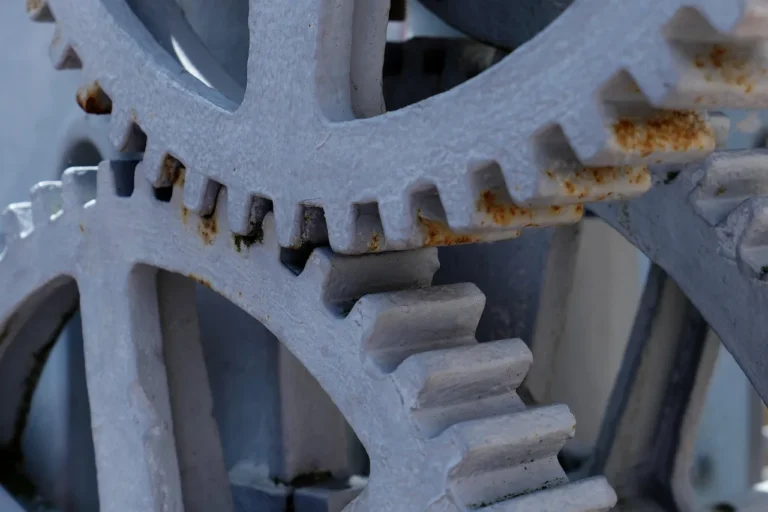
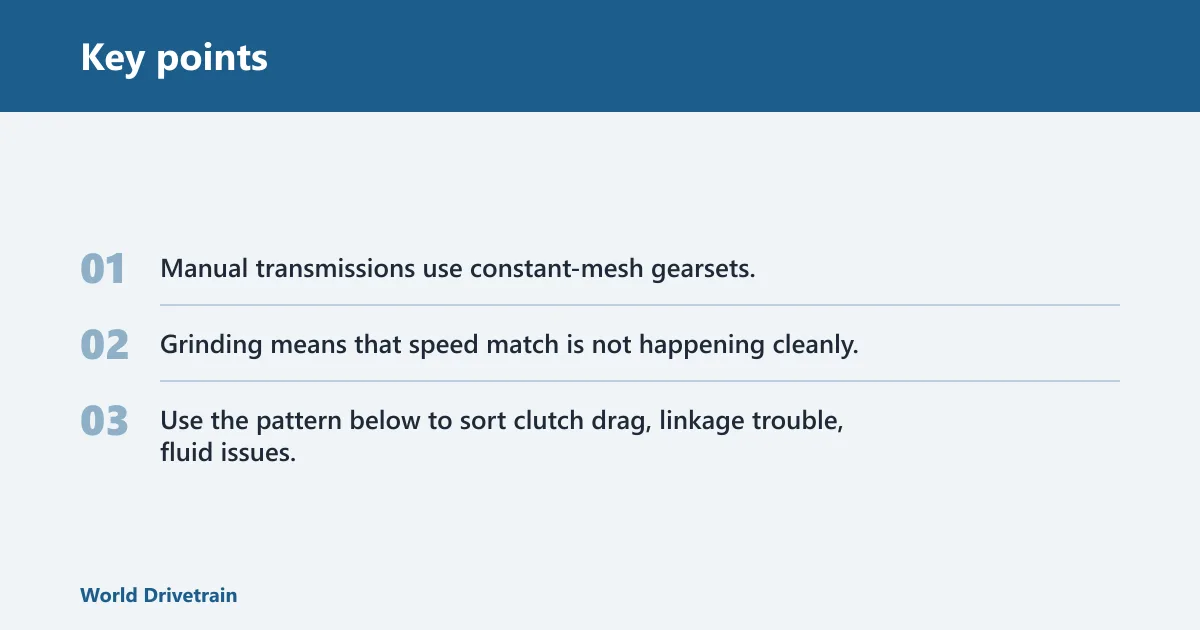
Manual transmissions use constant-mesh gearsets, so the gears are already spinning and synchronizers or blocker rings match their speeds before engagement. Grinding means that speed match is not happening cleanly, or the shift path is not landing where it should. Use the pattern below to sort clutch drag, linkage trouble, fluid issues, and synchro wear.
| Symptom pattern | Most likely cause | First check | Stop-driving threshold |
|---|---|---|---|
| Grinds only with engine running, not engine off | Clutch drag or hydraulic issue | Pedal free play, full disengagement test | Stop if reverse or first gear grind repeats |
| Grinds with engine off and running | Linkage, cable, or internal shift issue | Shifter gate feel and under-vehicle linkage inspection | Stop if the lever will not select cleanly |
| Only one forward gear grinds | Worn synchronizer ring for that gear | Repeat that gear after a pause or with double-clutching as a clue | Stop if the same gear grinds every drive |
| Reverse grinds, forward gears feel normal | Clutch drag or normal reverse non-synchro sensitivity | Wait a few seconds in neutral, then retry reverse | Stop if reverse grinds hard every time |
| Grinds only when cold | Fluid viscosity or cable tension | Check if it improves after 5–10 minutes | Stop if it stays harsh warm |
| Grinds when warm too | Synchro wear or clutch drag | Compare engine-off versus engine-running shifting | Stop if it starts affecting multiple gears |
| Grinds on upshifts under light load | Synchronizer wear | Try a slower, deliberate shift | Stop if grinding becomes frequent |
| Grinds on downshifts or engine braking | Synchronizer wear or pilot bearing drag | Listen for vibration and note whether the clutch was recently serviced | Stop if downshifts become hard to select |
| Shifter moves but gate feels vague | Loose bushings or misalignment | Inspect linkage and bushings under the vehicle | Stop if it can skip gates or pop out |
| Grinds after clutch replacement | Air in hydraulics, installation error, or pilot bearing issue | Check pedal feel and hydraulic leaks first | Stop if clutch does not fully disengage |
| Grinds in several gears after a fluid leak | Low, contaminated, or wrong gear oil | Check fill plug, drain plug, color, smell, and debris | Stop if oil is low or metallic |
| Grinds with vibration at the pedal or during engagement | Release bearing or pilot bearing issue | Note any new noise after clutch work | Stop if vibration and grind are worsening |
How do you tell if the clutch is dragging?
Clutch drag is the first thing to separate because it can make every gear harder to select when the engine is running. If the transmission shifts normally with the engine off but grinds with the engine running, the clutch may not be fully disengaging. That often points to free play, hydraulic trouble, air in the lines, or a release problem.
- Park on level ground, set the brake, and compare shifting with the engine off versus running.
- Press the clutch pedal and feel for free play; Vehiclebar gives a 15–25 mm pedal travel check for clutch free play.
- Check whether the pedal feels spongy, sinks, or returns slowly, which suggests hydraulic trouble.
- Inspect the master cylinder, slave cylinder, and lines for wetness or leaks, and confirm the reservoir uses DOT 3 or DOT 4 brake fluid only.
- Try reverse after a few seconds in neutral. A hard reverse grind with a properly moving pedal points away from simple driver technique.
Say your car shifts cleanly with the engine off, then grinds into reverse and first with the engine running. That pattern points more toward clutch drag than gear damage, especially if the pedal feels soft or the reservoir is low.
How do you check the shifter and linkage at home?
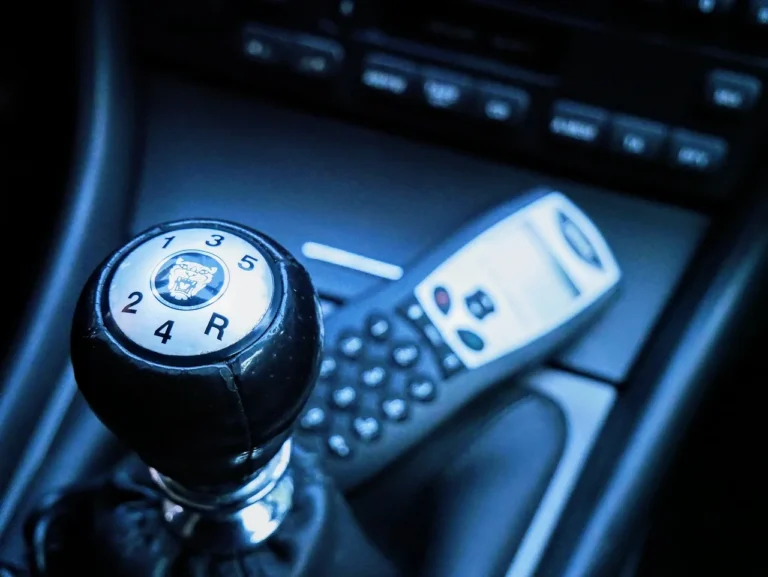
Shift linkage issues can mimic gearbox trouble because the lever may not move the selector far enough for a clean engagement. Loose bushings, stretched cables, or misalignment can create a hard-to-find gate, vague movement, or a lever that feels normal but does not fully select the gear. Engine-off testing helps separate driver feel from internal load.
- With the engine off, move the shifter through every gate and note any notchiness, slop, or hard-to-find positions.
- Repeat the same pattern with the engine running and compare the gate feel.
- Raise the vehicle safely and inspect cables, bushings, clips, and bracket alignment under the vehicle.
- Look for cracked plastic bushings, looseness at the ends, or a bent bracket; worn plastic bushings can disintegrate after 80,000 miles.
- If the lever moves but the transmission does not select cleanly, stop and correct the external linkage before assuming an internal fault.
What does cold or one-gear grinding mean?
Grinding that appears only cold often points to fluid viscosity or cable tension, especially if shifting smooths after 5–10 minutes. Grinding in the same gear again and again points more toward a worn synchronizer ring, because a synchro can fail one gear at a time. Double-clutching can help separate synchro wear from clutch drag, but it is only a clue.
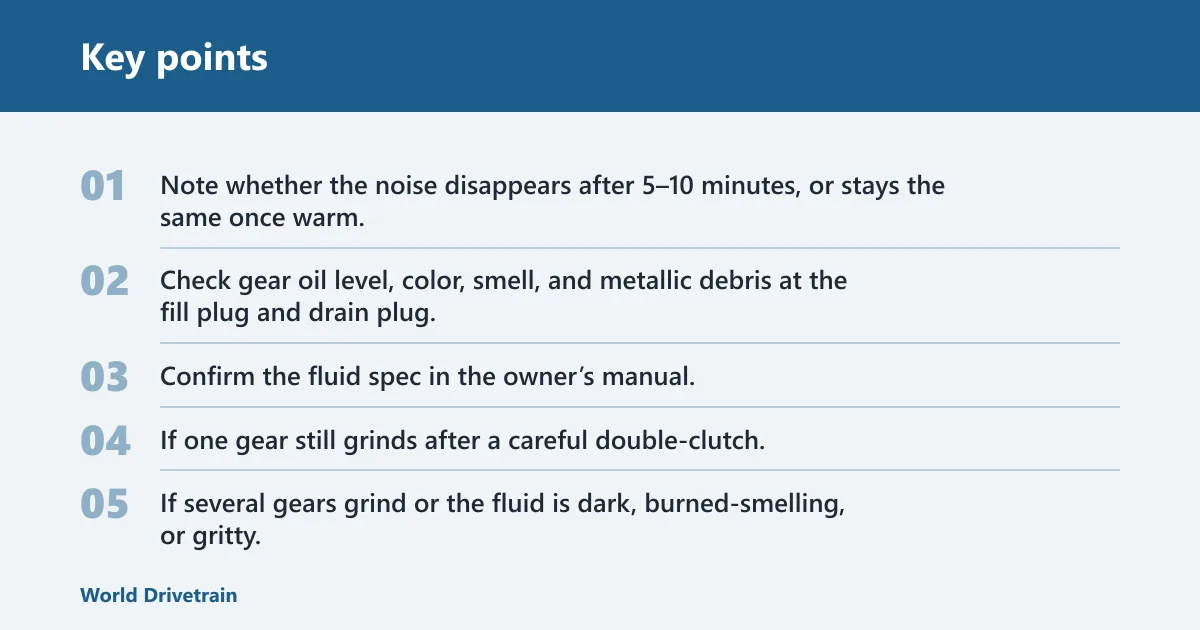
- Note whether the noise disappears after 5–10 minutes, or stays the same once warm.
- Check gear oil level, color, smell, and metallic debris at the fill plug and drain plug.
- Confirm the fluid spec in the owner’s manual; Vehiclebar notes hard shifting can come from degraded or incorrect GL-4 gear oil.
- If one gear still grinds after a careful double-clutch, suspect synchronizer wear in that gear.
- If several gears grind or the fluid is dark, burned-smelling, or gritty, stop driving and schedule repair.
Suppose second gear grinds only on the first cold shift, then feels normal after a short drive. That pattern points first to fluid viscosity or cable tension, not an automatic rebuild. If second gear continues to grind warm, the synchronizer for that gear moves higher on the list.
Common mistakes
Reverse grind is useful. Many drivers ignore it because reverse often lacks full synchro action, but a consistent reverse grind still helps separate clutch drag from a linkage problem. Another common error is assuming low fluid is the only fluid-related cause; wrong spec, degraded fluid, or contamination can matter too.
Pilot bearing trouble can also mislead diagnosis, especially after clutch service. A worn pilot bearing can create vibration that affects engagement and make the clutch feel wrong even when the linkage is fine. Do not keep driving if grinding becomes frequent in multiple gears, because repeated synchro damage can spread quickly.
When should you stop DIY diagnosis and get professional help?
Stop home testing if grinding happens with the clutch fully depressed, if multiple gears grind repeatedly, if the shifter pops out of gear, or if the fluid is dark, burned-smelling, or full of debris. Those are signs that the problem may be moving beyond external adjustment and into internal wear. Professional diagnostic labor is described as $150-200 per hour, while a complete transmission rebuild is described as costing $3,000-5,000.
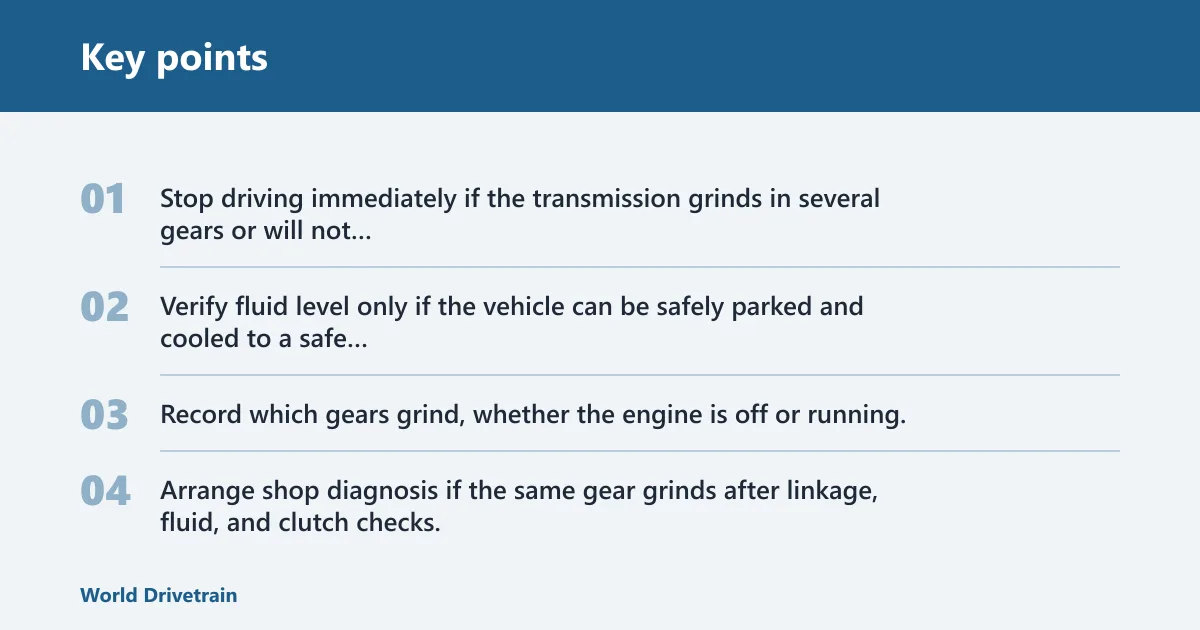
- Stop driving immediately if the transmission grinds in several gears or will not disengage cleanly.
- Verify fluid level only if the vehicle can be safely parked and cooled to a safe inspection point.
- Record which gears grind, whether the engine is off or running, and whether the symptom changes cold versus warm.
- Arrange shop diagnosis if the same gear grinds after linkage, fluid, and clutch checks.
Frequently asked questions
How do I diagnose a manual transmission grinding noise at home?
Begin by separating engine-off from engine-running behavior. If it shifts cleanly with the engine off but grinds with the engine running, look first at clutch drag and hydraulic release. If it grinds in both states, check linkage, cable alignment, and the gearbox side next.
How do I tell if grinding is the clutch or the transmission?
Use reverse, first gear, and a full pedal depression test. Clutch-related grinding usually changes when the engine is running and often affects more than one gear. A repeated grind in one specific gear, especially when warm, may point more toward a worn synchronizer ring.
Why does my manual transmission grind when shifting into gear?
Grinding on engagement usually means the gear speeds are not matching or the shift path is incomplete. That can come from clutch drag, air in hydraulic lines, worn synchronizers, low or incorrect GL-4 gear oil, or loose linkage that does not fully select the gate.
How can I check for transmission problems before visiting a shop?
Check fluid level and condition, compare engine-off versus engine-running shifts, inspect pedal feel and free play, and look under the vehicle for linkage looseness. If the same gear grinds repeatedly or the fluid is gritty or burned-smelling, stop the home tests and schedule service.
What does it mean if it grinds only when cold?
Cold-only grinding often points to thicker fluid, cable tension, or a synchronizer that is slow to match speeds until the unit warms up. If the symptom fades after 5–10 minutes, fluid viscosity or cable adjustment rises on the list. If it stays present warm, suspect wear.