Can You Drive with a Bad CV Axle?
A bad CV axle can be limp-home only, but a torn boot with no clicking or shake can usually wait for a short trip to repair. If the joint is clunking, shaking hard, or spraying grease after a boot split, tow it. A damaged constant-velocity joint typically progresses from boot failure to grease loss, contamination, noise, vibration, and eventually loss of drive if ignored.
Symptom severity and drivability limits
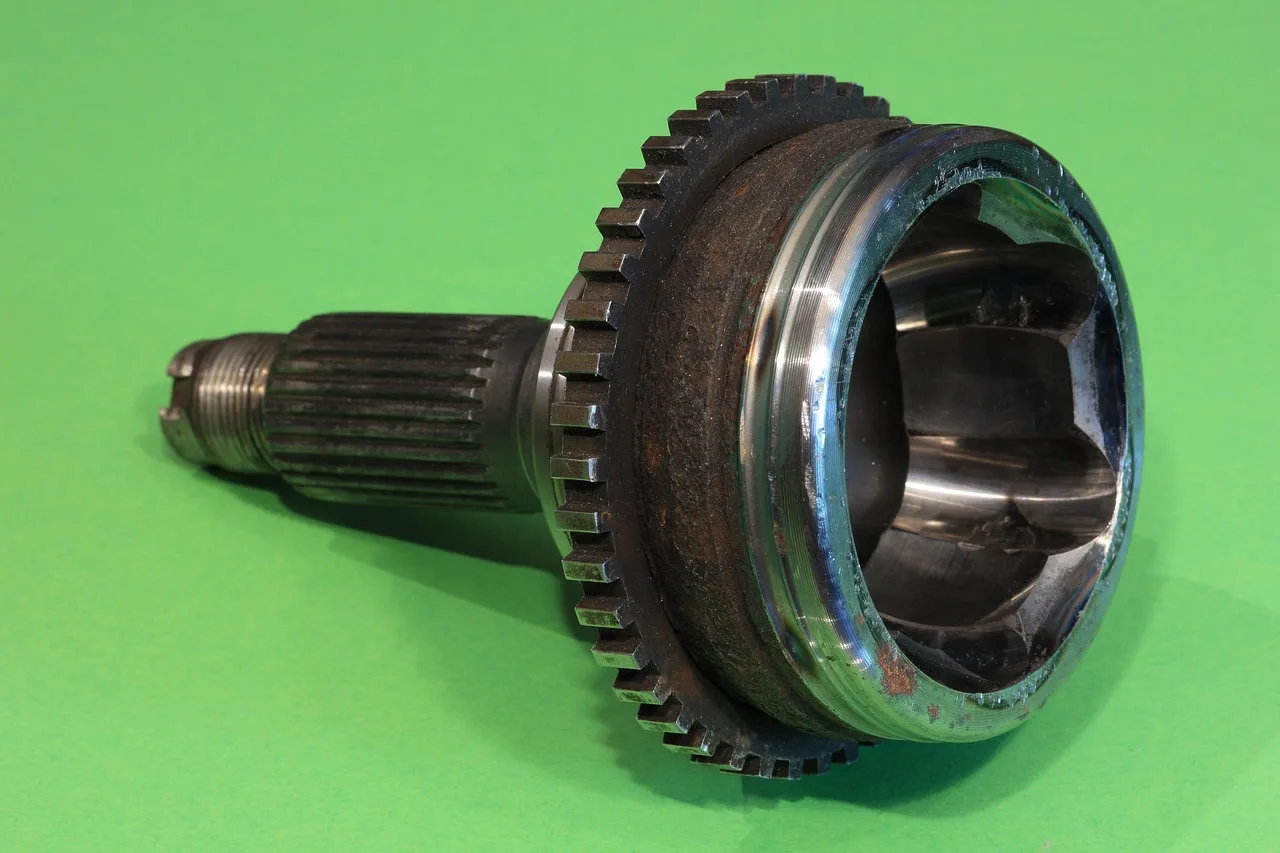
Sometimes, but only when the symptom is mild and the axle still sends power cleanly. A CV axle transfers power from the transmission or differential to the drive wheels while allowing steering and suspension movement, and most front-wheel-drive vehicles have two front CV axles. Once the noise turns into clunking, grinding, binding, or loss of drive, stop driving.
The answer changes with the failure stage. A fresh boot tear may still allow a short trip if the joint remains quiet. Light clicking on turns is often reported as an outer joint warning and may mean only short, careful trips are advisable. Strong vibration under acceleration points more toward an inner joint problem and is a higher-risk condition. National roadside and safety guidance generally treats sudden driveline loss, severe vibration, and metallic knocking as stop-driving symptoms, not normal wear.
CV axle symptoms to watch
- Clicking on turns: usually points to the outer CV joint, especially when the sound gets louder during tight steering and load.
- Vibration under acceleration: often points to the inner CV joint and can show up as shudder at highway speed or under load.
- Grease near the wheel: often means the CV boot has torn and lost grease.
- Clunking, grinding, or loss of drive: means the axle is no longer in safe driving territory.
CV axle symptom-to-action table
| Symptom | Likely failure stage | Is a short drive acceptable? | Specific driving limits | Recommended next step |
|---|---|---|---|---|
| Fresh boot tear | Boot damage only, before joint contamination | Yes, briefly if the joint is still quiet | Short city route only, low speed, no highway, gentle throttle, no hard turns | Schedule prompt inspection and boot replacement if the joint is still intact |
| Light clicking on turns | Outer CV joint wear | Only for short, careful trips | Avoid sharp turns, keep speed down, skip highway merges and hard acceleration | Have the axle inspected soon; plan for replacement axle shaft if wear is confirmed |
| Vibration under acceleration | Inner CV joint wear or contamination | Limited driving only, and risk is higher | Stay local, avoid highway speed, use very light throttle, stop if vibration worsens | Book inspection quickly; replacement axle shaft is often the practical repair |
| Loud clunking, grinding, or loss of drive | Advanced joint failure or broken axle | No | Do not continue driving | Call roadside assistance or a tow truck |
Picture a compact FWD car with a torn outer boot on the right axle and no clicking yet. A 2-mile trip across town at low speed may be acceptable if the route avoids fast traffic, but the axle still needs prompt attention before dirt and water damage the joint.
Can you drive with a bad CV axle boot?
A torn CV boot can be driveable for a very short time if the joint is still quiet and has not started clicking or shaking. The boot is the rubber cover that keeps grease in and dirt and water out. Once it splits, grease loss and contamination can start, so the window for safe driving gets small fast. Technical repair guidance from parts suppliers and service references commonly warns that a split boot can quickly ruin the joint if left open to road spray.
If the only symptom is a fresh boot tear, very short city drives may be possible. That means low speed, a short route, no highway, no hard acceleration, and no sharp turning under load. The goal is to get to a repair spot, not to keep using the car for normal errands.
When a torn boot is still a short-drive issue
A torn boot is most manageable when the axle is quiet, the steering feels normal, and there is no shake on acceleration. In that case, the boot may be repairable before the joint is damaged. A boot replacement is the lower-cost preventive repair when caught early.
Say your front-wheel-drive sedan has a grease splash on the inside of one wheel and no clicking yet. A short trip to a nearby shop may be reasonable if you keep it local and gentle, but you should not stretch that into a week of regular driving.
When contamination makes it unsafe
Once the torn boot has let enough grease out for the joint to run dry, or dirt and water have entered, the axle may wear quickly. That is when a boot problem becomes a joint problem. If clicking, shudder, clunking, or grinding is already present, treat the axle as unsafe and arrange service. Industry repair references note that a contaminated joint often moves from noise to accelerated wear rather than stabilizing on its own.
Limp-home only vs tow now
Use limp-home only when the car still steers and accelerates normally, the boot is just torn, and the axle is quiet. Tow now if the axle clicks loudly, vibrates hard under load, clunks in turns, grinds, binds, or loses drive. Safety guidance from roadside and collision-repair sources consistently treats those stronger symptoms as breakdown risks, not normal wear.
A practical driveway check can help you decide fast: first look for grease sling around the inside of the wheel or underbody; then turn the steering to full lock in an empty space and listen for clicking; finally, note whether vibration appears only during acceleration. If all three show up, do not keep driving.
Why towing is safer than limping farther
- It reduces the chance of the axle separating or losing drive in traffic.
- It avoids extra damage to nearby suspension parts, hub components, and the transmission output area.
- It prevents a roadside breakdown that can block your lane or leave the car stuck in a turn.
A common mistake is to ignore the clicking on full turns and keep using the car for errands because it still goes straight. If the axle is already clunking on every tight turn, that extra driving can turn a repairable outer joint into a complete failure with no drive to one wheel.
What happens if you keep driving?
Continued driving can push a torn boot into a worn joint, then into a failed joint or broken axle. Dirt and water wash through the damaged boot. Grease leaks out. Wear speeds up. The result can be more noise, worse vibration, and eventually a car that will not move under its own power. That progression is why many service guides recommend fixing a torn boot before the joint starts making noise.
Repair cost can rise fast because the job may move from a boot replacement to a full axle shaft replacement. Once the joint is noisy or contaminated, the more complete repair is often needed, and towing may add to the bill. In general, the earlier the axle is caught, the more likely the repair stays in the lower-cost boot-service range rather than becoming a full assembly replacement plus roadside recovery.
What else a mechanic should inspect
Ask for inspection of the axle, boot, and related suspension parts. A bad axle can mask other issues, and a damaged suspension component can mimic or speed up CV joint wear. That is especially true after a curb hit, pothole strike, or torn boot that has been open for a while.
Look for grease sprayed around the inner wheel, cracked boots on both sides, uneven tire wear, and looseness at the hub area. Those clues help separate a boot-only problem from a joint that has already worn through its grease and protection.
Repair options for a bad CV axle
Repair choice depends on how far the damage has progressed. If the boot is torn but the joint is still healthy, boot replacement may solve the problem before contamination does more harm. If the joint is worn or contaminated, replacement axle shaft is the common fix because it swaps the whole assembly instead of rebuilding one joint.
That split matters. A torn boot is a preventive repair when caught early. A worn outer joint or contaminated inner joint usually makes full axle replacement the more practical route. If the axle is already noisy or shaking, plan on the whole assembly rather than hoping a boot alone will restore it.
Boot replacement when the joint is still healthy
Boot replacement is the better choice when the rubber has split but the grease is still mostly contained, the joint runs quietly, and there is no vibration or clicking. That repair is aimed at preventing dirt and water from entering before the joint is ruined.
Replacement axle shaft when the joint is worn or contaminated
Once the joint is noisy, the grease is contaminated, or the axle is shaking under load, replacement axle shaft is usually the smarter repair. It addresses the worn inner and outer joint assembly at once. That is why many shops replace the full axle instead of trying to save a damaged joint.
Frequently asked questions
Can you drive with a bad CV axle?
Only if the symptom is mild and the axle still feels stable. A fresh boot tear or light clicking on turns may allow a short, careful trip, but clunking, grinding, binding, or loss of drive means you should stop and arrange a tow instead of trying to keep going.
What happens if you drive with a bad CV axle for too long?
The joint can run dry, get contaminated, and wear fast. What starts as clicking or vibration can turn into clunking, grinding, and finally loss of drive to a wheel. At that point, you may be stranded and the repair is usually more expensive.
How long can you drive on a bad CV axle?
There is generally no safe distance once the axle is clunking, binding, or grinding. A quiet axle with a fresh boot tear may handle only a short city trip to a repair shop. If the symptoms are getting louder or stronger, do not stretch the drive.
Can you drive with a broken CV axle?
No. A broken axle is a stop-driving problem, especially if the car will not accelerate normally or one wheel has lost power. Call roadside assistance or a tow truck. Driving farther can cause more damage and can leave the vehicle stuck in traffic or a turn.
Can you drive without a CV axle?
No. The CV axle transfers power from the transmission or differential to the drive wheels. Without it, the vehicle cannot send power to that wheel, and if the axle is missing or disconnected, you should treat the car as not drivable and arrange towing.