Can You Drive with an Axle Seal Leak?
Yes, you can sometimes drive a short distance with a small axle seal leak, but stop driving if fluid is dripping fast, the differential or transaxle is low on fluid, or you hear new grinding, whining, or clunking. Ignoring it can destroy bearings, gears, or a CV joint and turn a seal job into a much larger repair. This guide explains when a rear, front, or CV axle seal leak is a short-trip risk, when it is unsafe, and which visual clues change the answer.
Axle seal basics
An axle seal sits where an axle shaft passes into the differential or axle housing. Its job is simple: keep gear oil inside while the shaft turns. When that seal fails, oil can move outward toward the wheel end, the brake hardware, or the axle housing, depending on the drivetrain layout.
That location matters. A leak near a solid rear axle can wet the backing plate, shoes, or drums. A front axle leak may show near the knuckle, hub, or inner CV area. Gear oil often leaves a dark, thick film near one wheel and has a heavy sulfur odor.
The housing also needs a vent or breather. If that breather clogs with mud, rust, or debris, pressure can build and force oil past a seal. Overfilling the differential can do the same thing. A seal replacement alone may not solve a repeat leak if shaft wear, bearing play, or vent blockage remains.
Why the leak path changes the risk
A leak that stays on the outside of the housing is different from one that reaches friction surfaces. Gear oil on pads, shoes, rotors, drums, or backing plates raises the urgency quickly because friction drops. Low fluid is the other major warning sign, because the differential or transaxle can lose the lubrication it needs to protect gears and bearings.
Can you drive with an axle seal leak?
A short drive may be possible only if the leak is small, the fluid level is still normal, and the oil has not reached the brakes. The answer changes fast if the leak is active after highway driving, if there is a sulfur smell at the wheel, or if the axle area starts making new noise. That is a short-trip risk, not a wait-and-see problem.
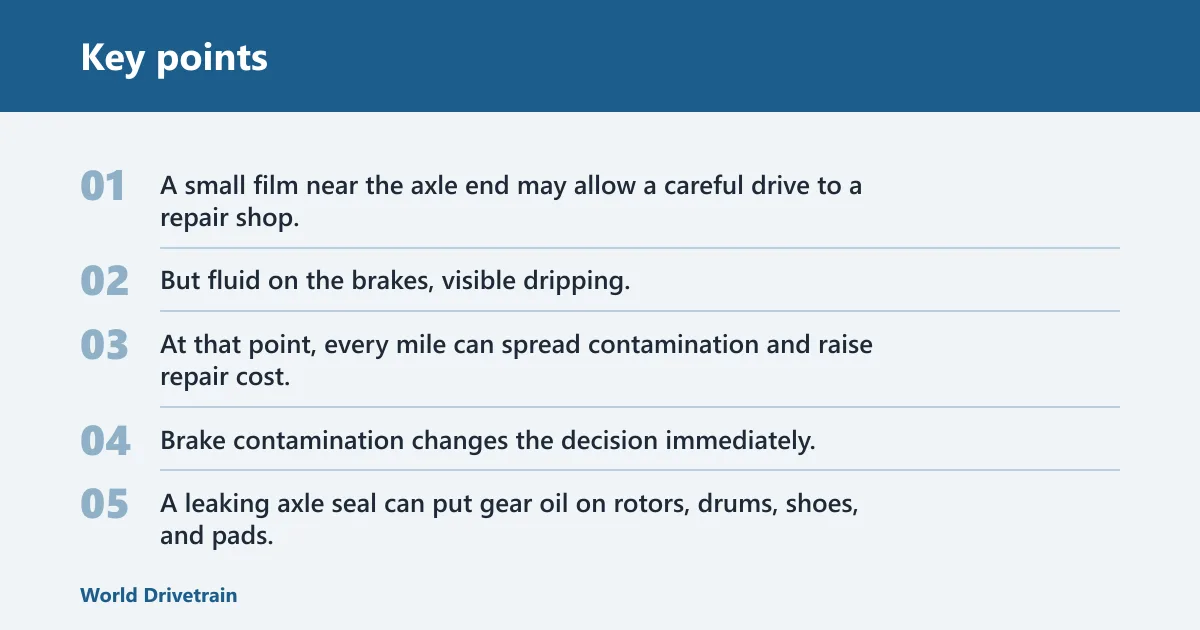
Short-trip risk versus no-drive warning signs
A small film near the axle end may allow a careful drive to a repair shop, especially if the vehicle has no low-fluid symptoms and no brake contamination. But fluid on the brakes, visible dripping, or a low differential level makes continued driving unsafe. At that point, every mile can spread contamination and raise repair cost.
When a leak is urgent because fluid is reaching brakes
Brake contamination changes the decision immediately. A leaking axle seal can put gear oil on rotors, drums, shoes, and pads. Once that happens, the contaminated friction material often needs replacement, not just cleaning. Oil on brakes can also reduce stopping power without much warning.
When low fluid makes continued driving unsafe
Low fluid is a separate red flag. A rear axle seal leak can still leave adequate fluid in the differential for a time, but if the level is dropping, the gears and bearings lose protection. Humming, whining, or clunking means the damage may already be starting.
Say your truck leaves a dark film on the inside of one rear wheel after a 40-minute highway drive, but the brakes stay dry and there is no new noise. That is still a short-trip risk. The same leak with wet drums or a lower-than-normal gear oil level is a no-drive situation.
Can you drive with a rear axle seal leak?
A rear axle seal leak can be a short-trip risk if it stays small and the fluid level is stable, but it becomes unsafe when oil reaches the brakes or the differential runs low. Solid rear axles can send oil toward the brake area, backing plate, shoes, or drums, so the leak path matters as much as the amount.
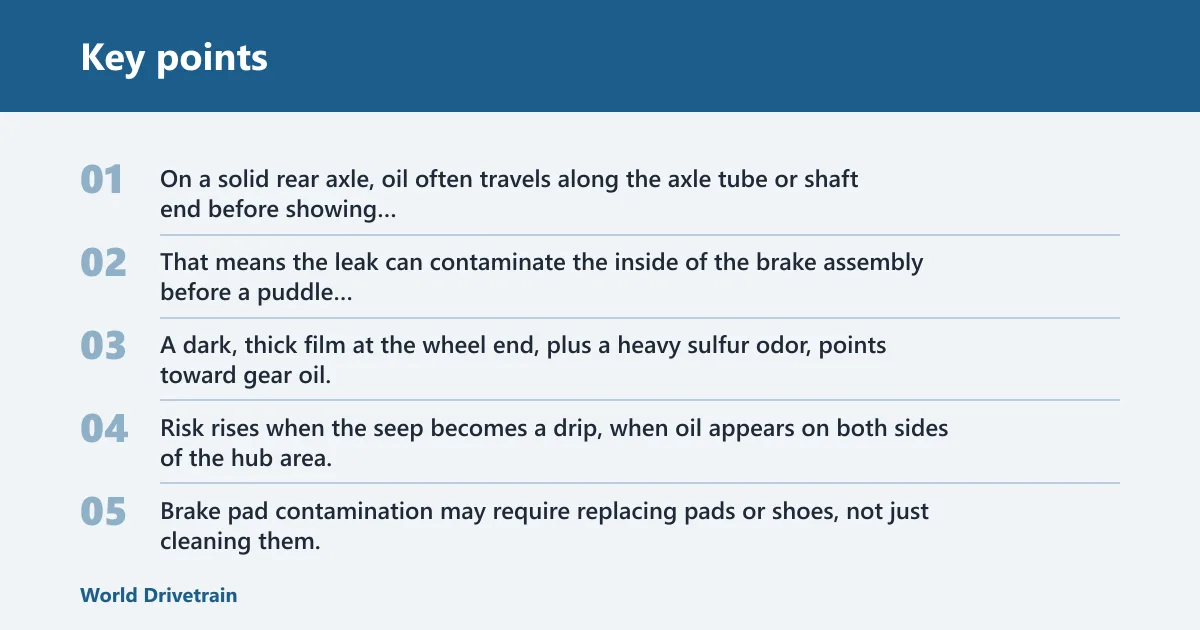
Solid rear axle leak paths near brakes and backing plates
On a solid rear axle, oil often travels along the axle tube or shaft end before showing up at the wheel. That means the leak can contaminate the inside of the brake assembly before a puddle appears. A dark, thick film at the wheel end, plus a heavy sulfur odor, points toward gear oil.
What changes the risk from minor seep to unsafe leak
Risk rises when the seep becomes a drip, when oil appears on both sides of the hub area, or when braking changes. Brake pad contamination may require replacing pads or shoes, not just cleaning them. If the axle bearing has play, shaft movement can tear the seal lip and make the leak return after replacement.
How towing and highway heat can speed up the problem
Highway driving can reveal a leak that was not obvious while parked. Heat thins gear oil, pressure rises, and the leak can spread after a sustained run. Towing can load the axle harder and may push a marginal seal from a wet edge into active dripping. That is why leak clues may appear after highway driving, not only while parked.
Suppose a crossover shows a small rear leak before a camping trip, then returns with a clunk and a wet backing plate after towing. That pattern points beyond the seal itself. The bearing, axle shaft, or vent should be checked before the vehicle moves again.
Can you drive with a front axle seal leak?
A front axle seal leak may show near the knuckle, hub, or inner CV area, so it can be harder to spot than a large puddle. It is still a concern if the leak reaches the brakes, hub bearings, or tire sidewall. If the fluid level drops or the wheel area gets oily, the vehicle should be inspected before more driving.
Front axle or knuckle area leak clues
Front axle leaks can leave oil near the inner C, knuckle, or hub rather than directly under the differential. On four-wheel-drive and all-wheel-drive vehicles, that path can hide the source. A fresh wet film, sulfur smell, or greasy buildup around the hub or knuckle deserves immediate attention.
Why front axle leaks can be easier to miss
The front end has more moving parts and more splash patterns. Grease from CV joints can be mistaken for gear oil, and road grime can hide a slow leak. A UV dye test for gear oil systems can help confirm the source when the visible trace is unclear.
What wheel, hub, or brake symptoms change the answer
If the front wheel area gets noisy, warm, or contaminated, the answer changes from “short-trip risk” to “stop driving.” Brake contamination lowers stopping power, and bearing wear can add looseness or roughness. If the leak is near the hub and the wheel shows play, a seal-only repair may not hold.
Axle seal leak decision table
The table below gives a drive-or-don’t-drive check by location and symptom. Use the worst symptom you can see. If more than one warning sign is present, use the most urgent action listed for that row.
| Leak location | Visible symptoms | Likely risk | Recommended action |
|---|---|---|---|
| Rear axle seal | Dark, thick film near one wheel; sulfur smell; no brake wetness; no noise | Short-trip risk | Drive only to a repair shop and recheck fluid level first. Yes, urgent inspection still needed. |
| Rear axle seal | Drip on backing plate, shoes, drums, or pads; brake dust looks wet | No-drive | Do not drive except for tow loading. Brake contamination can reduce friction fast. No. |
| Rear axle seal | Whining, humming, or clunking plus low fluid or visible leakage | No-drive | Stop driving and inspect the axle bearing, seal, and fluid level before restart. No. |
| Front axle seal | Wet knuckle or hub area, sulfur odor, no brake wetness, normal fluid level | Short-trip risk | Limit driving and schedule inspection soon. Check for shaft wear, bearing play, and vent issues. Yes. |
| Front axle seal | Oil on pads, rotors, caliper area, or inside wheel | No-drive | Do not continue driving. Brake contamination and fluid loss make this unsafe. No. |
| CV axle seal | Greasy leak near transaxle or axle seal area, but no brake contamination | Short-trip risk | Drive only a short distance if fluid level is stable and no new noise is present. Yes. |
| Any axle seal | Fast dripping, low fluid, new grinding, or repeated leak after recent repair | No-drive | Stop driving. Check for axle shaft grooves, rust, pitting, scoring, bearing wear, and clogged vent. No. |
What makes a leak worse
Several faults can turn a minor seep into a larger failure. A clogged axle breather traps pressure inside the housing. An overfilled differential pushes extra oil where it does not belong. Worn bearings or shaft play can move the shaft enough to damage the seal lip and reopen the leak.
Brake contamination and friction loss
Once gear oil reaches the brakes, the problem is no longer only about fluid loss. Pads, shoes, rotors, drums, and backing plates can all be affected. Brake pad contamination may require replacing pads or shoes, not just cleaning them, because oil can soak into friction material and keep reducing grip.
Low-fluid symptoms and differential damage risk
Low fluid can damage differential components, especially if the leak has gone unnoticed after highway driving or towing. A low level can also create heat, which thins the oil and can worsen seepage. If the housing starts making new noise, the issue is past the “check it later” stage.
Bearing play, shaft wear, and vent clog clues
Check for play, roughness, or looseness at the wheel or axle end. Those are clues that the bearing may be wearing out. Grooves, rust, pitting, or scoring on the axle shaft sealing surface can cause repeat leaks even after a new seal is installed. A repair may need a sleeve or shaft replacement, not just a seal.
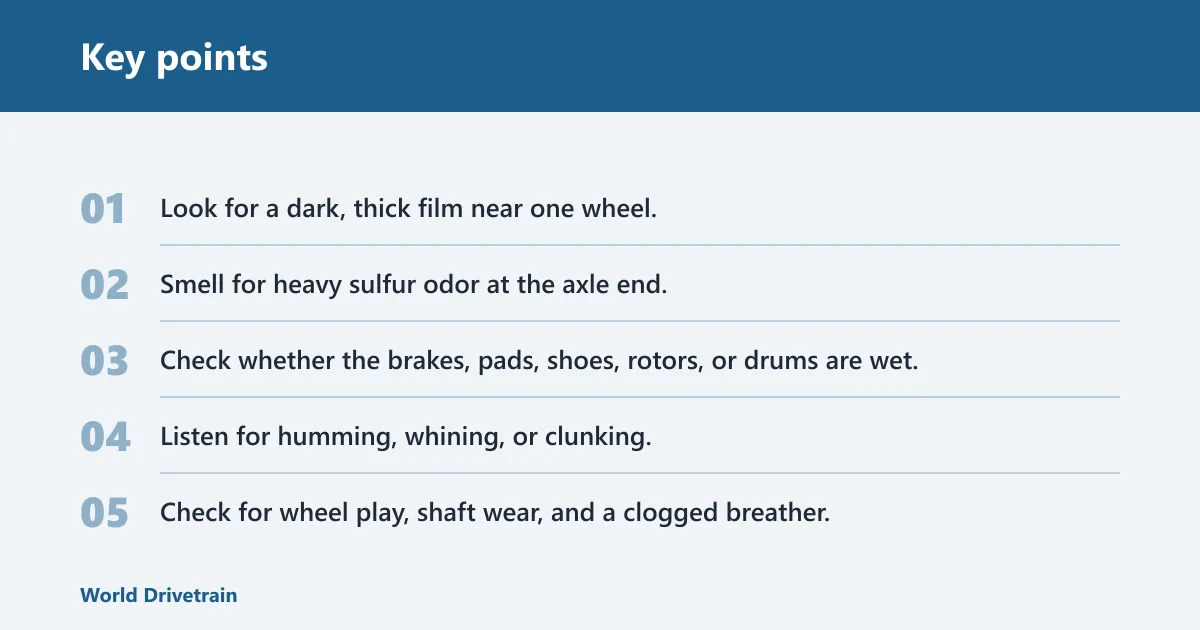
- Look for a dark, thick film near one wheel.
- Smell for heavy sulfur odor at the axle end.
- Check whether the brakes, pads, shoes, rotors, or drums are wet.
- Listen for humming, whining, or clunking.
- Check for wheel play, shaft wear, and a clogged breather.
- Do not drive if the fluid is low, dripping fast, or on the brakes.
Frequently asked questions
How long can you drive with a rear axle seal leak?
There is no safe blanket distance. A small leak with no brake contamination may allow a brief drive to a shop, while a drip on the shoes or pads means you should not keep going. The better question is whether the leak is stable, dry at the brakes, and not lowering fluid.
What happens if you drive with a leaking axle seal?
The leak can spread gear oil onto brakes and lower the lubricant level in the housing. That can lead to brake fade, contaminated pads or shoes, and damage to gears or bearings. If the shaft or bearing is worn, the new seal can fail again unless the root cause is fixed.
Can you drive with a leaking CV axle seal?
A leaking CV axle seal can sometimes allow a short drive if the leak is small and the fluid level is steady. The risk rises if the leak reaches the transaxle oil level, if the inner joint area is noisy, or if the fluid is wetting nearby brake parts. In that case, do not keep driving.