Why Is a Transmission Fluid Change So Expensive?
A transmission fluid change can be expensive because many vehicles need about 6 to 12 quarts of the correct fluid, plus labor to reach the pan or filter; fair quotes are often in the $150 to $400 range, with sealed units often higher. Skip the service or do it badly, and dirty fluid, the wrong fluid, or a missed filter can lead to rough shifts and much more costly transmission damage. This guide breaks down fluid volume, access, filter and gasket replacement, and service method so you can judge a quote.
What makes the quote jump
The price usually climbs for three reasons: the fluid itself, the amount needed, and the work required to reach the service point. Automatic transmission fluid, or ATF, is a specialized consumable. It must match the vehicle specification, and the same job can vary a lot from one platform to another.
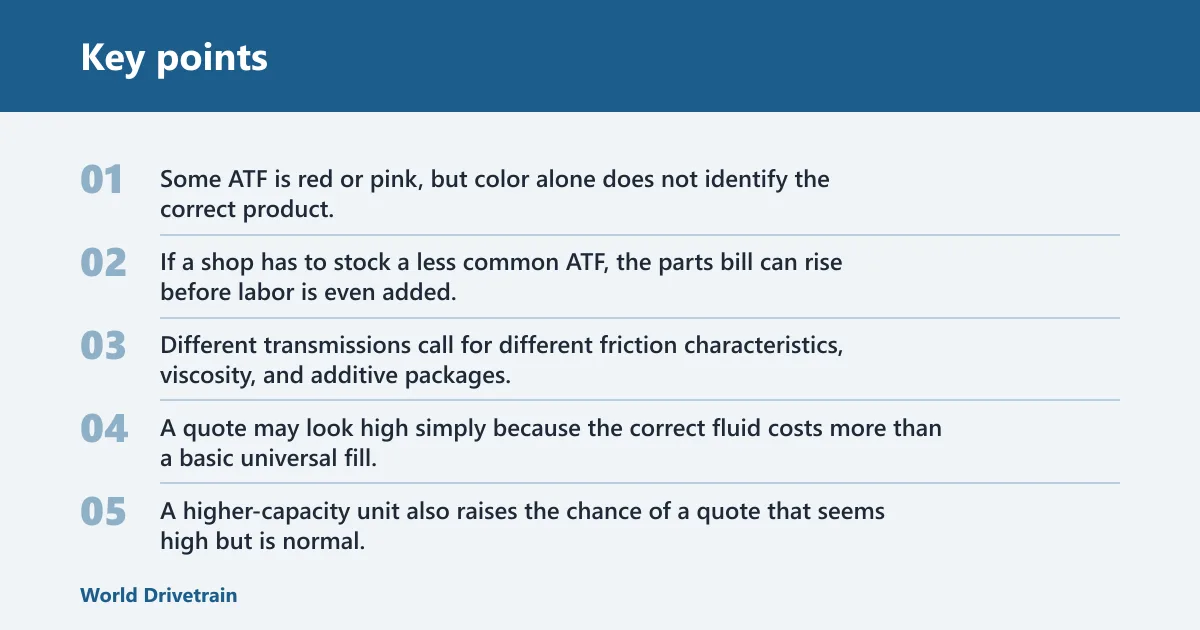
Some ATF is red or pink, but color alone does not identify the correct product. The spec does. If a shop has to stock a less common ATF, the parts bill can rise before labor is even added.
Fluid type and vehicle specification
ATF is not generic oil. Different transmissions call for different friction characteristics, viscosity, and additive packages. A quote may look high simply because the correct fluid costs more than a basic universal fill.
That matters most on newer automatics, CVTs, and sealed units. These often require a specific factory-approved fluid, and some shops price that fluid as a separate line item rather than folding it into a flat service rate.
Fluid volume and capacity
Capacity is a major cost driver. A transmission that takes only part of a drain-and-fill service needs fewer quarts than one that needs a larger refill, and a vehicle-specific capacity can change the parts bill fast. A higher-capacity unit also raises the chance of a quote that seems high but is normal.
Some fluid remains in the torque converter and cooler lines, so a complete exchange is harder than a simple drain. That is one reason full replacement is priced differently from a basic pan drain.
Labor, access, and service method
Labor often drives the quote after fluid volume. If the transmission pan is easy to reach, the job can stay straightforward. If skid plates, undertrays, crossmembers, or awkward fill procedures are involved, shop time rises.
Sealed units and vehicles without a dipstick or fill tube often take more labor because the fill process itself is more involved. A sealed-unit or CVT service may require raising the car, removing covers, monitoring temperature, and using the correct fill port and level-check procedure.
📊 WikiHow says transmission fluid is usually changed every 30,000–60,000 miles. Source: Wikihow.
Why is a transmission fluid change so expensive?
It costs more when the service needs more fluid, more labor, or both. ATF must match the transmission specification, and some vehicles need a pan drop, filter replacement, and gasket replacement instead of a simple refill. Those extra parts and the added shop time raise the bill fast.
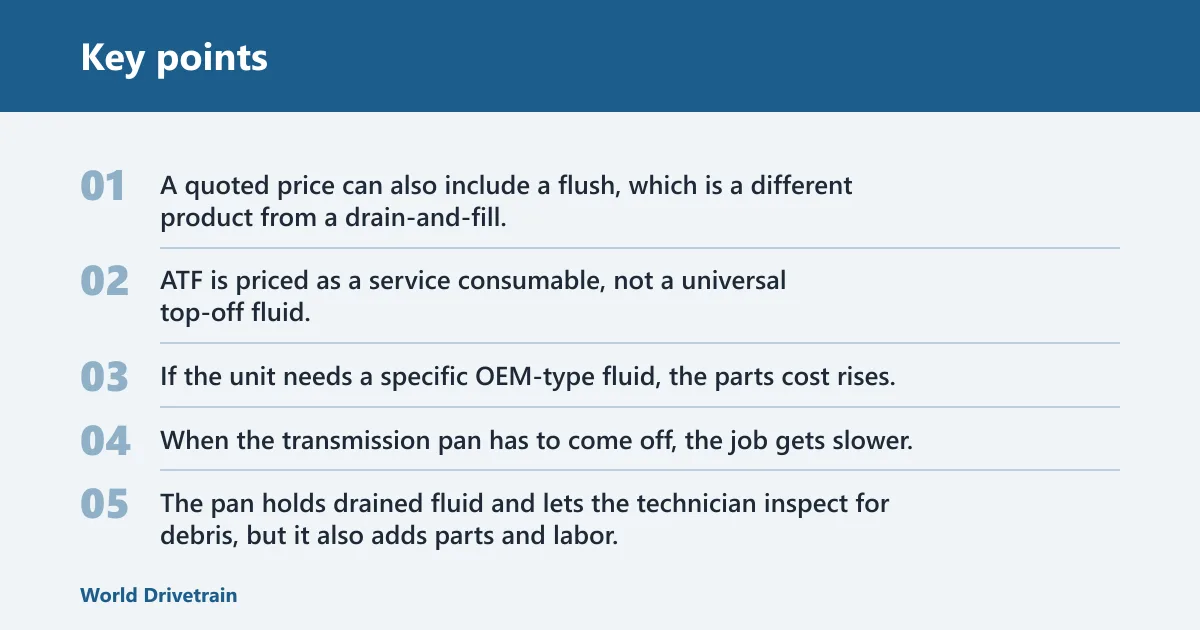
A quoted price can also include a flush, which is a different product from a drain-and-fill. A flush may cost more because it uses specialized equipment and more fluid, but it is not always the right choice for a neglected transmission.
ATF price and required specification
ATF is priced as a service consumable, not a universal top-off fluid. If the unit needs a specific OEM-type fluid, the parts cost rises. That is common on CVTs and many newer automatics.
Match the fluid spec exactly. Using the wrong ATF can affect shift quality, clutch operation, and long-term wear, which is why the cheapest quote is not always the best value.
Pan design, filter access, and gasket replacement
When the transmission pan has to come off, the job gets slower. The pan holds drained fluid and lets the technician inspect for debris, but it also adds parts and labor. A transmission filter in the pan area may be replaced during some fluid changes, and the pan gasket is commonly replaced when the pan is removed.
Those parts are not universal on every service. Many flushes do not include a new filter, so a quote that includes one may be more complete than a basic flush price.
Why some jobs take more labor hours
A transmission fluid change can take about an hour on an accessible vehicle, but that is not a hard ceiling. If the pan is buried behind shields or the fill procedure is picky, labor time grows. Shops price for that time, and the vehicle platform often matters as much as the fluid itself.
Suppose a front-drive sedan needs the undertray removed before the drain plug is visible. That extra step may add time even if the fluid volume is modest. Now compare that with a sealed CVT that needs a temperature-based level check. The second job usually costs more because the fill procedure is slower and more exacting.
What actually drives the parts bill?
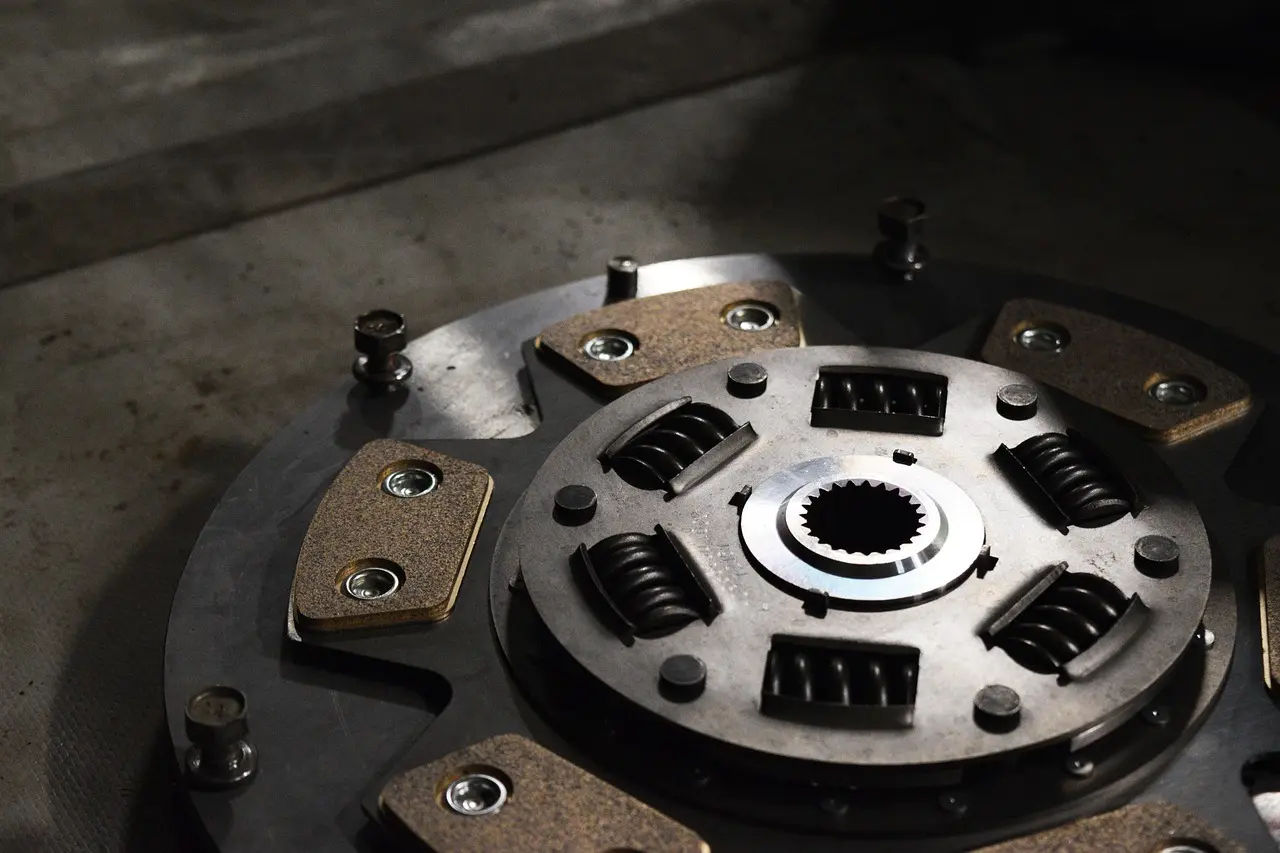
The parts bill comes from three places: the fluid, any service parts, and shop-added fees. The biggest swing is usually fluid quantity. After that, a filter or gasket can add a smaller but still real amount.
| Price driver | What to ask | Usually required, optional, or suspicious |
|---|---|---|
| Fluid type | Which ATF spec is required for this transmission? | Required |
| Total quarts | How many quarts will the service actually use? | Required |
| Filter replacement | Is the filter serviceable on this vehicle, and is it included? | Optional on some services |
| Pan gasket | Will the pan be removed, and is a new gasket included? | Required if pan is removed |
| Labor hours | How much shop time is billed for the procedure? | Required |
| Access difficulty | Are skid plates, undertrays, or crossmembers adding labor? | Required if present |
| Flush vs. drain-and-fill | Which service method is being sold, and why? | Method choice, not always required |
| Shop fees | Are disposal, supplies, or environmental fees itemized? | Usually required if disclosed |
Automatic transmission fluid and total quarts
Fluid quantity can move the price more than many owners expect. A vehicle that needs only a partial refill will cost less than one that needs more quarts. The difference shows up immediately in parts pricing, especially when the correct ATF is expensive.
That is why two quotes for “the same service” can be far apart. One quote may be for a shallow drain-and-fill, while another assumes more fluid for a larger-capacity transmission.
Transmission filter and pan gasket
The filter sits in the pan area on many transmissions, so replacing it requires pan removal. That adds labor. A new pan gasket is usually installed at the same time to help prevent leaks.
Do not assume every service includes a filter. Many flushes do not replace it. If the quote includes both parts, it may be a more complete pan service rather than an inflated one.
Shop fees and disposal charges
Reasonable shop fees may cover disposal, supplies, and overhead tied to the service. Ask what those charges cover. A small environmental or waste fee is normal; vague add-ons that are not explained are harder to justify.
If the fee list grows long, compare the quote against the actual service method. A clean line-item breakdown makes it easier to separate normal overhead from padding.
Drain-and-fill vs. machine flush
A drain-and-fill typically replaces only part of the fluid. A machine flush pushes new fluid through the system with specialized equipment and usually costs more. Both are different products, and they should be quoted that way.
On neglected transmissions, a drain-and-fill is often the safer choice because it is less aggressive. A flush may exchange more fluid, but it also adds equipment cost and may be a worse fit for a unit that has not been serviced on time.
How much fluid each service replaces
A drain-and-fill removes the fluid that drains from the pan and refills that amount. It does not always remove fluid trapped in the torque converter or cooler lines. A flush can move fluid through more of the circuit, including cooler lines, so it replaces a larger share of the old fluid.
That difference explains part of the price gap. More fluid, more machine time, and more setup can all push the total upward.
Why a flush usually costs more
A flush often costs more because it uses specialized equipment and more fluid. The method also takes more setup than a basic drain. For shops, that means a different labor profile and a different margin structure.
The price spread is reflected in common ranges: drain-and-fill cost is listed at $150 – $300, while full flush cost is listed at $200 – $400. Those ranges overlap, but the flush usually sits higher.
When a drain-and-fill is the safer choice
Drain-and-fill is usually the safer recommendation for a neglected transmission or one with unknown service history. It is less aggressive than a machine flush and still renews part of the fluid. That can help reduce risk when the old fluid is dirty or badly aged.
Regular fluid changes cost a fraction of a rebuild or replacement, and a rebuild or replacement runs $3,000 to $5,000 for most cars. That is why a conservative service is often the better financial choice when the transmission is already showing age.
Why do some vehicles cost more to service?
Some vehicles cost more because the service is harder to reach or more exacting to complete. Sealed units, CVTs, and vehicles without a dipstick or fill tube often need more labor. Add underbody panels or crossmembers, and the quote can rise even when the fluid volume is ordinary.
Those higher quotes are not automatically padding. The vehicle may simply be harder to service, and the correct procedure takes more time.
Sealed units and no dipstick or fill tube
Sealed units can be more expensive because filling and level-checking are less direct. The shop may need to use a specific fill port, a temperature check, and a precise overflow procedure. That extra time shows up in labor pricing.
If the vehicle has no dipstick or fill tube, ask how the shop verifies the final level. That answer tells you a lot about whether the quote reflects the actual procedure.
CVTs and special fluid requirements
CVTs often need a specific fluid and a more careful procedure than a simple conventional automatic. That can increase both the parts bill and the labor time. A quote that looks high for a CVT may be normal.
Because CVTs are more sensitive to fluid type, the exact specification matters. The wrong product can create shift or belt-related issues that are far more costly than the service itself.
Skid plates, undertrays, and crossmembers
Underbody hardware can turn a routine drain into a longer job. Skid plates and undertrays may need to come off before the pan or drain plug is reachable. Crossmembers can make access even tighter.
Ask whether those parts are included in the labor line. If they are, the quote is easier to judge. If they are not, the final bill may be higher than expected.
Transmission fluid quote checklist
Use this checklist before approving service. A clear quote should tell you what fluid is used, how much is needed, whether the pan comes off, and how the shop plans to service the vehicle.
- Confirm the fluid spec. Ask for the exact ATF specification, not a generic fluid description. The wrong fluid can create shift issues, so the spec matters more than color.
- Check the quart count. Ask how many quarts the job uses and whether that is for a drain-and-fill or a full flush. Capacity changes the parts bill directly.
- Ask about the filter. Find out whether the transmission filter is serviceable on your vehicle and whether it is included. It is common in pan-drop services, but not in many flushes.
- Verify the gasket. If the pan is being removed, a new pan gasket should usually be part of the quote. If it is not listed, ask why.
- Get the labor time. Ask how many labor hours are billed and what access steps are included. Hidden underbody removal can explain a higher quote.
- Identify the service method. Make sure the shop states drain-and-fill, pan service, or machine flush. Those are different jobs with different costs and risks.
- Review shop fees. Ask what disposal or supplies fees cover. Small, explained fees are normal; vague extras deserve a second look.
- Ask about temperature checks. On sealed units or CVTs, the fill procedure may require a temperature-based level check. That detail often explains extra labor.
How to judge a fair quote
A fair quote explains the service method, the fluid spec, and the labor tied to access. It does not rely on a single flat number with no details. The more complex the transmission, the more normal it is for the estimate to rise.
What is usually required?
Required items usually include the correct ATF, the necessary fluid quantity, and labor to perform the chosen service. If the pan is removed, the gasket is normally required too. On some vehicles, the filter is also part of the needed service.
What is optional?
A flush is optional if the vehicle can be serviced with a drain-and-fill or pan service. Filter replacement is also optional on some quotes because not every transmission service includes it. Ask why each item is being recommended.
What looks suspicious?
A quote becomes suspicious when the shop cannot say which fluid spec is required, cannot explain the quart count, or recommends a flush without describing why. A vague “transmission service” line with no details is harder to trust than a broken-down estimate.
Say your compact sedan needs a pan drop, 6 quarts of the correct ATF, and a new gasket. That quote may be fair even if it looks higher than expected. Now suppose the same car is sold a flush with no reason given and no filter detail. That version deserves more questions.
Frequently asked questions
Why does it cost so much to change transmission fluid?
The cost reflects vehicle-specific fluid, labor time, and the service method. A drain-and-fill is usually cheaper than a flush, and a flush often uses more fluid and equipment. If the transmission is hard to access, the quote can rise even more.
How much does it cost to have a transmission fluid change?
FIXD says average transmission fluid change cost is $230 and $475, with mechanic pricing at $412 to $475. The final price depends on fluid, labor, and access.
How much should a transmission fluid change cost?
It should cost enough to cover the correct ATF, the needed quart count, and the actual labor required by the vehicle. For many cars, that means a few hundred dollars rather than a bargain-basement figure. Very high quotes need a line-item breakdown, not a guess.
How much is it to have transmission fluid change?
The answer depends on whether the shop is quoting a drain-and-fill, a pan service, or a flush. Parts and labor can be modest on an easy-access vehicle and much higher on a sealed unit. Ask for the fluid spec, quart count, and labor hours before approving it.
Why is transmission oil change so expensive?
That phrase usually refers to the same service as a transmission fluid change. The expense comes from specialized fluid, the amount needed, and the work involved in access and fill. On many vehicles, the transmission is harder to service than the engine.