When Should You Use 4WD High vs Low for Snow, Mud, Towing?
Use 4H on loose or slick surfaces when you still need normal road speed, and use 4L for slow, controlled crawling on steep climbs, technical obstacles, or heavy loads. Pick the wrong range and you can lose control, bind the driveline, or overwork the transmission and brakes. This guide uses a surface-plus-speed rule for snow, mud, gravel, hills, ramps, towing, and tight off-road sections.
| Decision factor | When should you use 4WD high | low | Winner |
|---|---|---|---|
| Best speed range | Road-like speeds where you still need extra traction | Very slow travel, often with an approximate 25–31 mph ceiling depending on the vehicle. | When should you use 4WD high |
| Surface type | Snow, gravel, wet grass, faster sand, and mud | Rocks, ramps, deep ruts, steep grades, and slow deep terrain | tie |
| Control on hills | Good for traction, but less engine braking | Best for downhill control because low range multiplies engine braking | low |
| Use on pavement | Part-time systems still should stay off dry pavement | Should not be used on dry pavement; binding risk rises fast | When should you use 4WD high |
| Load and task | Light to moderate load on slick roads or trails | Heavy load, trailer launch, boat ramp, steep descent, or technical climb | low |
What 4WD high and low do
4H is the higher-speed traction mode. In a part-time 4WD system, it locks the front and rear driveline together, so both axles turn as one on loose or slippery ground.
4L is the slow, torque-multiplying mode inside the transfer case. Low range typically multiplies torque by roughly 2.5:1 to 4:1, and with a 4:1 low range it can reduce wheel speed to about a quarter of 4H at the same rpm.
Why speed is the first decision point
Speed comes before terrain because a surface can be slick and still call for 4H if you are moving at road-like speeds. A surface can also be slow and technical, which pushes you toward 4L even if traction is the main problem. That is the core split.
Many trucks and SUVs use a two-speed transfer case with 4H at or near 1:1 direct drive, 4L with reduction gearing, and Neutral on some models. If the vehicle also offers 2H or Auto 4WD, those modes matter too; they are not the same as part-time 4WD.
📊 Car and Driver says 4WD is intended for off-road or extremely slippery surfaces. Source: AWD vs. 4WD Explained.
When should you use 4WD high?
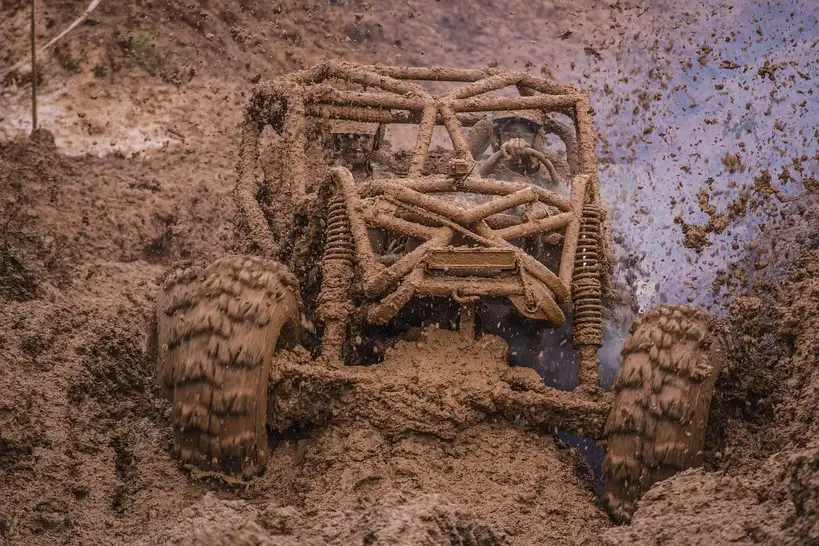
Use 4H when the surface is loose or slick but the vehicle still needs to move at normal road speeds. Snow, gravel, wet grass, faster sand, and mud are common examples. It gives you extra traction without the crawl-speed limits that come with 4L.
Snow, gravel, wet grass, and mixed traction
4H is the right choice when the road is slippery, but you still need to keep pace with traffic or travel between obstacles. On a forest road with packed gravel and patchy ice, 4H usually makes more sense than 4L because the speed stays higher and steering remains more natural.
A common first-timer mistake is choosing low range just because the road feels slick. If the vehicle is moving at about 20 to 35 mph on a snowy county road, 4H is generally the better match in a part-time system, while 4L would likely be too slow and too restrictive.
When 4H is the wrong choice
4H is wrong when the job is too slow for road-speed traction but too technical for direct drive. If you are easing down a steep grade, working over rocks, or trying to launch a boat on a steep ramp, 4L gives more control and less brake demand.
4H is also the wrong choice if the vehicle has selectable 2H and the surface is dry pavement. On a part-time system, the front and rear axles are locked together, so dry pavement can cause tire scrub and driveline binding.
When should you use 4WD low?
Use 4L when the vehicle needs more control than speed. Steep grades, rocks, ramps, deep ruts, and slow mud are common cases. Low range gives stronger throttle modulation, more pulling force at the wheels, and more engine braking on the way down.
Steep grades and technical climbs
4L belongs on steep climbs where wheel speed needs to stay low and steady. The lower gearing helps the engine stay in a useful range while the vehicle crawls instead of lunging. That matters when traction changes from one tire to the next.
If the climb is steep but short, 4H may still be enough when speed stays up. If the climb is steep and slow, 4L is the better answer.
Rocks, deep ruts, and slow mud
Use 4L when the vehicle must move carefully over obstacles and every inch of throttle matters. On rocks or deep ruts, low range helps keep the tires turning without a sudden surge. In deep mud, it can help the vehicle keep moving without having to ride the throttle.
Jeep rates the Gladiator Command-Trac low range at 2.72:1, while the Rubicon Rock-Trac uses 4:1. That difference shows why some vehicles crawl more slowly and control wheel speed better than others.
Steep descents and engine braking
Low range matters as much downhill as uphill. Engine braking is multiplied in 4L, which helps hold speed on descents and reduces how hard you need to work the brakes. That control is one of the strongest reasons to shift into low range.
Picture a loaded pickup coming down a long dirt grade. In 4L, the transmission and transfer case help hold the truck back, so the brakes do less work and wheel speed stays calmer.
4WD decision matrix
This matrix uses surface, slope, speed, and load together. If two rows seem close, start with speed and then check whether the vehicle is on pavement, because part-time 4WD has stricter limits than AWD or Auto 4WD.
| Surface | Slope | Speed | Load / task | Recommended mode | Manual check |
|---|---|---|---|---|---|
| Dry pavement | Flat | Any road speed | Normal driving | 2H or AWD / Auto 4WD | Check whether the vehicle allows 4A or Auto on pavement |
| Light snow or slush | Flat to mild grade | Road-like speed | Commuting or travel | When should you use 4WD high | Confirm if the owner’s manual permits 4H on the move |
| Packed snow or plowed roads | Mild to moderate grade | Moderate speed | Mixed traction | When should you use 4WD high | Watch for pavement exposure and any speed cap |
| Steep icy grade | Steep | Slow | Climb or descent | low | Check the shift procedure before entering the grade |
| Gravel road | Flat to rolling | Road-like speed | Light to moderate load | When should you use 4WD high | Verify whether the transfer case should stay in 2H on hardpack |
| Rocks, deep ruts, or technical trail | Any steepness | Very slow | Precision driving | low | Check that the vehicle has a two-speed transfer case |
| Boat ramp or trailer launch | Steep and wet | Crawl speed | Towing or launch load | low | Confirm ramp traction, 4L speed cap, and launch procedure in the manual |
| Fast sand or mud | Flat or mild | Higher trail speed | Momentum needed | When should you use 4WD high | Check if the manual warns against shifting while moving fast |
Use this rule: if the surface is slippery and the speed is road-like, choose 4H. If the surface is slow, steep, or technical, choose 4L. If the vehicle is on dry pavement and you are not in AWD or Auto 4WD, stay out of part-time 4WD.
Snow and ice by condition
Snow is not one single case. Light snow at speed points to 4H, packed snow or plowed roads still usually point to 4H, and steep icy grades often call for 4L because control matters more than pace. The wrong choice is common when all snow gets lumped together.
Light snow at speed
Use 4H when light snow is covering the road and traffic speed is still close to normal. 4H gives the traction boost you need without forcing the vehicle into crawl-speed behavior. If the road is open and the tires are rolling at speed, 4L is the wrong tool.
Packed snow and plowed roads
Packed snow often behaves more like a low-grip roadway than a trail. 4H is the better match because it keeps the vehicle moving at road-like speeds while helping both axles pull. If the surface turns to bare pavement in spots, watch the manual for part-time restrictions.
Steep icy grades
Steep icy grades are the snow case that can flip the answer to 4L. The climb or descent is slow, the margin for wheelspin is small, and engine braking becomes useful on the way down. That is when low range earns its place.
Suppose a 4WD SUV is creeping down a steep, icy driveway with a trailer behind it. 4H may help with traction, but 4L gives better downhill control and reduces brake load, which is the more important need in that moment.
When should you shift into 4L?
Shift into 4L when the vehicle needs more control, more pulling force at the wheels, or stronger engine braking than 4H can provide. That usually means steep grades, rocks, ramps, or other slow terrain. Use the owner’s manual for the exact shift procedure and speed limits.
What low range changes in control
Low range changes how the vehicle responds to throttle and braking. Crawl ratio is first gear times low range times axle ratio, so a higher crawl ratio means slower, more controlled crawling. That is why 4L helps the driver place the tires with less drama.
It also changes steering feel. Because wheel speed is reduced, small throttle inputs matter more, and the vehicle is less likely to lurch over an obstacle or lose traction on a descent.
Speed caps and shift procedure
Most manufacturers list a maximum speed for 4L, and it varies by vehicle. Nissan puts the Frontier’s 4LO ceiling at about 31 mph. Other trucks may be lower. The owner’s manual is the only place to trust for the exact cap and whether shifting must happen stopped or rolling.
Many trucks use a transfer case Neutral position for towing or service procedures. Do not guess at the steps. The manual will spell out whether the vehicle needs to be stopped, rolling slowly, or shifted in a specific sequence.
Red flags for 4L use
- Dry pavement or any surface that lets tires scrub hard.
- Road speeds above the vehicle’s listed 4L limit.
- A truck or SUV without a two-speed transfer case.
- Any mode where the owner’s manual bans 4L on the current surface.
- Normal commuting, highway use, or anything that does not need crawl control.
What happens if you use 4L on pavement? In a part-time system, the driveline can bind because the front and rear axles are locked together. The vehicle may hop, bind, or fight itself in turns. That is why part-time 4WD should stay off dry pavement. (Motortrend)
Choose when should you use 4WD high if…
Choose 4H if you need traction at road-like speeds, especially on snow, gravel, wet grass, faster sand, or mud. Choose 4H if the surface is slippery but the vehicle still needs to flow with traffic or cover ground at moderate speed. It is the better general-use traction mode.
Choose low if the job is slow, steep, technical, or heavily loaded. That includes rocks, deep ruts, steep climbs, steep descents, and boat ramps. If the manual gives a lower cap and the surface is safe for it, 4L is the controlled choice.
Choose AWD or Auto 4WD if the vehicle is on changing pavement conditions and the system is designed for it. Those systems can be used on pavement, unlike part-time 4WD. That distinction matters more than the badge on the tailgate.
Frequently asked questions
When should you use 4WD high vs low?
Use 4H for loose or slick surfaces at road-like speeds. Use 4L for slow, controlled driving where traction alone is not enough and you need engine braking or finer throttle control. The simplest rule is speed first, then slope, then load.
Should you use 4WD high or low in snow?
Use 4H for light snow, packed snow, plowed roads, and snowy travel at normal speeds. Use 4L only when the snow sits on a steep grade or the vehicle must crawl at very low speed. Snow depth matters less than the control requirement.
When to use low range 4WD?
Use low range for steep grades, rocks, ramps, deep ruts, slow mud, and long descents where engine braking helps. It is also useful when the vehicle is loaded and moving slowly, such as on a boat ramp or with a trailer on a steep pullout.
Can you drive fast in 4WD high?
4H is the higher-speed traction mode, but “fast” still depends on the vehicle and the surface. It is for road-like speeds on slippery ground, not for dry pavement in a part-time system. The owner’s manual should stay ahead of any speed guess.
What happens if you use 4WD low on pavement?
On dry pavement, a part-time system in 4L can bind because the front and rear axles are locked together. That can cause tire scrub, hopping in turns, and driveline stress. It is the wrong mode for surfaces that allow normal tire slip-free turning.
Should you use 4×4 high or low?
Use 4×4 high when you need traction but still want to travel at normal road speeds. Use 4×4 low when the terrain is steep, technical, or slow enough that control matters more than speed. If the vehicle has Auto 4WD or AWD, that may be the pavement-safe option instead.