Why Is My Transmission Making Noise When Accelerating?
If the noise rises with engine rpm under throttle in any gear, start with the transmission, fluid level, and mount or torque-converter issues; if it tracks road speed only, suspect wheel bearings, brakes, or a wheel-end problem. Ignoring it can turn a minor fluid or bearing issue into a rebuild or a stranded vehicle. This guide shows how to separate transmission whine from belt, steering, and drivetrain noises.
What you’ll need for the first checks
- Flashlight
- Paper towels or clean shop rags
- Owner’s manual or the correct transmission-fluid specification
- OBD-II scan tool
- Gloves
- Jack stands if you must inspect under the vehicle
What does the noise sound like?
The sound type gives the first clue. A whining noise under acceleration points toward transmission trouble, including low fluid, internal wear, or a failing torque converter. Squealing more often suggests a belt or pulley issue. Grinding, rattling, and clunking usually shift the diagnosis toward worn clutch parts, mount problems, or drivetrain components.
Pay attention to when it happens. Noise only under throttle matters more than noise at idle, and a sound that changes with engine rpm points somewhere different from a sound that follows road speed. That split helps separate transmission load noise from wheel-end or exhaust noise.
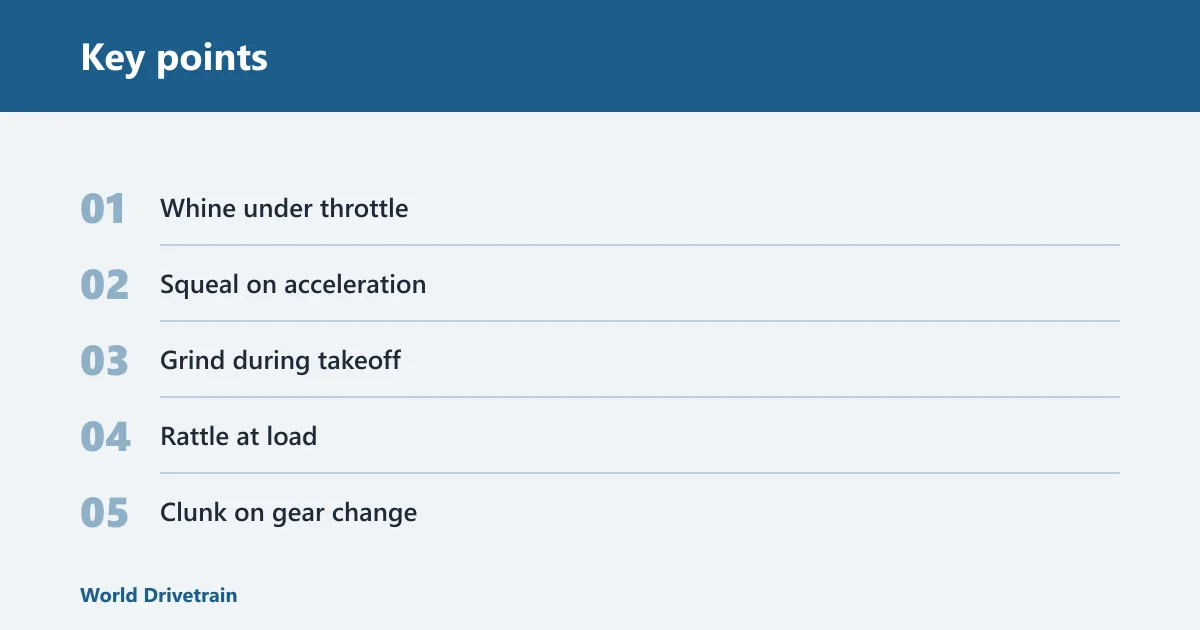
Quick sound-and-speed clues
- Whine under throttle: transmission fluid, torque converter, or internal bearing wear.
- Squeal on acceleration: serpentine belt slip, cracked belt, or pulley drag.
- Grind during takeoff: worn clutch parts or internal transmission damage.
- Rattle at load: loose heat shield, exhaust contact, or drivetrain play.
- Clunk on gear change: mount, joint, or shift-related drivetrain movement.
What should you check first if the noise gets louder as you speed up?
Start with the fluid, then leaks, then nearby accessory parts. Low transmission fluid can cause whining, and a leak at the pan, lines, or cooler fittings often explains why the noise shows up only under acceleration. If steering effort changes with the sound, move the power steering pump higher on the list.
Say your automatic whines only when pulling away in Drive and the sound fades at a steady cruise. That pattern fits load-related transmission noise better than a tire issue, especially if the fluid looks dark or smells burnt. If the same sound appears only with the A/C on, a belt or pulley deserves a closer look.
- Check the transmission fluid with the method in the owner’s manual.
- Compare the level and color to the correct fluid type listed for the vehicle.
- Inspect the pan, cooler lines, and fittings for wet spots or drips.
- Look at the serpentine belt for cracks, glazing, or frayed edges.
- Check power steering fluid and note whether steering effort has changed.
How do you tell if it’s the transmission or a bad belt?
A belt problem usually makes a high-pitched squeal or a light whine that changes with engine speed and accessory load. A transmission noise usually changes with throttle and gear behavior instead. Transmission bearings often whine under load, and a torque converter can whine when it is failing. Belt noise is more likely if the sound is sharp, brief, and strongest at startup.
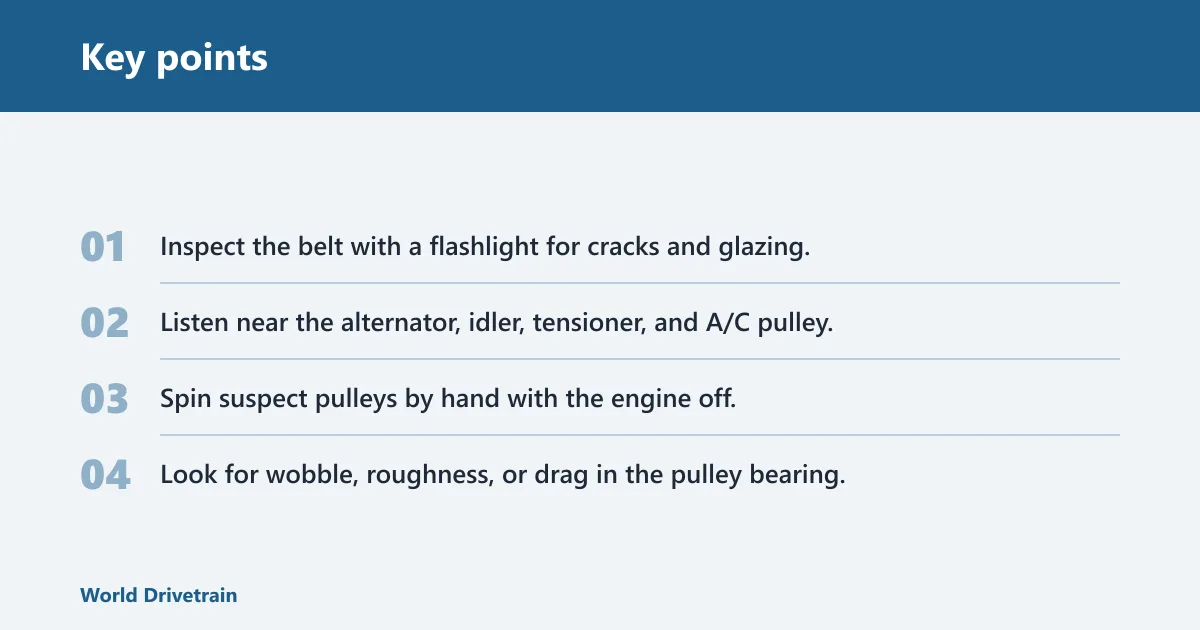
Inspect the belt first, then the pulleys. Cracks, shiny glazing, and dust around the belt path point toward slip. A bearing or pulley assembly can also make a steady whine, and a manual spin test may reveal roughness. If the belt is removed for diagnosis, do not run the engine longer than needed, and only do that when the vehicle can be kept safe and the cooling system will not be compromised.
Belt and pulley checks
- Inspect the belt with a flashlight for cracks and glazing.
- Listen near the alternator, idler, tensioner, and A/C pulley.
- Spin suspect pulleys by hand with the engine off.
- Look for wobble, roughness, or drag in the pulley bearing.
Step 1: Check fluid, leaks, and scan codes
Use the correct transmission-fluid type first. If the fluid is low, top it off in the amount listed by the manual or service data, then recheck before adding more. Low-fluid symptoms can include whining, delayed engagement, slipping, or harsh shifts, and topping off is only a fix if the level is the actual problem and the leak is repaired.
- Read the fluid specification in the owner’s manual.
- Check the level with the transmission procedure the vehicle requires.
- Add about 0.25 quart at a time, then recheck the level.
- Inspect for leaks at the pan, cooler lines, seals, and fittings.
- Use the scan tool to check warning lights and retrieve codes.
Can a transmission make noise without a check engine light? Yes. A transmission fault may not set a warning light, and a scan tool may show nothing even when the unit is noisy under load. A stored code helps, but the absence of one does not rule out low fluid, bearing wear, or a torque-converter problem.
Step 2: Compare load-related whine with other driveline noise
Transmission trouble often changes with throttle, gear, and load. A damaged torque converter may whine as it fails, and transmission bearings can whine more as acceleration increases. Grinding can come from a worn clutch in manual transmissions, while lack of lubrication can also create grinding in the transmission or differential.
Picture a manual car that grinds only when the driver accelerates in second gear, then quiets when cruising. That pattern leans away from a belt and toward clutch or internal transmission wear. A turbocharged vehicle that whines only on boost points you back toward intake hoses or a boost leak rather than the gearbox.
Automatic versus manual clues
- Automatic: whine that changes with throttle can point to fluid, torque converter, or internal bearings.
- Manual: grinding on acceleration can point to a worn clutch or gear wear.
- Both: clunking with load may involve mounts, joints, or differential issues.
Transmission noise diagnostic matrix
Use this matrix to separate the most common acceleration-noise patterns before you book a repair. The stop-driving threshold is the point where continued driving can spread damage or leave you stranded.
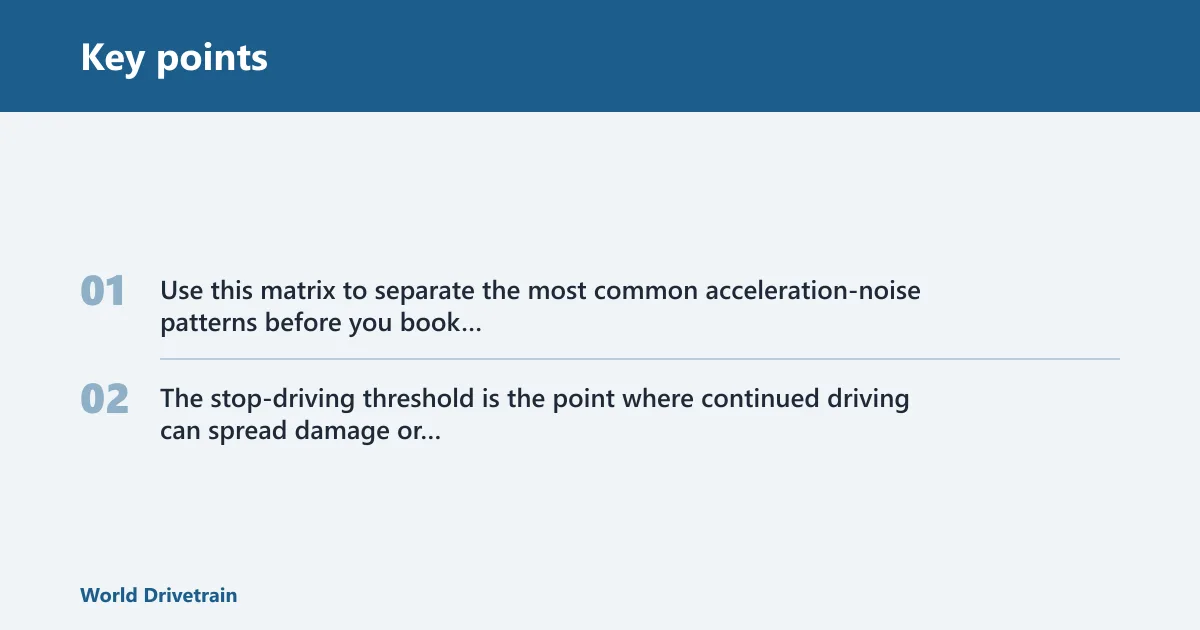
| Sound type | When it happens | Likely source | Next test | Stop-driving threshold |
|---|---|---|---|---|
| Whine | Only under throttle | Low transmission fluid | Check level, condition, and leaks | Stop if it slips or delays engagement |
| Whine | Rises with engine rpm in any gear | Torque converter | Listen in Park, then in Drive with brake applied | Stop if the noise gets louder fast |
| Whine | Builds with load and speed | Transmission bearings | Check for changes in sound during upshifts | Stop if metal appears in fluid |
| Squeal | On acceleration or startup | Serpentine belt | Inspect belt cracks and glazing | Stop if charging or cooling drops |
| Whine | Turns with steering input | Power steering pump | Check fluid level and steering effort | Stop if steering feels heavy |
| Whine or hiss | Only on boost | Vacuum leak or boost leak | Inspect intake hoses and clamps | Stop if boost falls off sharply |
| Rattle | Under load, not idle | Exhaust or heat shield contact | Check clearance around pipes and shields | Stop if noise becomes banging |
| Clunk or grind | On gear change or takeoff | Mount, clutch, or drivetrain wear | Check mounts, clutch feel, and shaft play | Stop if the vehicle jumps or slips badly |
What other symptoms come with transmission noise when accelerating?
Transmission noise rarely shows up alone. Watch for delayed engagement, slipping, harsh shifts, burnt-smelling fluid, or a change in how the vehicle pulls under load. A whining transmission can also be paired with a damaged torque converter or internal bearing wear, while a low-fluid problem often leaves a visible leak trail.
What does a whining transmission sound like when I accelerate? It is usually a steady, rising tone that follows throttle input more than vehicle speed. If the whine changes with each gear change or comes with flare between shifts, transmission internals move higher on the list than belts or accessories.
Common mistakes
- Adding fluid without confirming the correct type.
- Ignoring visible leaks after topping off.
- Blaming the transmission before checking the belt and pulleys.
- Assuming no warning light means no transmission fault.
- Driving through slipping or delayed engagement.
Is it safe to drive if my transmission whines under acceleration?
It depends on the symptom pattern. A light whine with a confirmed low-fluid level may allow short, cautious movement to a repair shop after a proper top-off, but a growing whine, slipping, harsh engagement, or metal in the fluid is a stop-driving situation. Noise that gets worse fast can point to damage that spreads quickly.
What should you check first if the noise gets louder as you speed up? Fluid level, leaks, and then the belt path. If the noise is followed by a burnt smell, warning light, or loss of drive, shut the vehicle down and arrange a tow instead of trying to limp it farther.
What should I do if the noise does not go away?
If fluid, belt, and pulley checks do not explain the sound, move to a transmission-and-drivetrain inspection. A diagnostic scan tool can still be useful even when no warning light is on, because some faults store codes before the dash light appears. If the vehicle is manual, include clutch condition in the next round of checks.
- Review the scan tool for stored or pending codes.
- Recheck the fluid after a short drive if the level was low.
- Inspect mounts, axle joints, and differential fluid if the noise follows road speed.
- Book a repair diagnosis if the whine persists or worsens.
Frequently asked questions
Why is my transmission making noise when accelerating?
Acceleration loads the transmission, so whine or grind can appear only when torque passes through worn parts, low fluid, or a failing torque converter. If the sound also changes with gear shifts, that makes a transmission source more likely than a belt or wheel-end problem.
What does a whining transmission sound like when I accelerate?
It is usually a steady, rising sound that follows throttle input and may get louder in certain gears. A low-fluid problem often sounds like a whine under load, while a failing torque converter can add a harsher, more constant tone as speed builds.
Can low transmission fluid cause noise when accelerating?
Yes. Low transmission fluid can cause whining, and it often brings delayed engagement, slipping, or harsh shifts with it. Check the level with the correct procedure, look for leaks at the pan and lines, and add only the specified fluid type.
How do I tell if the noise is transmission or a bad belt?
A belt problem usually makes a squeal or light whine that changes with accessory load, while transmission noise tends to change with throttle and gear behavior. Inspect the belt for cracks and glazing, then check nearby pulleys for roughness or wobble.
Can a transmission make noise without a check engine light?
Yes. Some transmission faults do not trigger a dash light right away. Use an OBD-II scan tool for stored or pending codes, but do not rule out fluid loss, torque-converter trouble, or bearing wear if the scan tool shows nothing.