Do You Need to Replace the Flywheel with the Clutch?
Do not automatically replace the flywheel with the clutch; replace it only if inspection shows heat cracks, scoring, excessive runout, worn ring gear teeth, or a failing dual-mass flywheel, and resurface only when the maker allows it. A damaged flywheel can cause chatter, clutch slip, vibration, and a repeat gearbox-out job. This guide explains when to replace, resurface, or reuse the flywheel during clutch service.
Flywheel decision matrix
| Flywheel type | Inspection result | Recommendation | Risk of clutch comeback |
|---|---|---|---|
| Solid flywheel | Light scoring only; no cracks, no hot spots, face still within spec | Reuse or resurface if the maker allows machining | Low, if the clutch disc and pressure plate are also sound |
| Solid flywheel | Heat checking on the friction face | Replace; do not resurface a heat-damaged flywheel | High, because heat damage can cause chatter and uneven bite |
| Solid flywheel | Cracks anywhere on the friction face or mounting area | Replace | High, with risk of noise, vibration, and rapid wear |
| Solid flywheel | Scoring, glazing, and contaminated friction surface from oil or gearbox fluid | Replace if contamination cannot be fully removed and the surface is out of spec | Medium to high, especially if the clutch disc was also soaked or overheated |
| Solid flywheel | Runout or machining result within manufacturer limits | Resurface or reuse, then fit the clutch kit | Low, provided the pressure plate and release bearing are renewed as needed |
| Solid flywheel | Runout or machining result out of spec | Replace | High, because poor flatness can cause drag, chatter, and slip |
| Dual-mass flywheel | Idle rattle that quiets when the pedal is pressed | Replace if the noise is confirmed as DMF wear; inspect for excess free play | High, because the damping unit is already failing |
| Dual-mass flywheel | Excess free play, judder, or inconsistent engagement | Replace | High, with a strong chance of repeat pull-away vibration |
| Dual-mass flywheel | Heat damage, grease loss, or broken internal damping components | Replace | High, because the flywheel can no longer damp driveline shock |
| Any flywheel type | Vehicle data calls for mandatory replacement with clutch service | Replace, even if the part looks usable | Low only if the required part is installed; otherwise high and avoidable |
Do you need a new flywheel with a clutch?
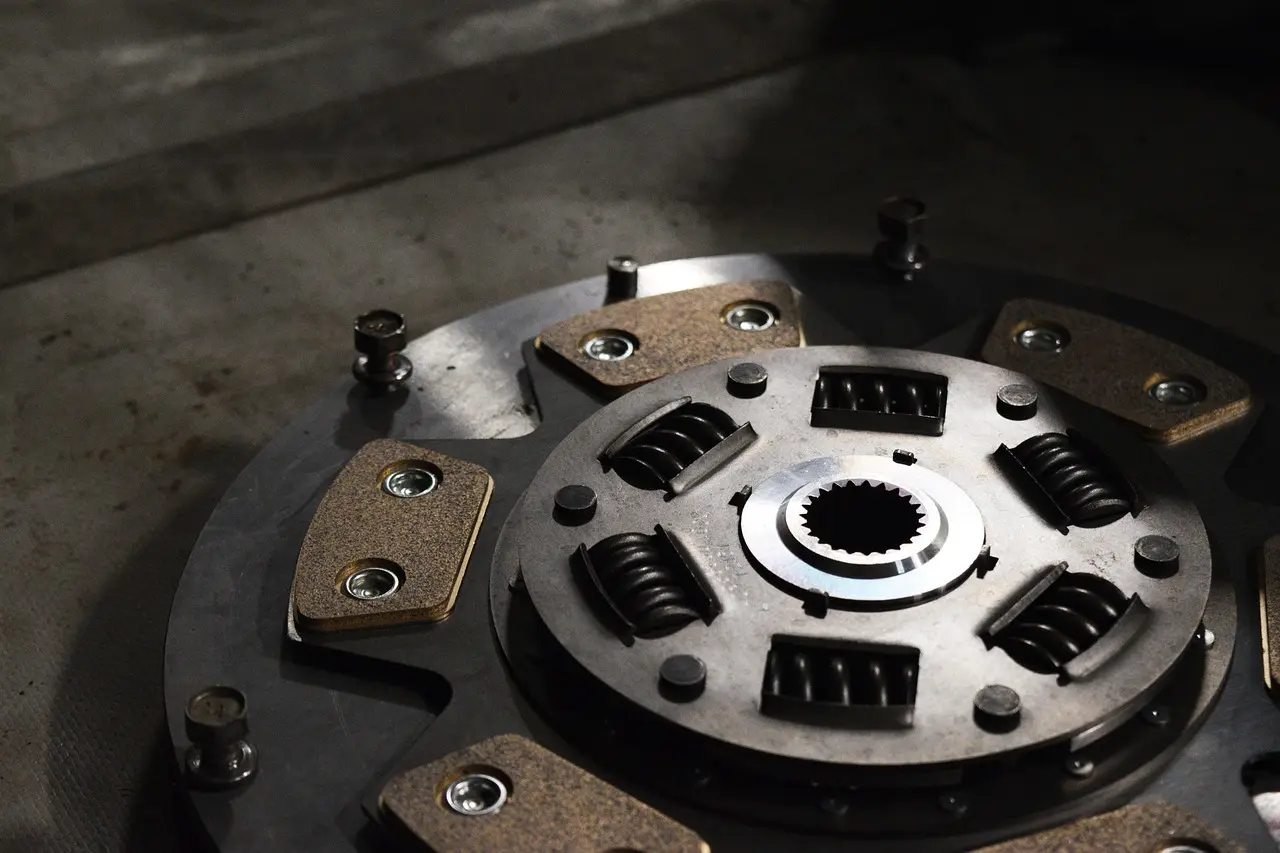
No, you do not always need a new flywheel when replacing the clutch. The correct answer depends on flywheel type, damage, and the vehicle’s service data. A solid flywheel can often be reused or resurfaced if it still meets specification, while a worn dual-mass flywheel often needs replacement. Some vehicles also require a new flywheel by procedure, not by appearance.
The short answer
If the flywheel face is flat, crack-free, and within limits, a clutch-only job can make sense. If the flywheel shows hot spots, glazing, cracks, or contamination, replacing the clutch alone can be false economy. The clutch links engine power to the wheels through the flywheel, so the two parts have to work together cleanly after gearbox removal.
When clutch-only replacement is reasonable
Clutch-only replacement is reasonable when the friction disc is worn, the pressure plate is tired, and the flywheel still passes inspection. A normal clutch can last between 60,000 and 100,000 miles, but wear depends on load and use. If the release bearing is part of the kit, it is usually replaced at the same time because the gearbox has already come out.
When replacing both is the safer call
Replacing both is the safer call when the flywheel shows hot spots, glazing, cracks, or a rough surface that could disturb clutch contact. It is also the safer call when the car has a dual-mass flywheel that rattles, jerks on takeoff, or shows excess free play. Some VW and Audi applications are commonly specified to use a new flywheel with each clutch change; the owner’s manual or service data should be followed.
How the clutch kit and flywheel wear together
Clutch friction disc, pressure plate, and release bearing
A clutch kit usually includes the friction disc, pressure plate, and release bearing. Those parts wear as a set, and they should be matched to each other after gearbox-out labor. The friction disc is the wear item that can slip under load when worn. The pressure plate provides clamping force, and the release bearing can become noisy or fail with age.
How flywheel wear affects engagement and slip
A damaged flywheel changes how the clutch clamps and releases. Heat spots, scoring, glazing, and contamination can reduce friction and create shudder or slip. A slipping clutch can show revs rising without matching road speed. A damaged flywheel can also cause juddering during pull-away, especially if the face is uneven or the clutch disc has overheated.
Why matched wear matters after gearbox removal
Gearbox removal is the labor-heavy step. Once the transmission is out, the flywheel, clutch pack, and hydraulics are all visible, so the decision should be made from inspection rather than habit. A clutch-only repair on a flywheel that is already marginal can bring the same labor bill back again if the clutch starts chattering, slipping, or grabbing unevenly.
Say your hatchback starts to shudder when pulling away in first gear and the clutch disc shows blue heat marks. If the flywheel face also has glazing and light cracking, resurfacing is the wrong move. Replace the flywheel and the clutch kit together, then verify the hydraulics before closing the job.
When a flywheel can be reused or resurfaced
Single-mass flywheel reuse conditions
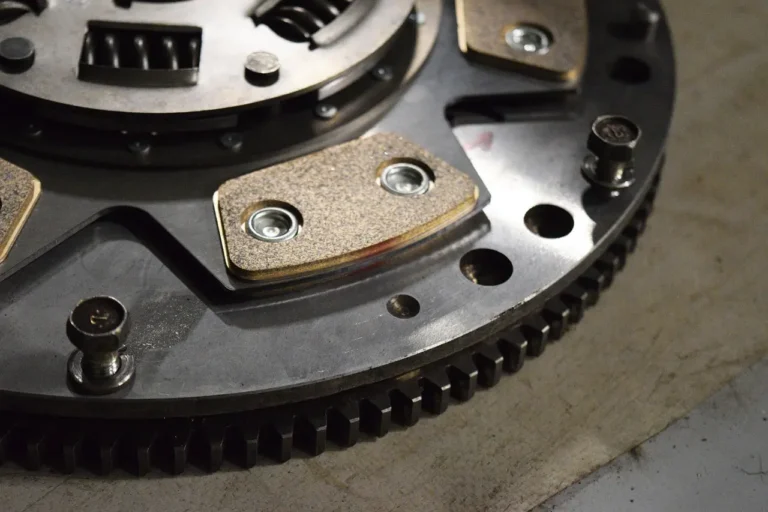
A single-mass flywheel can often be reused if the face is flat, the ring gear teeth are sound, and there are no cracks or heat checks. Light scoring alone is not an automatic rejection if the machining result stays within the maker’s limits. A solid flywheel is usually the easier part to inspect, and it often offers the most flexibility.
When machining makes sense
Flywheel resurfacing makes sense only when the flywheel is designed for it and the remaining material still meets the maker’s specification. Machine shop service is appropriate for a reusable flywheel with wear that is shallow and even. It is not a fix for a broken spring unit, a cracked face, or a contaminated surface that cannot be cleaned properly.
When resurfacing is ruled out
Do not machine a flywheel that is cracked, heat damaged, or out of specification after measurement. Do not resurface a dual-mass flywheel unless the manufacturer explicitly allows that service, which is not commonly allowed. Do not expect resurfacing to cure a bad ring gear, broken internal damping parts, or a flywheel with excessive runout.
Do you have to replace a dual-mass flywheel?
You often do, but not because every DMF is automatically bad. A dual-mass flywheel is a two-part sprung unit that reduces vibration, and it is more failure-prone than a basic solid flywheel. If it rattles, judders, or shows excess free play, replacement is usually the correct call. Some vehicles also require replacement by factory procedure.
Common DMF failure signs
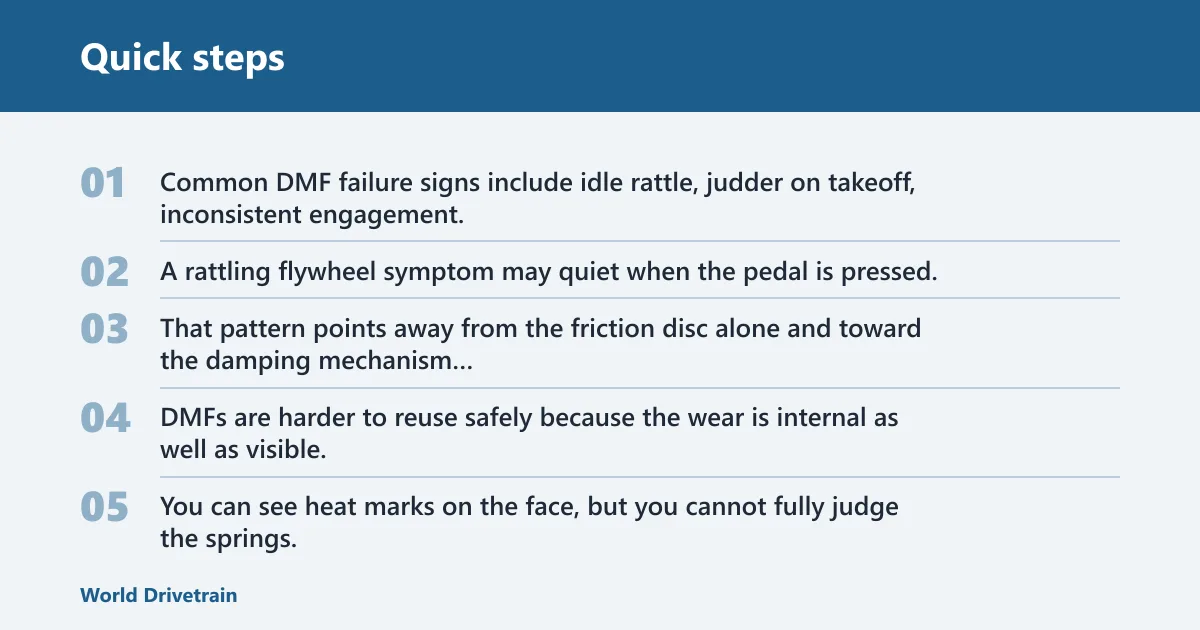
Common DMF failure signs include idle rattle, judder on takeoff, inconsistent engagement, and vibration that does not go away after fitting a fresh clutch disc. A rattling flywheel symptom may quiet when the pedal is pressed. That pattern points away from the friction disc alone and toward the damping mechanism inside the flywheel.
Why DMFs are harder to reuse safely
DMFs are harder to reuse safely because the wear is internal as well as visible. You can see heat marks on the face, but you cannot fully judge the springs, damping travel, or internal stop condition without the correct checks. A worn DMF can defeat a new clutch kit and create the same noise or shake again.
When the manufacturer requires replacement
Follow the service data when it calls for a new DMF with every clutch change. That instruction overrides visual reuse arguments, especially on applications where the flywheel and clutch are matched parts. If the vehicle maker says replace, the decision is simple: do not gamble on a clutch-only job or a reused DMF.
Suppose a sedan has a clutch that still takes power cleanly but the flywheel rattles at idle and quiets when the pedal is pressed. Even if the friction disc looks usable, the DMF is already warning you. Fitting a new clutch to a worn damping unit often buys little more than a second gearbox removal.
What to inspect before you order parts
Clutch hydraulics
Check the clutch hydraulics before ordering parts. A hard-to-select gear is often the hydraulics, not the clutch itself. A weak master cylinder or slave cylinder can mimic a worn clutch or a dragging flywheel by preventing full release. If pedal feel is inconsistent or the clutch engagement point changes, inspect hydraulics before condemning the flywheel.
Flywheel face condition and hot spots
Look for cracks, scoring, glazing, hot spots, and any damage to the mounting face. Check whether the friction surface is flat enough for machining and whether the ring gear teeth are sound. If the face shows heat checking or deeper damage, resurfacing is generally not a valid fix. The part should be replaced instead.
Noise, judder, and contamination checks
Map the symptom to the likely fault. Slipping under load often points to a worn disc or weak pressure plate. Judder on pull-away can come from a damaged flywheel or contamination on the friction surface. Idle noise that changes when the pedal is pressed often points toward the flywheel or release bearing, not the disc alone.
How flywheel choice affects clutch replacement cost
Gearbox removal drives the labor bill
The gearbox has to come out to reach the clutch. That labor is the expensive part, so the flywheel decision affects total cost more than the part price alone. If the flywheel is marginal and you skip it, you may save on parts today and buy the same labor again when the clutch comes back with chatter or slip.
Parts cost versus comeback risk
Clutch-only labor is the cheaper path only when the flywheel truly passes inspection. Adding a flywheel raises the parts total, but it can prevent a repeat job when the face is damaged or the DMF is near failure. A false economy happens when a reused flywheel forces another gearbox-out repair for the same symptom.
Why false economy shows up later
A clutch that works for a few weeks on a bad flywheel can still be a failed repair. The driver may feel shudder, hear rattle, or notice the clutch slipping again under load. The first repair looked cheaper. The second one costs more because the labor is repeated and the diagnosis was incomplete.
Frequently asked questions
Do you need to replace the flywheel with the clutch?
No. Replace it only if inspection shows cracks, heat damage, scoring beyond repair, excessive runout, contamination, or a failing dual-mass flywheel. A solid flywheel that meets spec can often be reused or resurfaced. Always follow the manufacturer’s service data, since some vehicles require replacement regardless of appearance.
Do you have to replace the flywheel with the clutch?
Not always. The flywheel can stay in service if it is a single-mass unit in good condition and the machining or reuse result stays within spec. You do have to replace it when the DMF is rattling, the face is cracked or heat checked, or the maker calls for a new one.
Do I need to replace the flywheel when replacing the clutch?
Only when the flywheel fails inspection or the vehicle specification requires it. A new clutch kit does not fix a damaged flywheel face, and a worn DMF can undo a new disc and pressure plate. If the flywheel is clean, flat, and within limits, reuse is often acceptable on a solid design.
Do you have to machine the flywheel when replacing the clutch?
No. Machine it only if the flywheel is a resurfaceable solid type and the face is still within the maker’s thickness and condition limits. Do not machine cracked, heat-damaged, or contaminated flywheels. Do not assume a dual-mass flywheel can be machined; many cannot be serviced that way.
Can you replace the flywheel without replacing the clutch?
Yes, but only when the clutch friction disc, pressure plate, and release bearing are still serviceable. That is uncommon during gearbox-out work if the clutch is already worn. A flywheel replacement alone makes sense mainly after a damaged flywheel is found before the clutch parts have reached end of life.
When does replacing the clutch alone make sense?
Replacing the clutch alone makes sense when the flywheel passes inspection, the hydraulics are healthy, and the problem is limited to clutch wear. That usually means no cracks, no hot spots, no serious scoring, and no DMF play. It is the right move when the flywheel is still a good partner for the new kit.