Can Changing Transmission Fluid Help Hard Shifting?
Yes, if the fluid is old, burnt, low, or the wrong spec; no, if hard shifting comes from worn clutches, solenoids, valve-body issues, or a bad service. Waiting can turn a simple service into a costly repair, and the wrong fluid can make shifts worse. This guide separates fluid-related fixes, incorrect service, and internal wear so you know what to check first.
Service errors that trigger hard shifts
Yes, but only when the fluid itself is the problem. Fresh automatic transmission fluid can restore hydraulic action and friction control if the old fluid is degraded, contaminated, or out of spec. If the complaint started right after service, check level, fluid type, procedure, and relearn before assuming the transmission is worn out.
When old fluid is the likely cause
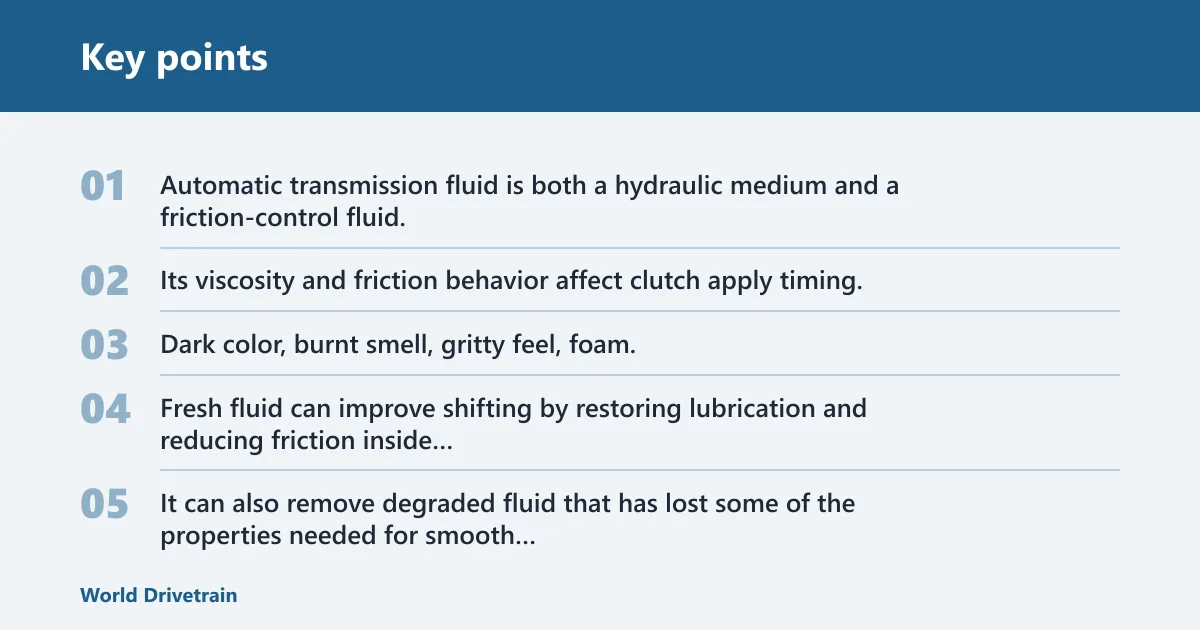
Automatic transmission fluid is both a hydraulic medium and a friction-control fluid. Its viscosity and friction behavior affect clutch apply timing, so old fluid can cause delayed, rough, or bang-like shifts. Dark color, burnt smell, gritty feel, foam, or varnish deposits all point toward fluid that may no longer protect and control shift quality well.
Fresh fluid can improve shifting by restoring lubrication and reducing friction inside the system. It can also remove degraded fluid that has lost some of the properties needed for smooth clutch application. That does not mean every hard shift is fluid-related. It means fluid condition belongs in the first round of diagnosis.
When service mistakes are the real cause
If the symptom appears immediately after service, the first suspects are fluid level, fluid specification, procedure, or relearn. A small overfill or underfill can change hydraulic pressure and cause delayed, harsh, or erratic shifts. Incorrect fluid level can also let the pump draw air or aerate the fluid.
The correct check is not guesswork. The owner’s manual or factory temperature procedure should guide the fluid type and level check, because many transmissions require a hot check at a specific temperature with the engine running in Park or another specified range. A small overfill can aerate the fluid, and aerated fluid does not behave like solid hydraulic fluid.
When hard shifting points to wear or control issues
If fresh, correct fluid does not change the complaint, the issue may be deeper. Worn clutches, a sticking valve body, solenoid faults, or a transmission control module problem can all cause hard or delayed shifts. The TCM is responsible for shift timing, and scan data can reveal faults that fluid cannot fix.
A hard 1-2 shift suggests a different cause than harsh engagement in every gear. That pattern can point toward a valve body, shift solenoid, or control issue rather than fluid alone. Fresh fluid can also reveal wear that old fluid was masking, so a change may expose a problem instead of curing it.
What transmission fluid does
Transmission fluid does more than cool parts. It carries pressure through the hydraulic circuits, lubricates moving surfaces, and helps control clutch apply timing through its friction characteristics. If viscosity changes too much, or the friction behavior no longer matches the transmission’s design, shift feel can change fast.
Old fluid can wear away protective coating and lead to increased friction and decreased efficiency. Dirty or old fluid can cause rough shifting or transmission issues. That is why fluid condition matters, but also why condition alone cannot explain every complaint.
Signs the fluid is tired or contaminated
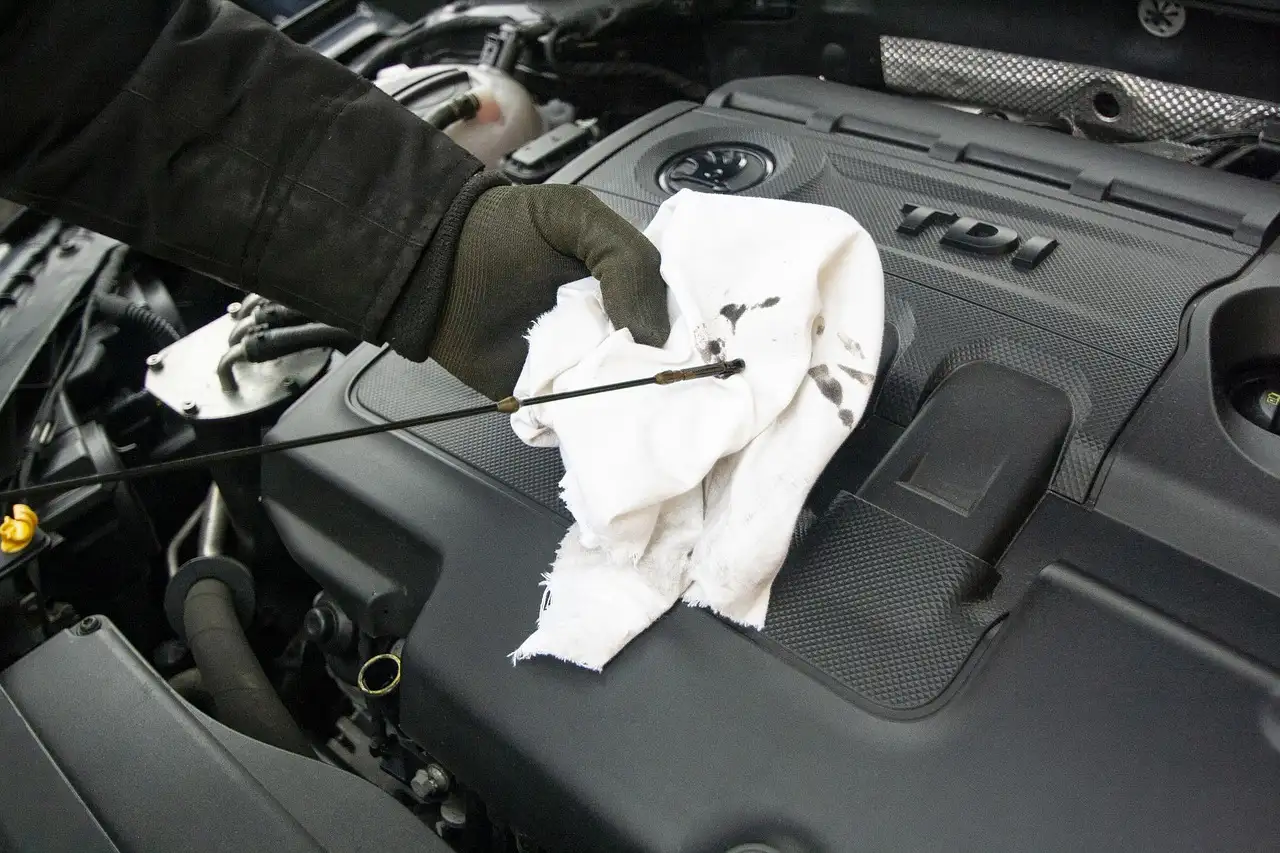
Old ATF may look dark, smell burnt, feel gritty, foam, or leave varnish deposits. Those signs do not prove internal damage by themselves, but they do tell you the fluid has likely lost useful properties. If the shift complaint is mild and the fluid looks poor, a service is often worth considering first.
Suppose a minivan starts feeling lazy on upshifts only after long highway runs, and the fluid comes out dark with a burnt odor. That pattern fits a fluid-related problem better than a sudden mechanical failure. If the same van also has a harsh 1-2 shift every time, you should look harder at solenoids or the valve body.
What the pan and magnet can tell you
Pan inspection gives useful clues. The pan magnet captures metal debris, and fine gray dust can be normal. Large flakes are different. They suggest internal wear and mean fluid service alone is unlikely to solve the complaint.
Debris in the pan also matters because a flush can move it. A transmission flush is not the same as a drain-and-fill. It can disturb debris or reveal existing wear, which is why a flush can sometimes make diagnosis harder if the transmission was already contaminated.
When a change is worth trying first
A fluid change is most reasonable when the complaint is mild, the fluid is old, and the pan does not show heavy debris. It is also reasonable when service history is unknown and the transmission still shifts in a mostly normal pattern. Start with the factory fluid spec and the factory temperature procedure.
Picture a sedan that shifts a little firmly when hot, but only after a long commute. If the fluid is discolored and the pan shows only fine gray dust, fresh correct fluid may help. If the fluid looks foamy or the magnet has large flakes, that points away from a simple service.
Does changing transmission fluid help rough shifting?
It can help if the roughness comes from degraded, dirty, or incorrect fluid. It is less likely to help if the problem is a sticking valve, faulty solenoid, or internal wear. Rough shifting is a symptom, not a diagnosis, so the fluid’s condition and the shift pattern both matter.
How the fluid age shows up in shifting
As ATF ages, its viscosity and friction behavior drift. That can change clutch apply timing and make shifts feel lazy, abrupt, or clunky. If the fluid is dark, burnt, or contaminated, a service may improve the feel because the transmission is no longer fighting poor fluid properties.
Fresh fluid can help improve shifting by restoring lubrication and proper friction behavior. That is true only when the fluid was part of the problem. If the harshness is tied to one gear, one temperature band, or one direction of shift, the pattern may be more useful than the color of the fluid.
What to look for in the pan and magnet
Fine gray dust on the pan magnet can be consistent with normal wear. Large metallic flakes are not. Sludge, debris, or heavy varnish also raise concern for a valve-body problem or internal wear. That kind of evidence changes the diagnosis from “service item” to “inspect deeper.”
Can the wrong transmission fluid cause hard shifting?
Yes. The OEM fluid specification must match the transmission, because many modern transmissions are sensitivity-driven. Wrong fluid can change friction behavior, shift timing, and hydraulic response. That can create harsh engagement, shift flare, or erratic shifts even if the fluid level looks correct.
Why OEM spec matters
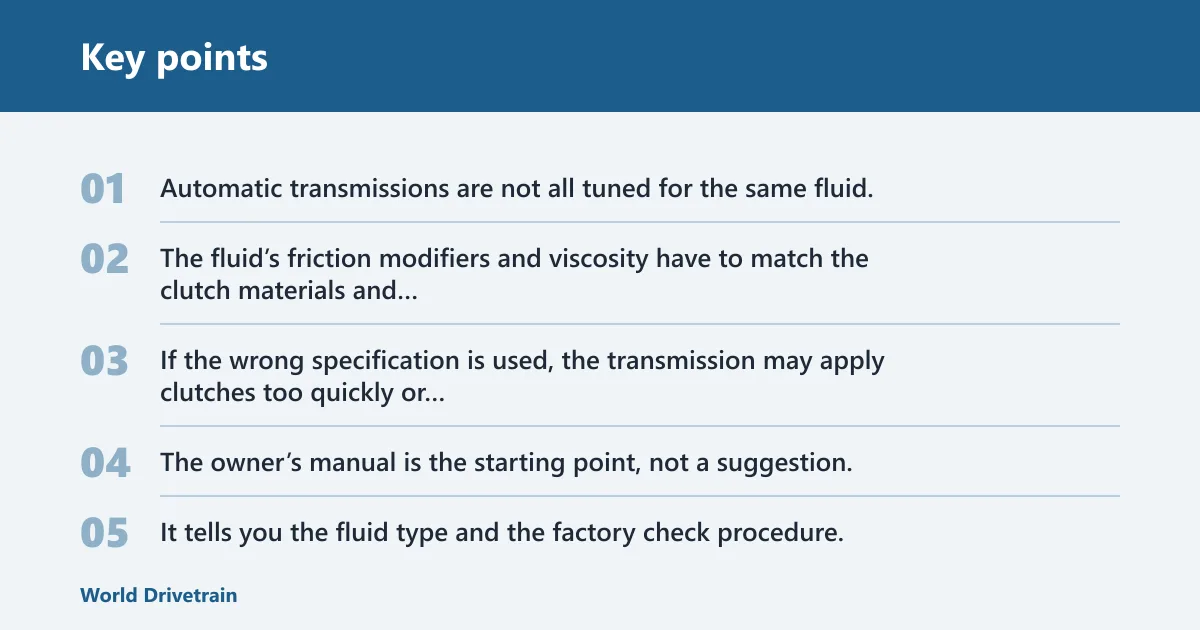
Automatic transmissions are not all tuned for the same fluid. The fluid’s friction modifiers and viscosity have to match the clutch materials and valve calibration. If the wrong specification is used, the transmission may apply clutches too quickly or too slowly, which changes shift feel right away.
The owner’s manual is the starting point, not a suggestion. It tells you the fluid type and the factory check procedure. That matters even more after service, because a transmission can feel bad simply because it was filled with the wrong product.
How level and temperature checks affect diagnosis
Fluid level has to be checked by the factory procedure. Many transmissions need a hot-in-Park check or another specified state, and the fluid temperature matters. A fill that looks fine cold can be wrong once the fluid expands and reaches the correct check range.
A rough shift after a fluid change may be caused by an incorrect fluid level. That is why a post-service complaint should not jump straight to “bad transmission.” Verify level first, then look at fluid type, then look at control data.
Why a small overfill can create aeration
A small overfill or underfill can change hydraulic pressure and cause delayed, harsh, or erratic shifts. If the level is too high, rotating parts can whip air into the fluid. Air bubbles in transmission fluid can disrupt hydraulic pressure and cause hard shifting.
That means a little extra fluid is not harmless. A small overfill can aerate the fluid and create symptoms that feel like internal failure. The same applies to underfill, which can starve the pump and produce similar complaints.
Why did my car shift hard after a transmission fluid change?
The most common causes are wrong fill level, wrong fluid specification, relearn or adaptation not completed, or debris moved through the valve body or solenoids. If the symptom starts right after service, treat it as a service-diagnosis problem first. Do not assume the transmission suddenly failed the same day.
Wrong fill level
A fill that is too high or too low can create immediate shift changes. Underfill can let the pump draw air. Overfill can aerate the fluid. Both can cause delayed, harsh, or erratic shifts that did not exist before service.
Wrong fluid specification
If the wrong ATF was used, the friction characteristics may not match the transmission. That can cause harsh engagement, flare, or delayed apply. Some transmissions react quickly to fluid mismatch because their calibration depends on very specific friction behavior.
Relearn or adaptation not completed
The TCM may need relearn or adaptation after service. If that step is skipped, shift timing can feel off until the module relearns clutch fill and apply behavior. A scan tool can reveal adaptive data and fault codes that point to a control issue instead of a fluid issue.
Debris moved through the valve body or solenoids
Harsh shifting after a flush can point to wrong fluid or disturbed debris. A flush can move sludge or contamination into the valve body or across shift solenoids, where small passages and valves are easier to upset. That can create one-gear hard shifts or a sudden change in shift pattern.
- Check the owner’s manual or factory temperature procedure.
- Verify fluid level at the required temperature and engine state.
- Confirm the fluid specification matches the transmission.
- Scan for TCM fault codes and adaptation data.
- Inspect the pan magnet and fluid condition for debris, foam, or varnish.
- Match the symptom pattern to one gear, every gear, hot-only behavior, or post-service onset.
Will fluid change help this shift complaint?
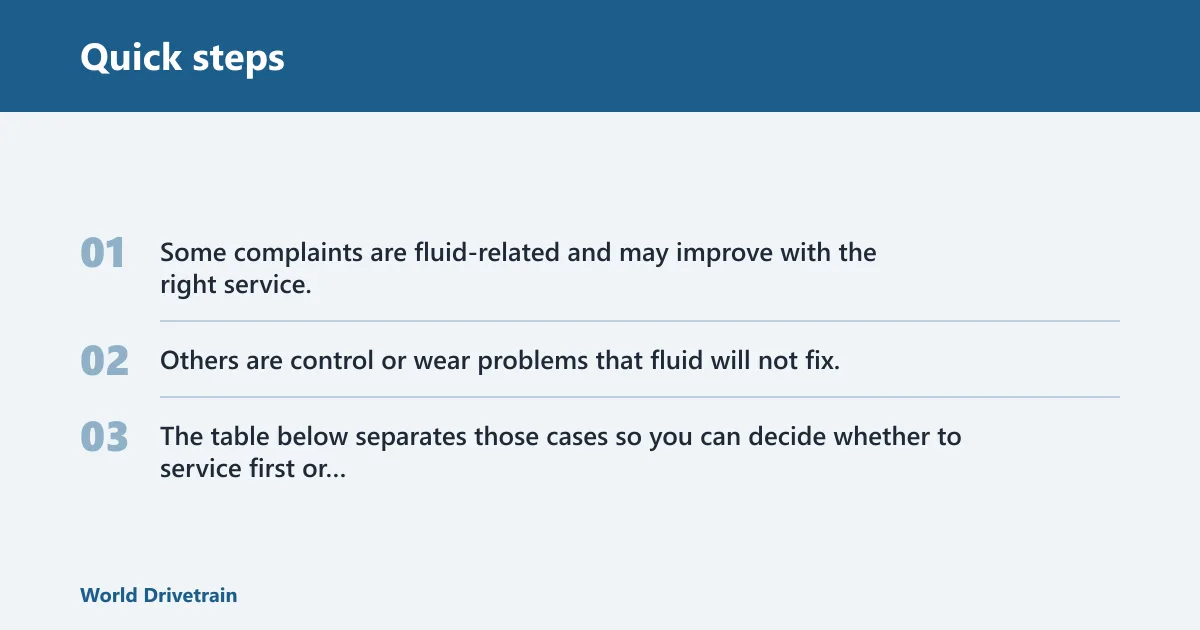
Use the symptom pattern first. Some complaints are fluid-related and may improve with the right service. Others are control or wear problems that fluid will not fix. The table below separates those cases so you can decide whether to service first or diagnose deeper.
| Symptom pattern | Likely fluid-related cause | Likely non-fluid cause | First check | Service likely to help / unlikely to help |
|---|---|---|---|---|
| Hot-only harsh shifts after long driving | Old ATF, wrong spec, low or high level, aeration when hot | TCM adaptation issue, pressure control fault | Factory temperature procedure and scan data | Likely to help if fluid is degraded or level is wrong; unlikely if codes or adaptations point elsewhere |
| One-gear harsh shift, such as a hard 1-2 shift | Debris in valve body, dirty fluid affecting one circuit | Valve body wear, shift solenoid fault | Live data, fault codes, pan inspection | May help if contamination is minor; unlikely if the pattern is repeatable and code-backed |
| Delayed engagement followed by a jolt | Low fluid, aerated fluid, degraded ATF | Internal wear, pump issue, pressure loss | Level check by factory procedure | Likely to help if level or fluid condition is off; unlikely if pressure loss remains after correction |
| Hard shifts right after a flush | Wrong fluid, disturbed debris, overfill or underfill | Valve body already worn, solenoid sticking, relearn not done | Confirm fill spec, then scan and inspect | Likely to help only if the service mistake is found; unlikely if the flush exposed existing wear |
| Dark, burnt fluid with fine gray dust on magnet | Fluid age and oxidation | Light wear already present | Pan and magnet inspection | May help if symptoms are mild; unlikely to cure major wear |
| Large flakes in pan or heavy varnish | Fluid is contaminated, but damage may already be advanced | Internal clutch or hard-part wear | Inspect debris size and amount | Unlikely to help as a cure; service may only be a temporary step |
Frequently asked questions
Can changing transmission fluid help hard shifting?
Yes, if the fluid is old, dirty, burnt, low, or the wrong spec. Fresh fluid can improve shift quality by restoring lubrication and correct friction behavior. It will not repair worn clutches, sticking solenoids, or valve-body damage, so the symptom pattern still matters.
Will changing transmission fluid help with rough shifting?
It can, especially when rough shifting comes with dark, burnt, or contaminated fluid. If the transmission has a clean pan, correct level, and still rough shifts in one gear or one temperature range, a deeper fault is more likely than fluid age alone.
Can changing transmission fluid stop hard shifting?
Sometimes. It is most likely to help when hard shifting comes from degraded fluid, wrong level, or the wrong spec. It is much less likely to stop hard shifting caused by clutch wear, valve-body problems, solenoid faults, or a TCM issue.
Does changing transmission fluid help shifting?
Yes, when the transmission is reacting to fluid that has broken down or been filled incorrectly. A correct service can improve hydraulic pressure behavior and clutch apply timing. If the complaint persists after the right fluid and level are confirmed, inspect the control system and internal wear.
Will a transmission flush help hard shifting?
Sometimes, but a flush is not the same as a drain-and-fill. It can disturb debris and may make a hidden problem more obvious. If hard shifting began after a flush, check for wrong fluid, wrong level, and any relearn or adaptation issue before anything else.
How do I tell if hard shifting is from fluid or a bigger transmission problem?
Start with pattern and evidence. Hot-only rough shifts, dark or burnt fluid, and a clean magnet lean toward a service issue. One-gear hard shifts, large flakes in the pan, repeated codes, or no change after the correct fluid and level point toward valve body, solenoid, control, or wear problems.