How to Fix Rear Differential Noise Without Guessing
Confirm rear differential noise by matching it to speed, load, and cornering: a whine that changes with throttle usually points to gear setup or wear, while a rumble that changes on turns often points to bearings. If fluid is low, fix that first. Miss the diagnosis and you can buy the wrong parts, keep driving on damaged gears, or turn a minor repair into a full axle rebuild. This guide shows how to confirm the sound source, separate gear, bearing, and fluid faults, and decide when to stop and send it to a shop.
Is it really the rear differential?
Rear differential noise comes from the housing at the axle, so it usually changes with vehicle speed, throttle, or load rather than engine rpm alone. A wheel bearing can sound nearly identical. A slight turn at higher speeds can help separate the two; if the noise follows the wheel on one axle, suspect the bearing instead.
What you’ll need
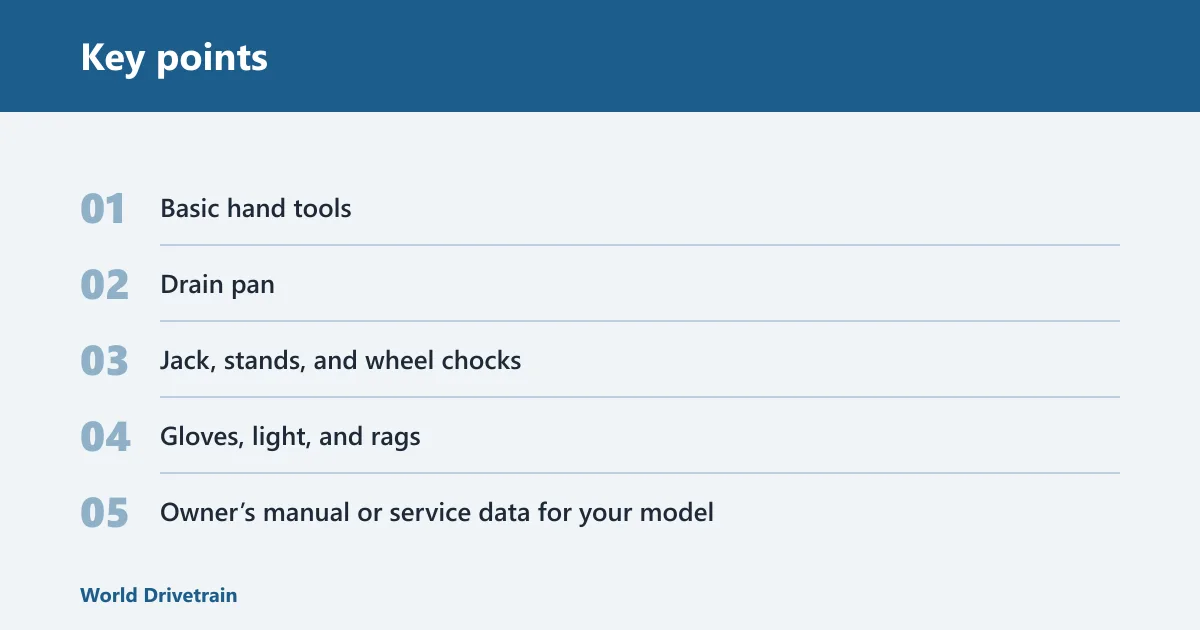
- Basic hand tools
- Drain pan
- Jack, stands, and wheel chocks
- Gloves, light, and rags
- Owner’s manual or service data for your model
| Symptom pattern | Likely source | Quick driveway checks | Next action |
|---|---|---|---|
| Whining at speed | Ring and pinion wear, low or degraded differential fluid | Listen at steady speed and on light throttle; check for leaks and fluid condition | Check fluid level and service history first; inspect gears if the whine stays after service |
| Noise on deceleration | Gear wear or setup issue in the ring and pinion gears | Lift off the throttle and note whether the pitch changes as load comes off | Plan a shop inspection for gear mesh and backlash if the noise is repeatable |
| Clunk on takeoff | Excess lash, worn gears, or internal wear | Start from a stop in a straight line and note whether the clunk repeats | Inspect before more driving; severe lash can point to gear damage |
| Chatter on turns | Limited-slip differential clutch chatter or broken gear teeth | Make slow, tight turns in a parking lot and note any binding | Check fluid type and condition first; if chatter continues, inspect internally |
| Vibration with heat or metal in fluid | Bearing failure, gear damage, or severe internal wear | Check for hot housing, burnt odor, or metal on the drain plug | Stop driving and arrange inspection |
Picture a pickup that whines only at 45 mph and gets quieter when the throttle changes. That pattern fits the differential better than a tire roar, especially if the sound comes from the center of the axle housing instead of one wheel.
A common first-timer mistake is blaming the rear end because the sound appears during a right turn. If the pitch follows the outside wheel and not the axle housing, a wheel bearing is still in play.
How do you isolate the source?
Start with leaks, then fluid, then a short road test. That order matters because low or degraded differential fluid can create whining or humming, and a leak can be the reason the noise started. If the sound changes with turning, speed, or throttle, compare those changes against wheel-bearing and axle clues.
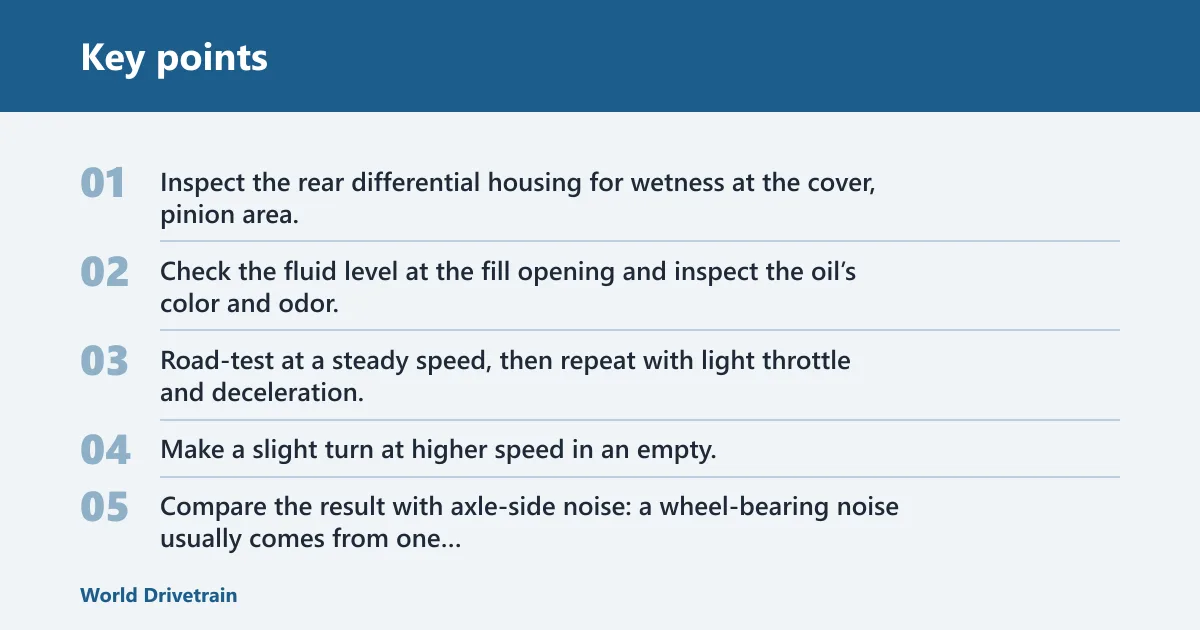
- Inspect the rear differential housing for wetness at the cover, pinion area, and axle seals.
- Check the fluid level at the fill opening and inspect the oil’s color and odor.
- Road-test at a steady speed, then repeat with light throttle and deceleration.
- Make a slight turn at higher speed in an empty, safe area and note whether the noise changes.
- Compare the result with axle-side noise: a wheel-bearing noise usually comes from one axle, while differential noise comes from the housing.
Suppose the housing is dry, the fluid is full, and the whine changes only on deceleration. That points away from a tire and toward ring and pinion wear or setup, so service alone is less likely to solve it.
What does the noise pattern point to?
The most common rear differential noise is a whirring sound, but whining, humming, clunking, banging, and vibration all matter. A pattern that follows speed or acceleration suggests drivetrain issues, while a sound that changes with turning raises the odds of a bearing fault or limited-slip clutch chatter.
Whine or hum under load
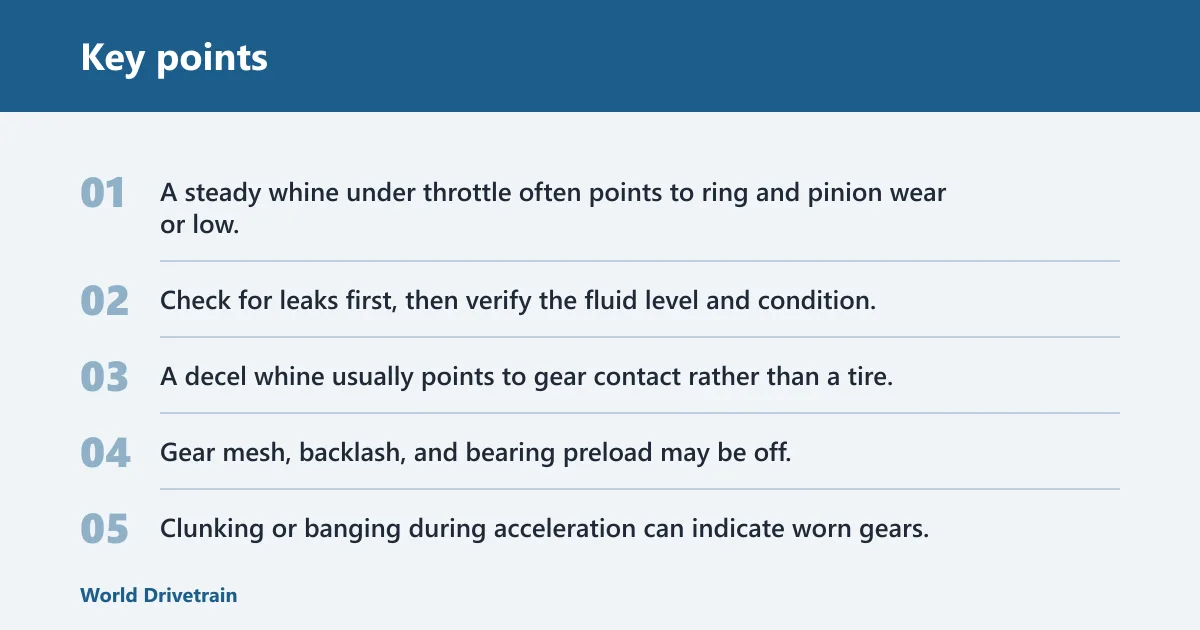
A steady whine under throttle often points to ring and pinion wear or low, dirty differential oil. Check for leaks first, then verify the fluid level and condition; thick gear oil like 90-weight is supposed to carry load without aeration or burn damage.
Noise that gets louder on deceleration
A decel whine usually points to gear contact rather than a tire. Gear mesh, backlash, and bearing preload may be off, or the gears may already be worn enough that the pattern changes when load reverses.
Clunk, bang, or lash on takeoff
Clunking or banging during acceleration can indicate worn gears. It can also come from excess backlash or other internal lash, so a repeated clunk is a reason to stop guessing and inspect the gearset.
Chatter or binding in turns
Chattering on turns often shows up in limited-slip or locking differentials, especially if the fluid is wrong, old, or low. Broken gear teeth can also create chatter, so this symptom deserves more than a quick top-up if the noise persists.
Heat, vibration, or metal in the fluid
Heat in the housing, vibration, or metal in the oil points to more serious internal damage. Broken teeth are a severe warning, and metal in the fluid means the damage is no longer limited to noise.
When can you fix it with service?
You can quiet some rear differential noise with service when the problem is fluid-related or when a leak has dropped the level. If the oil is low, dirty, or overheated, a fluid change or refill may help. If the seal is leaking, repair the leak first or the noise will return.
- Drain and inspect the old fluid for burnt odor, glitter, or chunks of metal.
- Repair visible leaks at the cover, pinion seal, or axle seals before refilling.
- Refill with the correct differential fluid specified for your axle and differential type.
- Road-test again and listen for the same speed, throttle, and turn changes.
Clean fluid can quiet a minor complaint, especially in a unit that was simply overdue. Staying on the service schedule lowers the chance of costly differential repairs, but service will not fix broken gear teeth or a worn bearing.
If the noise is still there after the fluid check and leak repair, stop treating it as a maintenance job. At that point, the problem is more likely internal.
When does it need a shop?
It needs a shop when the noise persists after fluid and leak checks, when the housing runs hot, or when the fluid shows metal. Differential bearings can mimic wheel-bearing noise, and gear damage can create whine, whirring, or chatter that only teardown can confirm. Continued driving can turn a repair into a rebuild.
- Schedule inspection if the noise returns after refill or seal repair.
- Ask for gear mesh, backlash, and bearing preload checks.
- Request inspection of the ring and pinion gears for wear or broken teeth.
- Ask whether the axle uses open, limited-slip, or locking components, because the diagnosis and fluid spec can differ by model.
Model-specific pricing varies, but the cost usually rises by failure mode: fluid service is lowest, seal work is higher, bearings and gears cost more, and a full rebuild is the most expensive path. A shop inspection is the right next step when the sound is getting louder, hotter, or harsher.
Common mistakes
Rear differential diagnosis goes wrong when the symptom is matched to the wrong part. The easiest mistake is calling every rear noise a differential problem, but tires, axle bearings, and driveshaft U-joints can make similar sounds.
- Confusing wheel bearing noise with differential noise
- Ignoring a damp housing because it is not dripping
- Adding fluid without checking for metal or burnt odor
- Driving past clunking, grinding, or severe chatter
Another common error is assuming a limited-slip chatter is normal. If the fluid is wrong or degraded, chatter may be the first sign that the axle needs service.
Frequently asked questions
What causes rear differential noise
The usual causes are ring and pinion wear, bearing wear, low or degraded fluid, and leaks that let the oil level drop. The pattern matters: whine, whirring, clunking, chatter, or vibration can point to different failures, so match the sound to when it happens.
How do I tell if the noise is from the differential or wheel bearings?
A wheel-bearing noise usually seems tied to one axle, while rear differential noise comes from the housing. A slight turn at higher speeds can help separate them. If the sound shifts with cornering and seems to move side to side, a bearing is more likely.
What does rear differential noise sound like while driving?
It often sounds like a whirring, whining, humming, clunking, or vibration that changes with speed or acceleration. The exact pitch may rise with vehicle speed or change when you lift off the throttle, which is why road testing under different loads matters.
When is rear differential noise serious enough to stop driving?
Stop driving if the housing is hot, the fluid contains metal, the sound turns into grinding or severe chatter, or the noise gets worse quickly. Those signs point to internal damage that can spread fast, especially if broken gear teeth are involved.
How much does rear differential repair usually cost?
Cost depends on the failure mode and the axle design. Fluid service and seal work are usually at the low end, bearings and gear setup cost more, and a full rebuild is the most expensive. Exact pricing varies by vehicle, parts, and labor time.